

Ouça este podcast gratuitamente no aplicativo: Baixe gratuitamente na App Store
radio.net
Sleeptimer
Guardar rádio
18 episódios
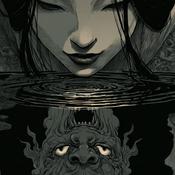
Japanese Folklore. The Tongue-Cut Sparrow: The spiritual symbolism of the Shita-kiri Suzume folktale.
26/11/2025 | 12minThe discovery that this "fairy tale" was treated as a legal reality in 1661, appearing on a government land dispute map in Gunma Prefecture, which suggests the story served as a codified warning about interacting with Marebito—visiting deities disguised as animals to test the human soul.
In this episode, we explore Shita-kiri Suzume (The Tongue-Cut Sparrow), one of Japan's most enduring morality tales. We move beyond the sanitized children's version to uncover a narrative deeply rooted in Edo-period sociology and Buddhist ethics. We discuss the story's surprising connection to a specific location in Isobe Onsen, validated by a 17th-century shogunate map, and analyze the sparrow not just as a bird, but as a Marebito—a visiting spirit that judges human households. We also examine the brutal original endings involving the "Mean Old Woman" and the symbolic significance of the wicker baskets.The Story of O-Tei: A Vow Stronger Than Death
17/11/2025 | 10minIn this podcast, we explore "The Story of O-Tei," a well-known tale from Lafcadio Hearn's Kwaidan. The story is about a young woman who, on her deathbed, promises to be reborn and find her beloved again. This episode goes beyond the surface-level romance to look at the tale's mechanics. We will discuss how O-Tei's promise is transformed into a binding karmic contract through the specific, ritualistic act of her fiancé, Nagao, writing a physical vow and placing it within the household Buddhist shrine, the butsudan. This podcast also examines the story's historical context in the Edo and Meiji periods, its likely origins as an oral tale told by Hearn's wife, Koizumi Setsu, and the deeper cultural themes of shūnen (clinging obsession) and inga (karma). Finally, we'll touch on the tale's haunting conclusion and what it reveals about Japanese perceptions of love, death, and memory.Why the Norse Cosmos Was Fated for Destruction
10/11/2025 | 24minThe Norse universe wasn't built for peace. Its creation from a murdered giant (Ymir) means that chaos is an inherent, inescapable part of the world, making the final, violent doom of Ragnarok an inevitability from the very beginning.
In this podcast, we explore the complete architecture of the Norse universe. This isn't just a map of the Nine Realms; it's an analysis of a cosmos that was, by its very design, destined for destruction. This episode begins with the creation myth, moving from the void of Ginnungagap to the clash of fire and ice. We'll discuss how the gods, led by Odin, didn't create the world from nothing, but violently shaped it from the corpse of the giant Ymir. The podcast explains how this foundational act embeds chaos into the very fabric of existence, setting up the central, inescapable conflict of the mythology. We then explore Yggdrasil, the great cosmic tree, as the axis that connects all of life. We'll look at its three roots, the Norns weaving fate at its base, and Odin's sacrifice for wisdom. The episode also provides a survey of the Nine Realms, analyzing them not just as places, but as symbolic spaces of order (innangard) versus the wild (utangard). Finally, this podcast discusses how this entire structure—built from violence and defined by constant struggle—provides the mythological basis for Ragnarok, the world's prophesied doom.The conceptual evolution of the "demon," from the neutral Greek daimon to the malevolent entity of Christian theology
10/11/2025 | 18minIn this podcast, we explore the history of the "demon." It's a word we all know, but its meaning has changed dramatically. This episode traces that journey. We start in ancient Greece, where the daimon wasn't evil, but a neutral intermediary spirit, or for philosophers like Socrates, an inner guiding voice. So how did it become the purely evil entity we think of today? This episode explains the critical transformation during the Second Temple period, showing how a specific Greek translation, the influence of Zoroastrian dualism, and the apocalyptic myths of 1 Enoch (the Watchers and Nephilim) combined to create the "demon" found in the New Testament. We'll then discuss how Christian theologians like Augustine and Aquinas codified this idea of a fallen angel, which led to rituals of expulsion (exorcism) and the legal framework for the witch-hunts (Malleus Maleficarum). Finally, the podcast explores how modern occultism (like the Goetia) and psychology (Carl Jung's "Shadow") have re-interpreted the concept, effectively retrieving the original Socratic idea of the daimon as an internal force to be integrated, not expelled.Tsuru no Ongaeshi: A Japanese Folktale of Love, Sacrifice, and Greed
08/11/2025 | 14minThe tale is not just about a magical reward, but a tragic warning. It explores how human greed (or curiosity) corrupts a supernatural gift, forcing the crane wife to literally unmake herself (plucking her own feathers) to satisfy a debt that escalates from kindness to materialism, resulting in an irreversible loss.
This podcast episode explores the famous Japanese folktale of Tsuru no Ongaeshi, often known as "The Grateful Crane" or "The Crane Wife." The story begins with a poor man who saves a wounded crane. Soon after, a mysterious woman arrives at his home, and they marry. She begins to weave a beautiful, magical cloth, but makes him promise never to look at her while she works. This episode discusses the narrative of the tale and its variations. We explore the powerful symbolism of the crane in Japanese culture as a figure of fidelity and longevity. The podcast also examines the story's core conflict: the collision between pure, sacrificial love and the corrupting influence of human greed or curiosity, which ultimately leads to the tragic climax. We will also touch upon the tale's modern legacy, including its adaptation in the play Yūzuru and its influence on other media.
Mais podcasts de Drama
 Terror na EsquinaDrama, Ficção
 Sherlock Holmes Short StoriesArte, Drama, Ficção, Livros
 Nuremberg: The Trial of the Nazi War CriminalsDrama, Ficção
 Relatos FlutuantesDrama, Ficção
 Sherlock & Co.Arte, Drama, Ficção, Livros
 MalevolentDrama, Ficção
 Campfire Radio TheaterDrama, Ficção
 CreepsMcPasta Creepypasta RadioCrimes verdadeiros, Drama, Ficção
 The Lovecraft InvestigationsDrama, Ficção
 Unwell, a Midwestern Gothic MysteryDrama, Ficção
Podcasts em tendência em Drama
 Fox PodcastsDrama, Ficção
- Campfire Radio TheaterDrama, Ficção
 DreamboyDrama, Ficção
 Historias EróticasDrama, Ficção
 AUDIOBOOKS Livros Contos PoemasArte, Drama, Ficção, Livros
- Sherlock Holmes Short StoriesArte, Drama, Ficção, Livros
 BridgewaterDrama, Ficção
 Les Maîtres du mystèreCrimes verdadeiros, Drama, Ficção, História
 Passenger ListDrama, Ficção
 Terror na EsquinaDrama, Ficção
 We're AliveArte, Artes performativas, Drama, Ficção
Sobre Folklore, Tales and Myths
Before there was written history, there were stories. Stories told around a campfire to explain the stars, tales whispered to children at bedtime, and sacred myths that shaped entire civilizations. Welcome to Folklore, Tales and Myths, the podcast that journeys into the heart of humanity's most enduring narratives.
Site de podcastOuça Folklore, Tales and Myths, Terror na Esquina e muitos outros podcasts de todo o mundo com o aplicativo o radio.net
Obtenha o aplicativo gratuito radio.net
- Guardar rádios e podcasts favoritos
- Transmissão via Wi-Fi ou Bluetooth
- Carplay & Android Audo compatìvel
- E ainda mais funções
Obtenha o aplicativo gratuito radio.net
- Guardar rádios e podcasts favoritos
- Transmissão via Wi-Fi ou Bluetooth
- Carplay & Android Audo compatìvel
- E ainda mais funções

Folklore, Tales and Myths
Leia o código,
baixe o aplicativo,
ouça.
baixe o aplicativo,
ouça.
Folklore, Tales and Myths: Podcast do grupo
 Brasil