

Ouça este podcast gratuitamente no aplicativo: Baixe gratuitamente na App Store
radio.net
Sleeptimer
Guardar rádio
115 episódios
#115 The Science of Blueberries for Brain and Vascular Health
01/10/2026 | 1h 10minGet access to more than 200 episodes of my premium podcast (The Aliquot) when you sign up as a FoundMyFitness Premium Member
One cup of blueberries a day can improve vascular function, support the aging brain, and tighten glucose control in ways that go far beyond antioxidant activity. In this episode, Dr. Rhonda Patrick breaks down how blueberry anthocyanins and their downstream metabolites act as signaling molecules that support endothelial function and memory, while long-term studies link regular blueberry intake to slower cognitive decline and lower dementia risk. She also details the evidence for post-meal glucose control and insulin sensitivity, and explains why blending blueberries with bananas may reduce polyphenol availability.
Timestamps:
(00:00) Introduction
(02:27) What can one cup of blueberries per day change?
(03:42) Why blueberry polyphenols are more than antioxidants
(05:28) Which compounds in blueberries matter most?
(07:45) What does the evidence show for cognitive aging?
(08:57) Can blueberries improve memory and cognitive flexibility?
(11:32) What long-term studies suggest about cognitive decline
(12:42) Do blueberries lower dementia and Alzheimer's risk?
(16:00) What may explain the brain benefits beyond blood flow?
(18:45) Can blueberries improve how arteries respond to increased demand?
(23:50) One cup vs. half a cup for endothelial function
(26:36) Does the vascular benefit extend to postmenopausal women?
(26:59) What anthocyanin studies reveal about cardiovascular risk
(29:36) How blueberry metabolites act as vascular and genetic signals
(35:42) Blueberries and insulin sensitivity—why findings conflict
(39:38) Do blueberries improve HbA1c and triglycerides?
(40:21) Can blueberries improve post-meal glucose control?
(42:18) What observational studies suggest about type 2 diabetes risk
(42:44) Blueberries for glucose control—who benefits most?
(43:47) Can blueberries improve gut symptoms without reshaping the microbiome?
(47:37) Could poorly absorbed polyphenols strengthen the gut barrier?
(49:11) Exercise performance vs. recovery—where is the benefit?
(52:20) Can bananas alter blueberry polyphenol availability?
(55:49) Direct vs. indirect effects of banana PPO on blueberry polyphenols
(59:06) What the human banana smoothie study showed
(1:04:55) Should you avoid bananas in blueberry smoothies?
(1:07:25) The case for one cup of blueberries per day
Show notes are available by clicking here
Watch this episode on YouTube#114 How Meditation Rewires Your Brain, Gut, & Immune System | Dr. Richard Davidson
24/08/2026 | 1h 49minGet access to more than 200 episodes of my premium podcast (The Aliquot) when you sign up as a FoundMyFitness Premium Member
Five minutes of daily meditation can measurably lower a marker of inflammation and alter pathways in the gut microbiome. In this episode, Dr. Richard Davidson explains how exercise and meditation can work together to shape resilience and support the biology of flourishing. He also shows how meditation can be folded into exercise and ordinary routines, with benefits comparable to formal sit-down practice.
Timestamps:
(00:00) Introduction
(05:22) Why meditate when you can exercise?
(09:05) How loneliness and connection alter our biology
(10:44) Can compassion be trained like a muscle?
(13:14) Does timing meditation around exercise matter?
(16:30) What are the four pillars of well-being?
(22:38) The six emotional styles that shape well-being
(30:11) Can an emotional style become too extreme?
(32:02) Can we intentionally shape neuroplasticity?
(34:45) When increased neuroplasticity backfires
(36:33) Does doing hard things build resilience?
(40:19) Why children may be more resilient than adults
(42:14) Why strength training may be a form of mindfulness
(48:15) Can mindset alone change your biology?
(52:44) Why mindset training may need to be personalized
(54:26) Can five minutes of meditation reduce inflammation?
(59:34) How meditation alters the gut microbiome
(1:03:49) The insula's role in linking stress and inflammation
(1:08:22) Can meditation protect against stress-related inflammation?
(1:09:59) Does meditation have to be done sitting still?
(1:13:17) Turning everyday meals into a gratitude practice
(1:15:00) Why meditation may initially increase anxiety
(1:17:24) How children absorb their parents' emotional state
(1:22:33) Does social connection increase longevity?
(1:25:30) How social connection shifts attention beyond the self
(1:28:02) Does spending money on others make us happier?
(1:30:20) What does it mean to have a purpose?
(1:34:55) Can curiosity help overcome pessimism?
(1:38:24) Can you flourish without formal meditation?
(1:40:55) The core practices for a flourishing life
Show notes are available by clicking here
Watch this episode on YouTube#113 Why AI Could Add Decades to Your Lifespan | Dr. Derya Unutmaz
19/07/2026 | 2h 45minGet access to more than 200 episodes of my premium podcast (The Aliquot) when you sign up as a FoundMyFitness Premium Member
The next 10 years may add decades to human lifespan by compressing the time it takes to understand, treat, and prevent disease. In this episode, Dr. Derya Unutmaz explains why accelerating AI could transform drug discovery, shorten clinical trials, and push cancer treatment toward increasingly personalized interventions. He also reframes AI not as an existential threat, but as a medical enabler that doctors may soon be ethically obligated to use.
Timestamps:
(00:00) Introduction
(07:11) Why the next 10 years may add 50 to your lifespan
(11:19) How AI is transforming drug discovery
(16:50) Could digital twins shorten clinical trials?
(19:25) Can AI predict drug safety and efficacy?
(23:40) Have we already reached AGI?
(29:23) Why AI may be medicine's greatest force multiplier
(35:35) Can AI replicate a scientist's biological intuition?
(42:16) Is it malpractice for doctors not to use AI?
(48:18) What happens when AI monitors disease in real time?
(51:52) Which AI models should doctors trust?
(57:29) Claude vs. GPT—does the model matter for diagnosis?
(1:00:58) Generalist vs. specialized AI—which works better in medicine?
(1:04:25) Why cancer is so hard to cure
(1:08:18) Could cancer be curable within a decade?
(1:12:29) Can AI design cancer treatments on demand?
(1:14:31) How AI could curb overtreatment and side effects
(1:17:28) Predicting cancer years before it forms—is it possible?
(1:23:50) Why biology could go exponential with AI
(1:28:58) Why aging may be easier to prevent than reverse
(1:34:51) Can the body be engineered to resist aging?
(1:40:07) Can AI model how gene therapy will behave?
(1:44:12) What people who reach 110+ reveal about Human 2.0
(1:46:21) From Dolly to Yamanaka factors—the case for cellular age reversal
(1:50:56) Why full-body rejuvenation is an engineering problem
(1:58:44) What happens when AI reasons longer about biology?
(2:01:25) The biosecurity dilemma of powerful AI
(2:06:12) What should we actually measure to track aging?
(2:12:34) How old immune cells distort aging clocks
(2:15:22) Why reversing brain aging is uniquely difficult
(2:21:49) The ultimate prompt for extending lifespan
(2:23:50) What data does a true digital twin need?
(2:28:32) How to build a mini digital twin today
(2:33:26) How to give AI a long-term memory of your data
(2:36:33) Why personal baselines matter for AI advice
Show notes are available by clicking here
Watch this episode on YouTube#112 How To Slow Biological Aging With a Multivitamin, Vegetables, & Omega-3 | Dr. Steve Horvath
07/06/2026 | 2h 47minGet access to more than 200 episodes of my premium podcast (The Aliquot) when you sign up as a FoundMyFitness Premium Member
The strongest anti-aging strategy may be less about dramatic reversal and more about removing what accelerates aging in the first place. In this episode, Dr. Steve Horvath maps out the science behind biological age and how aging clocks are changing the way researchers evaluate longevity interventions. He also explains why omega-3s, a daily multivitamin, and sufficient vegetable intake stand out as evidence-backed, compounding levers for shifting biological age over time.
Timestamps:
(00:00) Introduction
(07:05) What exactly is biological aging?
(12:39) Do all aging clocks measure the same thing?
(18:22) PhenoAge vs. GrimAge—how methylation reveals mortality risk
(20:27) Why GrimAge is a powerful mortality predictor
(24:10) How your epigenome remembers long-term stress
(28:08) Can parents pass stress to offspring through the epigenome?
(30:12) Why standard aging clocks fail in sperm
(31:35) Can lifestyle changes reverse GrimAge?
(33:24) How DunedinPACE tracks your aging speed
(37:26) Which clock is best for testing longevity interventions?
(39:47) Can methylation clocks replace long-term mortality studies?
(43:33) Which interventions most reliably reverse epigenetic age?
(46:31) Can someone reverse biological age by 5 years in 7 months?
(50:49) Can GrimAge predict when you'll die?
(52:36) Why a younger GrimAge doesn't mean more years of life
(57:21) What epigenetic clocks fail to capture
(1:03:26) Why aging clocks measure more than just inflammation
(1:06:02) Does younger blood rejuvenate the whole body?
(1:09:52) Can calorie restriction really slow biological aging?
(1:14:00) Do GLP-1 drugs reverse epigenetic age?
(1:17:29) Can a daily multivitamin slow epigenetic aging?
(1:26:11) Omega-3, vitamin D, and exercise—which slows aging best?
(1:34:01) Does correcting vitamin D deficiency reverse age acceleration?
(1:36:29) Vegetables vs. exercise—which matters more for epigenetic age?
(1:42:04) Does red meat accelerate epigenetic aging?
(1:43:44) How much exercise is needed to slow epigenetic aging?
(1:51:05) Can heat exposure mimic exercise?
(1:52:29) Does a lower core body temperature slow aging?
(1:54:54) How sleep disruption shows up on aging clocks
(1:56:25) The role of social connection in biological aging
(2:02:55) Are consumer biological age tests worth it?
(2:07:52) How to choose a reliable biological age test
(2:12:38) Why two epigenetic age tests might give different results
(2:17:27) Can AI build better aging clocks?
(2:18:58) Partial reprogramming—can cells become younger without losing identity?
(2:22:52) What partial reprogramming can (and can't) reverse
(2:27:43) Do DNA mutations actually drive aging?
(2:29:59) Why no single intervention can stop aging
(2:34:29) Why genetics aren't your destiny
(2:38:38) Steve Horvath's longevity routine
(2:43:11) Does short-term stress accelerate epigenetic aging?
Show notes are available by clicking here
Watch this episode on YouTube#111 The Optimal Mobility Protocol for a Durable Body | Dr. Kelly Starrett
24/04/2026 | 3h 11minGet access to more than 200 episodes of my premium podcast (The Aliquot) when you sign up as a FoundMyFitness Premium Member
Range of motion is the one aspect of your physiology that doesn't have to decline with age, but neglect almost guarantees that it will. In this episode, Dr. Kelly Starrett explains how to build a durable body by restoring the movement patterns that modern life strips away. He also lays out a clear framework for raising resilient young athletes grounded in sleep, fueling, play, and skill development rather than early specialization and excess volume.
Timestamps:
(00:00) Introduction
(06:24) Why pain doesn't always mean you're injured
(08:37) How to manage persistent pain without stopping training
(13:51) Does foam rolling really improve pain and mobility?
(17:01) Can soft tissue work reduce soreness and help you unwind?
(19:06) Why soreness isn't proof of a good workout
(21:04) Is neck pain after overhead pressing a mobility issue?
(26:04) How to test your mobility at home
(27:52) The Cindy workout and why it works
(28:48) What your warmup should actually accomplish
(33:03) Why "don't get injured" is the wrong warmup goal
(35:56) What if you don't have time to warm up?
(38:56) How to maintain hip mobility in minutes a day
(40:23) The sit-and-rise test for hip mobility
(42:25) Can the sit-and-rise test really predict longevity?
(43:52) Why fitness doesn't guarantee mobility
(47:04) Improving shoulder mobility for desk workers
(51:23) How much shoulder mobility work do you really need?
(52:40) Can breath holds help prime and reset the nervous system?
(55:50) How breathing mechanics affect spinal mobility
(58:34) Do breath holds improve athletic performance?
(1:01:11) Fit vs. sport-ready—what's the difference?
(1:05:14) How to breathe during heavy lifts
(1:08:56) Can planks help you practice better breathing?
(1:14:16) Training for life vs. living to train
(1:17:36) How should non-athletes think about training?
(1:23:37) Why adults need leisure-time activity
(1:27:32) What's really behind your nagging pain?
(1:30:38) The couch stretch test for hip extension
(1:32:38) How to test shoulder internal rotation
(1:35:34) Why do perimenopausal women get frozen shoulder?
(1:38:25) Can running benefit recovery after lifting?
(1:39:40) Heat or cold for recovery—which and when?
(1:42:59) Can heat exposure support tendon repair?
(1:46:36) How to make desk work less sedentary
(1:52:52) Why is sitting on the ground so important?
(1:55:46) Why mobility doesn't have to decline with age
(2:01:37) The surprising power of "movement snacks"
(2:08:34) Why never do nothing beats all or nothing
(2:13:34) Is our culture the real barrier to movement?
(2:17:20) Why rucking is such an accessible way to train
(2:19:22) Are you getting enough time outside?
(2:24:32) Why better nutrition starts with what you're missing
(2:29:18) What's gone wrong with youth sports?
(2:31:26) Why sleep matters for young athletes
(2:36:02) How to manage food and sleep around late practices
(2:38:41) Should kids avoid specializing in one sport?
(2:41:27) Why unstructured play is essential for kids
(2:47:18) When should kids start strength training?
(2:49:51) Can martial arts build movement skills in kids?
(2:51:15) Why do so many kids drop out of sports?
(2:55:09) Sleep, fueling, and pain in young athletes
(2:56:46) What if your kid is a picky eater?
(3:00:06) Handstands, skipping, and the foundations of youth training
(3:02:24) Can simple jumping drills reduce ACL injuries in kids?
(3:04:44) How 10 minutes of play can build movement skills
(3:06:22) What should young athletes remove before adding more?
Show notes are available by clicking here
Watch this episode on YouTube
Mais podcasts de Fitness
 Nutrição, Exercício e SaúdeFitness, Saúde e fitness
 Exercício Físico e CiênciaFitness, Saúde e fitness
 Viva Bem com Marcio AtallaFitness, Saúde e fitness
 Ronan DiegoFitness, Saúde e fitness
 Perform with Dr. Andy GalpinCiência, Fitness, Saúde e fitness
 Bulletproof For BJJ PodcastDesporto, Enriquecimento individual, Ensino, Fitness, Saúde e fitness
 ELETRÔNICAFitness, Saúde e fitness
Podcasts em tendência em Fitness
 WHOOP PodcastCiência, Ciências da Vida, Desporto, Fitness, Saúde e fitness
- Ronan DiegoFitness, Saúde e fitness
 Rox Lyfe - The HYROX PodcastFitness, Saúde e fitness
- ELETRÔNICAFitness, Saúde e fitness
 The Mindset MileEnriquecimento individual, Ensino, Fitness, Saúde e fitness
 Crushing Iron Triathlon PodcastDesporto, Fitness, Natação, Nutrição, Saúde e fitness
- Viva Bem com Marcio AtallaFitness, Saúde e fitness
Sobre FoundMyFitness
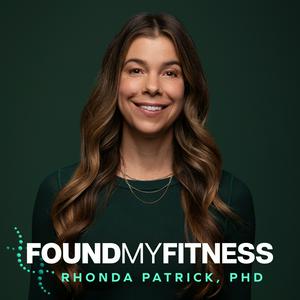
A podcast about health, science, nutrition, aging, and fitness.
Site de podcastOuça FoundMyFitness, Nutrição, Exercício e Saúde e muitos outros podcasts de todo o mundo com o aplicativo o radio.net
Obtenha o aplicativo gratuito radio.net
- Guardar rádios e podcasts favoritos
- Transmissão via Wi-Fi ou Bluetooth
- Carplay & Android Audo compatìvel
- E ainda mais funções
Obtenha o aplicativo gratuito radio.net
- Guardar rádios e podcasts favoritos
- Transmissão via Wi-Fi ou Bluetooth
- Carplay & Android Audo compatìvel
- E ainda mais funções

FoundMyFitness
Leia o código,
baixe o aplicativo,
ouça.
baixe o aplicativo,
ouça.
FoundMyFitness: Podcast do grupo
 Brasil