

Ouça este podcast gratuitamente no aplicativo: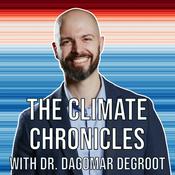 Baixe gratuitamente na App Store
radio.net
Sleeptimer
Guardar rádio
16 episódios
Episode 16: Megadrought in Mesopotamia
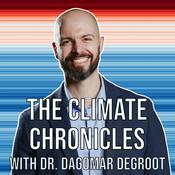
07/04/2026 | 1h 5minCreated, narrated, and produced by Professor Dagomar Degroot of Georgetown University, The Climate Chronicles reveals how climate change shaped humanity’s past, and explores what history can tell us about the future of global warming. With clear, dramatic storytelling, each episode brings history to life with exciting storytelling and cutting-edge science.
In the fifth and final episode of our third season, Into the Holocene, Professor Degroot explores the most frightening concept in climate science and archaeology: collapse. First, he explains how the Bronze Age transformed the agricultural communities of the Levant, and contributed to the advent of new systems of domination that culminated in the world's first empire. He traces how new ways of growing and moving food made this empire both more vulnerable and more resilient in the face of climate change than the communities that had prevailed for the previous 300,000 years of human history. Then, he surveys the evidence for a remarkable, decades- or even centuries-long drought that swept across the tropics around 4,200 years ago. Did this 4.2ka BP event bring about the collapse of history's first empire? If so, what does that tell us about our future? And how important was agriculture, anyway, in reshaping our species - not to mention the world? This episode explores all of these questions, and more.
Season three of The Climate Chronicles takes listeners on an immersive journey through the remarkable changes in climate and human culture that shaped the early history of the Holocene, the geological epoch in which humans became the dominant species on our planet. It zooms in on small communities and follows continental trends across thousands of years, all while unpacking the creative detective work that distinguishes the sciences of the past.
For an episode trailer and a transcript complete with citations, as well as maps, graphs, infographics, and other images, visit TheClimateChronicles.com.Episode 15: The Drying of the Sahara
22/03/2026 | 42minCreated, narrated, and produced by Professor Dagomar Degroot of Georgetown University, The Climate Chronicles reveals how climate change shaped humanity’s past, and explores what history can tell us about the future of global warming. With clear, dramatic storytelling, each episode brings history to life with exciting storytelling and cutting-edge science.
In the fourth episode of our third season, Into the Holocene, Professor Degroot tells the mind-bending story of the most spectacular environmental change of our geological epoch: the drying of the Sahara Desert. Although it seems timeless, as old as anything on Earth, the Sahara is actually a recent creation. At the start of the Holocene, most of it was a savannah, watered by rivers that have long since evaporated. People fished alongside hippos and crocodiles in lakes scattered across what are now some of the driest environments on Earth. How did people live in the "Green Sahara?" What did they do when the Sahara dried out? And is it possible that one of the world's first great civilizations - ancient Egypt - emerged as climate refugees fled the encroaching sand? This episode answers all these questions, and more.
Season three of The Climate Chronicles takes listeners on an immersive journey through the remarkable changes in climate and human culture that shaped the early history of the Holocene, the geological epoch in which humans became the dominant species on our planet. It zooms in on small communities and follows continental trends across thousands of years, all while unpacking the creative detective work that distinguishes the sciences of the past.
For an episode trailer and a transcript complete with citations, as well as maps, graphs, infographics, and other images, visit TheClimateChronicles.com.Episode 14: The Hottest Holocene
17/03/2026 | 52minCreated, narrated, and produced by Professor Dagomar Degroot of Georgetown University, The Climate Chronicles reveals how climate change shaped humanity’s past, and explores what history can tell us about the future of global warming. With clear, dramatic storytelling, each episode brings history to life through vivid storytelling and cutting-edge science.
In the third episode of our third season, Into the Holocene, Professor Degroot asks a simple question: when was the last time that the Earth was as hot as it is today? It may be a simple question, but it has a complicated answer - one that touches on everything from schemes for nuclear missile silos in the Greenland Ice Sheet at the height of the Cold War, to ancient computers in long-forgotten shipwrecks. Some evidence suggests that, in the early or mid Holocene, Earth was just as hot as it is right now, but other evidence tells the opposite story. The answer to this "conundrum" may be just within reach . . . and there are few more important riddles to solve in climate science.
Season three of The Climate Chronicles takes listeners on an immersive journey through the remarkable changes in climate and human culture that shaped the early history of the Holocene, the geological epoch in which humans became the dominant species on our planet. It zooms in on small communities and follows continental trends across thousands of years, all while unpacking the creative detective work that distinguishes the sciences of the past.
For an episode trailer and a transcript complete with citations, as well as maps, graphs, infographics, and other images, visit TheClimateChronicles.com.Episode 13: The Bones at Star Carr
02/03/2026 | 36minCreated, narrated, and produced by Professor Dagomar Degroot of Georgetown University, The Climate Chronicles reveals how climate change shaped humanity’s past, and explores what history can tell us about the future of global warming. With clear, dramatic storytelling, each episode brings history to life through vivid storytelling and cutting-edge science.
In the second episode of our third season, Into the Holocene, Professor Degroot focuses on the archaeological site of Star Carr, where - just over 11,000 years ago - a group of families settled beside a small lake in what is now northern England. He takes listeners through the history of the archaeological and scientific research that has gradually revealed the extraordinary resilience of that little community in the face of the abrupt climate changes of the early Holocene. He reflects on what it might have been like to live in that community, then considers whether the resilience of people so unlike us, who lived so many years ago, can be cause for hope in a rapidly warming world.
Season three of The Climate Chronicles takes listeners on an immersive journey through the remarkable changes in climate and human culture that shaped the early history of the Holocene, the geological epoch in which humans became the dominant species on our planet. It zooms in on small communities and follows continental trends across thousands of years, all while unpacking the creative detective work that distinguishes the sciences of the past.
For an episode trailer and a transcript complete with citations, as well as maps, graphs, infographics, and other images, visit TheClimateChronicles.com.Episode 12: The Natufian Wager
21/02/2026 | 49minCreated, narrated, and produced by Professor Dagomar Degroot of Georgetown University, The Climate Chronicles reveals how climate change has shaped humanity’s past, and explores what history can tell us about the future of global warming. With clear, dramatic storytelling, each episode brings history to life through vivid storytelling and cutting-edge science.
In the season premiere of our third season, Into the Holocene, Professor Degroot investigates one of the greatest turning points in human history: the dawn of agriculture. Touching on everything from farming ants to dying Martians, he explores why our species waited nearly 300,000 years to cultivate crops and domesticate animals. He traces the story of the Natufians of the Levant, who stood on the brink of agriculture just as the Younger Dryas abruptly cooled and dried their world.
Evaluating new evidence from pollen cores, speleothems, and archaeological sites, Degroot asks whether climate stress forced the first farmers into existence — or whether the stable warmth of the Holocene finally allowed their long experiment with cultivation to succeed. And he reflects on how the “Natufian wager” set our species on a path that would transform not just what it meant to be human, but also the destiny of a planet.
Season three of The Climate Chronicles takes listeners on an immersive journey through the extraordinary changes in climate and human culture that shaped the early history of the Holocene, the geological epoch in which humans became the dominant species on our planet. It zooms in on small communities and follows continental trends across thousands of years, all while unpacking the creative detective work that distinguishes the sciences of the past.
For an episode trailer and a transcript complete with citations, as well as maps, graphs, infographics, and other images, visit TheClimateChronicles.com.
Mais podcasts de Ciência
 NaruhodoCiência, Ciências Sociais, Ciências da Vida, Enriquecimento individual, Ensino
 Especulando: Ginecologia e ObstetríciaCiência
 Ciência SujaCiência, Crimes verdadeiros, Documentário, Sociedade e cultura
 Alô, Ciência?Ciência, Ciências Naturais, Ciências Sociais, Ensino
 Ciência Sem FimCiência
 Geografia em Meia HoraCiência, Ciências da Terra
 Geopolítica com o Paulo FilhoCiência, Ciências Sociais
 Os três elementosCiência
 Ologies with Alie WardCiência, Comédia, Sociedade e cultura
 InfectoCastCiência, Ciências da Vida
Podcasts em tendência em Ciência
 EmonthebrainCiência
 The Michael Shermer ShowCiência, Ciências Naturais
 Notícias do MundoCiência, Ciências Sociais
 Revolta ClimáticaCiência, Ciências da Terra
 Das Wissen | SWRCiência
- Geopolítica com o Paulo FilhoCiência, Ciências Sociais
 Babbage from The EconomistCiência, Notícias, Novidades tecnológicas, Tecnologia
 Short WaveCiência, Ciências da Vida, Notícias, Notícias diárias
 Making Sense with Sam HarrisCiência, Filosofia, Notícias, Política, Religião, Religião e espiritualidades, Sociedade e cultura
 FisicastCiência
 Diálogos com a InteligênciaCiência, Ciências Sociais
 A hombros de gigantesCiência
 Heal NPDCiência, Ciências Sociais, Ensino
 Why This Universe?Astronomia, Ciência, Física
 UAP Unidentified Alien PodcastCiência, Crimes verdadeiros, Sociedade e cultura, Tecnologia
- Geografia em Meia HoraCiência, Ciências da Terra
 Sean Carroll's Mindscape: Science, Society, Philosophy, Culture, Arts, and IdeasCiência, Filosofia, Física, Sociedade e cultura
 Coffee Break: Señal y RuidoAstronomia, Ciência
 Oxigênio PodcastCiência, Ciências Naturais, Filosofia, Notícias, Novidades tecnológicas, Sociedade e cultura
 Salvo-conduto PodcastCiência, Ciências Sociais
 All In The MindCiência, Ciências da Vida, Saúde e fitness, Saúde mental
 Terapia no dia a diaCiência
 Nature PodcastCiência, Notícias, Tecnologia
Sobre The Climate Chronicles
Today’s global warming has no precedent in Earth’s history. Yet long before we started overheating the planet, natural climate changes shaped our past. In the Climate Chronicles, Dagomar Degroot, one of the world’s leading historians of climate change, explains how climate change influenced humanity’s history, from the evolution of our species to the onset of today’s climate crisis.
Find out more at TheClimateChronicles.com.
Site de podcastOuça The Climate Chronicles, Naruhodo e muitos outros podcasts de todo o mundo com o aplicativo o radio.net
Obtenha o aplicativo gratuito radio.net
- Guardar rádios e podcasts favoritos
- Transmissão via Wi-Fi ou Bluetooth
- Carplay & Android Audo compatìvel
- E ainda mais funções
Obtenha o aplicativo gratuito radio.net
- Guardar rádios e podcasts favoritos
- Transmissão via Wi-Fi ou Bluetooth
- Carplay & Android Audo compatìvel
- E ainda mais funções

The Climate Chronicles
Leia o código,
baixe o aplicativo,
ouça.
baixe o aplicativo,
ouça.
The Climate Chronicles: Podcast do grupo
 Brasil