

Ouça este podcast gratuitamente no aplicativo: Baixe gratuitamente na App Store
radio.net
Sleeptimer
Guardar rádio
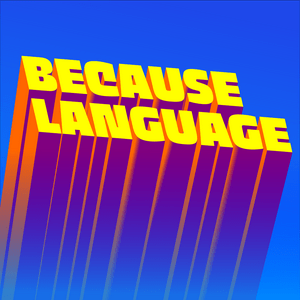
Because Language - a podcast about linguistics, the science of language.
Daniel Midgley, Ben Ainslie, and Hedvig Skirgård
Último episódio
128 episódios
147: The Language Beat (with Michael Erard)
23/09/2026 | 58minMichael Erard has been covering language in major publications for a good long while. What has he learned, and what can linguistic communication take from his work? Michael sits down for a chat with Daniel and Hedvig to talk about his new book The Language Beat: Essays and Reporting on Language and Life.
Timestamps
00:00 Start
01:21 Getting the book together: Save your contracts!
04:22 Getting into lingcomm
06:38 Popular things v things you're interested in
10:48 Getting the Spidey sense
19:30 Public reactions and book tour insights
23:22 Lingcomm involves a little bit of pastoral care
26:55 How has the lingcomm landscape changed?
34:05 Persistent misunderstandings
39:48 Are we seeing a lingcomm explosion?
47:37 Are we doing any good?
57:07 Thanks and closing146: Beyond Words (with Karen Stollznow)
17/09/2026 | 2h 1minHow do children learn language, and why can't other animals? Why are false friends between languages always naughty? And how is public perception of language changing? Dr Karen Stollznow is taking us through a tour of psycholinguistics, taboo language, and linguistic skepticism with her new book Beyond Words: How We Learn, Use, and Lose Language. We're also taking a look at Bitch: The Journey of a Word.
Timestamps
00:00 Start
00:32 Intros: Do you use Y'ALL?
06:46 New patron shoutout
08:07 News: Strathfield Council trying to control shop signage
17:37 News: Claude introduces watermarking
25:43 News: Welsh joins the Star Wars club
29:30 Related or Not: Theme from Hugh
30:25 Related or Not 1: cute and acute
34:48 Related or Not 2: skip
42:22 Related or Not 3: tribe, tribute, & tributary
46:51 Karen Stollznow on psycholinguistics
50:36 Language and animal communication
53:37 Skepticism in linguistics
59:48 Getting a book done
01:02:09 The attraction of taboo words
01:08:18 Daddy diaries and child language acquisition
01:15:00 False friends
01:19:09 Best way to learn a language?
01:22:05 Public awareness of linguistics
01:26:58 Word of the Week: forever war
01:29:56 Word of the Week: aegyo
01:31:20 Word of the Week: meat proxy
01:33:46 Word of the Week: Cyberno de Bergerac
01:37:31 Comment: vague v ambiguous
01:39:24 Comment: Okay if languages die?
01:41:59 Comment: Sudoku pronunciation in Japanese
01:43:20 The Reads
01:56:02 Outtake: Hedvig watches an eclipse
02:00:18 Outtake: Glottle145: Face With Tears of Joy (live with Keith Houston and friends)
03/09/2026 | 1h 33minEmoji, once regarded as some kind of frivolous nonsense, have become an important way we communicate online. But how did these little pictures come to our devices? What is the Unicode Consortium, and how did they get involved? And who is the Levitating Suit Guy? Fear not; author Keith Houston is here to give us the whole story in front of a live audience. Keith is the author of Face With Tears of Joy: A Natural History of Emoji.
Timestamps
00:00 Start
02:21 Introducing Keith Houston, author of Face With Tears of Joy
03:28 Put your top five emoji in chat
08:03 What's the state of emoji now?
10:11 How did the Unicode Consortium get involved?
22:30 The strange history of Levitating Suit Guy
27:37 The latest emoji in v17.0
30:12 Changes to some emoji
38:22 What gives an emoji staying power?
47:12 Related or Not: Theme by David
48:10 Related or Not 1: orchard and hoard
52:46 Related or Not 2: belle, bell, ball, & ball
59:01 Related or Not 3: Italian aceto (vinegar) & Spanish aceite (oil)
01:03:45 Why don't they use emoji on Reddit?
01:05:26 Are emoji now more acceptable in serious contexts?
01:08:34 Do speakers of some languages use emoji more?
01:13:00 Any languages where they just don't use emoji?
01:13:59 Does everyone call them "emoji"?
01:16:13 Sociolinguistic trends in emoji?
01:22:12 The reads: Which emoji is closest to your name?
01:33:06 Afterparty144: Sociophonetics Deep Dive (with Jennifer Nycz, Lauren Hall-Lew, and Kelly Wright)
22/08/2026 | 1h 8minWhy don't we all sound the same? Are some accents easier to learn? And are there reasons for the differences in how people sound and sign, or is it just random?
We use sound and sign to encode information about our age, place, gender, sexuality, and so much more. Sometimes we're not even aware of how we do it. But we're fixing that on this episode with Jennifer Nycz and Lauren Hall-Lew, editors of Sociophonetics: Implications for Phonological and Phonetic Theory.
Timestamps
00:00 Start: Introducing Jennifer Nycz and Lauren-Hall Lew
01:57 What is sociophonetics?
03:01 What's in our own sociophonetic background?
10:10 Why is it always vowels, vowels, vowels?
13:03 Why don't we all just sound the same?
15:09 You can hallucinate accents by seeing a photo
16:00 Sound encodes gender and sexuality
20:57 Chronolects, Boomerlects, and GenX-lects
22:04 Tweens to teens: What to expect sociophonetically?
27:33 Are there reasons for sound variation and change?
34:16 Why does a community change faster than an individual?
38:37 Does media have an influence on accent?
42:17 How much are we consciously aware of?
44:52 Are some accents easier?
48:39 What are the sociophonetic hot spots?
50:54 Are American women more nasal?
52:09 Persistent misconceptions
54:49 Fight linguistic discrimination, or teach marginalised people to "pass"?
01:03:03 The sociophonetics of signed languages143: How to Kill a Language (with Sophia Smith Galer)
11/08/2026 | 2h 16minHow does it feel to be isolated from a language and a culture that could have been yours? There are many paths to language loss, but there are also many ways back. Language revitalisation is now happening for communities and individuals. We're talking about it with journalist and lingToker Sophia Smith Galer, author of How to Kill a Language: Power, Resistance, and the Race to Save Our Words.
Timestamps
00:00 Start
00:34 Intros: How are you "going"?
05:54 News: A font that can poison data for GenAI
13:51 News: A lost Golden Age of language in the Holocene
27:33 News: New language support for Netflix, Disney+
33:59 Related or Not: Theme from Gordon
34:37 Related or Not: ramshackle
41:39 Related or Not: nap
48:57 Related or Not: adder, deer, natter, otter, hydra
54:12 Chat with Sophia Smith Galer: Her language background
01:00:31 The pain of separation from one's own language
01:05:01 Attacks on multicuturalism
01:07:34 Is all language death language murder?
01:09:41 The role of parents in language transmission
01:16:52 Factors influencing language survival
01:26:50 Will GenAI help or harm minority languages?
01:35:33 Challenging monoglossic language ideology
01:40:36 Sophia encourages linguistic curiosity
01:43:11 Responding to a review: Is it okay if languages die?
01:53:21 Word of the Week: slop zombie
01:55:29 Word of the Week: eternity leave
01:56:24 Word of the Week: spherical bastard
01:58:10 Word of the Week: the butter's penthouse
02:01:47 Word of the Week: Jimothy
02:04:42 Comments: Ingressive speech
02:08:33 The Reads
02:15:40 Outtakes: Hedvig's plant
Mais podcasts de Aprendizagem de idiomas
 Learning English ConversationsAprendizagem de idiomas, Ensino
 Thinking in EnglishAprendizagem de idiomas, Ensino
 Listening Time: English PracticeAprendizagem de idiomas, Ensino
 Inglês Todos os DiasAprendizagem de idiomas, Ensino
 6 Minute EnglishAprendizagem de idiomas, Ensino
 Learn English with Coffee Break EnglishAprendizagem de idiomas, Cursos, Ensino
 Hoy Hablamos: Podcast diario para aprender español - Learn Spanish Daily PodcastAprendizagem de idiomas, Cursos, Ensino
 All Ears English PodcastAprendizagem de idiomas, Ensino, Negócios
 Coffee Break ItalianAprendizagem de idiomas, Cursos, Ensino
 Learning Easy EnglishAprendizagem de idiomas, Ensino
Podcasts em tendência em Aprendizagem de idiomas
 Corso di italiano A1 - A2Aprendizagem de idiomas, Ensino
- Inglês Básico Todos os DiasAprendizagem de idiomas, Ensino
 Francês básico com Bruna LewisAprendizagem de idiomas, Ensino
 IELTS Energy English 7+Aprendizagem de idiomas, Ensino
 Simple English News DailyAprendizagem de idiomas, Ensino, Notícias, Notícias diárias
 Japanese podcast for beginners (Nihongo con Teppei)Aprendizagem de idiomas, Ensino
 To Fluency Podcast: English with JackAprendizagem de idiomas, Ensino, Guias
 ChinesePod - BeginnerAprendizagem de idiomas, Ensino
 Fluency TV FrancêsAprendizagem de idiomas, Ensino
 Miss Honey: Slow English PodcastAprendizagem de idiomas, Ensino
 Speak English Now Podcast: Learn English | Speak English without grammar.Aprendizagem de idiomas, Ensino
 Charlas Hispanas: Aprende Español | Learn SpanishAprendizagem de idiomas, Cursos, Ensino, Guias
 Little Talk in Slow FrenchAprendizagem de idiomas, Cursos, Ensino
- Learn English with Coffee Break EnglishAprendizagem de idiomas, Cursos, Ensino
 Podcast Italiano Principiante | Learn Italian (Beginners)Aprendizagem de idiomas, Ensino
 Culips Everyday English PodcastAprendizagem de idiomas, Cursos, Enriquecimento individual, Ensino
 Português SuaveAprendizagem de idiomas, Ensino
 The Level Up English Podcast (Natural British English)Aprendizagem de idiomas, Enriquecimento individual, Ensino
 Podcast Italiano | Learn Italian (Intermediate & Advanced)Aprendizagem de idiomas, Ensino, Sociedade e cultura
- Business English Pod :: Learn Business EnglishAprendizagem de idiomas, Cursos, Ensino
 Il podcast di Italiano AvanzatoAprendizagem de idiomas, Comentários de notícias, Ensino, Notícias, Sociedade e cultura
 American Stories - VOA Learning EnglishAprendizagem de idiomas, Ensino
 Learning English For WorkAprendizagem de idiomas, Ensino
 Slow GermanAprendizagem de idiomas, Ensino, Lugares e viagens, Sociedade e cultura
Sobre Because Language - a podcast about linguistics, the science of language.
A podcast about linguistics, the science of language.
Site de podcastOuça Because Language - a podcast about linguistics, the science of language., Learning English Conversations e muitos outros podcasts de todo o mundo com o aplicativo o radio.net
Obtenha o aplicativo gratuito radio.net
- Guardar rádios e podcasts favoritos
- Transmissão via Wi-Fi ou Bluetooth
- Carplay & Android Audo compatìvel
- E ainda mais funções
Obtenha o aplicativo gratuito radio.net
- Guardar rádios e podcasts favoritos
- Transmissão via Wi-Fi ou Bluetooth
- Carplay & Android Audo compatìvel
- E ainda mais funções

Because Language - a podcast about linguistics, the science of language.
Leia o código,
baixe o aplicativo,
ouça.
baixe o aplicativo,
ouça.
 Brasil