

Ouça este podcast gratuitamente no aplicativo: Baixe gratuitamente na App Store
radio.net
Sleeptimer
Guardar rádio
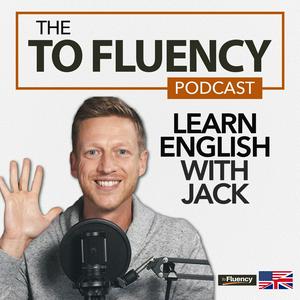
To Fluency Podcast: English with Jack
Jack from To Fluency
Último episódio
78 episódios

Speak English Confidently: Small Talk Secrets You Need to Know (Key Phrases)
31/05/2026 | 21minLearn everyday English through the topic of small talk.
In this episode, we talk about how to open a conversation, how to keep small talk going with the "tennis match" rhythm, the safe topics English speakers use again and again, how to wrap up politely, and the cultural notes that save you from awkward moments.
You'll get natural listening practice plus lots of useful phrases that you can use to start, continue, and end conversations in English.
We keep things conversational and practical so you can build real-world fluency while learning the small phrases that make a big difference.
In this episode, you'll learn how to:
Open a casual conversation with natural English greetings
Keep a conversation going using the "tennis match" rhythm
Talk about the weather the way native speakers do
Ask about the weekend in several different ways
Discuss work and local things naturally
End a conversation politely without sounding rude
Handle "How are you?" the way native speakers actually do
Use British-style "friendly complaining" to bond with people
Useful phrases from the episode:
Opening small talk
How's it going?
Yeah, not bad. You?
Pretty good. How about you?
How's your week been?
Got anything fun planned?
Long time no see.
It's been ages.
Keeping the conversation going — the tennis match
How about you?
What about you?
Oh, really? How's that going?
Oh, wow. What's that like?
That sounds amazing.
That sounds lovely.
That's nice.
Talking about the weather
Bit chilly today, isn't it?
It's a bit warm.
It's a bit windy.
It's a bit grey at the moment.
Yeah, things are good, although it's been really rainy.
Talking about the weekend
What are you going to do this weekend?
What are you doing this weekend?
What are you getting up to this weekend?
What did you get up to this weekend?
Did you have a good weekend?
Work and local things
How's work going?
Yeah, it's good. I'm really busy, but it's fun at the moment.
Yeah, it's good. I'm busy. It's going okay.
Have you been to that new cafe just around the corner?
Have you heard they're opening up a new cafe around the corner?
Wrapping up the conversation
Anyway, I'd better let you go.
I'd better let you go.
It was lovely catching up.
I've gotta get going.
We should grab a coffee sometime.
We should grab a beer sometime.
Cultural notes — friendly complaining and "How are you?"
Yeah, not bad. You?
Yeah, pretty good. You?
This weather is awful, isn't it?
Ah, it's getting so dark so early.
Anyway, did you see the game last night?
Reflect and practice
The next time someone says "How are you?" or "How was your weekend?" — what will you say? Use the phrases from this episode to start, keep going, and wrap up a small talk conversation in English.
Chapters:
(00:00) Small Talk in English — why people freeze(03:22) The big idea — it's a tennis match(05:02) Opening phrases — How's it going?(07:50) "How about you?" — keeping it going(09:58) Safe topics — weather, weekend, work, local(14:57) Wrapping up gracefully(17:22) Cultural notes(20:26) A full small talk conversationLearn English Naturally: Talking about Cooking - Can You Understand? (Video Podcast with Subtitles)
25/11/2025 | 23minLearn everyday English through the topic of cooking and food.
Get bonus English lessons here: https://creators.spotify.com/pod/profile/jda-industries-inc/subscribe
In this episode, we talk about breakfast routines, snacks, quick meals, go-to dinners, grocery shopping, and even washing up. You’ll get natural listening practice plus lots of useful phrases that you can use to describe your own daily life in English.
We keep things conversational and practical so you can build real-world fluency while enjoying a relaxed chat about food.
In this episode, you’ll learn how to:
Talk about your typical breakfast and morning routine
Describe snacks, cravings, and “guilty pleasures”
Explain quick meals and leftovers in natural English
Use phrases for ordering takeout and frozen meals
Describe your go-to meals and cooking style
Use common expressions for grocery shopping
Talk about washing up and taking turns with chores
Express food preferences, likes, and dislikes
Useful phrases from the episode:
Breakfast and habits
I tend to have breakfast around nine or ten.
I usually start the day with a cup of coffee.
I used to eat a lot of cereal as a kid.
I used to live in Spain.
I’ve grown to love this.
I’ve gotten used to being hungry.
I don’t mind being hungry.
Snacks and cravings
I’m not big on snacks.
I just need a little something before lunch.
I need a little snack to get me through until dinner.
Let’s grab a few snacks before we go.
I fancy something to eat.
I fancy something sweet.
Chips are my guilty pleasure.
Chocolate is my guilty pleasure.
I’m trying to cut back on chocolate.
I’m trying to cut back on snacks.
Quick meals, leftovers, and takeout
I’m just going to throw something together.
Let’s just have pizza.
Let’s finish that leftover pasta.
We have some leftovers in the fridge.
I love leftovers.
Can I get a box for this?
In American English, we say “takeout.”
Frozen pizza is really popular here.
It’s convenient and fast.
Go-to meals and cooking style
What’s your go-to meal?
My go-to meal is beef stew.
My go-to meal is beef pasta.
I like to cook from scratch.
I don’t really like ready meals.
Instant meals are very popular in the U.S.
We try to rotate meals each week.
Grocery shopping
Do we have any garlic?
Do we have any pasta left?
Do we have any herbs for this dish?
I’m just going to nip to the store.
Let’s stock up before the weekend.
I’m not a big fan of grocery shopping.
I forgot the one ingredient I needed.
Cooking and washing up
I like to clean as I cook.
I like having music or a podcast on while I cook.
I don’t mind washing up.
We take turns doing the washing up.
It’s my turn to wash up tonight.
Whose turn is it to wash up tonight?
The sink is full again.
The dishwasher hasn’t been unloaded.
This pan needs soaking.
I like to get in the zone when I’m cooking.
Talking about likes and dislikes
I fancy a quick drink before dinner.
I fancy going out to eat.
I’m craving steak tonight.
It’s not my cup of tea.
I’m not a big fan of full English breakfasts.
I’m not keen on full English breakfasts.
Reflect and practice
If you could only eat one meal for the rest of your life, what would you choose? Use the phrases from this episode to describe your own breakfast, snacks, and dinner routines in English.
Chapters:
(00:00) Learn English Podcast Intro
(00:48) Breakfast
(04:11) Snacks and Snacking Habits
(08:26) Quick and Easy Meals
(09:16) Leftovers and Takeout Culture
(11:44) Cooking from Scratch vs. Instant Meals
(15:15) Grocery Shopping Tips
(20:30) Cleaning Up and Final ThoughtsLearn These Powerful English Sentences to Instantly Improve Your English (Adj + Prepositions)
18/11/2025 | 12minIn this lesson, you’ll learn natural adjective + preposition combinations such as afraid of, interested in, angry about, excited about, addicted to, and more. These structures are essential for fluent and natural English, but most learners struggle with them because you simply have to learn them through examples and patterns, not rules.
Below, you’ll find all the key phrases and example sentences from the lesson so you can review them, repeat them, and add them to your sentence-learning routine.
Want to be able to think in English freely? Listen to this next: https://open.spotify.com/episode/2ghgRn40AS2BeHJNN5BJvS?si=JtONR5i3ROqij-eNyTaG2g
Learn 30 phrases about emotions: https://open.spotify.com/episode/27ASOVrQexjGZfPeI1huJr?si=flGLmYsTRrqeAosaBMU3pQ
Phrases and examples from the lesson:
Afraid of
• I’m afraid of the dark.• I’m afraid of going outside when it’s dark.
Interested in
• I’m really interested in photography at the moment.• I’m not really interested in watching any more of that show.• He didn’t seem very interested in what we proposed.
Angry about
• I’m angry about what you did.• He’s angry about not being able to see his friends.
Ashamed of
• I’m ashamed of what I did.• I’m ashamed of what the company is doing at the moment.
Aware of
• Not that I’m aware of.• Be aware of your surroundings when you go downtown at night.
Good at / bad at / fantastic at / terrible at / amazing at
• Try and get good at speaking to strangers to help you improve your English.• I’m bad at keeping in touch with people at the moment.• He’s really good at listening to people when they speak.• She’s amazing at explaining things in a simple way.
Certain about
• I’ve never been so certain about something in my entire life.• Are you certain about that?• I’m not completely certain about it, but let’s just do it anyway.
Content with
• I’m not content with the state of our house at the moment.• I’m content with staying in tonight.
Busy with
• I’m so busy with work right now.• They seem really busy with their new restaurant at the moment.
Smart of / stupid of
• That’s not very smart of you.• It was stupid of him to say that.• How stupid of you. What were you thinking?
Addicted to
• I think I’m addicted to coffee.• Kids are addicted to screens these days.
Excited about
• She’s so excited about going to the party later.• He doesn’t seem that excited about it.• I was really excited about going to the pool.
Sad about / happy about
• We’re so sad about what happened.• Are you happy about your new job?
Disappointed with / pleased with
• I’m really disappointed with how you are acting at the moment.• I’m so pleased with you.• Are you pleased with your progress this year?
Overwhelmed with / overwhelmed by
• I’m overwhelmed with all the work I have to do right now.• I was overwhelmed by all the cleaning I had to do.
Use the phrases in the description to review, repeat, and build your own personalized sentence list.
If you enjoyed this lesson, watch the next video on your screen and keep practicing English in a natural, sentence-based way.30 English Conversational Phrases You MUST Know About Emotions
04/11/2025 | 20minIn this English lesson, you’ll learn 30 natural phrases to express your emotions — happiness, sadness, anger, fear, surprise, and relief. These are expressions native speakers use every day in both the UK and the USA. By the end, you’ll know how to describe exactly how you feel — in real conversations.
How to learn English on your own: https://www.youtube.com/watch?...
Resources for you: https://tofluency.com/5sp-book...
💬 Phrases from the Lesson
😊 Happiness & Excitement
• That’s awesome – “This restaurant is awesome.”
• That’s brilliant – “That’s brilliant news.”
• That made my day – “That news really made my day.”
• I can’t stop smiling – “I couldn’t stop smiling after hearing the news.”
• I’m over the moon – “I’m over the moon about my new job.”
😲 Surprise & Shock
• No way – “No way! I can’t believe that.”
• You’re kidding – “You’re kidding! Really?”
• I wasn’t expecting that – “I wasn’t expecting to pass the test.”
• It took me by surprise – “The ending of that movie took me by surprise.”
• I was blown away – “I was blown away by that restaurant.”
😔 Sadness & Disappointment
• That’s such a shame – “It’s such a shame they can’t make the party.”
That’s too bad – “That’s too bad you can’t make it.”
• I’m feeling a bit down – “I’m feeling a bit down today.”
• It broke my heart – “It broke my heart to see him leave.”
• I was a bit disappointed with… – “I was a bit disappointed with the food.”
• I’m disappointed in you – “I’m disappointed in you recently.”
• I’m gutted – “I’m gutted we lost today.”
😤 Frustration & Anger • I’ve had enough – “I’ve had enough of this noise.”
• It really annoys me when… – “It really annoys me when people are late.”
• I’m fed up of… – “I’m fed up of waiting.”
• I’m sick of… – “I’m sick of waiting all this time.”
• He completely lost it – “He completely lost it when he found out.”
• I can’t deal with this right now – “I can’t deal with this right now.”
• I just can’t – “I just can’t.”
😰 Fear & Nervousness
• I’m a bit nervous about it – “I’m a bit nervous about the presentation.”
• My heart was racing – “My heart was racing before the speech.”
• She got cold feet – “She got cold feet before the wedding.”
😳 Embarrassment & Awkwardness
• That was so awkward – “He forgot her name—it was so awkward.”
• It was so embarrassing – “It was so embarrassing when I spilled my drink.”
• I wanted the ground to swallow me up – “I wanted the ground to swallow me up after that mistake.”
😌 Relief & Acceptance
• What a relief – “I passed the exam—what a relief.”
• That’s a weight off my shoulders – “I finally did my taxes—that’s a weight off my shoulders.”
• I’m not sure how I feel about it – “I’m not sure how I feel about moving abroad.”
• It is what it is – “We lost—it is what it is.”
Chapters:
00:00 Introduction to Emotions in English 00:59 Expressing Happiness and Excitement 04:27 Phrases for Surprise and Shock 07:16 Talking About Sadness and Disappointment 10:42 Dealing with Frustration and Anger 14:10 Expressing Fear and Nervousness 15:54 Handling Embarrassment and Awkwardness 18:09 Relief and Mixed FeelingsHow to Think in English and Speak Automatically (Simple Daily Method)
29/10/2025 | 17min🎧 How to Think in English Naturally (Step-by-Step Method)
In this episode, you’re going to learn how to think in English naturally — without translating from your native language and without worrying about grammar rules. You’ll learn the exact method I use to think in other languages too. When you reach this stage, English starts to flow. Sentences come out automatically, your speech becomes smoother, and conversations feel effortless. Most learners never reach this point — but you can if you follow this simple process.
💡 What You’ll Learn in This Episode
✅ What it really means to think in English
✅ Why grammar and vocabulary must be internalized — not memorized
✅ The method I use to make English automatic
✅ How to build this into your daily routine
📺 Watch the technical tutorial on YouTube: https://www.youtube.com/watch?v=pysIoC1bb3I
The Method (Step-by-Step)
1: Create or Find Sentences
Start with sentences that are personal to you — things you actually want to say in English. These should reflect your life, your hobbies, your work, and topics you care about.
Use tools like ChatGPT or work with a teacher to create natural, real-world examples.
:. Add Audio
Listen to how these sentences sound naturally. You can use AI text-to-speech or native recordings. Hearing real pronunciation, rhythm, and intonation is essential for internalizing how English feels.
3: Use Spaced Repetition
Import your sentences (with audio) into an app like Anki or Memrise.
Listen, read, and repeat each sentence aloud — matching the sound as closely as possible.
The system will show you sentences right before you forget them, which is the most efficient way to review.
4: Make It a Daily Habit
Do this every day — even if only for five minutes.
On days when you’re busy or tired, just review a few sentences. The goal is consistency.
Over time, English grammar and phrases will become automatic — you’ll start thinking in English instead of translating.
5: Keep Adding Sentences
As your life changes, add new sentences that match your experiences, goals, and topics you want to talk about.
Each new sentence strengthens your fluency and builds flexibility when speaking.
🧩 Why This Works Because you’re not just learning words — you’re training your brain to recognize and reproduce patterns.
You’re absorbing English through repetition, sound, and context — the same way native speakers learn.
If you found this lesson helpful, share it with a friend who’s learning English — and remember: English fluency comes from consistent, focused practice.
Mais podcasts de Aprendizagem de idiomas







Podcasts em tendência em Aprendizagem de idiomas




















Sobre To Fluency Podcast: English with Jack
Looking for effective English lessons? Join Jack from To Fluency as he gives you English learning advice and detailed lessons to help you improve. Learn key vocabulary, the most powerful ways to learn English, and get the best listening practice so you can start understanding native speakers. If you're looking for an English podcast that will take you to an advanced level, this is for you.
Site de podcastOuça To Fluency Podcast: English with Jack, Learning English Conversations e muitos outros podcasts de todo o mundo com o aplicativo o radio.net
Obtenha o aplicativo gratuito radio.net
- Guardar rádios e podcasts favoritos
- Transmissão via Wi-Fi ou Bluetooth
- Carplay & Android Audo compatìvel
- E ainda mais funções
Obtenha o aplicativo gratuito radio.net
- Guardar rádios e podcasts favoritos
- Transmissão via Wi-Fi ou Bluetooth
- Carplay & Android Audo compatìvel
- E ainda mais funções

To Fluency Podcast: English with Jack
Leia o código,
baixe o aplicativo,
ouça.
baixe o aplicativo,
ouça.
 Brasil