

Ouça este podcast gratuitamente no aplicativo: Baixe gratuitamente na App Store
radio.net
Sleeptimer
Guardar rádio
92 episódios
Episode 43: Haiti — State Against Nation, Part 1
09/10/2026 | 1h 18minMamyrah Dougé-Prosper joins us to discuss the history of foreign intervention in Haiti, the political and economic origins of the country’s so-called gangs, and the centuries-long struggle between the Haitian state and popular sovereignty.
Mamyrah Dougé-Prosper is an Assistant Professor of Global and International Studies at the University of California, Irvine. She is also the director of the Center for Racial Justice at UCI. Dougé-Prosper’s work generally focuses on Black social movements. More specifically, her research centers around protest movements in 21st century Haiti. Dougé-Prosper has published in political magazines such as Black Agenda Report, LeftEast, Phenomenal World, Jacobin and NACLA as well as academic journals such as Women’s Studies Quarterly, International Studies Review, Kalfou, Small Axe, PoLAR and the Journal of Haitian Studies. She is completing her first manuscript titled Nation Against State: Development Contested in Occupied Haiti. Dougé-Prosper is currently a board member of Grassroots International. Between 2018 and 2024, she served as the coordinator of the Pan-African Solidarity Network with Community Movement Builders.
To support Palestinians in Gaza, consider donating through The Sameer Project.
Episode Guide:
* MINUSTAH — United Nations Stabilization Mission in Haiti (2004–2017). Brazil-led UN peacekeeping mission established following the removal of Jean-Bertrand Aristide.
* MINUJUSTH — United Nations Mission for Justice Support in Haiti (2017–2019). Successor to MINUSTAH, focused on policing and judicial institutions.
* BINUH — United Nations Integrated Office in Haiti (2019–present). UN political mission supporting governance, security, and human rights.
* MSS — Multinational Security Support Mission (2024–2026). Kenya-led multinational security force authorized by the UN Security Council.
* GSF — Gang Suppression Force (2026–present). Multinational force authorized to combat armed groups in Haiti.
* FRAPH — Front for the Advancement and Progress of Haiti. Paramilitary organization implicated in repression following the 1991 coup against Aristide.
* PHTK — Parti Haïtien Tèt Kale. Political party associated with former presidents Michel Martelly and Jovenel Moïse.
* G9 — G9 an Fanmi e Alye (G9 Family and Allies). Armed-group coalition associated with Jimmy Chérizier (“Barbecue”).
* ALBA — Bolivarian Alliance for the Peoples of Our America. Regional cooperation initiative established by Venezuela and Cuba.
* IMF — International Monetary Fund. International financial institution involved in Haiti’s economic restructuring.
* OAS — Organization of American States. Regional intergovernmental organization.
* HOPE — Haitian Hemispheric Opportunity through Partnership Encouragement Act. U.S. trade-preference legislation for Haitian apparel.
* HELP — Haiti Economic Lift Program Act. U.S. legislation expanding trade preferences for Haitian textiles and apparel.
We’re committed to independence and will never run ads or take money from institutions. That means Turbulence is entirely listener-funded.
For $5 a month, paid subscribers gain access to weekly news analysis bonus episodes, where we respond to events as they unfold, follow up on previous discussions, and draw connections across the conflicts shaping our world.
Most importantly, paid subscriptions make it possible for us to keep doing this work independently, week after week.
Subscribe today at turbulencepod.substack.com
Follow along on Twitter/X and Instagram @turbulence_pod
Theme: Eye for an Eye, Haram (2017)
Art: Vivek Venkatraman
Researcher: KC
Mix: Jasper Saba
This is a public episode. If you'd like to discuss this with other subscribers or get access to bonus episodes, visit turbulencepod.substack.com/subscribeBONUS: Ansarallah on the Offensive w/ Barry
08/10/2026 | 4minThis is a free preview of a paid episode. To hear more, visit turbulencepod.substack.com
We discuss the third anniversary of 10/7, the French school riots, Ansarallah’s continued offensive in Yemen, their use of FPV drones, the response from the Saudi-led “coalition,” and Iranian strikes on shipping in the Gulf.
We’re committed to independence and will never run ads or take money from institutions. That means Turbulence is entirely listener-funded.
For $5 a month, paid subscribers gain access to weekly news analysis bonus episodes, where we respond to events as they unfold, follow up on previous discussions, and draw connections across the conflicts shaping our world.
Most importantly, paid subscriptions make it possible for us to keep doing this work independently, week after week.
Subscribe today at turbulencepod.substack.com
Follow along on Twitter/X and Instagram @turbulence_pod
Theme: Eye for an Eye, Haram (2017)
Art: Vivek VenkatramanBONUS: October Surprise
02/10/2026 | 5minThis is a free preview of a paid episode. To hear more, visit turbulencepod.substack.com
We discuss the upcoming Brazilian elections, US plans to invade Cuba, the end of the third (?) Iraq war, military escort missions in Hormuz, the detention of migrant children in Texas, and Netanyahu’s pre-election gambits.
To support Palestinians in Gaza, consider donating through The Sameer Project.
We’re committed to independence and will never run ads …BONUS: A Financial History of Zionism w/ Nathan Tankus
25/09/2026 | 4minThis is a free preview of a paid episode. To hear more, visit turbulencepod.substack.com
In part two of our conversation with Nathan Tankus, we discuss the finance of settler colonialism—from the Ottoman Empire’s debt crisis to the foreign capital that financed Zionist settlement and facilitated Palestinian dispossession.
Nathan Tankus is a writer, researcher, and president of the publication Notes on the Crises. He is the author of the forthcoming book The Trump-Musk Payments Crisis: A 250-Year History, under contract with Viking Press. He is also the editor of We, Traitors: Bundist Writings on Zionism, Palestine, and Socialism, forthcoming from Haymarket.
Nathan has created a 70% off annual subscription discount for Turbulence listeners! Access here: https://www.crisesnotes.com/turbulence.
You can find Nathan on Bluesky or on Instagram.
To support Palestinians in Gaza, consider donating through The Sameer Project.
Full Bibliography for parts 1 and 2:
Beardsley Ruml, “Warm Springs Memorandum,” April 1, 1938, Box 1, Series II, Ruml Papers (University of Chicago Special Collections)
https://drive.google.com/file/d/1QX-moCOXe3sdIdb-D6nahgsZWDAP6gMe/view?usp=sharing
Collins, Robert M. The business response to Keynes, 1929–1964. Columbia University Press, 1981.
https://drive.google.com/file/d/1krr_0HETyEGSS47b5tbNnd4yXf_Jciqi/view?usp=sharing
Blackstone, William E. “The Blackstone Memorial.” 1891. “To Show Kindness to Israel”: The Blackstone Memorial, Wheaton College Billy Graham Center Archives
https://www2.wheaton.edu/bgc/archives/docs/BlackstoneMemorial/intro.htm
Blackstone, William E. Jesus is Coming. Fleming H. Revell Company, 1898.
https://archive.org/details/JesusIsComing-raptureByWilliamW.e.b.Blackstone
Hudson, Michael. Super imperialism: The origin and fundamentals of US world dominance. Pluto Books, 2003 [1972].
https://www.crisesnotes.com/june2018manchesterspectrumofmonetarysovereignty/
https://www.crisesnotes.com/did-the-united-states-really-invade-iraq-because-it-started-pricing-oil-in-euros/
https://www.crisesnotes.com/the-oil-market-is-a-conventional-wisdom-processor/
Sabbagh-Khoury, Areej. Colonizing Palestine: The Zionist left and the making of the Palestinian Nakba. Stanford University Press, 2023.
https://drive.google.com/file/d/1c19cza2D0HpckCDmMUvamOVS2TnHIwYk/view?usp=sharing
Beirich, Eyshe, ed. We, Traitors: Bundist Writings on Palestine 1925–1938. Translated by Eyshe Beirich. Chicago: Haymarket Books, 2027.
Parks, B. C., Zhang, S., Escobar, B., Walsh, K., Fedorochko, R., Vlasto, L., Zimmerman, J., Sickell, J., Bury, E., Joshi, A., Thome, L., Pandey, O., & Raja Manuri, V. P. R. 2025. Chasing China: Learning to Play by Beijing’s Global Lending Rules. Williamsburg, VA: AidData at William & Mary
https://docs.aiddata.org/reports/chasing-china/Chasing_China_Full_Report.pdf
“We are a rich Nation; we can afford to pay for security and prosperity without having to sacrifice our liberties into the bargain. In the first century of our republic we were short of capital, short of workers and short of industrial production, but we were rich, very rich in free land, and free timber and free mineral wealth. The Federal Government of those days rightly assumed the duty of promoting business and relieving depression by giving subsidies of land and other resources. Thus, from our earliest days we have had a tradition of substantial government help to our system of private enterprise. But today the Government no longer has vast tracts of rich land to give away and we have discovered, too, that we must spend large sums of money to conserve our land from further erosion and our forests from further depletion.”
Roosevelt, Franklin D. “April 14, 1938: Fireside Chat 12: On the Recession.” Miller Center, University of Virginia, https://millercenter.org/the-presidency/presidential-speeches/april-14-1938-fireside-chat-12-recession
Herzl, Theodor. The Complete Diaries of Theodor Herzl. Edited by Raphael Patai, translated by Harry Zohn, vol. 1, Herzl Press / Thomas Yoseloff, 1960.
Herzl, Theodor. The Complete Diaries of Theodor Herzl. Edited by Raphael Patai, translated by Harry Zohn, vol. 2, Herzl Press / Thomas Yoseloff, 1960.
Herzl, Theodor. The Complete Diaries of Theodor Herzl. Edited by Raphael Patai, translated by Harry Zohn, vol. 3, Herzl Press / Thomas Yoseloff, 1960.
Portnoy, Samuel A., ed.. Vladimir Medem. The Life and the Soul of a Legendary Jewish Socialist. New York: Ktav, 1979.
Milgrim, Michael R. “An Overlooked Problem in Turkish–Russian Relations: The 1878 War Indemnity.” International Journal of Middle East Studies 9.4 (1978): 519-537.
Forstater, Mathew. “Taxation and primitive accumulation: the case of colonial Africa.” (2005).
https://web.archive.org/web/20100728002121id_/http://cas.umkc.edu/econ/economics/faculty/Forstater/papers/Forstater2005/RiPE%20Forstater.pdf
Merrino, Serena. “Currency and settler colonialism: the Palestinian case.” Review of International Political Economy 28.6 (2021): 1729-1750.
https://www.tandfonline.com/doi/abs/10.1080/09692290.2020.1803951
Darity Jr, William. “African American reparations, Keynes, and the transfer problem.” Keynes for the Twenty-First Century: The Continuing Relevance of the General Theory. New York: Palgrave Macmillan US, 2008. 199-205.
Darity Jr, William A., and Andrea Kirsten Mullen. From here to equality: Reparations for Black Americans in the twenty-first century. UNC Press Books, 2022.Episode 42: Dollar Imperialism w/ Nathan Tankus
22/09/2026 | 1h 25minNathan Tankus joins us to discuss the monetary foundations of American empire, how sanctions weaponize the global financial system, the possibility of China-led de-dollarization, and what’s really going on with the oil futures market.
This is part one of a two part episode. Part two, A Financial History of Zionism, will be released later this week on our paid feed.
Works mentioned: A Spectrum Approach to Monetary Sovereignty and our Dollar World; Did the United States Really Invade Iraq Because it Started Pricing Oil in Euros?; Chasing China: Learning to Play by Beijing’s Global Lending Rules; The Oil Market is a Conventional Wisdom Processor; Super Imperialism: The Economic Strategy of American Empire; The General Theory of Employment, Interest, and Money.
Nathan Tankus is a writer, researcher, and president of the publication Notes on the Crises. He is the author of the forthcoming book The Trump-Musk Payments Crisis: A 250-Year History, under contract with Viking Press. He is also the editor of We, Traitors: Bundist Writings on Zionism, Palestine, and Socialism, forthcoming from Haymarket.
Nathan has created a 70% off annual subscription discount for Turbulence listeners! Access here: https://www.crisesnotes.com/turbulence.
You can find Nathan on Bluesky or on Instagram.
To support Palestinians in Gaza, consider donating through The Sameer Project.
We’re committed to independence and will never run ads or take money from institutions. That means Turbulence is entirely listener-funded.
For $5 a month, paid subscribers gain access to weekly news analysis bonus episodes, where we respond to events as they unfold, follow up on previous discussions, and draw connections across the conflicts shaping our world.
Most importantly, paid subscriptions make it possible for us to keep doing this work independently, week after week.
Subscribe today at turbulencepod.substack.com
Follow along on Twitter/X and Instagram @turbulence_pod
Theme: Eye for an Eye, Haram (2017)
Art: Vivek Venkatraman
This is a public episode. If you'd like to discuss this with other subscribers or get access to bonus episodes, visit turbulencepod.substack.com/subscribe
Mais podcasts de Comentários de notícias










Podcasts em tendência em Comentários de notícias


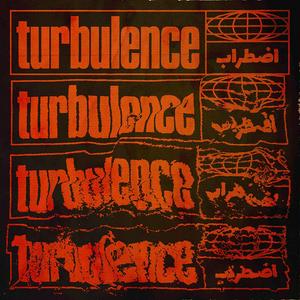
Sobre Turbulence
Turbulence is a podcast about the end of the American empire, or the end of the world—whichever comes first. Join Dylan Saba, M Ceniza, and friends as they navigate the geopolitical chaos of a world-system in flux. turbulencepod.substack.com
Site de podcastOuça Turbulence, Fora da bolha e muitos outros podcasts de todo o mundo com o aplicativo o radio.net
Obtenha o aplicativo gratuito radio.net
- Guardar rádios e podcasts favoritos
- Transmissão via Wi-Fi ou Bluetooth
- Carplay & Android Audo compatìvel
- E ainda mais funções
Obtenha o aplicativo gratuito radio.net
- Guardar rádios e podcasts favoritos
- Transmissão via Wi-Fi ou Bluetooth
- Carplay & Android Audo compatìvel
- E ainda mais funções

Turbulence
Leia o código,
baixe o aplicativo,
ouça.
baixe o aplicativo,
ouça.
Turbulence: Podcast do grupo
 Brasil