
Ouça este podcast gratuitamente no aplicativo: Baixe gratuitamente na App Store
radio.net
Sleeptimer
Guardar rádio
1000 episódios

The Epstein Files Expose How Prematurely DOJ Tried to Close the Case (Part 1) (10/23/26)
23/10/2026 | 12minIn July 2025, the DOJ and FBI tried to close the book on Jeffrey Epstein by claiming they had found no incriminating client list, no credible blackmail evidence, and nothing that could justify investigations of uncharged third parties. That posture collapsed after Congress passed the Epstein Files Transparency Act by overwhelming margins and forced millions of pages into public view. Once those records were released, New Mexico reopened its criminal investigation into alleged activity at Zorro Ranch, later sued the Justice Department for access to unredacted evidence, and filed a separate civil case accusing Darren Indyke and Richard Kahn of helping facilitate and conceal Epstein’s trafficking operation. Congress continued issuing subpoenas, taking testimony, and comparing witness statements against documentary evidence, while French prosecutors opened trafficking and financial-crime investigations based on newly released material. British authorities also opened Epstein-related investigations, including a public-corruption probe involving Peter Mandelson. None of those actions automatically prove criminal guilt, but they make one thing impossible to maintain with a straight face: the idea that every meaningful investigative avenue had already been exhausted.
That is where the administration’s handling becomes so hard to defend. Trump repeatedly dismissed the Epstein controversy as a hoax and mocked people who kept pressing for answers, while his own Justice Department was sitting on millions of pages that later generated new investigations in the United States and overseas. The administration’s defenders have since tried to move the goalposts by arguing that the released files do not automatically prove crimes, but that was never the question. The question was whether there were still credible leads, witnesses, financial trails, records, and third parties worth investigating, and the answer from New Mexico, Congress, France, and Britain has plainly been yes. The federal government told the public the road had ended, then watched other investigators walk straight past the supposed dead end using material that came out of federal files. At that point, the contradiction was no longer theoretical. Washington claimed the case had been picked clean, but once Congress forced the door open, investigators immediately found more rooms to search.
to contact me:
bobbycapucci@protonmail.comEpstein Survivors Win Class Certification Against FirstBank Puerto Rico (10/23/26)
23/10/2026 | 10minA federal judge handed Jeffrey Epstein survivors a significant legal victory by certifying a class-action lawsuit against FirstBank Puerto Rico and its parent company, First BanCorp. Judge Jed Rakoff ruled on October 20 that the case could proceed on behalf of all women who were abused or trafficked by Epstein between January 1, 1998, and August 10, 2019, dramatically expanding the potential reach of the litigation beyond lead plaintiff Julia Molchonova. The lawsuit alleged that FirstBank maintained more than 30 accounts connected to Epstein and related entities over roughly two decades and processed millions of dollars in transactions involving Epstein, his associates and companies tied to his operations. The survivors alleged that the bank continued doing business with Epstein despite increasingly obvious warning signs surrounding his sexual abuse and trafficking and continued servicing him even as other major financial institutions eventually terminated their relationships with him.
The ruling did not find FirstBank liable, but it represented an important procedural breakthrough because survivors would now be able to pursue their claims collectively rather than being forced to litigate individual cases against the bank. Rakoff had already refused to dismiss the central claim alleging that FirstBank participated in a trafficking venture under the federal Trafficking Victims Protection Act, although he dismissed a separate claim accusing the bank of obstructing enforcement of the law. FirstBank opposed class certification and has denied the allegations, but the case will now move forward toward discovery and potentially trial or settlement with a class covering more than two decades of Epstein’s abuse. The case continued the widening effort to hold Epstein’s financial institutions accountable on the theory that his trafficking operation could not have functioned on its enormous scale without banks willing to provide accounts, move money and maintain financial relationships despite the red flags surrounding him.
to contact me:
bobbycapucci@protonmail.comMega Edition: Ghislaine Maxwell And The Battle Over In Court Attire During Her Trial (10/23/26)
23/10/2026 | 43minGhislaine Maxwell and her lawyers fought repeatedly over the way she was being presented while awaiting trial, arguing that her appearance in jail-issued clothing reinforced an image of guilt before a jury had heard any evidence. During earlier proceedings Maxwell had appeared in loose blue prison scrubs, sometimes shackled, while her attorneys were simultaneously complaining that the Metropolitan Detention Center had subjected her to unusually restrictive conditions and, at points, special anti-suicide clothing because officials feared a repeat of Jeffrey Epstein’s death in federal custody. As the November 2021 trial approached, the defense pushed to ensure Maxwell could appear before prospective jurors in ordinary civilian clothing rather than anything identifying her as a prisoner. The issue was more than cosmetic: criminal defendants generally cannot be compelled to stand trial before a jury dressed in identifiable prison clothing because of the danger that it undermines the presumption of innocence. By jury selection, Maxwell had been allowed to shed the jail uniform and appeared in outfits including a black turtleneck with gray slacks and later a beige cashmere sweater, black trousers and heels.
The wardrobe change also became part of the defense’s broader effort to radically alter the image jurors saw of Maxwell. Instead of the disheveled defendant who had previously appeared in prison scrubs with graying hair and shackles, jurors saw a carefully groomed woman in understated civilian clothing who regularly embraced her attorneys, took notes and interacted closely with the defense table. Observers noted the deliberately conservative sweaters, dark trousers and muted appearance, which stood in sharp contrast to the glamorous photographs of Maxwell from her years socializing with Epstein and powerful figures. There was nothing improper about wanting Maxwell dressed as a civilian—protecting defendants from the prejudicial effect of prison garb is a basic feature of a fair trial—but the dispute illustrated how intensely her legal team fought over virtually every detail of her pretrial treatment and courtroom presentation. Once the jury proceedings began, the government was prosecuting a woman accused of helping Epstein groom and abuse minors, while the defense was determined that the person sitting a few feet from the jurors would look like an ordinary defendant presumed innocent rather than an inmate who had already been judged guilty.
to contact me:
bobbycapucci@protonmail.comMega Edition: Maxwell Tries to Leverage Her Ties To The Clintons Into A Light Sentence (10/23/26)
23/10/2026 | 51minGhislaine Maxwell’s lawyers pointed to her work with Bill Clinton’s philanthropic network as part of their effort to persuade a federal judge to give her a dramatically reduced prison sentence after her December 2021 sex-trafficking conviction. In a 77-page sentencing memorandum filed in June 2022, the defense cited Maxwell’s involvement with the Clinton Global Initiative several times, portraying it as evidence of her philanthropy, public service and supposed “desire to do good in the world.” Her attorneys said she had helped develop and launch the initiative and placed that work alongside her other activities, including the TerraMar Project, emergency medical training and charitable efforts. The larger argument was that Maxwell should not be defined solely by her crimes with Jeffrey Epstein and that her past charitable work, age, lack of prior criminal history and harsh pretrial confinement justified a sentence far below the federal guidelines. Her lawyers were effectively seeking a sentencing range beginning at roughly 51 months, or just over four years, while probation had recommended 20 years.
to contact me:
bobbycapucci@protonmail.comMega Edition: Ghislaine Maxwell And Her Date With The State (10/22/26)
23/10/2026 | 49minThe lead-up to Ghislaine Maxwell’s trial was marked by extraordinary public attention, repeated bail fights and intense speculation about how much of Jeffrey Epstein’s hidden world would finally be exposed in open court. Maxwell had been arrested in New Hampshire in July 2020 after months largely out of public view and remained jailed at the Metropolitan Detention Center in Brooklyn while her lawyers repeatedly complained about her confinement conditions and unsuccessfully sought her release. The case expanded through superseding indictments before Judge Alison Nathan scheduled trial for November 29, 2021, with Maxwell facing six counts centered on allegations that she had helped Epstein recruit, groom and sexually abuse underage girls between 1994 and 2004. Pretrial filings showed that prosecutors intended to rely heavily on testimony from women who said Maxwell had normalized Epstein’s behavior, gained their trust and helped draw them into his orbit. Maxwell’s defense signaled that it would aggressively challenge those memories, attack inconsistencies in the accusers’ accounts and call memory expert Elizabeth Loftus to explain how recollections could supposedly become distorted over time. The trial was expected to last roughly six weeks and was widely viewed as the first real opportunity to put Epstein’s inner operation before a jury after his death prevented his own 2019 prosecution from reaching trial.
Expectations outside the courtroom were considerably broader than what prosecutors actually needed to prove. There was widespread anticipation that Maxwell’s trial might expose previously unknown information about Epstein’s relationships with wealthy businessmen, politicians, academics and members of royalty, and that famous names connected to his aircraft, homes and social circle could surface during testimony. But experienced lawyers cautioned beforehand that the trial was unlikely to become a sweeping public inquiry into everyone who had associated with Epstein; the government’s task was much narrower—prove that Maxwell knowingly participated in the recruitment and grooming of minors. Prosecutors were expected to present Maxwell as Epstein’s essential partner and gatekeeper, while the defense was expected to portray Epstein as the true predator and Maxwell as a convenient substitute defendant who was being prosecuted because Epstein was dead. The central prediction was that the case would ultimately become a credibility battle between Maxwell and the women accusing her, with prosecutors relying on firsthand survivor testimony and corroborating records while the defense tried to create reasonable doubt by attacking memories formed decades earlier. That prediction proved largely accurate, although the trial moved far faster than expected: instead of six weeks, prosecutors presented 24 witnesses over roughly 10 trial days, the defense called nine witnesses over two days, and Maxwell was ultimately convicted on five of the six counts submitted to the jury.
to contact me:
bobbycapucci@protonmail.com
Mais podcasts de Comentários de notícias










Podcasts em tendência em Comentários de notícias






Sobre Jeffrey Epstein: The Coverup Chronicles
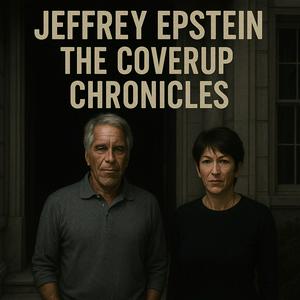
Jeffrey Epstein: The Coverup Chronicles is a podcast dedicated to examining not just who Epstein was and what he did, but how so many people and institutions worked—then and now—to keep it all hidden. This series cuts past the headlines and digs into the documentation: court filings, deposition transcripts, plea deals, sealed exhibits, and the bureaucratic paper trail that still tells the real story. Our focus isn’t on speculation or recycled outrage. It’s on facts—and the deliberate efforts to keep those facts out of public view.Each episode will feature in-depth analysis of newly surfaced records and underreported legal developments, alongside expert commentary that connects them to the broader machinery of power that shielded Epstein for decades. We’ll revisit the timeline from his first arrests through his 2008 plea deal, and into the re-investigations that followed his 2019 death in federal custody. And we won’t stop there—we’ll look closely at the current state of affairs: the closed probes, the lingering co-conspirators, the civil suits, and the glaring gaps in accountability.What makes The Coverup Chronicles different is that we’re not here to sensationalize the story—we’re here to document the ongoing concealment of it. This isn’t just about reliving Epstein’s crimes. It’s about following the networks that enabled them, protected him, and continue to obscure the truth. If you want an honest look at what’s still being hidden—by whom, and why—this is the podcast that pulls those threads.And I should know—I’ve spent over six years uncovering every dark corner of this case. My name is Bobby Capucci, and I’ve dedicated those same six years exposing the truth about Epstein and the powerful figures who enabled him. From on-the-ground investigations at Epstein’s Zorro Ranch, where I spoke with insiders, to national appearances on Tucker Carlson, I’ve followed this story farther than most are willing to go.Who helped Epstein build his empire? Who protected him? And who is still pulling the strings? The answers lie in the shadows of Jeffrey Epstein's criminal empire. .This is the truth they don’t want you to hear. And I’m here to make sure you do.
Site de podcastOuça Jeffrey Epstein: The Coverup Chronicles, Bom Dia, Fim do Mundo e muitos outros podcasts de todo o mundo com o aplicativo o radio.net
Obtenha o aplicativo gratuito radio.net
- Guardar rádios e podcasts favoritos
- Transmissão via Wi-Fi ou Bluetooth
- Carplay & Android Audo compatìvel
- E ainda mais funções
Obtenha o aplicativo gratuito radio.net
- Guardar rádios e podcasts favoritos
- Transmissão via Wi-Fi ou Bluetooth
- Carplay & Android Audo compatìvel
- E ainda mais funções

Jeffrey Epstein: The Coverup Chronicles
Leia o código,
baixe o aplicativo,
ouça.
baixe o aplicativo,
ouça.
Jeffrey Epstein: The Coverup Chronicles: Podcast do grupo
 Brasil

