Pular para o conteúdo
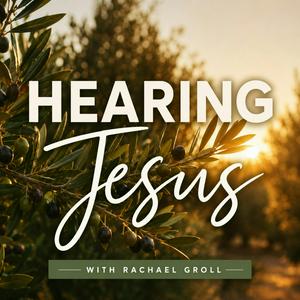
PodcastsCristianismoHearing Jesus: Daily Bible Study and Christian Affirmations

Hearing Jesus: Daily Bible Study and Christian Affirmations

Rachael Groll
Hearing Jesus: Daily Bible Study and Christian Affirmations
Último episódio

1637 episódios

  • Hearing Jesus: Daily Bible Study and Christian Affirmations

    To Know Him and To Make Him Known: Luke 2:1-21

    24/09/2026 | 34min
    So many of us read Luke chapter 2 as the Christmas story, but we don't recognize how strategic God was in the timing of it. Politically and spiritually, we see God's perfect timing and intention reveals His heart for humanity. In today's episode, we take a look at what it means for us and how we can know Him and make Him known.

    Links

    Join me on an immersive Bible Study Experience. Learn more at BibleStudyLive.org

    Have a question about the Luke series or a prayer request? Leave me a voicemail: SpeakPipe

    SEEDS: Download the free SEEDS app and take one small step today. Plant your first seed and see what God can grow. SEEDS

    What is a decree, and who was Caesar Augustus?

    A decree is an official order from someone in power. It's not a request or a suggestion. It carries the force of law, and people could not ignore it. The Greek word here is dogma, which is where we get our English word, though here it means a legal ruling rather than a religious teaching.

    Caesar Augustus was the first emperor of Rome, ruling from about 27 BC to AD 14. Before that his name was Octavian, and he was the great nephew of Julius Caesar. When Julius was murdered, his will named Octavian as his adopted son and heir. He was only eighteen. He fought his way into power, and the Roman Senate eventually gave him a new name, Augustus, meaning the revered one or the majestic one.

    Why does Luke mention Caesar at all?

    Because of the contrast, and it's sharper than most of us realize.

    When Julius Caesar died, the Roman Senate declared him a god. That meant Augustus, as his adopted son, could call himself Divi Filius, Latin for son of the deified one. Son of a god. He put that title on coins and monuments across the empire.

    He picked up other titles too. People called him Savior, because his rule brought a long stretch of peace known as the Pax Romana. One inscription from Egypt during his reign calls him a great heavenly savior.

    So by the time Jesus was born, Rome already had its own son of a god, its own savior, and its own version of peace. All of it came from a human ruler. All of it was political propaganda. Luke wants you to see that the real Son of God and the real Savior was about to be born, not in a palace, but in a stable. The enemy always offers a counterfeit.

    What was the census actually for?

    Taxes. Augustus was counting his empire so he could tax it.

    Here's what he had no idea about. While he thought this was all his doing, God used that decree to move a pregnant teenager from Nazareth to Bethlehem, exactly where the prophet said the Messiah would be born. Augustus was helping fulfill a promise hundreds of years old and never knew it.

    Did women have to register for the census?

    Yes. Since the census was about taxes, most women were counted, and in the Roman province of Syria, which included Judea, women paid the poll tax too. Records show taxation started as early as twelve or fourteen and ran to age sixty-five. So Mary would have been on the tax rolls, though whether she had to appear in person is a separate question given how risky travel would have been.

    We actually have surviving census records from that world. The papyrus and leather used in Judea rotted away over the centuries, but in the dry climate of Egypt hundreds of census forms survived. And among documents found near the Dead Sea are the personal papers of a Jewish woman named Babatha, including her own census declaration listing land she owned. That's roughly a century after Mary's trip, and it's real evidence of a Jewish woman taking part in a Roman census.

    Was Jesus really born in a stable?

    Most scholars think the inn wasn't an inn at all. It was a house, and the space they stayed in was the area where the family brought their animals inside at night. That may sound strange in an American context, but I've served in missions around the world and seen homes with a section in the back where the cows are kept, so they don't get stolen or wander off.

    The point is the contrast. Caesar, the political son of a god, would have been born in a palace. The actual Son of God was born in a crowded house in the space reserved for animals, with no special room set aside and a feeding trough for a bed because it was the softest place available. God came right into the middle of normal and messy and crowded, on purpose.

    Why did God tell the shepherds?

    Shepherds were near the bottom of society. They worked outdoors constantly and often smelled like their animals, which meant they couldn't always keep the religious washing rules. Shepherding was work a lot of Jewish fathers wouldn't even teach their sons. They'd hire it out or give it to their daughters. And like women, a shepherd's testimony wasn't trusted as a witness in court.

    These were the people God chose to tell first.

    There's something beautiful in the location too. This was Bethlehem, David's hometown, and David was a shepherd boy before he was king. God describes Himself as the shepherd of His people in Psalm 23 and Ezekiel 34, and He promised a shepherd king from David's line. So God announces the birth of the great Shepherd King to ordinary shepherds working the same hills David once worked.

    One more thing worth considering. All through the Old Testament, it's often young people and women tending flocks. Rachel in Genesis 29 was a shepherdess. So were Zipporah and her sisters in Exodus. Watching sheep was often given to the youngest in the family, which is why David was almost overlooked when Samuel came. The word Luke uses is plural and masculine, but it's the kind of word that can describe a mixed group. We don't know for certain who was out there. What we do know is how society saw them.

    Why does it say "heavenly host" instead of angels?

    This is one of my favorite details. The word for host is stratia, and it means army. It connects to the Old Testament title Lord of hosts, meaning the Lord of armies, the commander of heaven's forces.

    So verse 13 is telling us a whole army of heaven showed up. And they didn't come to declare war. They came to announce peace.

    Remember Caesar and the Pax Romana, peace brought to the empire through armies. Now heaven's army appears and announces a completely different kind of peace, one that comes through a baby laid in a manger. This was the rescue plan, and it was always a spiritual battle.

    Where do we see "know Him and make Him known" in this passage?

    Right here, in the first twenty verses after Jesus is born.

    Verse 8 tells us the shepherds were out in the field keeping watch by night. They were working. It was an ordinary night on an ordinary shift, and God found them right there.

    Verse 10 has the angel bringing good news of great joy. That phrase is the Greek word we get evangelize from. The first person to share the good news of the gospel was an angel, and he shared it with shepherds in a field. God takes the first step and comes to where we are.

    Verse 15 has the shepherds saying let's go and see this thing that has happened, which the Lord has made known to us. God isn't afraid of us verifying. He invites it. He wants us to seek Him out for ourselves.

    Then verse 17 says they made known what had been told to them. It's the same Greek word used in verse 15. God made Himself known to them, and after they experienced Him, they made Him known to everyone else.

    That's the whole pattern. God reveals Himself, you go see for yourself, and then you tell somebody.

    What does "those with whom he is pleased" mean?

    Verse 14 says peace among those with whom He is pleased, and I've wondered before how a person becomes someone God is pleased with. The Greek word is eudokia, made of two parts meaning good and to think or decide. It's God's good pleasure, His kind intention, His good decision. The focus isn't on how good the people are. It's on God's pleasure resting on them.

    It works a lot like the favor we talked about earlier in this series. It starts with God, not with us.

    Featured quote

    "Jesus is God's rescue plan. It was strategic. He thought through it. Everything was on purpose, on time, in time."

    Scripture referenced

    Luke 2:1-21 (ESV), Psalm 23, Ezekiel 34, Genesis 29, Exodus

    Timestamps

    00:00 Starting Luke 2, and why I'm not re-teaching the prophecies

    01:30 Reading Luke 2:1-21

    03:33 Prayer

    04:30 What a decree actually is

    05:22 Who Caesar Augustus was

    06:48 Son of the deified one

    07:47 Rome's savior and the Pax Romana

    08:47 A census for taxes

    09:28 What Augustus didn't know he was doing

    10:21 Did women have to register?

    11:11 Taxation from twelve to sixty-five

    12:00 Do the census records still exist?

    13:05 Babatha's papers

    13:58 The inn that wasn't an inn

    15:02 A palace versus a feeding trough

    15:58 Who the shepherds really were

    17:02 Washing rules and untrusted testimony

    17:31 David's hometown and David's hills

    18:28 Were they young? Were they women?

    20:20 Why it says heavenly host

    21:06 An army that declares peace

    22:34 Pax Romana and the counterfeit

    23:36 Know Him and make Him known, right here

    24:41 God finds you in the ordinary

    25:10 The angel evangelizes first

    26:06 Go and see for yourselves

    27:10 They made known what was made known to them

    28:19 What "those with whom he is pleased" means

    32:32 Prayer

    Frequently asked questions

    When did Caesar Augustus rule?
    From roughly 27 BC to AD 14. He was the first emperor of Rome.

    What does the word dogma mean here?
    It's the Greek word behind decree, meaning a binding legal ruling rather than a religious teaching.

    Who was Babatha?
    A Jewish woman whose personal papers, including her own census declaration, were found near the Dead Sea. They date to about a century after Mary's trip to Bethlehem.
    Learn more about your ad choices. Visit megaphone.fm/adchoices
  • Hearing Jesus: Daily Bible Study and Christian Affirmations

    Thursday Daily Affirmations: God Has a Purpose for My Life (Jeremiah 29:11)

    24/09/2026 | 10min
    Thursday Daily Affirmations: God Has a Purpose for My Life (Jeremiah
    29:11)

    You were created on purpose, for a purpose. These Scripture-based
    Christian affirmations are a short, steady way to walk into your day with
    intention, clarity, and wisdom. Whether you're questioning your calling or
    finding your footing in a new season, today's affirmations will help you trust
    God's plan, listen for His guidance, and move forward with boldness.

    I'll say each affirmation, pause so you can repeat it after me, and then
    share the Scripture it's based on.

    Links

    AD-FREE Daily Affirmations are on my Patreon: Patreon

    Join me on an immersive Bible Study Experience. Learn more at BibleStudyLive.org

    Have a question? Leave me a voicemail: SpeakPipe

    Before we begin

    God created you for a reason. Your life is not an accident, and your
    steps are not random. He has a plan for you, a purpose that brings glory to Him and fulfillment to your heart. As you listen to these affirmations, let them
    remind you that God is leading, guiding, and equipping you for everything He has called you to do.

    Thursday affirmations and Scripture

    God has a purpose for my life and I walk in His plan.
    Jeremiah 29:11

    I trust in the Lord to guide my steps.
    Proverbs 3:5-6

    I seek wisdom, and God gives it freely.
    James 1:5

    God is directing my steps and I do not walk alone.
    Psalm 37:23

    I am a light in this world, shining for Christ.
    Matthew 5:14

    God has prepared good works for me to do today.
    Ephesians 2:10

    I am equipped for every good work.
    2 Timothy 3:17

    I walk in the power of the Holy Spirit.
    Acts 1:8

    I will walk in faith, not in fear.
    2 Timothy 1:7

    God's Word lights my path.
    Psalm 119:105

    I choose obedience, knowing God's ways are best.
    Deuteronomy 5:33

    I live with purpose and do not waste my time.
    Ephesians 5:15-16

    I am called to make an impact for God's Kingdom.
    Matthew 28:19-20

    I have the mind of Christ and seek His wisdom daily.
    1 Corinthians 2:16

    I am a vessel for God's work.
    2 Corinthians 4:7

    I will not grow weary in doing good.
    Galatians 6:9

    God's purpose for me cannot be stopped.
    Job 42:2

    I do everything for the glory of God.
    Colossians 3:23

    God is using my life to accomplish His plan.
    Romans 8:28

    I am bold in sharing the gospel.
    Romans 1:16

    I walk in step with the Spirit.
    Galatians 5:25

    I remain steadfast in my calling.
    1 Corinthians 15:58

    God will finish the work He started in me.
    Philippians 1:6

    I live with an eternal perspective.
    Colossians 3:2

    I press forward in my faith, knowing my reward is in Heaven.
    Philippians 3:13-14

    Closing prayer

    Father, thank You for calling me to a life of purpose. Help me to walk in
    wisdom today, seeking You in all I do. Give me clarity where I need direction,
    courage where I need boldness, and a heart that is always ready to serve You. Let my life bring You glory. In Jesus' name, Amen.

    I hope these affirmations spoke to your heart today. If you want to go
    deeper, just keep listening. Your full Bible study episode is coming up next.

    Listen daily and start your morning with God's truth so you can walk in
    faith, clarity, and confidence.

    Learn more about your ad choices. Visit megaphone.fm/adchoices
  • Hearing Jesus: Daily Bible Study and Christian Affirmations

    Your Past Doesn't Disqualify You, It Prepares You: Luke 1:67-80

    23/09/2026 | 30min
    Your Past Doesn't Disqualify You, It Prepares You: Luke 1:67-80

    For nine months, Zechariah couldn't say a word. The man whose entire job was to speak on behalf of God to the people of God lost his voice because fear got louder than God's. And the very first thing he does when that voice comes back is prophesy.

    Today we finish Luke 1 with Zechariah's prophecy. We'll talk about what it means to be filled with the Holy Spirit, what prophecy actually is, what the horn of salvation means, and how the area where Zechariah failed became the very place God used him. If you've been quietly disqualifying yourself because of your past, this one's for you.

    Join me on an immersive Bible Study Experience. Learn more at BibleStudyLive.org

    Have a question about the Luke series or a prayer request? Leave me a voicemail: SpeakPipe

    SEEDS: Download the free SEEDS app and take one small step today. Plant your first seed and see what God can grow. SEEDS

    What does it mean to be filled with the Holy Spirit?

    Luke tells us Zechariah was filled with the Holy Spirit and prophesied. That's the same language he used for Elizabeth, and you're going to see it over and over in Luke and in Acts. The most famous example is Pentecost in Acts 2, but Luke uses it for Peter, for Stephen, and for Paul at key moments too.

    And almost every time Luke says someone was filled with the Holy Spirit, a prophetic word follows. It's his signature way of telling us that what comes next isn't coming from that person's own thinking or feelings. It's coming from God through them.

    I love that God keeps using people in the story of Jesus. Does He have to? No. But He does, because we were created to be in relationship with Him, to know Him, to make Him known, and to be known by Him.

    What is prophecy, really?

    A lot of people hear the word prophecy and think of predicting the future. Sometimes it means that. More often, prophecy is God's people speaking on His behalf, reminding others what God has already said, what He's already done, or what He's promised to do. It's forthtelling more often than foretelling.

    And prophecy isn't weird. It's all through your Bible. Entire books of the Old Testament are the words of the prophets. The silent years were called silent because there were no prophets in Israel. Now that Jesus is on the scene, we see the Holy Spirit and prophecy come roaring back.

    Here's what's interesting. Zechariah was a priest by training and by vocation. Prophecy wasn't technically his job. But after nine months of silence, the first thing he does with his restored voice is step into a prophetic role, and God uses him in it.

    What is Zechariah looking back on?

    His prophecy has two halves. If you're doing the color method and marking timing words, you may have caught it. The first half looks back, and the second half looks forward.

    In the first half, he praises God for keeping His covenant promises and raising up a Savior from David's line. He reminds the people what God already said through the prophets of old: that He would save them from their enemies and show the mercy He promised to Abraham.

    What do holiness and righteousness actually mean?

    Verse 75 talks about serving God in holiness and righteousness, and I think a lot of us check out when we see those words. We figure we could never measure up. I usually fall off the wagon by breakfast.

    But in the biblical sense, holiness is about spiritual wholeness, being dedicated to God and made whole because we're in right relationship with Him. Righteousness is very similar. It's being in right relationship with God.

    How do we get there? Through belief in Jesus. Before Jesus, that relationship was maintained through animal sacrifice under the old covenant. Jesus becomes the new covenant. He's the final sacrificial lamb.

    What is the horn of salvation?

    This is a Hebrew idiom that Zechariah's world would have understood immediately, but it's easy for us to miss. The image comes from an animal's horn, like a bull or a ram. The horn was that animal's main source of strength and its primary weapon for defense.

    So calling something a horn meant it was a source of real, effective power. In Psalm 18, God is called the horn of my salvation. In Psalm 132, God promises to make a horn sprout for David. When Zechariah says God has raised up a horn of salvation in the house of David, he's saying God has raised up a powerful deliverer from the promised royal line. This isn't the gentle, comforting side of God. It's His strength, the kind that actually acts on your behalf.

    What is Zechariah looking forward to?

    In the second half, he turns to the future and speaks over his son. John will prepare the way for the Lord by giving people knowledge of salvation through the forgiveness of their sins, so that when Jesus offers salvation, they're ready.

    Then he speaks about Jesus, the sunrise from on high who gives light to those sitting in darkness and the shadow of death, and guides our feet into the way of peace.

    The word for peace here carries the idea of shalom, and shalom is so much more than the absence of conflict. It means complete wholeness, things being set right. Ever since Eden, people have been trying to get back to that wholeness. It's impossible without Christ. Because of Jesus, we can finally be whole and restored to God.

    That's the good news. Jesus is the good news.

    Why does "serve him without fear" matter so much?

    Go back to verse 74. Zechariah prophesies that God's people will be delivered from their enemies so they can serve Him without fear.

    Think about who's saying this. Nine months earlier, fear fell on this man in the temple, and his fear-driven demand for proof cost him his voice and possibly his hearing. Now, filled with the Holy Spirit, he's prophesying that the whole point of salvation is to produce people who can serve God without fear. It's the exact opposite of where his story started.

    How does God use our past?

    Why do you think God took Zechariah's voice so seriously? Because his voice was going to become his area of spiritual gifting. As a priest, his entire role was to speak for God to God's people. Fear overcame him and he doubted, and there was a consequence and discipline. But that discipline led him right into his gifting.

    The enemy attacks in infancy what he fears in maturity. My mouth has been getting me in trouble my whole life. In first grade, my desk was literally put in the hallway because I would not stop talking. And my whole life is now dedicated to serving God with my voice.

    Your past does not prevent you. It prepares you, as long as you surrender it to Him. Some of us have disqualified ourselves from what God wants to do because of where we've been. But when you lay that down at the foot of the cross and ask the Holy Spirit to fill you and use you, He can take those dark seasons and step you right into your calling.

    Featured quote

    "Your past does not prevent you from God's plan. It prepares you for God's plan. But you have to surrender it."

    Scripture referenced

    Luke 1:67-80 (ESV), Psalm 18, Psalm 132, Acts 2

    Timestamps

    00:00 Finishing Luke 1, and why we're going slowly

    00:56 Don't compare what you see to what I see

    01:22 Reading Luke 1:67-80

    02:47 Prayer

    03:17 Zechariah's voice returns

    04:00 Filled with the Holy Spirit

    04:54 Luke's signature pattern: filled, then prophesied

    05:47 Prophecy isn't weird. Do you read your Bible?

    06:46 Forthtelling, not just foretelling

    07:45 A priest steps into a prophetic role

    08:15 Two halves: looking back and looking forward

    09:14 What holiness and righteousness actually mean

    11:27 The horn of salvation

    12:52 Psalm 18 and Psalm 132

    14:12 John will prepare the way

    15:00 The way of peace and the meaning of shalom

    16:17 Back to Eden

    17:28 Serving Him without fear

    18:38 Why God took Zechariah's voice so seriously

    19:31 Your past doesn't prevent you, it prepares you

    19:54 My desk in the hallway

    20:25 The enemy attacks in infancy what he fears in maturity

    21:15 Don't disqualify yourself

    22:07 Prayer

    23:29 Maui and the longing for Eden

    Frequently asked questions

    What is Zechariah's song called?
    It's traditionally called the Benedictus, from the first word of the Latin version, meaning blessed.

    Where did John grow up?
    Verse 80 tells us he grew and became strong in spirit and lived in the wilderness until his public appearance to Israel.

    When do we start Luke 2?
    Next episode.
    Learn more about your ad choices. Visit megaphone.fm/adchoices
  • Hearing Jesus: Daily Bible Study and Christian Affirmations

    Wednesday Daily Affirmations: I Am Ruled by God's Peace Today (Isaiah 26:3)

    23/09/2026 | 10min
    Wednesday Daily Affirmations: I Am Ruled by God's Peace Today (Isaiah
    26:3)

    Midweek is when the noise gets loudest. These Scripture-based Christian
    affirmations are a short, steady way to trade anxiety for peace and remember that God is still in control of what you can't see yet. Today's affirmations are about surrendering worry, resting in His presence, and trusting His timing even when the picture isn't clear. God's peace isn't just a feeling. It's a promise.

    I'll say each statement, then pause so you can repeat it after me, and
    then I'll share the Scripture it comes from.

    Links

    AD-FREE Daily Affirmations are on my Patreon: Patreon

    Join me on an immersive Bible Study Experience. Learn more at BibleStudyLive.org

    Have a question? Leave me a voicemail: SpeakPipe

    Before we begin

    Breathe in God's peace, and exhale your worries. This day is a gift, and
    no matter what's ahead, you can trust that God is in control. His love is
    steady. His plans for you are good. His presence goes before you. Let these
    affirmations remind you to trust Him today.

    Wednesday affirmations and Scripture

    I am ruled by God's peace today.
    Isaiah 26:3

    I cast all my worries onto Jesus. He carries them for me.
    1 Peter 5:7

    I will not be anxious. I will pray and trust God.
    Philippians 4:6-7

    God's plans for me are good, and I trust Him.
    Jeremiah 29:11

    I do not need to worry about tomorrow.
    Matthew 6:34

    I will rest in God's presence today.
    Exodus 33:14

    God is my refuge and strength.
    Psalm 46:1

    I will not let my heart be troubled. I trust in God.
    John 14:27

    The Lord directs my steps.
    Proverbs 3:5-6

    Even when I don't understand, I trust in God's wisdom.
    Romans 11:33

    I do not have to be afraid because God is with me.
    Deuteronomy 31:8

    God is fighting for me.
    Exodus 14:14

    I am not alone. God walks with me.
    Isaiah 41:13

    God is my rock and salvation. I will not be shaken.
    Psalm 62:6

    I find rest in God alone.
    Psalm 62:1

    God's love never fails me.
    Lamentations 3:22-23

    I have peace because I am in Christ.
    John 16:33

    I wait on the Lord and He renews my strength.
    Isaiah 40:31

    I will trust in God, even when I don't see the whole picture.
    2 Corinthians 5:7

    God is working all things for my good.
    Romans 8:28

    God's peace rules in my heart today.
    Colossians 3:15

    I give my burdens to the Lord and He sustains me.
    Psalm 55:22

    I will be still and know that He is God.
    Psalm 46:10

    I trust God's timing and His ways.
    Ecclesiastes 3:11

    I will rejoice in the Lord always.
    Philippians 4:4

    Closing prayer

    Father, I surrender my worries to You. I choose to rest in Your peace
    today, trusting that You are in control. Fill my heart with faith instead of
    fear, and let Your peace guard my mind. In Jesus' name, Amen.

    I hope these affirmations spoke to your heart today. If you want to go
    deeper, just keep listening. Your full Bible study episode is coming up next.

    Listen daily and start your morning with God's truth so you can walk in
    faith, clarity, and confidence.

    Learn more about your ad choices. Visit megaphone.fm/adchoices
  • Hearing Jesus: Daily Bible Study and Christian Affirmations

    Allowing God's Voice to Be the Loudest: Luke 1:57-66

    22/09/2026 | 32min
    Allowing God's Voice to Be the Loudest | Luke 1:57-66

    Sometimes the hardest voices to push past aren't the critics. They're the people who love you. In today's passage, Elizabeth finally gives birth, and the neighbors and relatives who had been celebrating God's mercy right alongside her show up with a plan for what to name the baby. They mean well. They're also wrong. And Elizabeth, who has experienced God for herself, says no.

    Today we're in Luke 1:57-66, the birth and naming of John. We'll talk about why everyone was making signs to Zechariah, why a name carried so much weight in that culture, and what it looks like to let God's voice be louder than even the well-meaning people in your life.

    Join me on an immersive Bible Study Experience. Our 2027 trips are open, Learn more at BibleStudyLive.org

    Have a question about the Luke series or a prayer request? Leave me a voicemail: SpeakPipe

    SEEDS: Download the free SEEDS app and take one small step today. Plant your first seed and see what God can grow. SEEDS

    Why were they making signs to Zechariah?

    This one always confused me. Gabriel told Zechariah he would be unable to speak until everything came to pass. So if he was mute, he could still hear, right? Why is everyone gesturing at him?

    The word Luke uses for Zechariah's condition is kophos, which carries the idea of being blunted. In that time it could mean deaf, it could mean mute, and sometimes it meant both. So the signs are a clue that Zechariah may not have been able to hear either.

    Think about what that means. If that's what was happening, he spent this entire pregnancy in silence, in a place where he could only really communicate with God. That's worth noticing.

    Who were the neighbors and relatives?

    Scripture tells us they heard the Lord had shown great mercy to Elizabeth, and they rejoiced with her. These weren't strangers or critics. They were people who loved this family, who could see the evidence of God working in her life, and who came to celebrate it.

    That's what makes the next part so striking.

    Why did they go over Elizabeth's head?

    On the eighth day they gathered to circumcise the baby, and they were ready to name him Zechariah after his father. Elizabeth said no, his name is John. And instead of listening to her, the living, breathing miracle standing right in front of them, they went to Zechariah. The man who was still mute, possibly deaf, and still carrying the consequence of not believing God.

    I don't think they had bad intentions. I think they just hadn't experienced God the way Elizabeth had. She had felt that baby leap when Mary walked in. She had been filled with the Holy Spirit. She knew that she knew. And Zechariah, in a very different way, knew too. He had spent months living with the consequence of his doubt.

    Why did the name matter so much?

    In our culture, naming a baby after family is mostly sentiment. In theirs, it meant much more. A name carried identity and calling. People believed you became what was spoken over you. That's why we see names changed in Scripture to reflect who God made someone to be, and why Jesus renamed Simon to Peter.

    Naming this baby Zechariah would have meant he'd follow in his father's footsteps as another priest from the line of Abijah, carrying the family's God-given role into the next generation. And this wasn't a quiet conversation at home. A circumcision was a public ceremony, and the whole community was there to witness the naming.

    So when Elizabeth said his name is John, she was announcing publicly that this child would not be what everyone expected. Gabriel had already said John would go before the Lord in the spirit and power of Elijah. His calling was prophetic, not priestly. The name was the first public sign that his life was going to look nothing like his father's.

    What happened when Zechariah wrote, "His name is John"?

    He asked for a writing tablet and wrote it out, and immediately his mouth was opened and he spoke, blessing God. I believe his freedom was tied to his obedience.

    Some people read this and see a harsh God. I see a loving one. As a parent, I discipline my kids because I know things they don't, because I love them, and because I want them in right relationship with God and with our family. Discipline motivated by love teaches us to obey. Zechariah came out of that season, obeyed, and was set free.

    What does this mean for us?

    People can love you, praise God with you, have your best interests at heart, and still lead you away from what God has said. That doesn't make them bad people. Sometimes the call of God on your life just doesn't make sense to anyone else.

    That's the whole reason I do what I do. You have to know God for yourself. Elizabeth and Zechariah could stand firm because they had heard His voice for themselves. His voice has to be the loudest voice in your life, even louder than the people who love you most.

    And sometimes we're the ones on the other side, doubting what God has said to someone else. That's worth sitting with too.

    Featured quote

    "The voice of God has to be the loudest voice in your life."

    Scripture referenced

    Luke 1:57-66 (ESV)

    Timestamps

    00:00 Welcome, and how the kids show fits with the Luke study

    01:25 The Bible I'm using for this series

    02:55 Reading Luke 1:57-66

    03:56 Questions this passage raises

    04:25 Why were they making signs to Zechariah?

    05:19 Kophos: deaf, mute, or both

    06:42 A season of silence with God alone

    07:09 Marking the supernatural with the color method

    08:08 Neighbors and relatives who rejoiced with her

    09:05 Going over Elizabeth's head

    10:01 Elizabeth knew that she knew

    10:57 His mouth was opened

    11:27 Discipline motivated by love

    12:56 Naming in our culture

    14:53 Naming in their culture: you became what you were named

    15:50 Why naming him Zechariah meant a priestly future

    16:46 A public ceremony and a public announcement

    17:38 A prophetic calling, not a priestly one

    19:00 Well-meaning people can still lead us the wrong way

    19:43 Why you have to know God for yourself

    20:54 Prayer

    22:44 Bible Study Live 2027 update

    Frequently asked questions

    Was Zechariah deaf as well as mute?
    Possibly. Luke uses a word that could mean deaf, mute, or both, and the fact that people made signs to him suggests he may not have been able to hear.

    Why did the relatives want to name the baby Zechariah?
    In that culture a name carried identity and calling. Naming him after his father would have marked him as the next priest in the family line.

    Why was the name John so significant?
    It publicly declared that this child had a different calling. John would be a prophet preparing the way for the Lord, not a priest carrying on the family role.

    Why could Zechariah speak again?
    Immediately after he obeyed and wrote "His name is John," his mouth was opened and he spoke, blessing God.
    Learn more about your ad choices. Visit megaphone.fm/adchoices
Mais podcasts de Cristianismo

Sobre Hearing Jesus: Daily Bible Study and Christian Affirmations
Do you ever wonder whether you're actually hearing God's voice, or whether it's just your own? Have you been in a season where He feels completely silent? Hosted by Rachael Groll, the Hearing Jesus Podcast brings together daily Bible study, Christian affirmations, prayer, and spiritual growth to help you hear God more clearly and go deeper with Him. Each episode opens the Bible through historical context, Spirit-led teaching, and honest encouragement, so you can understand Scripture, strengthen your faith, and live it out in ordinary days. Episodes cover daily devotionals, Christian prayer, Bible teaching, hearing the Holy Spirit, emotional healing, identity in Christ, and learning to recognize God's direction in a noisy world. Whether you're looking for a daily devotional podcast, Christian encouragement, Bible study for women, or practical teaching on hearing God and following Jesus, this is a place to grow.
Site de podcast

Ouça Hearing Jesus: Daily Bible Study and Christian Affirmations, Hernandes Dias Lopes e muitos outros podcasts de todo o mundo com o aplicativo o radio.net
Obtenha o aplicativo gratuito radio.net

  • Guardar rádios e podcasts favoritos
  • Transmissão via Wi-Fi ou Bluetooth
  • Carplay & Android Audo compatìvel
  • E ainda mais funções
Hearing Jesus: Daily Bible Study and Christian Affirmations: Podcast do grupo

Aplicações
Social
v8.18.0 | © 2007-2026 radio.de GmbH
Generated: 9/24/2026 - 8:57:13 PM