
Ouça este podcast gratuitamente no aplicativo: Baixe gratuitamente na App Store
radio.net
Sleeptimer
Guardar rádio
361 episódios
EP360 Why you drink more after bariatric surgery (and how to decide whether to quit or cut back) with Ruby Williams
22/10/2026 | 39minIf you've had bariatric surgery, and now you're drinking more than you ever have, you may be wondering if quitting is your only option. This conversation shows you why the answer is embedded in your own personal experience, not someone else's playbook, and why letting go of your alcohol identity opens the door to what you really want.
Guest: Ruby Williams, 20-year wine industry veteran turned alcohol freedom coach.
What you'll learn:
Why drinking can ramp up after bariatric surgery when food can no longer serve as a coping mechanism
Why your alcohol identity, drinker or non-drinker, can block what you really want
How to figure out whether you want to quit or cut back, based on your own experience
Why going back and forth between goals doesn't mean you failed
Get the Mindful Drinking Experience: a guided workshop you can do in the privacy of your own home while you're drinking, so you can learn what's true for you. Bonuses include workbook, hangover homework and 23 training audios from inside The Next Chapter.
If you're ready to do the deeper work of emotional sobriety and want to know how to start, Schedule your free discovery call with our enrollment team.
Connect with Ruby:
Social media: @rubywilliamscoaching
Podcast: Sober & Lit
Sober and Lit podcast: [LINK]
https://www.freedomrenegadecoaching.com/About-RubyEP359 The hidden reasons why you drink too much (and what really needs to change)
14/10/2026 | 34minYou've been negotiating new rules every time you break the old ones, and you still can't figure out why "just drink less" never sticks. The answer isn't in your glass. It's in your week. Three client stories show you exactly where the drinking is coming from, and the one question to ask instead of "what's wrong with me."
What you'll learn:
Why removing the one thing that gives you relief, in a week you haven't changed, backfires
The unspoken rules you follow for everyone else and never apply to yourself
Why you have plenty of motivation, it's just pointed in the wrong direction
What self-care actually is, and why it isn't pedicures and prosecco
The small, unimpressive changes that move the needle for high achieving women
Join Colleen live for Get Happy, Not Sober on October 23, 24 and 25. [REGISTER HERE]
If you'd rather talk to someone now, schedule a call with our enrollment team and they'll help you figure out where to start.
Check out our new program options! Emotionalsobrietycoaching.com/programsEP358 Why you need wine when you're stressed (and how to reduce cravings without whiteknuckling) with Sian Cook
06/10/2026 | 38minYou eat clean, you handle everything, and by five o'clock you still feel like you need a glass of wine to calm down. Sian Cook, a former client trained in medicine, explains what stress is draining from your brain, why wine feels like the fix, and where to start to change your relationship with alcohol.
What you'll learn:
Why stress burns through the nutrients your brain needs to feel calm
Why wine makes you feel instantly better when you're stressed
Why eating clean isn't always enough to give your brain what it needs
What it looks like when wine shifts from a need to a want
Click here to learn more about Vital Mind Serenity. Type "Colleen" in the discount field for 10% off. (Colleen has no affiliation. She just thinks it's worth knowing about.)
Click here to join Colleen's next live Get Happy Not Sober event to uncover the real reasons why reducing your drinking feels harder than it should be. It's an ideal opportunity to work directly with Colleen without making a huge commitment.
Referenced in this episode: It's Not About the Alcohol Episode 193: How to use amino acid supplements to fix neurotransmitter deficiences that trigger alcohol cravingsEP357: Your drinking isn't self-indulgent. It's self-denial. Here's the difference.
08/09/2026 | 23minYou've been telling yourself you drink too much because you love it too much. That's not what's happening. This episode shows you the rules you've been following since childhood that make you say yes to everyone else and no to yourself, and why the drink at the end of the day is the only thing you actually let yourself have.
What you'll learn:
Why the same rule that makes you reliable for everyone else makes you unavailable to yourself
The difference between a Go rule and a No-Go rule, and how to spot both in one decisio
Why "I'll just tough it out" costs you more bandwidth, patience and momentum than you think
Why trying to reduce your drinking fails when the depletion underneath it doesn't change
Get Happy, Not Sober is a live three-day event starting Friday, September 11. Day one, you'll measure the gap between what you'll do for other people and what you'll do for yourself, find the rule causing it, and walk away with one sentence that explains why your relationship with alcohol is out of balance. Day two is the mindful drinking experiment, live with Colleen for VIPs or on your own with the workbook. Day three is coaching and integration. Sessions are Friday and Saturday at 3pm Eastern, Sunday at noon Eastern. Plan on 90 minutes each. VIP spots are limited. [REGISTER HERE]EP356 The real reason you can't follow through on your promise to "not drink" tonight
18/08/2026 | 17minYou have discipline in every other area of your life. You follow through, you deliver, you keep everything running. So why is it that the one night you tell yourself no drinking, you pour that first glass like that was the plan all along? This episode explains what's actually driving that, and why willpower can't make it stop.
What you'll learn:
Why "not drinking" feels harder than anything else on your list
What your nervous system is actually reacting to when you sit still
Why cutting back so you can get more done backfires every time
Why three years of perfect abstinence didn't fix a damn thing
The difference between acting like a woman who can take it or leave it and feeling like her
Join Colleen this weekend, Aug 21-23 for Get Happy Not Sober, a live three-day event. [Click here to register now.]
Mais podcasts de Enriquecimento individual








Podcasts em tendência em Enriquecimento individual





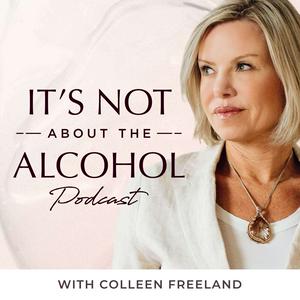
Sobre It's Not About the Alcohol
Would you like to reduce your alcohol consumption by about 80 percent? Become the version of you who can just "take it or leave it" so that you can enjoy drinking socially without relying on alcohol to manage your stress, anxiety, loneliness and boredom when you're by yourself?
Most high achieving women assume over-drinking is caused by a lack of willpower--or worse, the incurable disease of "alcoholism." So they beat themselves up and avoid asking for help because they feel ashamed and out of control.
Whether you're a daily drinker who can't break the habit, or you're still going to sobriety meetings even though you don't drink anymore, the real problem is that you don't trust yourself.
Which means it's not about the alcohol. It's about your relationship with yourself.
Colleen Freeland is a a mindful drinking coach helping professional women learn how drinking less (or not at all) is actually a superpower, even when the idea of giving up the only thing that helps them quiet their mind feels impossible.
The solution to alcohol use disorder is a FEELING. If you felt comfortable in your own skin and at ease in your life, you would drink like someone who is comfortable and at ease!
Join me each week for holistic, evidence-based strategies to fix your dopamine deficit, regulate your nervous system, cure imposter syndrome, manage sugar cravings, improve your sleep and reclaim your mental health so you no longer have the urge to escape your own body.
Get happy, not sober. Because happy people don't drink themselves into a stupor.
Site de podcastOuça It's Not About the Alcohol, Descobri depois de adulta e muitos outros podcasts de todo o mundo com o aplicativo o radio.net
Obtenha o aplicativo gratuito radio.net
- Guardar rádios e podcasts favoritos
- Transmissão via Wi-Fi ou Bluetooth
- Carplay & Android Audo compatìvel
- E ainda mais funções
Obtenha o aplicativo gratuito radio.net
- Guardar rádios e podcasts favoritos
- Transmissão via Wi-Fi ou Bluetooth
- Carplay & Android Audo compatìvel
- E ainda mais funções

It's Not About the Alcohol
Leia o código,
baixe o aplicativo,
ouça.
baixe o aplicativo,
ouça.
It's Not About the Alcohol: Podcast do grupo
 Brasil