
Ouça este podcast gratuitamente no aplicativo: Baixe gratuitamente na App Store
radio.net
Sleeptimer
Guardar rádio
241 episódios
04 | Unsteady State | Confucianism and crisis
21/10/2026 | 43minWith liberal democracy in crisis around the world, we're talking about Confucianism and how Confucian political theory addresses such problems as economic inequality and rampant individualism. This week's guest is interested in developing a reconstructed Confucianism that incorporates aspects of American pragmatist philosophy — in particular the work of John Dewey, who visited China in the 1920s and made a huge intellectual and cultural impact there.
This episode is fourth in a five-part series.
Guest: Sor-hoon Tan, Professor of Philosophy at Singapore Management University
Producer: David Rutledge
Confucian Democracy: A Deweyan Reconstruction of Confucianism by Sor-hoon Tan (SUNY Press 2004)
The crisis of liberal democracy and the Confucian challenge: a pragmatist response by Sor-hoon Tan in Journal of Social and Political Philosophy (2022)
Toward Confucian economic democracy: a relational alternative to possessive individualism by Sor-hoon Tan in Democratic Theory: An Interdisciplinary Journal (2026)
01 | Unsteady State | Politics and the good life - The Philosopher's Zone, October 4 2026
02 | Unsteady State | Who owns Antarctica? - The Philosopher's Zone, October 11 2026
03 | Unsteady State | What the Right gets wrong about Nietzsche - The Philosopher's Zone, October 18 202603 | Unsteady State | What the Right gets wrong about Nietzsche
14/10/2026 | 39minFriedrich Nietzsche is a difficult figure to pin down politically. He's popularly known as the favourite philosopher of the architects of the Holocaust, and of today's neo-Nazis and far-right ideologues who venerate strength, domination and the exercise of traditionally male-coded virtues. But then there's the other Nietzsche, the Nietzsche who was a fierce critic of German nationalism and antisemitism, and whose work has gone on to become central to feminism and queer theory. What can Nietzsche tell us about today's febrile climate of state and gender politics?
This episode is third in a five-part series.
Guest: Adrian Daub, Professor of Comparative Literature and German Studies at Stanford University, co-host of the podcast In Bed With the Right
Producer: David Rutledge
The Cancel Culture Panic: How an American Obsession Went Global by Adrian Daub (Stanford University Press 2024)
What Tech Calls Governing by Adrian Daub (Stanford University Press 2026)
Episode 1 | Unsteady State | Politics and the good life - The Philosopher's Zone, October 4 2026
Episode 2 | Unsteady State | Who owns Antarctica? - The Philosopher's Zone, October 11 2026
Episode 4 | Unsteady State | Confucianism and crisis - The Philosopher's Zone, October 25 202602 | Unsteady State | Who owns Antarctica?
07/10/2026 | 34minWhat can Antarctica teach us about statehood and sovereignty?
The continent has no government, no citizens, no permanent human population. Its native inhabitants are mostly seals and penguins who, as far as we know, take little interest in politics.
But according to this week's guest, Antarctica offers a remarkable political experiment, one that challenges some of our most basic assumptions about territory and political community.
Since the Antarctic Treaty came into force in 1961, the usual question of who owns the territory has been set aside. Instead, Antarctica is governed according to a model of 'joint guardianship', raising the intriguing possibility that this remote frozen continent might have something crucial to teach us about how politics could work elsewhere.
This episode is second in a five-part series.
Guest: Alejandra Mancilla, Professor of Philosophy at the University of Oslo, Norway
Producer: David Rutledge
From Sovereignty to Guardianship: Governing Antarctica, Governing the World by Alejandra Mancilla (Oxford University Press 2026)
Episode 1 | Unsteady State | Politics and the good life - The Philosopher's Zone, October 4 2026
Episode 3 | Unsteady State | What the Right gets wrong about Nietzsche - The Philosopher's Zone, October 18 2026
Episode 4 | Unsteady State | Confucianism and crisis - The Philosopher's Zone, October 25 202601 | Unsteady State | Politics and the good life
30/09/2026 | 1h 10minWhat if your government decided what 'the good life' looks like, then rewarded you for living it and penalised you for straying?
In a growing number of countries, that's already happening.
Liberal democratic theory has long held that the good life is for each citizen to define for themselves, and that the state should stay out of it. But some governments are now rejecting that idea, defining the good life for their citizens and using a mix of incentives and penalties to bring people into line.
Many liberals call this authoritarianism, and accuse the leaders behind it of being driven by greed or a desire for power.
But this week we're asking if the picture is more complex, and if liberals are making a dangerous mistake in misunderstanding the appeal of the 'good life state'.
This episode is a recording of the 2026 Alan Saunders Lecture, produced in collaboration with the Australasian Association of Philosophy.
Guest: Alexandre Lefebvre, Professor of Politics and Philosophy at The University of Sydney
Producer: David Rutledge
Liberalism as a Way of Life by Alexandre Lefebvre (Princeton University Press 2024)
Episode 2 | Unsteady State | Who owns Antarctica? - The Philosopher's Zone, October 11 2026
Episode 3 | Unsteady State | What the Right gets wrong about Nietzsche - The Philosopher's Zone, October 18 2026
Episode 4 | Unsteady State | Confucianism and crisis - The Philosopher's Zone, October 25 2026Technology and the lure of ancient Athens
23/09/2026 | 45minOne of the more utopian promises of technology has always been that it will free us from the necessity of work - but not having to work poses its own problems. What will we do instead? how will we make money? and what might a leisure-oriented society look like? Technophiles - from the early cybernetics enthusiasts to today's AI promoters - have looked to ancient Athens as an example of a society where citizens were free to engage in culture, reflection and political participation. But was ancient Athens really such a place? and how likely is it that today's tech lords will deliver 'the good life' to us all?
Guest: Michele Kennerly, Associate Professor Communication Arts and Sciences, and Classics and Mediterranean Studies, Pennsylvania State University
Producer: David Rutledge
Automated Athens: Ancient Greek Ideals in the Early Age of Automation by Michele Kennerly (University of Chicago Press 2026)
Mais podcasts de Filosofia




Podcasts em tendência em Filosofia







Sobre Philosopher's Zone
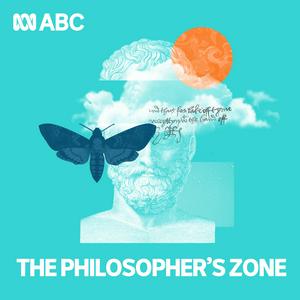
The simplest questions often have the most complex answers. The Philosopher's Zone is your guide through the strange thickets of logic, metaphysics and ethics.
Site de podcastOuça Philosopher's Zone, Palestras Filosóficas Nova Acrópole e muitos outros podcasts de todo o mundo com o aplicativo o radio.net
Obtenha o aplicativo gratuito radio.net
- Guardar rádios e podcasts favoritos
- Transmissão via Wi-Fi ou Bluetooth
- Carplay & Android Audo compatìvel
- E ainda mais funções
Obtenha o aplicativo gratuito radio.net
- Guardar rádios e podcasts favoritos
- Transmissão via Wi-Fi ou Bluetooth
- Carplay & Android Audo compatìvel
- E ainda mais funções

Philosopher's Zone
Leia o código,
baixe o aplicativo,
ouça.
baixe o aplicativo,
ouça.
Philosopher's Zone: Podcast do grupo
 Brasil