

Ouça este podcast gratuitamente no aplicativo: Baixe gratuitamente na App Store
radio.net
Sleeptimer
Guardar rádio
297 episódios
When Music Became Dramatic: The Baroque Era | The Classical Music Minute
12/10/2026 | 1minSend us Fan Mail
Opera was born, instrumental music flourished, and major and minor keys became central to Western music. The Baroque era gave us some of classical music’s most enduring forms—and some of its greatest composers.
Support the show
Love classical music? There's more to discover.
If you enjoyed this episode, you can read the companion article and subscribe on Substack at The Classical Music Minute. And for a brand-new narrated classical music story every day, download the Classical Minute app for iPhone.
Until next time, I'm Steven Hobé. Thanks for listening to The Classical Music Minute.Mozart's Search for Independence | In Their Own Words, Part One
08/10/2026 | 24minSend us Fan Mail
What was Mozart really like when the concert halls fell silent and he sat down to write to his family?
In Their Own Words is a special series from The Classical Music Minute that explores the lives of history’s great composers through their personal correspondence. Combining historical context with dramatized readings of their letters, the series takes us beyond the familiar portraits of musical genius to encounter the people behind the music—their ambitions, frustrations, relationships, disappointments and triumphs.
In Part One, we meet Wolfgang Amadeus Mozart in Mannheim in 1777.
At twenty-one, Mozart is no longer the celebrated child prodigy touring the courts of Europe. He is a young professional composer searching for something much harder to find: a secure position that will give him recognition, financial stability and greater control over his own future.
Through two letters written to his father, Leopold, we hear Mozart in his own words—enthusiastic about Mannheim’s extraordinary musical world, wonderfully candid in his opinions, increasingly frustrated by his father’s concerns, and determined to establish a career on his own terms.
Behind it all lies a larger question that would follow Mozart throughout his life: how could a composer achieve artistic independence in a world still dominated by aristocratic patronage?
This is Mozart before Vienna, before The Marriage of Figaro, Don Giovanni and The Magic Flute—a twenty-one-year-old musician who has no idea what the future holds.
About the letters: The correspondence featured in this episode is drawn from the nineteenth-century English translation by Lady Grace Wallace, published in 1866 and available through Project Gutenberg. Selected passages have been omitted for length and narrative flow, while the wording of the passages presented has been preserved. The letters are presented as dramatized readings.
Support the show
Love classical music? There's more to discover.
If you enjoyed this episode, you can read the companion article and subscribe on Substack at The Classical Music Minute. And for a brand-new narrated classical music story every day, download the Classical Minute app for iPhone.
Until next time, I'm Steven Hobé. Thanks for listening to The Classical Music Minute.Music Reborn: The Renaissance Era | The Classical Music Minute
05/10/2026 | 1minSend us Fan Mail
Polyphony flourished, madrigals filled courts and homes, and printing helped music travel across Europe. In just two centuries, the Renaissance transformed how Western music was composed, performed, and shared.
Support the show
Love classical music? There's more to discover.
If you enjoyed this episode, you can read the companion article and subscribe on Substack at The Classical Music Minute. And for a brand-new narrated classical music story every day, download the Classical Minute app for iPhone.
Until next time, I'm Steven Hobé. Thanks for listening to The Classical Music Minute.How Did Medieval Music Shape the Western Tradition? | The Classical Music Minute
28/09/2026 | 1minSend us Fan Mail
From Gregorian chant to polyphony, the Medieval era saw some of Western music’s most important developments—including the growth of musical notation and increasingly complex composition.
Support the show
Love classical music? There's more to discover.
If you enjoyed this episode, you can read the companion article and subscribe on Substack at The Classical Music Minute. And for a brand-new narrated classical music story every day, download the Classical Minute app for iPhone.
Until next time, I'm Steven Hobé. Thanks for listening to The Classical Music Minute.Why Did Baroque Arias Repeat Themselves? The Da Capo Aria | The Classical Music Minute
21/09/2026 | 1minSend us Fan Mail
Why would an opera aria finish—and then send the singer straight back to the beginning? Discover the da capo aria, a Baroque form that turned repetition into an opportunity for singers to improvise, ornament, and show off their artistry—all in just sixty seconds.
Support the show
Love classical music? There's more to discover.
If you enjoyed this episode, you can read the companion article and subscribe on Substack at The Classical Music Minute. And for a brand-new narrated classical music story every day, download the Classical Minute app for iPhone.
Until next time, I'm Steven Hobé. Thanks for listening to The Classical Music Minute.
Mais podcasts de Arte








Podcasts em tendência em Arte













Sobre The Classical Music Minute
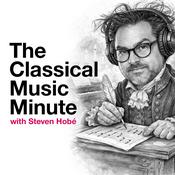
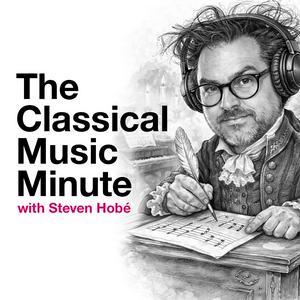
The Classical Music Minute is a short, engaging classical music podcast that explores the stories, composers, and curious traditions behind the world’s greatest music.Ever wondered who the Florentine Camerata were? Where the conductor’s baton came from? Or what the difference is between opera buffa and opera seria?Hosted by Canadian composer and storyteller Steven Hobé, each episode offers a quick and entertaining journey through classical music history, uncovering fascinating facts about composers, famous works, opera, orchestras, and musical traditions.Whether you’re a lifelong music lover or simply curious about classical music, hop around music history with Steven—one musical minute at a time.
Site de podcastOuça The Classical Music Minute, vinte mil léguas e muitos outros podcasts de todo o mundo com o aplicativo o radio.net
Obtenha o aplicativo gratuito radio.net
- Guardar rádios e podcasts favoritos
- Transmissão via Wi-Fi ou Bluetooth
- Carplay & Android Audo compatìvel
- E ainda mais funções
Obtenha o aplicativo gratuito radio.net
- Guardar rádios e podcasts favoritos
- Transmissão via Wi-Fi ou Bluetooth
- Carplay & Android Audo compatìvel
- E ainda mais funções

The Classical Music Minute
Leia o código,
baixe o aplicativo,
ouça.
baixe o aplicativo,
ouça.
 Brasil