

Ouça este podcast gratuitamente no aplicativo: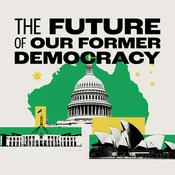 Baixe gratuitamente na App Store
radio.net
Sleeptimer
Guardar rádio
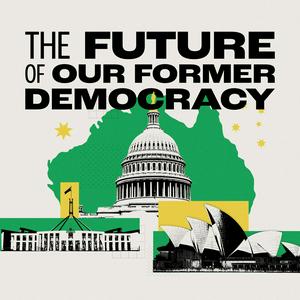
The Future of Our Former Democracy
MED and Mori Strategies
Último episódio
25 episódios
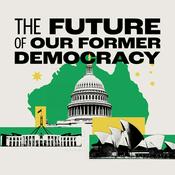
From Penal Colony to Democracy Lab
12/10/2026 | 42minHow does a British penal colony become one of the world's most trusted democracies?
Ruth and Colin head back to 1788 to trace how a society of convicts and guards pioneered the secret ballot, the living wage, and the eight-hour workday, blending Washington and Westminster into a democracy all its own, built on the ethos of the "fair go." But that story is inseparable from the dispossession and genocide of First Nations people, raising the question of who Australian democracy was actually built for.
Special thanks to the experts featured in this episode:
Dr. Mark Dunn, Historian and Author of The Convict Valley
Professor Thalia Anthony, University of Technology Sydney
Professor Frank Bongiorno, Australian National University
Dr. Marija Taflaga, Centre for the Study of Australian Politics, Australian National University and co-host of Democracy Sausage podcast about Australian Politics
Paul Daffy, Journalist and Tour Guide
Mentioned Resources Link
The Future of Our Former Democracy is a production of More Equitable Democracy and Mori Strategies.
For more information on More Equitable Democracy's work, please visit: https://www.equitabledemocracy.org/Vote, Surf, Sausage: A Recipe for Trust Down Under
05/10/2026 | 33minWelcome to Season 3 of The Future of Our Former Democracy!
Colin is joined by new co-host Ruth Greenwood, director of Harvard Law School's Election Law Clinic and proud Australian expat, as the show heads Down Under. In Australia, elections are "boring, boring, boring," and voters across the political spectrum trust the results in a way Americans rarely do.
Colin and Ruth explore why.
Special thanks to the experts featured in this episode:
Dr. Marija Taflaga, Centre for the Study of Australian Politics, Australian National University and co-host of Democracy Sausage podcast about Australian Politics
Professor David Smith, United States Studies Centre, University of Sydney
Professor Thalia Anthony, University of Technology Sydney
For more information on our electoral systems work, visit democracynow.org.
The Future of Our Former Democracy is a production of More Equitable Democracy and Mori Strategies.
For more information on More Equitable Democracy's work, please visit: https://www.equitabledemocracy.org/Season 3 Trailer: The Commonwealth of Australia
21/09/2026 | 4minAustralia built its democracy on the American model, then kept revising it: the secret ballot, ranked-choice voting, proportional representation, and elections that Australians across the political spectrum actually trust. In our new season, we travel Down Under to explore how a country so similar to ours, including in its history of white supremacy and Indigenous genocide, ended up with a democracy that works so differently, and what the U.S. can learn from it.Future Hindsight | The People's Document: Melissa Murray
29/06/2026 | 48minMila Atmos and Melissa Murray discuss the hidden power inside the U.S. Constitution, what it was designed to protect against, and how it can fortify American democracy today.
Melissa Murray is the Frederick I. and Grace Stokes Professor of Law at NYU School of Law, co-host of the Strict Scrutiny podcast, and a legal analyst for MSNBC. Her new book is The US Constitution: A Comprehensive and Annotated Guide for the Modern Reader.
Your civic action toolkit recommendations from Melissa are:
1) Commit to voting and follow through
2) Make your demands clear to your elected representativesBonus: Who Gets To Belong? Voices from Ukraine and Syria
20/05/2026 | 49minThis bonus episode is a recording of a panel presentation from More Equitable Democracy's 2025 learning tour to Germany. The panel featured four international voices - immigrants, international students, and refugees - living in Germany today.
Special thanks to the experts featured in this episode:
- Hesham Moadamani, Office of Civic Engagement, Bard College Berlin
- Liza Nezhyva, Mriï Collective, Bard College Berlin
- Khalil Hammod, Alumni, Bard College Berlin
- Mariia Krychevska, Mriï Collective, Bard College Berlin
Music and archival references
For more information on More Equitable Democracy’s work, please visit: https://www.equitabledemocracy.org/
Mais podcasts de Ciência política




Podcasts em tendência em Ciência política









Sobre The Future of Our Former Democracy
Australia built its democracy on the American model, then kept revising it: the secret ballot, ranked-choice voting, proportional representation, and elections that Australians across the political spectrum actually trust. In our new season, we travel Down Under to explore how a country so similar to ours, including in its history of white supremacy and Indigenous genocide, ended up with a democracy that works so differently, and what the U.S. can learn from it.
Site de podcastOuça The Future of Our Former Democracy, STF Oficial e muitos outros podcasts de todo o mundo com o aplicativo o radio.net
Obtenha o aplicativo gratuito radio.net
- Guardar rádios e podcasts favoritos
- Transmissão via Wi-Fi ou Bluetooth
- Carplay & Android Audo compatìvel
- E ainda mais funções
Obtenha o aplicativo gratuito radio.net
- Guardar rádios e podcasts favoritos
- Transmissão via Wi-Fi ou Bluetooth
- Carplay & Android Audo compatìvel
- E ainda mais funções

The Future of Our Former Democracy
Leia o código,
baixe o aplicativo,
ouça.
baixe o aplicativo,
ouça.
 Brasil