

Ouça este podcast gratuitamente no aplicativo: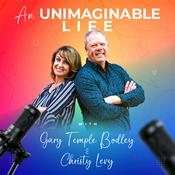 Baixe gratuitamente na App Store
radio.net
Sleeptimer
Guardar rádio
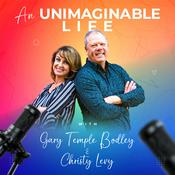
An Unimaginable Life
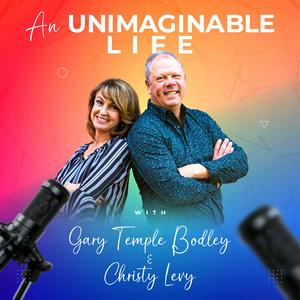
Christy Levy, Spiritual Medium with Gary Temple Bodley
Último episódio
108 episódios
Stop Editing Yourself - Diego Rivera and Zora Neale Hurston
05/10/2026 | 49minWhat if the life you want isn't waiting on the other side of accomplishment, healing, money, approval, or becoming a better version of yourself? Diego Rivera and Zora Neale Hurston arrive with a provocative invitation: trust your appetite for life, notice the ordinary guidance already calling you, and stop confusing the conditions of your life with actual limitation.
Their message is simple and radical: you were worthy of your life before you accomplished a single thing, and freedom begins when you allow yourself to participate in it now.
Read about the Freedom Project hereWhy Falling Is Not Failure: Buster Keaton and Heraclitus
27/09/2026 | 58minWhat do a silent-film comedian famous for falling down and a 2,500-year-old philosopher famous for a flowing river have to teach us about freedom? Buster Keaton and Heraclitus arrive with a surprisingly unified message: you are exhausting yourself trying to remain who you think you're supposed to be.
This hilarious and unexpectedly moving Dead Talk explores spiritual performance, emotional honesty, identity, surrender and the freedom to stop correcting every wobble. Sometimes the next version of you isn't born when you get back up—it begins while you're still on the floor wondering what just happened.
Read about The Freedom Project 7-day Boosts here
Schedule a call with Christy to learn about The Freedom Project here
Schedule a call with Gary to learn about The Freedom Project here
Buster Keaton was famous silent-film physical comedian known as “The Great Stone Face” because of his deadpan expression. His comedy repeatedly involved physical chaos: falling, collapsing structures, accidents, unexpected movement and circumstances going spectacularly wrong while he remained engaged with what was happening.
Heraclitus of Ephesus was an ancient Greek philosopher associated with continual change, fire, the Logos, the unity of opposites, and the famous river teaching: “You can't step into a river twice” because the river is no longer the same river, and you are no longer the same person.Living Without Waiting - Eileen Caddy and Albert Camus
20/09/2026 | 1h 3minWe think certainty gives us permission to move, but what if waiting for certainty is precisely what keeps us stuck? This Dead Talk explores trust without reassurance, clarity without explanation, and the extraordinary power of taking the next honest step even while doubt is still present.
Eileen Caddy was a spiritual teacher, author, and one of the founders of the Findhorn spiritual community in Scotland. She became particularly associated with receiving practical inner guidance through what she described as the quiet voice within.
Albert Camus was a French-Algerian writer, philosopher, journalist, and Nobel Prize–winning author associated with philosophical explorations of absurdity, revolt, meaning, mortality, and the human condition.
Read about The Freedom Project 7-day Boosts here
Schedule a call with Christy to learn about The Freedom Project here
Schedule a call with Gary to learn about The Freedom Project hereThe Life You Haven’t Lived Yet - Julia Child and Samuel Beckett
12/09/2026 | 51minWhat if the empty space in front of you isn't evidence that something is missing, but the place where everything you haven't imagined yet is waiting? In this extraordinary Dead Talk, Julia Child and Samuel Beckett bring two perfectly opposite perspectives together—the freedom not to know and the freedom to participate anyway—revealing why fascination, appetite for life, steadiness in uncertainty, and an unwritten future may be the essential ingredients of an unimaginable life.
Read about The Freedom Project 7-day Boosts here
Schedule a call with Christy to learn about The Freedom Project here
Schedule a call with Gary to learn about The Freedom Project here
Julia Child was an American chef, author, and television personality who became one of the most influential popularizers of French cooking in the United States. In the session, however, her relevance is not primarily culinary. Her life becomes an example of discovery through appetite. She was someone who lived multiple lives within one lifetime, continually encountering changing circumstances and identities while discovering, essentially, “I’m still here.” She understood appetite not merely for food and pleasure but for experience.
Samuel Beckett was an Irish writer, playwright, novelist, and poet, most famously associated with Waiting for Godot. He references his involvement in the French Resistance and the creative period that followed. His presence is almost the energetic opposite of Julia’s: sparse, observant, patient, comfortable with silence, and unwilling to fill empty space simply because emptiness makes us uncomfortable.The Identity Is Afraid. The Essence Is Not: Henri Nouwen and Rabindranath Tagore
06/09/2026 | 53minHenri Nouwen and Rabindranath Tagore bring an unusually intimate message about worthiness, identity, courage, and the way fear interprets reality. This Dead Talk explores why limiting beliefs feel like truth, what healing is not, and how we can begin life through the eyes of our essence rather than the frightened identity.
Read about The Freedom Project 7-day Boosts here
Schedule a call with Christy to learn about The Freedom Project here
Schedule a call with Gary to learn about The Freedom Project here
Henri Nouwen was a Dutch Catholic priest, theologian, professor, and spiritual writer known for work centered on vulnerability, belonging, compassion, inner wounds, spiritual identity, and the experience of being deeply loved.
Rabindranath Tagore was an Indian poet, philosopher, composer, educator, artist, and Nobel laureate. He wrote extensively about consciousness, nature, humanity, divinity, freedom, beauty, and the relationship between the individual and the universal. He also famously renounced his British knighthood in protest after the Jallianwala Bagh massacre and wrote songs that became the national anthems of India and Bangladesh.
Mais podcasts de Espiritualidades
 LendaCastEspiritualidades, Ficção, Religião e espiritualidades
 Audiolivros EspíritasEspiritualidades, Religião e espiritualidades
 Espiritismo PodcastEspiritualidades, Religião e espiritualidades
 Espiritismo SimplesEspiritualidades, Religião e espiritualidades
 TarotEspiritualidades, Religião e espiritualidades
 Terapia InteriorEspiritualidades, Religião e espiritualidades, Saúde e fitness, Saúde mental
 PositivaMente Consciente PodcastEspiritualidades, Religião e espiritualidades
 Foco de PestilênciaEspiritualidades, Filosofia, História, Religião e espiritualidades, Sociedade e cultura
 Café Da Manhã Com Fernando ManhaniniEspiritualidades, Religião e espiritualidades
 Recomeçar PodCast EspíritaEspiritualidades, Religião e espiritualidades
Podcasts em tendência em Espiritualidades
- Café Da Manhã Com Fernando ManhaniniEspiritualidades, Religião e espiritualidades
 Back on the Broomstick: Old Witchcraft, New PathEspiritualidades, Filosofia, Religião e espiritualidades, Sociedade e cultura
- Foco de PestilênciaEspiritualidades, Filosofia, História, Religião e espiritualidades, Sociedade e cultura
 Multiverse 5D Podcast | Spirituality, Metaphysics, Multiverse and Ancient SecretsAstronomia, Ciência, Ciências Sociais, Enriquecimento individual, Ensino, Espiritualidades, Física, Religião e espiritualidades
 Estudando O Livro dos Médiuns | FEBEspiritualidades, Religião e espiritualidades
 Horóscopo Em DiaEspiritualidades, Religião e espiritualidades
 Espiritualidade e VidaEspiritualidades, Religião e espiritualidades
 PODBISPOEspiritualidades, Religião e espiritualidades
 Alquimia da MenteEspiritualidades, Religião e espiritualidades
 bibicastEspiritualidades, Religião e espiritualidades
 The Astrology PodcastEspiritualidades, Filosofia, Religião, Religião e espiritualidades, Sociedade e cultura
 Projeto MayhemEspiritualidades, Filosofia, Religião e espiritualidades, Sociedade e cultura
- PositivaMente Consciente PodcastEspiritualidades, Religião e espiritualidades
Sobre An Unimaginable Life
Christy is a one of the world’s most powerful mediums. In this podcast, Christy and channeler Gary Temple Bodley bring in those who have crossed over to share their nonphysical perspectives to tell us what’s really going on in our reality. The conversations are both fascinating and enlightening.
Site de podcastOuça An Unimaginable Life, LendaCast e muitos outros podcasts de todo o mundo com o aplicativo o radio.net
Obtenha o aplicativo gratuito radio.net
- Guardar rádios e podcasts favoritos
- Transmissão via Wi-Fi ou Bluetooth
- Carplay & Android Audo compatìvel
- E ainda mais funções
Obtenha o aplicativo gratuito radio.net
- Guardar rádios e podcasts favoritos
- Transmissão via Wi-Fi ou Bluetooth
- Carplay & Android Audo compatìvel
- E ainda mais funções

An Unimaginable Life
Leia o código,
baixe o aplicativo,
ouça.
baixe o aplicativo,
ouça.
 Brasil