
Ouça este podcast gratuitamente no aplicativo: Baixe gratuitamente na App Store
radio.net
Sleeptimer
Guardar rádio
408 episódios
Some memories age like vinyl. Others age like PS2 graphics on a giant TV.
22/10/2026 | 48minThis week’s Sesh starts with old-school video games and ends with a Mexico story that escalates way past “we should probably find our friend.” In between? Strict parents, forbidden cartoons, questionable movie nights, and a very important question: was that childhood favorite actually good, or were you just twelve?
With Midtown Haze in the Volcano, we revisit the chaos of Manhunt, the love for Splinter Cell, and the absolute insanity of Conker’s Bad Fur Day. Then we take the scenic route through VHS memories, The Heavenly Kid, and the horror movies that make you laugh versus the ones that actually get under your skin.
Naturally, that turns into Navy stories, Tijuana adventures, and a dad who could negotiate a deal through sheer eye contact.
It’s a happy, rambling, “how the hell did we get here?” kind of sesh. Pull up a chair. You’re in good company.
Inside this sesh:
Why some classic games still hit—and others should stay a memory.
Childhood gaming limits and cartoons we weren’t allowed to watch.
A Heavenly Kid recap that becomes its own side quest.
Midtown Haze check-in: happy, chill, and thoroughly off-topic.
Horror favorites, chainsaw hands, and one deeply questionable movie night.
Navy memories, Mexico misadventures, and the art of holding your price.
Chapters
00:00 — Rockstar games were a different kind of wild
04:19 — Does nostalgia actually hold up?
09:04 — Minecraft, gaming with kids, and the backlog
12:19 — Racing games and earning your Nintendo time
15:27 — Syphon Filter, Conker, and childhood chaos
18:42 — Forbidden cartoons and VHS memories
20:14 — The Heavenly Kid rabbit hole
29:22 — Midtown Haze in the Volcano
29:49 — Popcorn movies and horror favorites
36:14 — A movie night that took a turn
38:08 — Navy memories and visits from home
40:23 — Tijuana trips and Rosarito adventures
43:26 — Finding the friends who wandered off
47:17 — Bargaining lessons and the $1,250 Honda
What’s one game or movie you loved growing up that still holds up—and one you wish you’d left in your memories?
8:16 PMMidtown Haze: Clear Head, Chill Body & Patrick Swayze
20/10/2026 | 28minSome strains get you talking. Midtown Haze apparently gets us building a whole Patrick Swayze cinematic universe before we’ve even finished the introduction. Welcome to Cannabis School.
This week, we’re firing up the Volcano and spending some quality time with Midtown Haze. Big, squishy buds, citrus on the first pull, and woody, earthy aromas have our attention—but how does it actually feel?
For us, this session brings a clearheaded, chatty high with a surprisingly relaxed body. We talk through those effects as they settle in, compare the experience with our expectations of a sativa-leaning hybrid, and get into why knowing your own preferences matters more than chasing a label.
Along the way, we’re sticking our noses in the grinder, talking flower storage, and appreciating good cannabis the same way you’d appreciate good food. Then we somehow end up on frozen pizza, ketchup sandwiches, learning languages, and somebody’s dad getting into glassblowing. It’s that kind of episode.
In this episode:
Our Midtown Haze aroma, flavor, and effects review.
Why we smell flower before and after grinding.
Citrus, pine, incense, and earthy notes—and what we actually pick up.
Our Volcano session and some vaporizer talk.
Personal terpene preferences and the limits of strain labels.
Creative curiosity, relaxed conversation, and the usual questionable tangents.
Chapters
00:00 — Welcome to Cannabis School
00:31 — Meet Midtown Haze—and cue the Swayze tangent
03:48 — Genetics discussion and first impressions
05:51 — Volcano session and vaporizer talk
07:38 — The grinder sniff test and flower storage
10:58 — Flavor notes and how the high is settling in
12:18 — Personal experiences with crossfading and medications
14:31 — Terpene preferences and appreciating the aroma
17:07 — Chatty, focused, and feeling relaxed
18:38 — Body effects and individual preferences
19:40 — Frozen pizza and childhood sandwiches
22:50 — Learning languages, new hobbies, and creative rabbit holes
27:39 — Final thoughts and Patreon love
Have you tried Midtown Haze? Tell us what flavors stood out and how the experience landed for you. And if you’ve got a childhood sandwich you still defend, we apparently need to hear about that, too.
Big love to our Patreon supporters for helping make Cannabis School happen. Follow the show, share this episode with your favorite sesh buddy, and we’ll catch you next week.
Find everything in one place here:
👉 https://cannabisschool.org/productsDoes Cannabis Give You Superpowers?
13/10/2026 | 1h 2minEver feel like a few puffs turned you into a creative genius… then one more bowl sent you straight into “oh shit” territory? Yeah. We’ve been there.
This week on Cannabis School, Jesse and Brandon explore those moments when cannabis makes you feel more focused, more present, and a little more like the superhero in your own movie. Jesse’s Tropicana Cherries story kicks things off with a twelve-page writing sprint—and a second bowl that took the experience in a very different direction.
From there, we get into creativity, quieting the mental chaos, letting go of other people’s judgments, and finding joy without turning every damn hobby into work. There’s a giant bowl of Froot Loops analogy, a Ted Lasso moment, and enough gaming tangents to keep things interesting.
The question underneath it all: does cannabis give us superpowers, or do we sometimes feel like we’re finally getting out of our own way?
In this episode:
Feeling locked in versus getting way too high
Creativity, connection, and being present
Jesse’s take on slowing down a brain full of ideas
Ego, self-judgment, and learning without getting defensive
Finding joy in books, games, and everyday moments
Personal experiences with strains, terpene profiles, and dry herb vaporizers
Chapters
00:00 — Tropicana Cherries: superhero mode meets “oh shit”
05:48 — Does cannabis actually give you superpowers?
08:53 — Family conversations and cannabis stigma
13:58 — Mental chaos, Froot Loops, and Quicksilver
17:41 — Getting out of your head and into your life
21:08 — Finding joy beyond money and possessions
25:33 — Jesse’s experiences with terpenes and setting
27:31 — Confidence, creativity, and needing approval
31:41 — Hobbies, gaming, and letting fun stay fun
35:16 — Judgment, Ted Lasso, and letting things go
39:22 — Learning from others without an ego battle
43:54 — Reflection, kindness, and everyday connection
46:48 — Parenting, screens, and personal responsibility
51:46 — A delivery disaster and accepting what you can’t control
54:56 — Strain labels, personal preferences, and dosing
58:39 — Dry herb vaporizers and the people around you
Keep the conversation going: Have you ever had a cannabis experience that made you feel like a superhero—or humbled you real quick? Tell us your story.
If this episode made you laugh or gave you something to think about, follow Cannabis School, leave a review, and share it with a friend.
Find everything in one place here:
👉 https://cannabisschool.org/productsYou F*cked Up. You’re Still Allowed to Grow. Other options with your to
08/10/2026 | 55minWe missed a week, came back, and apparently had some shit to work through.
This sesh starts with Mormon cartoons and whether carrying gold plates into battle requires superhero strength. Somehow, we end up talking about faith, family, forgiveness, and the stories we keep telling ourselves about who we are. GMO Cookies may have helped with the detours.
We get personal about growing up in very different households, finding community without agreeing on everything, and learning to look back at our mistakes without turning every memory into another reason to beat ourselves up. You fucked up. What have you learned? Who have you become since then?
Then we get into relationships, misunderstandings, and the difference between feeling angry and using that anger to hurt someone. There are some heavy moments in this one, along with plenty of us being us.
And just when things need a little breathing room, Jesse shares how “making new connections” became “naked connections” in a professional text. Autocorrect really said, let’s see where this goes.
In this sesh:
Growing up with Living Scriptures and very specific Sunday entertainment.
Family stories, alcohol, and the things we were taught to believe.
Faith, church culture, and making room for people who think differently.
Taking responsibility while giving yourself room to grow.
How labels and assumptions get in the way of connection.
Listening to your partner instead of preparing your rebuttal.
Feeling your emotions without taking them out on someone else.
An unfortunate text, a hard-earned racing win, and the power of a simple thank-you.
Chapters
00:15 — We’re back, and straight into Mormon cartoons
03:03 — Patience before you could text everyone
04:14 — Family stories, Mexico, and two very different grandmas
09:01 — Growing up around alcohol—or without it
11:38 — Faith, church culture, and community
14:21 — Connection, conversations, and looking past labels
16:30 — Dating, pickup artists, and manipulation
18:18 — Religion and what community means to us
21:14 — Forgiving yourself and recognizing your growth
28:34 — Do we want understanding, or do we want to be right?
31:09 — Identity, labels, and different paths
34:53 — Childhood hurt and showing up in relationships
38:06 — When an invitation gets lost in translation
40:12 — Ownership, reactions, and listening
42:07 — Trauma, abuse, and difficult personal stories
45:54 — Being angry without being hurtful
48:50 — “Naked connections”: autocorrect strikes again
50:41 — A little kindness at the checkout
52:34 — Finally winning that damn race
53:58 — Starting over and saying thank you
What’s something you handle better now than you did five years ago? Give yourself a little credit, and tell us about it.
Find everything in one place here:
👉 https://cannabisschool.org/productsCannabis 101: Why the Hell Is My Heart Racing?
06/10/2026 | 44minYou wanted to chill. Your heart apparently signed up for cardio.
This week on Cannabis School, we’re talking about that uncomfortable moment when your heart starts pounding, you notice every damn beat, and suddenly your smartwatch has your undivided attention.
Jesse and Brandon share their own experiences with racing hearts, anxious highs, and familiar products that suddenly felt very different. We talk dose, tolerance, mindset, and the questions we sometimes forget to ask ourselves before a session: Did I sleep? Have I eaten? Am I already stressed? How much caffeine did I just put in my body?
We also revisit Jesse’s Banana Kush experience, discuss why we keep coming back to flower, and explain why being the experienced cannabis friend comes with some responsibility. Your buddy’s first session is not an audition for the Cannabis Olympics.
Expect honest conversation, questionable analogies, a few Jedi references, and a reminder that “just chill the fuck out” isn’t exactly top-tier emotional support.
In this episode:
Racing hearts and the anxiety loop of noticing every heartbeat.
Why the same strain doesn’t always feel the same.
Our experiences with edibles, carts, flower, and changing tolerance.
Looking beyond the biggest THC number on the shelf.
Set and setting beyond candles and a little patchouli.
Supporting a friend who’s having an uncomfortable experience.
Talking with your pharmacist about medications—your physicist has other things going on.
Chapters
00:31 — Why does my heart feel like that?
01:30 — When a favorite cart stops feeling familiar
02:47 — Checking in: sleep, food, water, and caffeine
04:59 — THC, heart rate, and the nervous system conversation
05:50 — Set, setting, and edible experiences
07:19 — Moving past the highest THC percentage
08:46 — The racing-heart anxiety loop
11:04 — An anxious moment while playing Diablo
13:29 — Why we keep coming back to flower and vaporizers
15:03 — Revisiting Banana Kush and an overwhelming high
17:09 — Joints, coughing, and the ritual of smoking
22:12 — Feeling panicked versus looking panicked
25:25 — Medications: call your pharmacist
27:17 — Cannabis Jedi and looking out for beginners
28:09 — Personal calming rituals and breathing discussion
32:34 — The inevitable movie tangent
34:24 — Revisiting dose and consumption methods
40:15 — Tolerance and recognizing your own reactions
42:42 — Knowing yourself and showing compassion
Ever had your usual strain suddenly hit different? Tell us about your experience and what you learned about your own limits.
Health note: This episode includes personal experiences and home remedies, not established treatments. Don’t assume concerning symptoms are just anxiety. Chest pain, trouble breathing, or loss of consciousness warrant emergency help.
Find everything in one place here:
👉 https://cannabisschool.org/products
Mais podcasts de Saúde alternativa






Podcasts em tendência em Saúde alternativa



Sobre Cannabis School
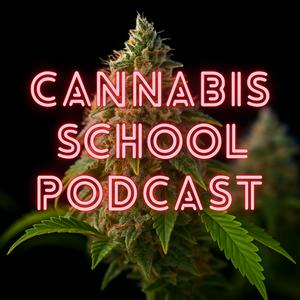
Cannabis School is a weekly podcast focused on clear, honest cannabis education for real adults.
We break down how the plant works, how people actually use it, and how to think about cannabis with intention, not hype or fear.
Through science, lived experience, and real conversations, we cut through stigma and misinformation
so listeners can make informed choices that fit their lives.
Hosted by Brandon Elder and Jesse Angeles.
Questions or feedback: contact@cannabisschool.org
Site de podcastOuça Cannabis School, 8 Hour Binaural Beats e muitos outros podcasts de todo o mundo com o aplicativo o radio.net
Obtenha o aplicativo gratuito radio.net
- Guardar rádios e podcasts favoritos
- Transmissão via Wi-Fi ou Bluetooth
- Carplay & Android Audo compatìvel
- E ainda mais funções
Obtenha o aplicativo gratuito radio.net
- Guardar rádios e podcasts favoritos
- Transmissão via Wi-Fi ou Bluetooth
- Carplay & Android Audo compatìvel
- E ainda mais funções

Cannabis School
Leia o código,
baixe o aplicativo,
ouça.
baixe o aplicativo,
ouça.
Cannabis School: Podcast do grupo
 Brasil