
Ouça este podcast gratuitamente no aplicativo: Baixe gratuitamente na App Store
radio.net
Sleeptimer
Guardar rádio
300 episódios
AI to El Niño What's Ahead for Oil and Gas Prices in 2027?
20/11/2026 | 36minIn this episode of the Energy Newsbeat Podcast, host Stu Turley sits down with Steve Reese, CEO of Reese Energy Consulting, and Dennis Kisstler, Senior Vice President of the Energy Trading Division at Bank of Oklahoma, to explore the current state of global energy markets. As geopolitical tensions reshape oil and gas flows, data centers compete for natural gas resources, and Europe grapples with an energy crisis of its own making, the three discuss how price signals and market dynamics are driving adaptation across the industry. From the Strategic Petroleum Reserve hitting 40-year lows to LNG exports becoming a critical tool for energy security, this conversation reveals how traditional energy remains indispensable—and how the next few years will test the resilience of both supply chains and policy frameworks worldwide.
Connect with Dennis on LinkedIn Here: https://www.linkedin.com/in/dennis-kissler/
Connect with Steve on LinkedIn Here: https://www.linkedin.com/in/steve-reese-185a86/
Connect with Stu on LinkedIn Here: https://www.linkedin.com/in/stuturley/
Here is the BOK News Letter Link:
1. Oil Market Dynamics & Geopolitical ImpactThe conversation opens with analysis of crude oil markets, particularly focusing on Iran's export restrictions and Middle East tensions. Dennis Kistler explains how ship-to-ship transfers are maintaining oil exports despite Iran's offline status. The key insight is that while supply appears stable, transportation costs are artificially inflating prices by $13-20 per barrel. Without these shipping delays, crude would likely be in the low $60s. The speakers predict potential oversupply of 2 million barrels per day by mid-2025 once supply chains normalize.
2. Strategic Petroleum Reserve (SPR) RefillingDiscussion centers on the U.S. SPR being at its lowest level since 1982. While refilling SPRs globally (particularly China's) provides some price support, the speakers note this isn't a major bullish factor. The U.S. can quickly rebuild reserves by temporarily halting exports if needed, given America's shift to energy self-sufficiency with Permian production now exceeding 6 million barrels per day.
3. Natural Gas Market ComplexityThis is a major focus, with several key points:
Data center competition: Texas data centers are now in a moratorium, shifting dynamics between LNG exports and local demand
Political uncertainty: New regulations in Texas and changing policies are creating market volatility
Storage levels: Gas storage is only 2.1% above the five-year average (vs. 3.8% last year), suggesting the market isn't as bearish as feared
El Niño impact: Milder weather is suppressing prices, with heavy short positions in the market
4. LNG Export Growth & International DemandThe speakers highlight aggressive demand from India, which is now a major player seeking 5-10 MTPA (million tons per annum). Qatar's facility issues have shifted market dynamics. The conversation reveals that LNG takeaway capacity (9.5-10 BCF/day) will likely match or exceed production growth from major basins (Permian, Haynesville, Appalachia) by 2029, creating potential supply tightness.
5. Northeast Pipeline Infrastructure & Home Heating Oil CrisisA significant discussion focuses on:
High home heating oil prices (reaching $6.10) in the Northeast
The need for natural gas pipeline infrastructure to replace heating oil
Potential for LNG export facilities in Virginia (discussed with Toby Rice/EQT)
Political barriers to pipeline expansion in the Northeast
The opportunity to transition homes from heating oil to propane or natural gas
6. European Energy Crisis & De-industrializationSteve Reese shares firsthand observations from their Berlin office about Germany's energy disaster:
German manufacturing is collapsing due to tripled electricity prices from aggressive wind-only policies
100+ German CEOs want U.S. shale LNG
Government energy strategy meetings lack basic energy knowledge (MMBTU understanding)
Europe is learning the hard way that hydrocarbons remain essential
7. Long-Term Price Forecasts & Investment OutlookDennis provides detailed projections:
Oil: Expects oversupply by 2025, with prices settling in the low $60s long-term
Natural gas: Predicts a $3 floor with winter peaks at $5-6; unlikely to drop below $2
Electrification demand: Growing 16-18% through 2030, supporting gas demand
Investment thesis: Favors LNG infrastructure, natural gas pipelines, and drilling services over the next 10 years
8. Market Resilience & AdaptabilityA recurring theme is that "oil will find a way"—markets self-correct through price signals. Examples include Saudi Arabia's rapid pipeline repairs and market responses to shipping disruptions. The speakers emphasize that both crude oil and natural gas remain essential for decades, despite renewable energy growth.
We would also like to give our sponsors a shout-out.
Check out the World’s Greatest Podcast Show Notes at EnergyNewsBeat.co or EnergyNewsBeat.com, and the Energy News Beat Substack at:
Energy News Beat
At The Intersection of Energy and Finance - By Sandstone Group
By Stu Turley
A shout-out to Steve Reese and the Reese Energy Consulting group for sponsoring the Podcast https://reeseenergyconsulting.com/.
Data2 if you have any business systems, can you trust A? Well, they have the patent on validation. . https://data2.zoholandingpage.com/energy
And we have WellDatabase rolling, and we use their tools for the Energy News Beat weekly Rig Reports: https://welldatabase.com/
Also entering Sponsor Rey Trevino, Pecos Operating https://pecos.energy/Drew Bond, Conner Brace, Post Midterm Election Energy Policy Impact
13/11/2026 | 1h 1minIn this episode of the Energy Newsbeat Podcast, host Stu Turley sits down with Drew Bond, co-founder and chairman of PowerField Energy, and Conner Brace, principal at Boundary Stone Partners and former U.S. Department of Energy advisor, to discuss the energy policy implications of the recent midterm elections. The conversation reveals a critical disconnect: while Democrats successfully campaigned on affordability, Republicans failed to communicate how their energy policies actually deliver lower costs and greater energy security. The trio dives deep into the real culprits behind rising energy prices—not politicians alone, but the bureaucratic red tape and bad policy that handicap American energy production. From the collapse of U.S. refinery capacity to the urgent need for permitting reform, from China's nuclear dominance to the greenwashing plaguing the renewable energy sector, this episode exposes the hard truths about energy policy and charts a pragmatic path forward based on market-driven solutions, energy independence, and the principle of delivering the lowest-cost, most reliable energy to American consumers.
1. Post-Midterm Election Energy Policy ImpactThe hosts analyze how energy affordability became a central campaign message, with Democrats successfully messaging on affordability despite Republicans having better energy policies. They discuss why Republicans failed to effectively communicate their energy accomplishments and messaging strategy during the midterms.
2. Permitting Reform & Regulatory OverreachA major focus is the urgent need for permitting reform. The discussion highlights how excessive red tape and bureaucratic policies handicap the U.S. energy sector compared to competitors like China. They mention the BAJA permitting bill moving through Congress with bipartisan support.
3. Refinery Capacity & Energy IndependenceThe conversation covers the dramatic decline in U.S. refinery capacity—from 300 refineries down to 130—and how this impacts fuel prices. They discuss California's specific challenges with only 7 refineries, most slated to close, and how this drives up diesel and gasoline prices to 52% higher in blue states.
4. Nuclear Power DevelopmentThey compare U.S. nuclear development unfavorably to China, which has 36 new reactors under construction while the U.S. has built only 3 in 30 years. They emphasize nuclear as essential for baseload power and energy security.
5. Data Centers & Grid InfrastructureDiscussion of how data centers are driving electricity demand and infrastructure investment, while also examining the tension between development needs and community concerns about land use and property rights.
6. "All of the Above" Energy StrategyThe speakers advocate for a pragmatic, market-driven approach that includes natural gas, nuclear, solar, wind, and oil/gas—prioritizing affordability and reliability over ideological energy preferences.
7. Renewable Energy Subsidies & GreenwashingCritique of current solar tax credits that incentivize expensive technology over cost-effective solutions, and criticism of companies claiming "green" status while using natural gas (like Bloom Energy).
8. Energy Costs & InflationAnalysis of how energy prices have actually remained relatively stable when adjusted for inflation since 2008, despite perceptions of high costs, thanks to innovation in fracking and natural gas.
9. Geopolitical Energy SecurityDiscussion of how U.S. energy independence affects foreign policy, including references to conflicts in Iran and Ukraine, and the importance of domestic energy production for national security.
10. Land Reclamation & Environmental ResponsibilityConcerns about solar and wind farms not being designed for land reclamation, with an $89 billion bill looming for cleanup, and promotion of sustainable solar solutions like Power Field Energy's ballasted, removable systems.
Connect with Drew Bond at https://www.linkedin.com/in/drew-bond/
Connect with Conner Brace at https://www.linkedin.com/in/connerbrace/
We would also like to give our sponsors a shout-out.
Check out the World’s Greatest Podcast Show Notes at EnergyNewsBeat.co or EnergyNewsBeat.com, and the Energy News Beat Substack at:
Energy News Beat
At The Intersection of Energy and Finance - By Sandstone Group
By Stu Turley
A shout-out to Steve Reese and the Reese Energy Consulting group for sponsoring the Podcast https://reeseenergyconsulting.com/.
Data2 if you have any business systems, can you trust A? Well, they have the patent on validation. . https://data2.zoholandingpage.com/energy
And we have WellDatabase rolling, and we use their tools for the Energy News Beat weekly Rig Reports: https://welldatabase.com/
Also entering Sponsor Rey Trevino, Pecos Operating https://pecos.energy/The Blue Wave's Energy Reckoning: Rate Freezes, Grid Collapse, and Why Refineries Matter
12/11/2026 | 31minIn this episode of the Energy News Beat podcast, hosts Stu Turley and Rey Trevino dive deep into how the recent political shifts are reshaping America's energy landscape. From California's controversial rate-freeze proposal to Senate permitting reforms, the hosts examine the real-world consequences of energy policy decisions on consumers' wallets and grid reliability. They explore critical issues including the collapse of U.S. refining capacity, the expiring Jones Act waiver's impact on fuel distribution, major oil companies' expansion ambitions in the Permian Basin, and the looming threat of Federal Reserve rate hikes triggering another recession. With insights from their recent interview with Senator Alan Armstrong and on-the-ground observations from New York to Texas, Turley and Trevino break down why energy security, affordable power, and reliable baseload sources matter more than ever—and why the policies being proposed in blue states may backfire on consumers and the economy.
1. Political Impact on Energy Policy & PricingThe hosts discuss how the recent "blue wave" election results are affecting energy costs, particularly electricity rates. They highlight that blue states have 52.5% higher electricity rates than red states and explore how new political leadership in states like California and Texas will shape energy policy.
2. California's Power Crisis & Rate FreezeGovernor-elect Gina Hinojosa's plan to freeze electricity rates is analyzed. The hosts compare this to failed attempts in California, New Jersey, and other states, noting that California's rates (29.75¢) are nearly double Texas's (15.91¢), while California experiences rolling blackouts. They argue that price controls don't work and can lead to higher costs long-term.
3. Grid Reliability & Energy MixA critical discussion about how Texas maintained grid stability through summer without rolling blackouts, with over 50% of power coming from oil and natural gas plus nuclear. The hosts emphasize the importance of reliable baseload power sources versus intermittent renewables.
4. DOE Oil & Gas FinancingThe hosts celebrate the DOE's first oil and gas loan ($480 million to modernize offshore platforms in Louisiana), highlighting how government support for fossil fuels creates jobs and economic benefits for small-town America.
5. Jones Act Waivers & Fuel DistributionDiscussion of the expiring Jones Act waiver that allowed 90 million barrels of American fuel to reach California. The hosts debate the balance between energy security and maritime industry protection, noting that the waiver helped lower fuel costs for consumers.
6. Senate Permitting Reform (73-25 Vote)The Senate's bipartisan vote to streamline energy permitting is analyzed. The hosts note that Democrats oppose the "lawfare clause" limiting environmental lawsuits, while the permitting process varies dramatically by state (4 days in Texas vs. months/years in California).
7. Gas Price TrendsGas prices have fallen below $4 since September, but the hosts clarify this isn't due to new political leadership—it's driven by market factors like predictions about conflict resolution and the upcoming winter fuel blend switch.
8. Refinery Capacity CrisisThe U.S. has declined from 300 to 130 refineries, with Texas being the only state adding new capacity. The hosts discuss how global conflicts (Ukraine targeting Russian refineries) and net-zero policies have reduced refining capacity, creating supply vulnerabilities.
9. Major Oil Companies' Expansion PlansExxonMobil aims to add 1 million barrels per day to Permian Basin production by 2030, while Chevron focuses on cash flow and Venezuela production. The hosts note that independent oil companies drive 50% of U.S. drilling.
10. Federal Reserve Rate Hikes & Recession RiskThe hosts analyze historical patterns showing that the last two times the Fed signaled rate hikes, recessions followed. They argue 2024 is different due to diesel shortages and reduced refining capacity, making an oil shock more likely.
11. Data Center RegulationGovernor Hinojosa's pause (not permanent ban) on data centers is discussed. The hosts clarify that Governor Abbott already implemented a review, and proper regulation is needed to prevent the "Wild Wild West" approach currently in place.
12. Eminent Domain & Land Rights IssuesA concerning case involving Alabama Power cutting lines on private property despite pending eminent domain litigation is highlighted as an example of how to "not win friends and influence people."
1.If Texas Follows California on a Power-Price Freeze, the Blackout Risk Is Later Winters
2.DOE Closes Its First Oil-and-Gas Loan. Twenty-Two Gulf Platforms Get a Second Life.
3.The Waiver That Moved 90 Million Barrels of American Fuel Expires Sunday Night.
4.73–25: The Senate Moves to Build Faster. Your Power Bill Will Have to Wait.
5.Gas Fell Below $4. The Slide Started in September.
6.Will the Blue Wave Cut Your Power Bill? Brenda Shaffer Says Look at the Supply Side
7.Hinojosa Can Pause Data Centers. She Can’t Rewrite Texas Power Alone.
8.Exxon Wants More Permian Barrels. Chevron Wants More Cash. Families and Investors Need Both to Deliver.
9.The Fed Is Signaling More Rate Hikes Into an Oil Shock. Two of the Last Three Times, Recession Followed.
10.A Judge Dismissed Alabama Power’s Second Suit. The Company Still Says Cost Beats a Consented Reroute.
We would also like to give our sponsors a shout-out.
Check out the World’s Greatest Podcast Show Notes at EnergyNewsBeat.co or EnergyNewsBeat.com, and the Energy News Beat Substack at:
Energy News Beat
At The Intersection of Energy and Finance - By Sandstone Group
By Stu Turley
A shout-out to Steve Reese and the Reese Energy Consulting group for sponsoring the Podcast https://reeseenergyconsulting.com/.
Data2 if you have any business systems, can you trust A? Well, they have the patent on validation. . https://data2.zoholandingpage.com/energy
And we have WellDatabase rolling, and we use their tools for the Energy News Beat weekly Rig Reports: https://welldatabase.com/
Also entering Sponsor Rey Trevino, Pecos Operating https://pecos.energy/Hon. Jason A. Isaac, Tim Stewart, David Blackmon and Stu Turley on the Energy News Beat Podcast
10/11/2026 | 1h 5minThis roundtable discussion brings together energy industry leaders and policy experts—Jason Isaac (Founder and CEO of the American Energy Institute), Tim Stewart (President of the US Oil & Gas Association), David Blackmon (Forbes and Daily Caller contributor), and Stu Turley (Energy News Beat Podcast Host)—for a candid post-election analysis of the energy landscape facing America. In the wake of Democratic victories in key energy-producing states like Texas and New Mexico, the panel examines the critical challenges ahead: skyrocketing electricity costs in blue states, massive misallocations of capital toward unreliable renewables, and the urgent need for permitting reform. They explore how voter concerns about affordability were weaponized against the energy industry despite its role in keeping prices competitive, discuss the looming threat of "Californication" spreading to Texas energy policy, and debate strategies for effective messaging and legislative action. With insights on federal lands, the Jones Act, capital flight, and the broader geopolitical implications of American energy policy, this conversation offers a comprehensive look at how energy policy decisions will shape the nation's economic future.
Check out the American Energy Institute: https://americanenergyinstitute.com/
Check out the US Oil & Gas Association https://usoga.org/
1. Post-Election Energy Policy & Political LandscapeThe hosts discuss the recent election results and concerns about how new Democratic leadership in energy-producing states (particularly Texas and New Mexico) may impact the oil and gas industry. They emphasize the importance of maintaining Republican majorities in state legislatures as a "firewall" against restrictive energy policies.
2. Electricity Costs & Affordability CrisisA central theme is the stark disparity in electricity prices between blue and red states—blue states have 52% higher electricity costs. They cite specific examples: Hawaii, California, Massachusetts, Rhode Island, Connecticut, Maine, and New York have the highest rates, while North Dakota, Idaho, Nebraska, Louisiana, and Arkansas have the lowest. Texas, despite being an energy-producing state, isn't even in the lowest 15 states for electricity costs.
3. Renewable Energy Misallocation & Grid ReliabilityThe panel criticizes massive investments in wind, solar, and battery storage in Texas—$53 billion in capital expenditures over five years—arguing these create inefficient jobs and unreliable power generation. They note that wind and solar require 8 times more jobs than natural gas to produce equivalent electricity.
4. Permitting Reform BillA major legislative focus is the permitting reform bill, which would streamline approval processes for energy infrastructure. The discussion covers the 73-25 cloture vote, opposition from environmental groups (Sierra Club, NRDC, Earth Justice), and the challenge of getting enough House members to return for votes.
5. Federal Lands & Oil/Gas ProductionThey discuss how federal lands represent 25% of U.S. oil and gas resources. Ironically, with restrictive state policies in New Mexico, federal lands become a saving grace for production since the state government has limited control there.
6. The Jones Act & Energy Supply ChainThe Trump administration's suspension of the Jones Act has allowed Texas refineries to supply 90.3 million barrels of fuel to the East and West coasts, helping keep prices down. The expiration of this waiver is imminent and could significantly impact national energy costs.
7. Capital Flight & Business EnvironmentCompanies are already shifting capital away from restrictive energy states toward more business-friendly jurisdictions. The panel warns that negative regulatory signals cause capital to relocate, threatening local economies dependent on energy production.
8. Voter Behavior & Messaging FailuresThe discussion includes analysis of voting patterns—particularly Hispanic voters in Texas who switched to Democrats primarily due to affordability concerns. The panel criticizes Republicans for failing to effectively communicate their energy policy successes and counter Democratic messaging about affordability.
9. Lawfare Against Energy InfrastructureThey discuss a lawsuit by an electrician in Seattle against NGOs funded by billionaires and China that oppose data centers and AI infrastructure. This connects to broader concerns about left-wing organizations using litigation to block energy and infrastructure projects.
10. Global Energy ContextThe panel touches on international energy dynamics, including China's manipulation of oil markets before the election, the UK approving North Sea drilling, and the importance of American energy independence and responsible production compared to other nations.
The overall tone is cautionary but hopeful, emphasizing that the energy industry's adaptability and the Trump administration's pro-energy policies provide some protection against the most restrictive state-level policies.
We would also like to give our sponsors a shout-out.
Check out the World’s Greatest Podcast Show Notes at EnergyNewsBeat.co or EnergyNewsBeat.com, and the Energy News Beat Substack at:
Energy News Beat
At The Intersection of Energy and Finance - By Sandstone Group
By Stu Turley
A shout-out to Steve Reese and the Reese Energy Consulting group for sponsoring the Podcast https://reeseenergyconsulting.com/.
Data2 if you have any business systems, can you trust A? Well, they have the patent on validation. . https://data2.zoholandingpage.com/energy
And we have WellDatabase rolling, and we use their tools for the Energy News Beat weekly Rig Reports: https://welldatabase.com/
Also entering Sponsor Rey Trevino, Pecos Operating https://pecos.energy/Doomberg, Charlie Garcia and Stu Turley on the shifting political winds
09/11/2026 | 59minIn this episode of the Energy News Beat Podcast, host Stu Turley sits down with two prominent analysts—Charlie Garcia of MarketWatch and Capital Mischief, and Doomberg, the influential energy and finance commentator—to dissect the seismic shifts reshaping American politics, energy policy, and geopolitics. The conversation kicks off with a candid analysis of the recent election results, exploring how soaring energy prices, an unpopular military conflict in the Middle East, and widespread voter frustration with corruption upended political expectations. From there, the discussion expands into critical energy infrastructure challenges—particularly California's refinery crisis and its implications for fuel prices—the explosive growth of data centers and their competing demands for reliable power, and the strategic miscalculations behind ongoing wars in Iran and Ukraine.
Woven throughout are insights into emerging opportunities in AI and geothermal energy, speculation about the 2028 presidential race, and a sobering assessment of how political cycles and voter preferences increasingly clash with long-term strategic planning. This wide-ranging conversation offers a rare blend of energy market expertise, geopolitical analysis, and political commentary from three seasoned observers navigating an era of unprecedented volatility.
Check out Charlie Garcia https://charliepgarcia.substack.com/
Check out Doomberg: https://newsletter.doomberg.com/
1. 2026 Midterm Election Analysis & Political ShiftsThe hosts analyze the recent "blue wave" election results, discussing why voters rejected the previous administration. Key factors include:
High energy prices (gas, diesel, electricity) as a major voting issue
The unpopular Iran war, which voters cited as a key factor
Significant swing in Latino voter support (from 67% to ~30% in Texas)
Voter frustration with corruption and insider trading
The shift from a "no wars" campaign promise to military conflicts
2. Energy Policy & Refinery CrisisExtensive discussion on California's refining capacity collapse:
California has gone from 7 refineries down to 5 slated to close
Risk of $10 gasoline and $12 diesel if one more closes
The Jones Act's impact on fuel imports and distribution
Potential use of the Defense Production Act to reopen refineries
Blue states having 52% higher electricity costs than red states
3. Data Centers & AI InfrastructureThe tension between energy demands and voter opposition:
Data centers losing 46 of 47 local ballot initiatives
3 out of 4 voters opposed data centers in their towns
Texas's massive backlog of data centers and Governor Abbott's pause
NVIDIA's role and the recent scandal involving CEO Jensen Huang
The need for reliable power sources near data centers
4. Geopolitical Conflicts & War StrategyDeep analysis of ongoing military conflicts:
Iran War: Characterized as a strategic miscalculation; discussion of regime change vs. limited strikes
Ukraine War: Analysis of Russia's strategy, bridge destruction, and NATO weapons supply
Putin's long-term strategic patience vs. U.S. political cycles
Questions about whether the U.S. should remain in NATO
Emerging trading blocs: U.S.-Russia-India-China vs. declining EU
5. Corruption & Insider TradingDiscussion of ethical concerns in government:
Trump administration officials' private market dealings
Jared Kushner's international investments
Insider trading by members of Congress
The contrast between campaign promises and actual behavior
6. Future Political LandscapeEarly speculation on 2028 presidential race:
DeSantis vs. Newsom as a potential matchup
Rubio's political positioning
JD Vance's potential role
The Democratic primary's potential candidates
7. Energy Innovation & MarketsEmerging opportunities and challenges:
Geothermal energy companies (Fevro) and their market timing
EQT and Range Resources merger creating a natural gas "super major"
The role of fracking innovation in geothermal development
Toby Rice and Christopher Wright as influential American capitalists
8. AI & Agentic SystemsCharlie Garcia's work on the emerging AI economy:
Digital employees replacing human workers
Early-stage companies generating massive revenue through AI agents
Microsoft's early retirement offers amid AI transformation
Investment opportunities in AI infrastructure
The podcast weaves together energy policy, geopolitics, market analysis, and political commentary, with a strong emphasis on how energy costs and policy decisions shaped recent election outcomes.
We would also like to give our sponsors a shout-out.
Check out the World’s Greatest Podcast Show Notes at EnergyNewsBeat.co or EnergyNewsBeat.com, and the Energy News Beat Substack at:
Energy News Beat
At The Intersection of Energy and Finance - By Sandstone Group
By Stu Turley
A shout-out to Steve Reese and the Reese Energy Consulting group for sponsoring the Podcast https://reeseenergyconsulting.com/.
Data2 if you have any business systems, can you trust A? Well, they have the patent on validation. . https://data2.zoholandingpage.com/energy
And we have WellDatabase rolling, and we use their tools for the Energy News Beat weekly Rig Reports: https://welldatabase.com/
Also entering Sponsor Rey Trevino, Pecos Operating https://pecos.energy/
Mais podcasts de Notícias









Podcasts em tendência em Notícias

























Sobre Energy News Beat Podcast
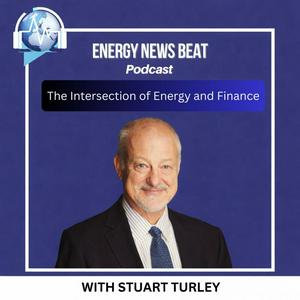
Covering the energy markets around the world, one story at a time. Our daily podcast keeps you up to speed on all the latest energy news while our weekly interviews with energy industry experts keep you in the know for all things energy development. Follow us at energynewsbeat.com
Site de podcastOuça Energy News Beat Podcast, Comentaristas e muitos outros podcasts de todo o mundo com o aplicativo o radio.net
Obtenha o aplicativo gratuito radio.net
- Guardar rádios e podcasts favoritos
- Transmissão via Wi-Fi ou Bluetooth
- Carplay & Android Audo compatìvel
- E ainda mais funções

 Brasil