
Ouça este podcast gratuitamente no aplicativo: Baixe gratuitamente na App Store
radio.net
Sleeptimer
Guardar rádio
22 episódios
School as a Game -- Ethan Hutt
05/10/2026 | 1hIf the goal of school is to learn, school isn't a game. But if the goal of school is to get a high score on a test, or raise the rankings of your university, or beat the competition to get into med school, then school looks an awful lot like a game, with winning more important than learning.
Ethan Hutt joins me to discuss the idea of school as a game, and how we can reduce the distance between learning and scoring.
Check out Ethan's book (co-authored with Jack Schneider) here: https://www.offthemarkbook.com/Markets and Models as Games -- Donald MacKenzie
24/08/2026 | 51minDonald MacKenzie rejoins the show to talk about his book An Engine, Not a Camera, which is about how financial models aren't designed to reflect the world economy, like a camera, but drive the world economy, like an engine. This means that a large part of economics is driven by trading that resembles a Reiner Knizia or 18XX game. It also means that trading and gambling can be pretty hard to differentiate.
You can read more about Donald's book here: https://mitpress.mit.edu/9780262633673/an-engine-not-a-camera/Games Are More Like Toasters Than Movies -- Ian Bogost
06/07/2026 | 53minIan Bogost joins me to discuss The Small Stuff, his book about finding gratification in physical things. We discuss his road from game studies to gratification, the place for gratification in games, and how something as small as pushing a button or cradling a joystick can make us happy.Is Science a Game?
08/06/2026 | 48minToday I'm joined by two social scientists to address the question: is science a game? Michael Penkler, Stefan Sulzenbacher, and Stephan Voss recently published an article on this topic: Playing science: representing and doing research in board games. After a brief discussion of the way that philosophers have considered science a game, the article looks at 3 board games that simulate science.
Michael and Stefan join me to discuss their article, and what looking at science as a game can teach us about how science works.
Here's a link to the article: https://www.tandfonline.com/doi/full/10.1080/09505431.2026.2630948Learning Against Gamification -- Molly Worthen
14/05/2026 | 44minMolly Worthen joins me to discuss her recent NYTimes article "You Can't Game Your Way to a Real Education," which argues that the gamification of classroom learning stems from a fundamental misunderstanding of how students learn. We discuss the broader adoption of tech in classrooms, the way that standardized testing can be thought of as a game, the danger of frictionless edutainment games, and the place for games in real learning.
You can read the article here (behind a paywall): https://www.nytimes.com/2026/04/19/opinion/schools-edtech-laptops-games-learning.html
Molly's website is here: https://mollyworthen.com/
Mais podcasts de Filosofia








Podcasts em tendência em Filosofia


Sobre Plumbing Game Studies
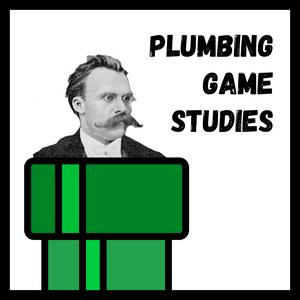
Philosophy is like plumbing for ideas - it makes connections and keeps everything flowing. In this podcast, Graham and his guests are doing some philosophical plumbing for game studies. We'll be asking questions like:
Why are philosophers always talking about games? Is philosophy itself a game? How can we use games to understand philosophy - and how can we use philosophy to understand games?
This podcast will use philosophy to study games and games to study philosophy. Anyone interested in philosophy, games, and how they interact should enjoy it!
Remember: the unexamined game is not worth playing
Site de podcastOuça Plumbing Game Studies, Aprenda Filosofia e muitos outros podcasts de todo o mundo com o aplicativo o radio.net
Obtenha o aplicativo gratuito radio.net
- Guardar rádios e podcasts favoritos
- Transmissão via Wi-Fi ou Bluetooth
- Carplay & Android Audo compatìvel
- E ainda mais funções
Obtenha o aplicativo gratuito radio.net
- Guardar rádios e podcasts favoritos
- Transmissão via Wi-Fi ou Bluetooth
- Carplay & Android Audo compatìvel
- E ainda mais funções

Plumbing Game Studies
Leia o código,
baixe o aplicativo,
ouça.
baixe o aplicativo,
ouça.
Plumbing Game Studies: Podcast do grupo

 Brasil

