

Ouça este podcast gratuitamente no aplicativo: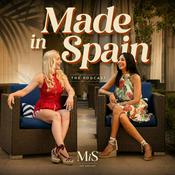 Baixe gratuitamente na App Store
radio.net
Sleeptimer
Guardar rádio
49 episódios
47. Paloma Moreno, De Flores y Floreros: From Corporate Career to Ballet Flats Made in Spain
14/10/2026 | 42minSend us Fan Mail
The English Version! One decision can split your life in two. Keep the “serious” international career everyone recognises, or walk away and build the thing you can’t stop thinking about. In this episode we’re joined by Paloma Moreno, founder and CEO of De Flores y Floreros, the Spanish brand of handmade ballet flats and luxury flat shoes, who takes us from a high-speed corporate world to the slow, demanding reality of artisan footwear made in Spain. A health scare becomes the wake-up call, but what follows is not a fairytale. It is prototypes, production minimums, long lead times and the constant pressure of cash flow in the fashion industry.
We talk about what makes a shoe brand truly different when the market is already full of pretty designs. The shoe as the main thread of a look, bold textures and prints, and comfort engineered from the inside out. Paloma explains the identity of De Flores y Floreros, how Madrid drives her inspiration and why the Valencian Community remains essential to Spanish shoemaking. She also breaks down the craftsmanship behind each pair, including why a single design passes through around 23 pairs of hands, and what that level of specialisation protects.
If you care about women entrepreneurs, sustainable growth, luxury flats and ballet pumps, or how product innovation actually happens, you’ll love the practical detail, including the interchangeable insole built for different climates and seasons. We also get into the brand’s daring creative rhythm. Seventy to seventy-five new designs per collection, never repeated, and more than 3,300 models in 15 years, plus a major milestone with a tribute to Cristóbal Balenciaga.
This is Made in Spain’s first episode recorded in Spanish, and it is available in both languages. Listen in whichever one feels like home.
Subscribe for more founder stories, share this with a friend who loves great shoes, and leave us a review to help others find the show. What part of building a brand do you want us to unpack next?47. Paloma Moreno, De Flores y Floreros: de la carrera corporativa a las bailarinas hechas en España
13/10/2026 | 41minSend us Fan Mail
Our first episode in Spanish!! Look for the English version on our feed coming out October 14th. Una sola decisión puede partir tu vida en dos: seguir con la carrera internacional “seria” que todo el mundo reconoce, o dejarla atrás y construir aquello en lo que no puedes dejar de pensar. Hoy nos acompaña Paloma Moreno, fundadora y CEO de De Flores y Floreros, la marca de bailarinas y zapatos planos de lujo hechos a mano en España. Paloma nos lleva de un mundo corporativo a toda velocidad a la realidad lenta y exigente del calzado artesanal. Un susto de salud se convierte en la llamada de atención, pero lo que viene después no es un cuento de hadas; son prototipos, mínimos de producción, plazos de entrega largos y la presión constante del flujo de caja en la industria de la moda.
Hablamos de qué hace que una marca de zapatos sea realmente diferente cuando el mercado ya está lleno de diseños bonitos. El zapato como hilo conductor de un look, texturas y estampados atrevidos, y una comodidad diseñada desde dentro hacia fuera. Paloma explica la identidad de De Flores y Floreros, cómo Madrid inspira cada colección y por qué la Comunidad Valenciana sigue siendo esencial para el calzado español. También desgrana la artesanía detrás de cada par, incluido por qué un solo diseño pasa por unas 23 manos distintas, y qué protege ese nivel de especialización.
Si te interesan las mujeres emprendedoras, el crecimiento sostenible, las bailarinas y los zapatos planos de lujo, o cómo ocurre de verdad la innovación de producto, te encantarán los detalles prácticos, como la plantilla intercambiable pensada para distintos climas y estaciones. Además entramos en el ritmo creativo de la marca, que no es poca cosa: entre 70 y 75 diseños nuevos por colección, sin repetir nunca, y más de 3.300 modelos en 15 años, con un hito reciente en forma de homenaje a Cristóbal Balenciaga.
Suscríbete para más historias de fundadores, comparte este episodio con alguien que ame los buenos zapatos y déjanos una reseña para que más gente descubra el podcast. ¿Qué parte de construir una marca quieres que desgranemos en el próximo episodio?
#DeFloresyFloreros #PalomaMoreno #MadeInSpain #HechoEnEspaña #Bailarinas #CalzadoArtesanal #ZapatosHechosEnEspaña #MujeresEmprendedoras #EmprendedorasEspañolas #ModaEspañola #Balenciaga #MadeInSpainPodcast46. Cuenca In Six Hours
29/09/2026 | 32minSend us Fan Mail
Cuenca is the stop you’ve probably seen on the Madrid to Alicante train route and completely ignored, and that’s exactly why we decided to get off. What we found is a UNESCO World Heritage city that feels carved into the landscape: a medieval old town stacked on a finger of rock between two river gorges, with streets that can be so quiet you start listening for your own footsteps.
We start at the Cuenca train station, which surprised us with contemporary design that reads more like an art installation than a transport hub. From there we dig into the city’s headline act, the Casas Colgadas (the Hanging Houses): what they’re actually called, how they were built to survive a near-vertical cliff edge, and how restorations in the 20th century left just three hanging on today. If you’ve ever wondered why some Spanish towns feel “overrun” while others still feel local, Cuenca is a perfect case study.
Then we move to the cathedral, a building with French Gothic DNA, lightning strikes, rebuilds, and a façade that still shows its scars. We also share a favourite discovery for art lovers: Fernando Zóbel’s museum and the unlikely story of serious Spanish abstract art living in a small city of roughly 50,000 people.
We finish with a practical, honest day-trip playbook: cheap transport into town, what’s walkable, why the Parador de Cuenca is worth your time, and the taxi scramble that had us running for the train. If you enjoy smart travel stories, subscribe, share the episode with a friend, and leave us a review.45. What does it mean to be Spanish?
15/09/2026 | 37minSend us Fan Mail
“He’s not really Spanish.” Hearing that twice, from two different taxi drivers, after one of our kids named his favourite Spain player, stopped us in our tracks. If someone is born in Barcelona, raised in a neighbourhood he proudly signals with a postcode celebration, and plays for the national team, what else do people think is required to belong? That single comment opens a much bigger conversation about Spanish identity, race, migration, and the stubborn idea that a nation has one “look”.
We follow the thread from the World Cup’s surge of patriotism into the deeper forces that shape how Spain sees itself: centuries of layered history, the legacy of Al-Andalus, the turning point of 1492, and how culture can carry memory through language and food. Then we jump forward to the 20th century, the Spanish Civil War, and Franco’s dictatorship, including why the Spanish flag can still feel politically charged in everyday life and why regional languages and autonomy remain so emotionally powerful.
To keep it grounded, we also asked around ten people from different backgrounds what “feeling Spanish” means to them. Their answers bring out surprising common ground: pride in traditions, life lived in the street, the joy and the arguments around food, and a shared frustration with politicians. We finish with a slice of life from watching the final, tinto de verano in absurdly large glasses, and that pure moment where sport makes strangers hug like old friends.
If you’ve ever had questions about where national identity really comes from, press play, and join the conversation! If you love the podcast subscribe, share the episode with a friend, and leave us a review. What makes someone Spanish to you?44. La Vila Joiosa’s Moors And Christians
01/09/2026 | 36minSend us Fan Mail
At three o’clock in the morning, a whole town stands on a dark Costa Blanca beach, staring out to sea. You hear oars and drums before you see anything, then torches flare, gunpowder cracks over the water, and the boats come in. La Vila Joiosa’s Moros y Cristianos is not a quiet heritage display. It’s a full-bodied Spanish fiesta built around the Desembarco, a reenactment of a 1538 raid that locals still treat as part of who they are.
We walk through the history that makes this ritual make sense: the age of Barbary corsairs, coastal villages living in fear, and the town’s belief that Santa Marta intervened when they “should have lost”. From there, we zoom out to how Moors and Christians festivals work across the Valencian Community and beyond, why Alicante holds so much prestige, and what makes La Vila different thanks to its marine landing. We also pull back the curtain on the logistics, from artisan-made costumes that are anything but fancy dress, to the memberships, peñas and comparsas that keep the whole thing running like a well-oiled machine year after year.
Then we get into the questions people whisper from the outside. Is Moros y Cristianos racist, or is it respectful reenactment with pride on both sides? We share what we heard and what we found. And because this is Spain, we finish with the traditional fuel: El Nardo, an iced coffee and absinthe mix that locals say gives you energy and courage, plus a brilliant art-book project, Un Desembarco Genial, that reimagines the landing through the styles of artists like Goya and Van Gogh.
Subscribe, download, and if you enjoy the show, share it with a friend and leave us a review. What’s the most unforgettable local festival tradition you’ve ever seen?
Mais podcasts de Arte




Podcasts em tendência em Arte













Sobre Made in Spain
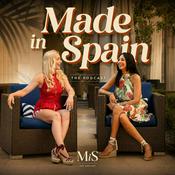
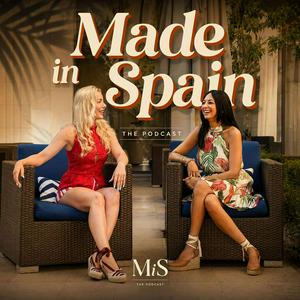
Whether you’re an expat chasing the dream, a traveller inspired by European elegance or a foodie seeking the perfect paella, Made in Spain is your insider’s guide to all things chic, cultural and quintessentially Spanish.
Join hosts Nalini Sharma and Laura Senior García for a glamorous mix of travel, food, fashion and the rich cultural narratives that make Spain a global icon of style and sophistication.
Nalini is a former Canadian TV presenter, who has previously covered red carpet and live events, and major news stories. She channels the same wit and curiosity to the Made in Spain podcast, offering sharp, unscripted takes on everything from Spanish traditions to expat surprises.
Laura, a seasoned leadership coach and global traveler, shares her deep, first-hand knowledge of Spain—not just as her birthplace, but as a country she continues to rediscover. With a British father and Spanish mother, she considers herself a global citizen with deep roots in Spain. Her insights connect Spain’s rich past with its modern evolution, offering a unique and personal perspective on life, culture, and luxury in Spain today.
Every episode of Made in Spain explores the country’s hidden gems and exclusive experiences, but it’s more than just a guide—it’s a conversation.
The show’s Slice of Life segment gives listeners an unfiltered peek into Nalini and Laura’s daily experiences – the joys, frustrations, and unexpected moments that make life in Spain, and beyond, full of surprises. Sometimes, it’s about the reality of settling into a new country – at other times, it’s about their travels, funny mishaps, or behind-the-scenes stories from researching the podcast. No matter the topic, listeners feel like they are right there with them, stepping into their world.
Site de podcastOuça Made in Spain, Ilustríssima Conversa e muitos outros podcasts de todo o mundo com o aplicativo o radio.net
Obtenha o aplicativo gratuito radio.net
- Guardar rádios e podcasts favoritos
- Transmissão via Wi-Fi ou Bluetooth
- Carplay & Android Audo compatìvel
- E ainda mais funções
Obtenha o aplicativo gratuito radio.net
- Guardar rádios e podcasts favoritos
- Transmissão via Wi-Fi ou Bluetooth
- Carplay & Android Audo compatìvel
- E ainda mais funções

Made in Spain
Leia o código,
baixe o aplicativo,
ouça.
baixe o aplicativo,
ouça.
Made in Spain: Podcast do grupo
 Brasil