

Ouça este podcast gratuitamente no aplicativo: Baixe gratuitamente na App Store
radio.net
Sleeptimer
Guardar rádio
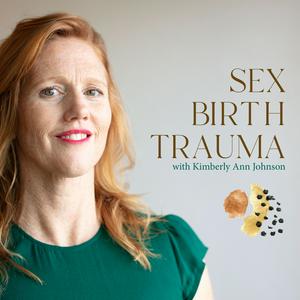
Sex Birth Trauma with Kimberly Ann Johnson
Kimberly Ann Johnson: Author, Vaginapractor, Trauma Educator
Último episódio
250 episódios
EP 249: Mothering the Mother – Granny Midwifery, the Lying-In, and Diasporic Memory with Shafia Monroe
13/09/2026 | 45minIn this episode, Kimberly speaks with Shafia Monroe, the renowned midwife, doula trainer, cultural historian, and author of Mothering the Mother: African American Postpartum Traditions, Recipes, and Healing, with a foreword by Erykah Badu. Shafia begins with the inheritance she was raised on: a second-generation Boston Catholic mother who told her to burn the bra and not to stay anywhere she was unhappy, and a rural foot-washing Alabama father who turned an empty Boston lot into collard greens and turnips before anyone called it a community garden. From there the conversation follows the diasporic threads she has spent four decades tracing, from her father eating with his right hand to the Senegalese village where she watched women shape a newborn's head exactly as her mother had shaped her niece's. They talk about what enslavement broke in African-American postpartum culture and what was rebuilt after it: the lying-in, the warm soup, the darkened room, and a community that knew what to do without needing a book. Shafia lays out the history of the granny midwives, including the origin of the word granny itself. She and Kimberly work through the real difference between a doula and a midwife, why she trains in full circle rather than full spectrum, and why women are flock people whom Western birth deliberately separated. Shafia describes raising seven children inside the work rather than around it, and why the family that hired you has to come first. The conversation closes on money, policy, and fear: what makes birth work financially viable, what this country refuses to fund, and why she tells every woman and man she meets to stop fearing birth, to refuse the label of patient, and to trust a body that has been doing this since the beginning.
Bio
Shafia Monroe, MPH, is a renowned midwife, master doula trainer, cultural historian, author, and motivational speaker whose work has shaped birth and postpartum care for more than four decades. A leading subject matter expert on African American birth and postpartum traditions, she has researched the lives of twentieth century Black midwives and traveled to interview and observe them, learning traditional practices firsthand. In 1991 she founded the International Center for Traditional Childbearing, the first national nonprofit dedicated to increasing the number of midwives and doulas of color and to promoting home birth in Black communities. In 2002 she created the SMC Full Circle Doula Birth Companion Training, a dual certification program built on the legacy of the twentieth century African American midwife, which has since trained thousands of birth workers worldwide. She is president of Shafia Monroe Consulting and Birthing CHANGE, which helps health care providers deliver culturally competent care. Her work has been recognized with numerous honors, including four lifetime achievement awards, and she was named by Scientific American in 2022 among those working to make health care more fair. Her book, Mothering the Mother: African American Postpartum Traditions, Recipes, and Healing, with a foreword by Erykah Badu, was published by Hachette Go. She draws on her Southern roots in rural Alabama, where her grandmother taught her that food is medicine. She is a mother of seven, a grandmother of nine, and a great-grandmother of two, and she lives in Portland, Oregon.
What She Shares
- The two worlds she was raised between: a Boston Catholic mother and a rural foot-washing Alabama father
- Her father turning an empty Boston lot into a garden in the 1970s, before there was a name for it
- Her mother on burning the bra, on equality at home, and on never staying where you are unhappy
- Why her mother told her that what people do not want you to know is kept in a book
- Diasporic recognitions: eating with the right hand, banku and cornbread, rainwater, and infant massage
- Watching women in a Senegalese village do exactly what she had watched her mother do fifty years earlier
- Belly wrapping as something her community always practiced without a name for it
- What enslavement broke in African American postpartum care, and what was rebuilt after emancipation
- The lying-in, the warm soup, the quilts, and why the elders kept the room dark
- African Americans as the country's dominant providers of postpartum care, and the credit never given
- The granny midwives, where the word granny came from, and what it was meant to do
- Why wisdom mattered more than whether a midwife had borne children of her own
- The real difference between a doula and a midwife, and why she wants both
- Full circle rather than full spectrum, and why the circle is the right shape
- Herbs for period pain instead of putting a thirteen year old on the pill
- Raising seven children inside the calling, and why the family that hired you comes first
- What makes birth work financially viable, and what this country refuses to pay for
- Why she tells everyone to stop fearing birth, and to stop calling themselves a patient
What You'll Hear
- Why she is claiming the title of doctor, at her son's instruction
- That midwives once held higher standing in a community than the pastor
- Seven children, nine grandchildren, and two great-grandchildren
- Kimberly on her husband's Candomble practice and the recognitions it triggers in African American visitors
- How a birth world that borrows freely from Mexico, Sweden, Japan, and Bali has erased Black postpartum culture
- Why the elders kept the room dark, and the physiology that proved them right
- Date night ten days postpartum, and what the old culture expected instead
- A twelfth pregnancy answered with a blessing rather than an interrogation
- Who was actually captured and brought here: rice growers, healers, readers of Arabic, dyers, midwives
- Being twenty years old at a forty year old woman's birth, with the skill but not yet the life
- The granny midwives walking through the dark past the Klan, and serving Black and white families alike
- Kimberly on the inversion that files the most human skills under unskilled labor
- Flock people, and what Western birth broke by separating women from each other
- The song her trainings close with every day
- A nine year old carrying the oxygen tank to the car
- Byllye Avery on the midwife having a star in her crown
- Kimberly on why the self-care framing in doula training only makes sense without spiritual care
- Why nobody left a home birth exhausted, and what a hospital does differently
- Eight hundred dollars a birth, and the second and third incomes that made it work
- Paid leave, daycare, the Momnibus, and the comparison to Norway and Denmark
- Why fear of birth keeps people from questioning their care
- Refusing the labels: high risk, geriatric, obese
- Her objection to the genocidal framing of Black maternal mortality
- Why a doula cannot save your life, and what she can actually do
Resources
Shafia Monroe
Main website https://shafiamonroe.com/
SMC Full Circle Doula Birth Companion Training https://smcdoulas.com/
Instagram https://www.instagram.com/shafiamonroe/
Facebook https://www.facebook.com/shafiamonroeconsulting/
Mothering the Mother, publisher page https://www.hachettebookgroup.com/titles/shafia-monroe/mothering-the-mother/9780306835438/EP 248: Rewrite the Mother Code – Losing Yourself, Self-Mothering, and the Courage to Rock the Boat with Dr. Gertrude Lyons
07/09/2026 | 51minIn this episode, Kimberly speaks with Dr. Gertrude Lyons, a master coach, podcast host, and the author of Rewrite the Mother Code: From Sacrifice to Stardust, about what it takes to notice you have gone missing from your own life. Dr. Gertrude describes the moment on a pilgrimage in Nepal, with her children in high school and college, when she burst into tears in front of a shaman and understood that despite years of coaching, study, and conscious parenting, she had lost herself somewhere inside motherhood. That recognition sent her back to school for a doctorate in education and eventually produced the framework the book is built on. Kimberly and Dr. Gertrude trace how the messages get in: the primal, unconscious conviction that rocking the boat will make everything fall apart, the ordering of children and spouse and career ahead of self, and the false pretense that there is a right way to do any of it. The conversation turns to the hero myth and what it has done to mother culture, the pressure to be exceptional rather than to be on a journey, and whether twenty years of increased awareness has actually shifted anything underneath. She then tells the story of her 2025 TEDx talk, which TED would not post until she removed the birth data: the maternal mortality figures, the history of midwives being pushed out by active marketing campaigns, and the observation that not all hospital birth practice is evidence based. Kimberly picks this up and runs with it, on how the people the system appears to serve are the least likely to see it clearly, on birth as an irreducibly bodily experience that has been siloed off from the rest of a woman's life, and on what it costs to be defanged from your own animal instinct.
Bio
Dr. Gertrude Lyons is a master coach, podcast host, and thought leader helping women rewrite outdated narratives around motherhood, identity, and self-worth. She is the author of Rewrite the Mother Code: From Sacrifice to Stardust, A Cosmic Approach to Motherhood (Rise Books, 2025), which grew out of her doctoral research into the transformational opportunity inside motherhood and has since become the foundation of a broader body of work with women at every stage of that question. She holds an Ed.D. and an M.A. in Transformational Leadership and Coaching from Wright Graduate University, an M.A. in Psychology from Antioch University McGregor, and a BBA in Finance and Accounting from Saint Mary's College in Notre Dame, Indiana. She is a Whole Brain Living certified coach and holds a Level 3 breathwork certification through the Global Professional Breathwork Alliance. She hosts the Rewrite the Mother Code podcast, delivered a 2025 TEDx talk titled Redefining Self-Mothering: The Courage to Mother Ourselves First, and has spoken at the Glastonbury Goddess Conference. Over more than twenty years she has worked with individuals, couples, parents, and families, and she now leads retreats in Mexico and Ireland, with a first retreat in Malta planned. Her home base is Chicago. She has two daughters.
What Dr. Gertrude Shares
The pilgrimage in Nepal, the shaman, and the moment she understood she had lost herself inside motherhood
Why two master's degrees were not enough, and what sent her back for a doctorate
The difference between her first daughter and her second, and the fear she could only see in retrospect
What rocking the boat looked like, and how couples coaching quietly became parenting coaching
Leaving the dogma of a Roman Catholic upbringing while keeping the mystery, and finding the divine feminine
The letter she wrote in 1989 asking her fiancé for premarital counseling, and why she could not say it out loud
The hero myth as exceptionalism, and the journey as the whole point rather than the prize at the end
What has and has not changed for mothers in thirty years, and why more information has meant more overwhelm
Her home birth, being called selfish by her family, and the boss whose two suggestions changed her life
The 2025 TEDx talk, the birth data she was asked to remove, and the reason she was never given
Why she believes all women mother, and the one downside she has found to saying so
What You'll Hear
Whether the people around you can see that you have gone missing, or whether only you can
The primal, unconscious calculation that if I rock the boat, everything will fall apart
Joseph Campbell taught to eighth graders, and whether we want children to be heroes of their own lives
Emergence rather than a declared end game, and myth held without making it all about you
Mom rage arriving in the culture, and what it took to put the word on a book cover ten years ago
Maternal mortality, midwives pushed out by marketing campaigns, and what counts as evidence based
Why the people a system appears to serve are often the least able to see it clearly
The infamous request for a home birth in a hospital, and what a good hospital birth actually requires
Birth as an irreducibly bodily experience, and the cost of siloing it off from the rest of a life
The oppositional gaze, being defanged from animal instinct, and belonging conditional on conformity
A frank exchange about what gets lost when mothering becomes a metaphor
Maiden to mother, mother to virgin, virgin to crone, and how that maturation happens without a birth
Resources
Dr. Gertrude Lyons
Website https://www.drgertrudelyons.com/
Book, Rewrite the Mother Code: From Sacrifice to Stardust, A Cosmic Approach to Motherhood (Rise Books, 2025) https://www.simonandschuster.com/books/Rewrite-the-Mother-Code/Gertrude-Lyons/9781959524120
Rewrite the Mother Code podcast https://podcasts.apple.com/us/podcast/rewrite-the-mother-code-with-dr-gertrude-lyons/id1534581166
TEDx talk, Redefining Self-Mothering: The Courage to Mother Ourselves First https://www.youtube.com/watch?v=NZ9ZF8JKIDY
Substack https://gertrudelyons.substack.com/
Instagram https://www.instagram.com/drgertrudelyons/
LinkedIn https://www.linkedin.com/in/gertrudelyons/
Retreats, 2027 https://www.drgertrudelyons.com/retreats2027EP 247: The Opposite of Hypervigilance – Boundaries, Healthy Aggression, and Reclaiming Fight with Jaye Marolla
30/08/2026 | 1h 10minIn this episode, Kimberly is rejoined by Jaye Marolla, somatic educator, martial artist, and bodyworker, founder of The Body Innate, YINDOJO, and YinWarriorship in Santa Fe, New Mexico. Nine months and several co-taught weekends after their first conversation, and ahead of Jaye joining Jaguar Fight Club in September, they dive deep into their work with the word fight. Jaye explains why she has never used the frame of self-defense, reflecting on how it seats a woman inside a preconceived victim's stance and quietly assigns the whole burden of a culture's violence to the people most likely to be harmed by it. From there they make the distinction between readiness and hypervigilance, between the body that knows where the exits are and the body running a fear script it has mistaken for awareness. They look at what happens when a boundary comes from contraction rather than wholeness, at Kimberly's work restoring reflexive gestures in bodies that were anesthetized or held still, and at the longing for real physical contact that both of them keep meeting in rooms, and that many somatic training treats as inappropriate. The second half turns to the trauma frame itself, and what it costs in agency, artistry, and appetite when a culture organizes everything it knows about the body around what went wrong. They talk about animist inquiry and bone knowing, about somatic transmission versus the somatic exercise, about the long arc from trying out a practice to living one, and about the blueprint each person carries and what it takes to fight for it in a culture built to bury it. The conversation closes on the great work that may look like nothing you could post and on the power of a deeply quiet life.
Bio
Jaye Marolla is a somatic educator, martial artist, and bodyworker based in Santa Fe, New Mexico, and the founder of The Body Innate, YINDOJO, and YinWarriorship. A former Division I basketball player at American University, she has spent decades training across martial and healing traditions, shaped by years of living and studying in Ghana, China, Thailand, Central Asia, and England, where she became fascinated by lineage-based practice and the knowledge that travels tacitly, through transmission and embodied nuance. In China and Thailand she studied martial arts and healing practices alongside one another, and came to understand the two branches as growing from a single root. In Santa Fe she spent three years studying with her former teacher Zhenevere Sophia Dao in the practices of Post-Daoism and Mythopoetic Qigong. She weaves applied Daoism and conscious Eros through vitality-based teaching within a framework of experiential collaborative leadership and somatic activism, offering classes and intensives in Santa Fe, across the United States, and internationally, and working privately with individuals, groups, and organizations. She is a member of Soma Collective in Santa Fe, and has collaborated with practitioners including Stephen Jenkinson on retreats exploring death, embodiment, and communal practice. She joins Kimberly for Jaguar Fight Club in September.
What Jaye Shares
Why she has never gone near self-defense training, and why she considers the frame harmful rather than merely imprecise
The difference between self-defense and self-awareness, and what changes when every body is trained rather than only the ones expected to be harmed
Hypervigilance as a fear script running outside present time, and readiness as its opposite
How a martial artist uses the imaginal capacity: not forecasting harm, but rehearsing the move she is going to make
Boundary from the knitted sense of self versus boundary from contraction, and why the second one invites more antagonism
The longing for real contact, why bodies are still recovering from the distance of the COVID years, and what animals know about grappling
Ma-ai, the spatial and temporal distance between two bodies, and how we track it constantly without naming it
The animist frame and bone knowing as a starting point rather than an advanced technique
Why the trauma orientation functions as a distraction from self-agency, social activism, and collective inquiry
Her objection to the phrase somatic exercise, and what somatic transmission is instead
The long arc from visiting a practice to being inhabited by one, and why that arc cannot be shortcut
Fight as grit, teeth, and animal, and why the people who grapple regularly argue less
The blueprint, the seed, and full commitment without attachment as an antidote to despair
What You'll Hear
The nine months between this conversation and the last one, and what changes when two teachers become training partners
Kimberly's own six-week self-defense course, what it kicked up, and why she is not sure she was ready for it
Why so many women in the Maine workshop reacted viscerally to being told to notice the exits
Presence and readiness mistaken for paranoia, and where the shame around that comes from
The record scratch, and why the same thing keeps happening at the same time of year, in the same place, with the same kind of person
Why setting a boundary feels exhausting rather than energizing, and what frame that comes from
Restoring reflexive gestures: pushing, grabbing, squeezing, and what happens to them under anesthesia or in stirrups
The polarity trap of being protected, and what birth and postpartum actually ask of women now
The "on top" practice, and why it beats a weighted blanket
What becomes possible in an artistic frame that a therapeutic frame will not allow
Whether we can trust the body, and what happens when comportment comes from the outside in
Not demonizing the mind, and where the soul actually lives
Kendra Cunov, Tassajara, and whether a twenty-three year old can carry this
The machete zone, the muse knocking, and choosing the thing that is yours to do
The great work, which might be a book, or your children, or ease in your bones
Resources
The Body Innate: https://www.thebodyinnate.com/
Second site (classes, about): https://www.jayemarolla.com/
Instagram: @thebodyinnate https://www.instagram.com/thebodyinnate/
Soma Collective, Santa Fe: https://www.somacollectivesf.com/
Sign up for Jaguar Fight Club here: https://kimberlyannjohnson.com/jaguar-fight-club-fb/
https://kimberlyannjohnson.com/
Instagram: @kimberly.ann.johnson
Erotic Seasons (2026) pre-order here: https://www.amazon.com/dp/1649633742?tag=macmillan-20
Previous appearance: EP 238, The Body Innate. Yin Warriorship, Communal Eros, and Leading Atmospheres with Jaye MarollaEP 246: Whose Desire Is This? – Rematriation, Erotic Self Sourcing, and the Art of Touching Women with Casia Sobolewski
23/08/2026 | 1h 16minIn this episode, Kimberly speaks with Casia Sobolewski, somatic sex educator, sexological bodyworker, and co-founder of the Himeros Project. Casia opens with the grief of a recent realization: that patriarchal structures had shaped even her most tender and private erotic world, and that some of the desires moving through her may never have been hers to begin with. From there she traces twenty years of exploring dominance and submission, the pull of the daddy dom dynamic in her twenties, and the question she is only asking now about why she had to imagine herself young to feel turned on. They talk about the "taking quadrant" of the wheel of consent and why so many exhausted women reach for passivity when what their systems actually want is mobilization. She describes the men's retreats she runs with her husband Cosmo Meens: what men bring to a room where their erotic lives are finally speakable, why starting with sexuality is both the hardest and the most important entry point in men's work, and what happens in a man's system when a woman says no. She unpacks matriarchy as mothers at the beginning rather than rule by women, drawing on Heide Göttner-Abendroth and the Mosuo, and names how the nuclear family loads one man with labor that once belonged to grandmothers, aunties, uncles and brothers. The conversation moves through early motherhood and the erotic tether Casia kept through it, the axial age and the cost of men teaching women how to care, aging and the erasure of the grandmother, and closes on the work she and Cosmo are renaming the art and responsibility of touching women.
Bio
Casia Sobolewski is a somatic sex educator, sexological bodyworker, and erotic practitioner who has been teaching sexuality since 2009. She is a certified Somatic Sex Educator and Sexological Bodyworker, a certified Holistic Sex Educator, and a trained intern surrogate partner with the International Professional Surrogates Association. She completed Dr. Betty Martin's Like A Pro Wheel of Consent training and has served on the boards of the Association of Certified Sexological Bodyworkers and the Somatic Sex Educators Association. In Toronto she founded Spit.Exposed, a queer and feminist porn project she ran from 2014 to 2019. From 2018 to 2025 she was a practitioner and teacher with Back to the Body: Sensual Retreats for Women. She is co-founder and ongoing practitioner of the Himeros Project, immersive retreats for men, which she leads alongside her husband Cosmo Meens, and together they teach The Art and Responsibility of Touching Women. She works in immersion experiences only, supporting people who are out of touch with their pleasure, who have experienced sexual trauma, or who want a space to meet the erotic aspect of themselves with integrity. She identifies as queer, non-disabled, introverted, non-monogamous, kink positive, married, cis, femme, a mother to one, a stepmother to three, and a devoted sister, daughter, friend and partner. She lives in British Columbia and her personal site is Honey and Water.
What Casia Shares
The grief opening three or four months ago when she realized patriarchal structures had reached into her most private erotic world
Twenty years of exploring dominance and submission, and the question she is only now asking about why she had to imagine herself young to feel turned on
Why so many women arrive wanting to be dominated, and why exhaustion and choice fatigue are part of the picture
The taking quadrant of the wheel of consent, and the night she first took, tired, at 11pm
What her men's retreats actually look like, including the numbers: nine to twelve men, three male staff, four female practitioners, ages twenty-eight to seventy-five
Why she and Cosmo added mutual touch to the container, and how negotiation of desire is taught in micro steps
What happens in a man's system when she says no, and why receiving a no is the skill that transfers to the rest of his life
Matriarchy as mothers at the beginning, drawn from Heide Göttner-Abendroth, and the Mosuo clan structure where there are no words for husband or father
How the nuclear family hands one stepfather the labor of grandmothers, aunties, uncles and brothers, and why he feels like he is failing
Early motherhood, the erotic structures that stopped computing, the nerve issues, and pleasure as the tether back to herself
The axial age, care labor, and what it costs when the people already doing the caring are taught by men to care more
Erotic self sourcing, and asking her charismatic partner to decenter himself from women's lives
Circumcision of infant boys as a first initiation, and men in their seventies finally being held
Aging, the elephant metaphor, and the erasure of the grandmother
The renaming of their offering to the art and responsibility of touching women, and why the responsibility matters
What You'll Hear
What rematriation means when it is applied to a marriage, a household, a business and a body all at once
Whether a desire can be genuinely yours if it was placed there, and whether that even matters
The difference between rest and mobilization for an exhausted nervous system, and why more passivity is often the wrong prescription
Kim on the bodyworker who discovered she needed to take, not receive, after a full day of giving
Why starting with sexuality is the hardest and most important entry point in men's work
What men sound like singing together at the end of a retreat, without drugs or alcohol
Whether men and women have the same obstacles to pleasure, and where patriarchy shows up on both sides of the same coin
Matriarchy versus matrifocal, and why Casia uses the word that starts an argument
The community that holds her and Cosmo accountable, and what personal power looks like when it is checked
Renegotiating the parenting load as a seven year old claims her independence
Kim on Perdita Finn, Stephen Jenkinson, lineage, and why elderhood makes gender matter less
A long, honest passage from Kim on double binds, young men, her daughter's friends in Scotland, and raising a son you would not want to date
The coming of age ceremony for a thirteen year old girl, and what is missing for boys
Affiliate groups versus mixed groups, and whether single gender work is a stepping stone or a destination
Mothers as the creators of culture, and the mother son bond in matriarchal anthropology
Kim's friend in Palau, and what it feels like to leave a living matriarchy and land in an airport
The hysteria clinic, and why the modern orgasm imperative is the same move in a different costume
Why men mostly cannot see the work, and what "you look good for your age" actually costs
Porn as training in extraction, and what men need instead
Resources
Casia Sobolewski
Personal website, Honey and Water https://www.honeyandwater.ca/
The Himeros Project https://www.himerosproject.com/
The Art of Touching Women https://www.himerosproject.com/the-art-of-touching-women
Instagram https://www.instagram.com/casia.sobolewski/
Linktree https://linktr.ee/casia.xx
Kimberly Ann Johnson
Pre-Order Erotic Seasons: Tuning into the Rhythms of Women's Sexuality and Spirituality (Sounds True, 2026): https://www.amazon.com/dp/1649633742
Support
This episode includes discussion of sexual assault and sexual trauma.
RAINN National Sexual Assault Hotline (US): 1-800-656-4673, rainn.org. Confirm current before publication.EP 245: The Contrast Is the Gold - Death Nesting, the Vortex, and Why Deathcare Belongs to the Village with Anne-Marie Keppel
16/08/2026 | 1h 9minIn this episode, Kimberly speaks with Anne-Marie Keppel, death doula educator, founder of the nonprofit Village Deathcare, and author of Death Nesting: The Heart-Centered Practices of a Death Doula, about what has and has not shifted in the culture since she wrote the book. Anne-Marie traces the origin of Death Nesting back to her years as a licensed nurse assistant in residential care, a hospice volunteer, a Meals on Wheels director, and to the elderly homeless man she looked after through Vermont winters; work she did because she wanted to. They look at the 1920s as the demarcation point when care left the home, when antibiotics became a god and the hospital became the authority realm, and at what has been lost in the handoff from family to funeral home. Anne-Marie makes the case that death curiosity is healthy, that it is okay to want to see and touch a dead body, and that fewer than half of the 500 students she has taught ever have. She describes the vortex that opens when someone is leaving their body, why timing matters more than ceremony, and why she considers the celebration of life a travesty when it replaces mourning rather than following it. The conversation goes into difficult territory: what care workers have reported feeling after a medically assisted death, the sense of severing and whiplash, and Kimberly's parallel that you can die and death does not happen. They talk honestly about suicide, about normalizing the thought rather than exiling it, about the scammers now working the death doula platforms, and about why people who long for death often do not know what dead actually is. The episode closes on professionalization: why she calls the business plan death doula training a lost opportunity, why she teaches citizens rather than experts, why the hairdresser who talks about dying with people in her chair is doing death doula work, and why the point is to give all the knowledge and wisdom, everything you've got, away. If any of this landed close to home, you don't have to sit with it alone. In the US, the 988 Suicide and Crisis Lifeline is available by call or text, day or night.
BIO
Anne-Marie Keppel is an international speaker, award-winning author of Death Nesting: The Heart-Centered Practices of a Death Doula, and founder of Village Deathcare 501c3, whose inspiration and purpose is incorporating deathcare into community. Of Irish Celtic and Finnish Sámi (indigenous Finno-Ugric) roots, she draws from her work as a death doula, nurse assistant, life-long meditator, Reiki Master Teacher and mother of three. She leads retreats and talks in Vermont, across the US, in Ireland, England, Costa Rica and Mexico on death, dying, healing and intuition. She lives in Vermont where she practices meditation, magic, community deathcare, trains her Siberian Husky (nonstop) and delights in her family's love.
WHAT ANNE-MARIE SHARES
Why she wrote Death Nesting from a place of genuine care and not a business plan, and how she only later realized she had accidentally built a business model
The basic physical skills nobody is taught anymore: how to transfer someone from bed to chair, how to protect your own back, how to hold a body that cannot hold itself
Her years as a licensed nurse assistant in residential care, a hospice volunteer, and director of Meals on Wheels in Montpelier, Vermont
Caring for an 89 year old homeless veteran through Vermont winters, and what it taught her about doing the work when nobody is filming
The 1920s as the demarcation point: hospitalization, antibiotics as the new god, and the hospital as a god realm where we send our loved ones away
Why death curiosity is healthy, and why it is okay to want to see, touch, and smell a dead body
That fewer than half of the 500 plus students she has taught have ever seen a dead body, at every age including into their sixties
The vortex that opens when a person is leaving their body, why others feel it whether or not they know it, and why it stays open afterward
Why the celebration of life is a travesty when it replaces the funeral, and why timing is the thing that matters
What people have told her after being present at a medically assisted death: the severing, the whiplash, and the gap between what their eyes saw and what their body felt
The scammers currently working death doula platforms with fake terminal diagnoses, and the empathy they exploit
Why she normalizes suicidal thoughts immediately, and what happens in a room when she asks how many people have thought about ending their life
Why people who long for death often do not know what dead is, and her prescription: volunteer for hospice, work in a funeral home, dig a grave
Why coupling a death doula training with a business plan destroys the training, and why she teaches citizens instead of experts
The hairdresser and the barista as models of community deathcare, and how to be a death doula without quitting your job
Why she teaches her students to empower the family, stay in the background, and then walk away
The student who finished her training and realized he actually is afraid to die, and why she called that a hallelujah
WHAT YOU'LL HEAR
What has and has not shifted in the culture since Death Nesting was first written
The parallels and the gap between birth doula care and death doula care, and what weekend trainings do to a threshold
Why 88 is very old, and what the denial of that reveals about the culture
Embodied knowing versus instruction: holding a baby, holding a fractured heel, holding a leg someone cannot feel
Why proximity beats curriculum, and why no training substitutes for a long embodiment practice
How the handoff from family to hospital to funeral home created a generation with nowhere to put its grief
The vortex, the gateway, and why people need to step outside for coffee during a death
A candid, careful exchange about medical aid in dying, individualism, sovereignty, and what Canada has shown since legalization
Stephen Jenkinson's line that you can die and death does not happen, and its birth equivalent
Suicide, ideation, and the difference between exiling the subject and washing away the taboo
Disconnection from the physical earth, zero vulnerability tolerance, and why medical professionals arrive at death doula training carrying decades of unprocessed exposure
Kimberly on mothering the bones as a lay practice, and on what teaching does to your ability to receive
The professionalization problem, the learning rate, and permission to be new at something
Why awkwardness is the skill worth practicing before the business card
Details on Anne-Marie's upcoming autumn death doula training
RESOURCES
Main Website: https://stardustmeadow.com
Anne-Marie Keppel: https://www.annemariekeppel.com
Death Doula Training (Village Deathcare Citizen Course): https://stardustmeadow.com/death-doula-training
Instagram: https://www.instagram.com/villagedeathcare/
Medium: https://annemariekeppel.medium.com
Death Nesting: The Heart-Centered Practices of a Death Doula: https://www.innertraditions.com/books/death-nesting
Referenced in conversation:
Stephen Jenkinson, Orphan Wisdom: https://orphanwisdom.com
Tom Myers, Anatomy Trains: https://www.anatomytrains.com
Tami Lynn Kent, Wild Feminine: https://www.wildfeminine.com/
If you or a loved one are dealing with suicide or suicidal thoughts you can call or text 988 in anywhere in the US to find someone to talk to.
Mais podcasts de Saúde alternativa
 Equilíbrio em GotasSaúde alternativa, Saúde e fitness
 8 Hour Binaural BeatsSaúde alternativa, Saúde e fitness
 Feel Better, Live More with Dr Rangan ChatterjeeSaúde alternativa, Saúde e fitness
 Pílulas de CuraSaúde alternativa, Saúde e fitness
 Sadhguru PortuguêsCiência, Ensino, Espiritualidades, Guias, Natureza, Negócios, Relacionamentos, Religião e espiritualidades, Saúde alternativa, Saúde e fitness, Sem fins lucrativos, Sociedade e cultura
 Sons de Chuva (Sounds of Rain)Saúde alternativa, Saúde e fitness, Saúde mental
 SUS, Atençao Primaira A Saude E Suas Potencialidades.Saúde alternativa, Saúde e fitness
 Meditação GuiadaSaúde alternativa, Saúde e fitness, Saúde mental
 Rain Sounds - 10 HoursCiência, Natureza, Saúde alternativa, Saúde e fitness
Podcasts em tendência em Saúde alternativa
 The Ben Azadi ShowSaúde alternativa, Saúde e fitness
 BETTER! with Dr. Stephanie Estima | Strength, Body Composition & PerimenopauseFitness, Medicina, Nutrição, Saúde alternativa, Saúde e fitness
- Feel Better, Live More with Dr Rangan ChatterjeeSaúde alternativa, Saúde e fitness
 Meditação Guiada - Equilíbrio dos chakrasSaúde alternativa, Saúde e fitness
- 8 Hour Binaural BeatsSaúde alternativa, Saúde e fitness
Sobre Sex Birth Trauma with Kimberly Ann Johnson
Cutting-edge, pioneering conversations on holistic women's health, including sex, birth, motherhood, womanhood, intimacy and trauma with doula, certified Sexological Bodyworker, Somatic Experiencing practitioner, and author of Call of the Wild and the Fourth Trimester, Kimberly Ann Johnson.
Site de podcastOuça Sex Birth Trauma with Kimberly Ann Johnson, Equilíbrio em Gotas e muitos outros podcasts de todo o mundo com o aplicativo o radio.net
Obtenha o aplicativo gratuito radio.net
- Guardar rádios e podcasts favoritos
- Transmissão via Wi-Fi ou Bluetooth
- Carplay & Android Audo compatìvel
- E ainda mais funções
Obtenha o aplicativo gratuito radio.net
- Guardar rádios e podcasts favoritos
- Transmissão via Wi-Fi ou Bluetooth
- Carplay & Android Audo compatìvel
- E ainda mais funções

Sex Birth Trauma with Kimberly Ann Johnson
Leia o código,
baixe o aplicativo,
ouça.
baixe o aplicativo,
ouça.
 Brasil