

Ouça este podcast gratuitamente no aplicativo: Baixe gratuitamente na App Store
radio.net
Sleeptimer
Guardar rádio
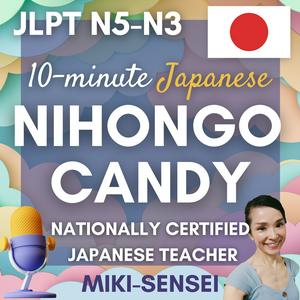
NIHONGO CANDY: Learn Japanese for Beginners & JLPT N5-N3
Miki Sensei | NIHONGO CANDY
Último episódio
167 episódios
#167 Ninja: Legend and Truth — Learn Japanese Through History (N5–N3)
21/09/2026 | 6minBlack clothes, throwing stars, secret techniques — that's the ninja you know from anime and games. In this episode we look at what the ninja of the Warring States period were really like.
This is Episode 8 of our mini-series on Japanese history, made for JLPT N5–N3 learners. In about seven minutes, you'll learn that a ninja's real job was gathering information (情報 / jōhō / jouhou), why Iga (伊賀) and Koga (甲賀 / Kōka / Kouka) became famous, and where the black costume actually came from — the kabuki (歌舞伎) stage of the Edo period. We also meet Hattori Hanzo (服部半蔵 / Hattori Hanzō / Hattori Hanzou), the "strongest ninja" of games who was in fact a spearman, and whose name still lives on at Tokyo's Hanzomon (半蔵門) subway station.
You'll also pick up five useful everyday words: 情報 (jōhō), 集める (atsumeru), 協力 (kyōryoku), 危険な (kiken na), and 無事に (buji ni).
Next episode: Battle tactics — how huge armies were moved, and how guns changed the way wars were fought.
🚀 NEXT STEPS FOR YOUR JAPANESE💻Systematic Learning (Self-Study)🎁 Podcast Listener Reward: Claim your exclusive discount through the link below:https://www.udemy.com/course/intermediate-japanese-jlpt-n3-course1/?couponCode=SEP26_NIHONGOCANDY💻Executive Private Coaching (Live):https://www.welcjp.com/forindividuals📱 LinkedIn:www.linkedin.com/in/mikisasakiwelc
#Samurai #JapaneseHistory #SengokuPeriod #SamuraiHistory #AnimeJapanese #Ninja #HattoriHanzo #Iga #NihongoCandy #LearnJapanese #JapaneseVocabulary #JLPTN5 #JLPTN4 #JLPTN3 #JapaneseForTravel #TravelInJapan #SpeakJapanese #JapanesePhrases #LivingInJapan #JapaneseConversation#166 Japanese Castles — Learn Japanese Through History (N5–N3)
07/09/2026 | 5minEver walked through a Japanese castle, or seen one in an anime or game? In this episode we look at how the castles of the samurai were built, and why so few of the original ones still stand.
This is Episode 7 of our mini-series on Japanese history, made for JLPT N5–N3 learners. In about seven minutes, you'll learn the two key parts of a castle — the tenshu (天守 / tenshu), the tall tower, and the ishigaki (石垣 / ishigaki), the stone walls — and meet three castles that still keep their original tenshu, all National Treasures (国宝 / kokuhō / kokuhou): Matsumoto (松本城), Inuyama (犬山城), and Himeji (姫路城), the "White Heron Castle." We finish in the castle town (城下町 / jōkamachi / joukamachi) of Kanazawa (金沢).
You'll also pick up five useful everyday words: 守る (mamoru), 防ぐ (fusegu), 残る (nokoru), 美しい (utsukushii), and 雰囲気 (fun'iki).
Next episode: Ninja — the ones you know from anime and games, and what they were really like.
🚀 NEXT STEPS FOR YOUR JAPANESE💻Systematic Learning (Self-Study)🎁 Podcast Listener Reward: Claim your exclusive discount through the link below:https://www.udemy.com/course/intermediate-japanese-jlpt-n3-course1/?couponCode=SEP26_NIHONGOCANDY💻Executive Private Coaching (Live):https://www.welcjp.com/forindividuals📱 LinkedIn:www.linkedin.com/in/mikisasakiwelc
#Samurai #JapaneseHistory #SengokuPeriod #SamuraiHistory #AnimeJapanese #JapaneseCastles #HimejiCastle #MatsumotoCastle #NihongoCandy #LearnJapanese #JapaneseVocabulary #JLPTN5 #JLPTN4 #JLPTN3 #JapaneseForTravel #TravelInJapan #SpeakJapanese #JapanesePhrases #LivingInJapan #JapaneseConversation#165 Date Masamune & Sanada Yukimura — Learn Japanese Through History (N5–N3)
24/08/2026 | 8minMeet two of the most popular heroes of the Sengoku period — the ones you may already know from anime and games. Date Masamune (伊達政宗 / date masamune), the "one-eyed dragon," and Sanada Yukimura (真田幸村 / sanada yukimura), the "greatest warrior in Japan."
This is Episode 6 of our mini-series on Japanese history, made for JLPT N5–N3 learners. In about seven minutes, you'll learn the story behind Masamune's eyepatch and crescent-moon helmet, why Yukimura's bright red armor made him a legend after he nearly defeated Tokugawa Ieyasu, and how the two met just once, on opposite sides at the Siege of Osaka (大坂の陣).
You'll also pick up five useful everyday words: 目立つ (medatsu), 倒す (taosu), 見事な (migoto na), 敵 (teki), and 味方 (mikata). In our "Japanese You Can Still Use Today" corner, we look at nihon-ichi (日本一), "the best in Japan."
Next episode: Japanese castles — the towering keeps and stone walls where the samurai lived.
🚀 NEXT STEPS FOR YOUR JAPANESE💻Systematic Learning (Self-Study)🎁 Podcast Listener Reward: Claim your exclusive discount through the link below:https://www.udemy.com/course/intermediate-japanese-jlpt-n3-course1/?couponCode=JULY26_NIHONGOCANDY💻Executive Private Coaching (Live):https://www.welcjp.com/forindividuals📱 LinkedIn:www.linkedin.com/in/mikisasakiwelc
#Samurai #JapaneseHistory #SengokuPeriod #SamuraiHistory #AnimeJapanese #DateMasamune #SanadaYukimura #NihongoCandy #LearnJapanese #JapaneseVocabulary #JLPTN5 #JLPTN4 #JLPTN3 #JapaneseForTravel #TravelInJapan #SpeakJapanese #JapanesePhrases #LivingInJapan #JapaneseConversation#164 Takeda Shingen vs Uesugi Kenshin — Learn Japanese Through History (N5–N3)
17/08/2026 | 7minTakeda Shingen (武田信玄 / takeda shingen) and Uesugi Kenshin (上杉謙信 / uesugi kenshin) were destined rivals who clashed again and again — and yet respected each other deeply.
This is Episode 5 of our mini-series on Japanese history, made for JLPT N5–N3 learners. In about seven minutes, you'll meet the "Tiger of Kai" and the "Dragon of Echigo," follow their Battles of Kawanakajima (川中島の戦い) and the legend of their duel, and learn the meaning of Shingen's famous banner, Fūrinkazan (風林火山 / fuurinkazan) — "as fast as the wind, as quiet as a forest, as fierce as fire, and as still as a mountain."
You'll also pick up five useful everyday words: 宿命 (shukumei), 激しい (hageshii), 悲しむ (kanashimu), 認める (mitomeru), and 尊敬する (sonkei suru). In our "Japanese You Can Still Use Today" corner, we look at the idiom teki ni shio o okuru (敵に塩を送る), "to send salt to the enemy" — helping a rival in trouble, an attitude that reflects the spirit of bushidō (武士道 / bushidō / bushidou), the way of the samurai.
Next episode: Date Masamune (伊達政宗), the "one-eyed dragon," and Sanada Yukimura (真田幸村), called the greatest warrior in Japan.
🚀 NEXT STEPS FOR YOUR JAPANESE💻Systematic Learning (Self-Study)🎁 Podcast Listener Reward: Claim your exclusive discount through the link below: https://www.udemy.com/course/intermediate-japanese-jlpt-n3-course1/?couponCode=AUG26_NIHONGOCANDY💻Executive Private Coaching (Live):https://www.welcjp.com/forindividuals📱 LinkedIn:www.linkedin.com/in/mikisasakiwelc
#Samurai #JapaneseHistory #SengokuPeriod #SamuraiHistory #AnimeJapanese #TakedaShingen #UesugiKenshin #Bushido #NihongoCandy #LearnJapanese #JapaneseVocabulary #JLPTN5 #JLPTN4 #JLPTN3 #JapaneseForTravel #TravelInJapan #SpeakJapanese #JapanesePhrases #LivingInJapan #JapaneseConversation#163 Who Was Tokugawa Ieyasu? — Learn Japanese Through History (N5–N3)
03/08/2026 | 6minWho was Tokugawa Ieyasu (徳川家康 / tokugawa ieyasu), the man who waited and finally won all of Japan?
This is Episode 4 of our mini-series on Japanese history, made for JLPT N5–N3 learners. In about seven minutes, you'll follow Ieyasu from his long years as a hostage (人質) to his victory at the Battle of Sekigahara (関ヶ原の戦い, 1600), and see how he opened the Edo shogunate (江戸幕府, 1603) and began about 260 years of peace.
You'll also meet the famous "cuckoo poems" (ホトトギスの句) that capture the very different characters of the three great heroes — Nobunaga, Hideyoshi, and Ieyasu — and pick up five useful everyday words: 手に入れる (te ni ireru), 恵まれている (megumarete iru), 平和な (heiwa na), 性格 (seikaku), and 我慢する (gaman suru). And here's a fun cultural note: even today, Japanese people sometimes compare themselves or others to one of these three men.
Next episode: Takeda Shingen and Uesugi Kenshin (武田信玄と上杉謙信), the destined rivals of Kawanakajima.
🚀 NEXT STEPS FOR YOUR JAPANESE💻Systematic Learning (Self-Study)🎁 Podcast Listener Reward: Claim your exclusive discount through the link below:https://www.udemy.com/course/intermediate-japanese-jlpt-n3-course1/?couponCode=AUG26_NIHONGOCANDY💻Executive Private Coaching (Live):https://www.welcjp.com/forindividuals📱 LinkedIn:www.linkedin.com/in/mikisasakiwelc
#Samurai #JapaneseHistory #SengokuPeriod #SamuraiHistory #AnimeJapanese #TokugawaIeyasu #NihongoCandy #LearnJapanese #JapaneseVocabulary #JLPTN5 #JLPTN4 #JLPTN3 #JapaneseForTravel #TravelInJapan #SpeakJapanese #JapanesePhrases #LivingInJapan #JapaneseConversation
Mais podcasts de Aprendizagem de idiomas
 Learning English VocabularyAprendizagem de idiomas, Ensino
 InnerFrenchAprendizagem de idiomas, Ensino
 6 Minute EnglishAprendizagem de idiomas, Ensino
 Learning English ConversationsAprendizagem de idiomas, Ensino
 American English PodcastAprendizagem de idiomas, Ensino, História, Lugares e viagens, Sociedade e cultura
 Hoy Hablamos: Podcast diario para aprender español - Learn Spanish Daily PodcastAprendizagem de idiomas, Cursos, Ensino
 Inglês Todos os DiasAprendizagem de idiomas, Ensino
 Learning Easy EnglishAprendizagem de idiomas, Ensino
 Listening Time: English PracticeAprendizagem de idiomas, Ensino
 Aprenda Inglês com músicaAprendizagem de idiomas, Ensino
Podcasts em tendência em Aprendizagem de idiomas
 Easy Russian: Learn Russian with native speakers | Учим русский с носителями языкаAprendizagem de idiomas, Ensino, Guias, Lugares e viagens, Sociedade e cultura
 Das sagt man so! | Audios | DW Deutsch lernenAprendizagem de idiomas, Ensino
 Apprends le français avec Madame à Paname (French Podcast)Aprendizagem de idiomas, Ensino
 Francês com Raquel Ferpin - InicianteAprendizagem de idiomas, Ensino
 LanguaTalk Slow French: Learn French With Gaëlle | French podcast for A2-B1Aprendizagem de idiomas, Ensino
 To Fluency Podcast: English with JackAprendizagem de idiomas, Ensino, Guias
 Thinking in Japanese PodcastAprendizagem de idiomas, Ensino, Filosofia, Saúde e fitness, Saúde mental, Sociedade e cultura
 IELTS Energy English 7+Aprendizagem de idiomas, Ensino
 Mini aulas de inglês básicoAprendizagem de idiomas, Ensino
 Fluency TV InglêsAprendizagem de idiomas, Ensino
 Fluency TV EspanholAprendizagem de idiomas, Ensino
 Fala alemão com LinguaBoost (em português)Aprendizagem de idiomas, Cursos, Ensino
 Speak English Now Podcast: Learn English | Speak English without grammar.Aprendizagem de idiomas, Ensino
 Coffee Break GermanAprendizagem de idiomas, Cursos, Ensino
 Culips Everyday English PodcastAprendizagem de idiomas, Cursos, Enriquecimento individual, Ensino
 Langsam Gesprochene Nachrichten | Audios | DW Deutsch lernenAprendizagem de idiomas, Ensino
 The Level Up English Podcast (Natural British English)Aprendizagem de idiomas, Enriquecimento individual, Ensino
 Advanced FrenchAprendizagem de idiomas, Ensino, Notícias, Política
 Coffee Break ItalianAprendizagem de idiomas, Cursos, Ensino
 Dose Diária de EspanholAprendizagem de idiomas, Ensino
 Easy Italian: Learn Italian with real conversations | Imparare l'italiano con conversazioni realiAprendizagem de idiomas, Cursos, Ensino, Lugares e viagens, Sociedade e cultura
 Stories in Slow Italian - Learn Italian through storiesAprendizagem de idiomas, Ensino
 Vaporetto Italiano PodcastAprendizagem de idiomas, Ensino
 Le français avec FluiditéAprendizagem de idiomas, Cursos, Ensino
 Hoy Hablamos Básico: Aprender español nivel básico-intermedio | Learn SpanishAprendizagem de idiomas, Cursos, Ensino
 Happy English Podcast (Natural American English)Aprendizagem de idiomas, Ensino, Guias
Sobre NIHONGO CANDY: Learn Japanese for Beginners & JLPT N5-N3
Welcome to NIHONGO CANDY 🍬
Hosted by Miki-sensei, a certified Japanese language teacher, this podcast helps you master real-life 日本語. Designed for learners bridging the gap between textbooks and real-world communication (JLPT N5-N3). I deliver bite-sized audio lessons to upgrade your spoken Japanese, improve listening, and build speaking reflexes for daily life, travel, and work. Let's learn the Japanese language together!
🚀 Coaching: Take your Japanese to the next level. https://www.welcjp.com/forindividuals
📱 LinkedIn: https://www.linkedin.com/in/mikisasakiwelc
Site de podcastOuça NIHONGO CANDY: Learn Japanese for Beginners & JLPT N5-N3, Learning English Vocabulary e muitos outros podcasts de todo o mundo com o aplicativo o radio.net
Obtenha o aplicativo gratuito radio.net
- Guardar rádios e podcasts favoritos
- Transmissão via Wi-Fi ou Bluetooth
- Carplay & Android Audo compatìvel
- E ainda mais funções
Obtenha o aplicativo gratuito radio.net
- Guardar rádios e podcasts favoritos
- Transmissão via Wi-Fi ou Bluetooth
- Carplay & Android Audo compatìvel
- E ainda mais funções

NIHONGO CANDY: Learn Japanese for Beginners & JLPT N5-N3
Leia o código,
baixe o aplicativo,
ouça.
baixe o aplicativo,
ouça.
 Brasil