
Ouça este podcast gratuitamente no aplicativo: Baixe gratuitamente na App Store
radio.net
Sleeptimer
Guardar rádio
462 episódios
Tapas Is Shutting Down — Now What?
22/10/2026 | 1h 7minWhat happens to your audience when the platform hosting your comic disappears? Brad and Dave discuss the news of Tapas shutting down and why owning your website, building a mailing list, and connecting readers through RSS remain essential tools for an independent comics career.
Then, Brad shares ways to breathe new life into a digital product whose sales have stalled. Finally, a listener asks about revising previously posted cartoons before submitting them to publications — sparking a discussion about first-publication rights, letting time be your editor, and applying yesterday’s lessons to tomorrow’s comics.
On this week’s show:
Pen names, professional identities, and some spectacularly silly alternatives.
The risks of building your audience entirely on someone else’s platform.
Mobile-friendly websites, newsletters, and RSS.
Reviving digital products through bundles, bonus content, new formats, sales, and membership gifts.
Revising published cartoons versus creating new work.
Building a buffer so you can edit with fresh eyes.
Being kinder to the younger cartoonist who helped you get here.
Publication update: Tapas has confirmed its service will end March 31, 2027. Tapas
You get great rewards when you join the ComicLab Community on Patreon
$2 — Early access to episodes
$5 — Submit a question for possible use on the show AND get the exclusive ProTips podcast. Plus $2-tier rewards.
If you'd like a one-on-one consultation about your comic, book it now!
Brad Guigar is the creator of Evil Inc and the author of The Webcomics Handbook. He is available for personal consultations. Dave Kellett is the creator of Sheldon and Drive. He is the co-director of the comics documentary, Stripped.WorldCon 2026 and Hugo Awards review
15/10/2026 | 1h 7minA Hugo Award nomination brought cartoonist Dave Kellett new readers, book sales, and Patreon supporters. Five days behind a WorldCon booth brought something else entirely: A serious crisis of confidence.
This week, Dave shares his WorldCon experience, from wonderful conversations with Drive readers to a painfully quiet dealers’ room. Brad and Dave discuss the emotional cost of a poorly performing convention — and why even an established cartoonist can mistake a bad show for a verdict on their career.
Along the way, they share John Picacio’s terrific metaphor for designing book covers, explore a storytelling approach that falls between planning everything and improvising everything, and discuss why an award nomination can deliver real business benefits without a win.
On this week’s show:
WorldCon’s strengths and challenges. How a convention built around fan participation, volunteer organizers, and panels differs from the comics shows Brad and Dave usually attend.
A better way to think about book covers. John Picacio’s approach: introduce your book as you would introduce an interesting friend at a party.
Connecting with your most dedicated readers. Why a small coffee gathering became one of Dave’s favorite experiences as an author.
Architect, gardener… or road tripper? Knowing your story’s major destinations while leaving room to discover what happens along the way.
The emotional cost of a bad convention. Five days, approximately $2,000 in gross sales, and one day without a single sale — compared with Dave’s $19,000 San Diego Comic-Con.
Award recognition and independent publishing. Why audience size matters in voting, and why a smaller readership can still support a strong business.
Making the most of a nomination. How Hugo recognition and a Bluesky starter pack helped bring new readers to Drive.
What’s next? Questions about webcomic eligibility, the possibility of a ComicLab nomination, and forthcoming Tales of the Drive stories from K. B. Spangler and Ursula Vernon.
You get great rewards when you join the ComicLab Community on Patreon
$2 — Early access to episodes
$5 — Submit a question for possible use on the show AND get the exclusive ProTips podcast. Plus $2-tier rewards.
If you'd like a one-on-one consultation about your comic, book it now!
Brad Guigar is the creator of Evil Inc and the author of The Webcomics Handbook. He is available for personal consultations. Dave Kellett is the creator of Sheldon and Drive. He is the co-director of the comics documentary, Stripped.How to Launch a Comics Studio
08/10/2026 | 1h 7minShould you launch a comic studio — or are you really talking about a comics collective, a shared workspace, or simply collaborating on a project? This week, Brad and Dave unpack what the word “studio” actually means and why adding another layer of branding might make your project harder, rather than easier, to promote. They discuss shared creative spaces, financial partnerships, anthology projects, comics collectives, and why most collaborations work better when everybody knows exactly what they’re signing up for.
They also argue that an anthology generally doesn’t need an umbrella “studio” brand at all. Keep the marketing focused on the book, make the financial responsibilities clear, and be wary of creating an organization that one hardworking person winds up carrying by themselves.
Also in this episode:
Kickstarter late pledges really work. Dave reports continued pledges long after his campaign ended — but Brad and Dave agree emphatically that you should never advertise late pledges while the campaign is still running. Kickstarter depends heavily on urgency and FOMO.
Why having more free time can make you less productive. Both Brad and Dave have experienced the strange phenomenon of getting less done when their schedules suddenly open up. They discuss rest, motivation, structure, and learning to shift to other useful tasks when the creative work isn’t happening.
Dave introduces his “Three Sisters” approach to productivity: when one part of your comics career isn’t moving, switch to another complementary task — bookkeeping, website improvements, promotion, admin work, or another creative project — so the overall career keeps moving forward.
Susan McTaggart returns! ComicLab’s internationally unverified motivational speaker offers another soul-fortifying affirmation.
And Dr. Reginald Wigglesby explores Lionel Feininger’s 1906 comic strip Wee Willie Winkie — with exactly the level of scholarly rigor longtime listeners have come to expect.
You get great rewards when you join the ComicLab Community on Patreon
$2 — Early access to episodes
$5 — Submit a question for possible use on the show AND get the exclusive ProTips podcast. Plus $2-tier rewards.
If you'd like a one-on-one consultation about your comic, book it now!
Brad Guigar is the creator of Evil Inc and the author of The Webcomics Handbook. He is available for personal consultations. Dave Kellett is the creator of Sheldon and Drive. He is the co-director of the comics documentary, Stripped.Is there a LIMIT to comics success?
01/10/2026 | 59minIs there a limit to how many cartoonists can build successful careers—or is the real limiting factor the cartoonists themselves?
Cartoonists Brad Guigar and Dave Kellett examine the surprisingly vast comics ecosystem, where thousands of creators can cultivate separate audiences without ever appearing on one another’s radar. The market may have room for far more working cartoonists than we realize — but success requires more than artistic ability. Creators must also be willing to learn business, communicate consistently with their audiences, and improve when something doesn’t work.
Also: Brad discovers that his brilliant new idea had already been implemented… by Brad.
ON TODAY’S SHOW
Is there a ceiling on the number of successful comics careers?
Why artistic talent alone isn’t enough
The danger of waiting for Marvel, syndication, or a publisher to “make” your career
Audience-building isn’t “shilling”—it’s part of the job
Could 10,000 different Brad Guigars all make a living?
How niche comics find their “true fans”
Three essentials for a sustainable comics career
Why repeated promotional messaging matters
The Council of Brads
Do Kickstarter creators owe sales tax?
Kickstarter Pledge Manager vs. BackerKit
Dr. Wigglesby: Which comic was the first successful daily newspaper strip?
You get great rewards when you join the ComicLab Community on Patreon
$2 — Early access to episodes
$5 — Submit a question for possible use on the show AND get the exclusive ProTips podcast. Plus $2-tier rewards.
If you'd like a one-on-one consultation about your comic, book it now!
Brad Guigar is the creator of Evil Inc and the author of The Webcomics Handbook. He is available for personal consultations. Dave Kellett is the creator of Sheldon and Drive. He is the co-director of the comics documentary, Stripped.How to Build Momentum
24/09/2026 | 1h 2minHow do you build momentum as a cartoonist — and what happens when you lose it?
Brad and Dave examine momentum across every part of a creative career: generating ideas, maintaining a productive workflow, growing an audience, and building a sustainable business. They discuss why progress can feel imperceptibly slow at first, how consistent work eventually begins producing its own energy, and why returning after a break can feel like starting a stalled train.
Then, a listener asks how cartoonists should transition between scenes, chapters, and storylines in a collected book. Brad and Dave compare their very different approaches, debate whether a completely blank page is ever justified, and explain how multiple purpose-driven read-throughs can reveal problems with pacing, continuity, page turns, and transitions.
Also: Skunk Watch 2026 continues, Dave considers surrendering his backyard, and Professor Dr. Reginald Wigglesby reveals the completely reliable history behind Little Orphan Annie’s pupil-less eyes.
ON THIS WEEK’S SHOW...
What “momentum” means in a creative career
Why momentum takes longer to build than most cartoonists expect
Creative momentum and generating new ideas
Using an assembly-line workflow to work faster and better
Repurposing one comic for websites, social media, books, merchandise, and more
Building business momentum through Patreon, Kickstarter, and audience trust
Why old business models can survive on momentum—even after they stop making sense
Recovering after a creative pause
Transitioning between scenes, chapters, and storylines
Splash pages, title pages, narration boxes—and the dreaded blank page
Conducting separate read-throughs for dialogue, art, pacing, continuity, and page turns
Reviewing a book in print, on desktop, and on a small screen
Skunk Watch 2026
Prof. Wigglesby, The Histories of Sequential Art: Little Orphan Annie’s eyes
You get great rewards when you join the ComicLab Community on Patreon
$2 — Early access to episodes
$5 — Submit a question for possible use on the show AND get the exclusive ProTips podcast. Plus $2-tier rewards.
If you'd like a one-on-one consultation about your comic, book it now!
Brad Guigar is the creator of Evil Inc and the author of The Webcomics Handbook. He is available for personal consultations. Dave Kellett is the creator of Sheldon and Drive. He is the co-director of the comics documentary, Stripped.
Mais podcasts de Animação e manga






Podcasts em tendência em Animação e manga

Sobre Comic Lab
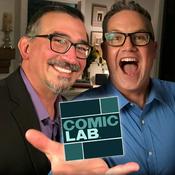
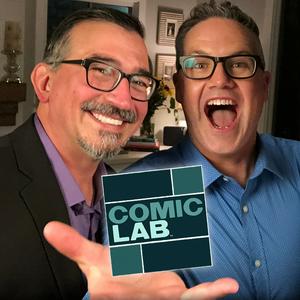
The podcast about making comics — and making a living from comics! It's half shop talk, half how-to, and half friendship. WE SQUEEZED IN THREE HALVES. It's tips and tricks and all the joys of cartooning as a pro. So pull up your drawing chair, put on some headphones, and join us while you draw! And if you like what you hear, join our community at patreon.com/comiclab (For sponsorship inquiries: comiclabpodcast@gmail.com)
Site de podcastOuça Comic Lab, Animes Overdrive e muitos outros podcasts de todo o mundo com o aplicativo o radio.net
Obtenha o aplicativo gratuito radio.net
- Guardar rádios e podcasts favoritos
- Transmissão via Wi-Fi ou Bluetooth
- Carplay & Android Audo compatìvel
- E ainda mais funções
Obtenha o aplicativo gratuito radio.net
- Guardar rádios e podcasts favoritos
- Transmissão via Wi-Fi ou Bluetooth
- Carplay & Android Audo compatìvel
- E ainda mais funções

Comic Lab
Leia o código,
baixe o aplicativo,
ouça.
baixe o aplicativo,
ouça.
 Brasil