
Ouça este podcast gratuitamente no aplicativo: Baixe gratuitamente na App Store
radio.net
Sleeptimer
Guardar rádio
Fragmented to Whole: Life Lessons from 12 Step Recovery
Barb Nangle
Último episódio
378 episódios
Stop Waiting for Their Apology: How to Reclaim Your Peace | Episode 374
19/10/2026 | 20minSend us Fan Mail
In this week's episode 374 of the Fragmented to Whole Podcast, I'm talking about how to reclaim your peace when someone has hurt you, hasn't apologized, or still doesn't understand why you needed to set a boundary. Have you ever spent hours replaying a conversation in your head, trying to find the perfect words that would finally make someone understand? You're not alone. But what if your peace didn't have to depend on their response?
Some of the talking points I go over in this episode include:
Why we keep replaying difficult conversations and how waiting for someone else's understanding can keep us emotionally stuck.
How forgiveness helped me work through my painful relationship with my father—and why forgiveness is something we do for ourselves, not to make someone else feel better.
Why forgiveness doesn't mean excusing someone's behavior, removing boundaries, or giving them another opportunity to hurt you.
How compassion can help you release resentment while still maintaining distance from someone who has hurt you.
Practical ways to stop the mental arguments, support yourself through discomfort, and redirect your attention toward the life you want to live.
You don't have to wait for an apology, acceptance, or someone else's permission to find peace. You can acknowledge your hurt, hold your boundaries, and begin letting go of the expectation that someone else must change before you can move forward. Forgiveness is a process, and you don't have to rush it or turn it into another reason to criticize yourself.
What are you still waiting for someone else to give you before you'll allow yourself some peace?
Be sure to tune in to all the episodes to receive tons of practical tips on living a more whole life and to hear even more about the points outlined above.
Thank you for listening! If you enjoyed this episode, take a screenshot of the episode to post in your stories and tag me! And don't forget to follow, rate and review the podcast and tell me your key takeaways!
Learn more about Fragmented to Whole at Fragmented to Whole Podcast
3 Genius Ways Smart People Deal With Toxic People by Emma Seppälä Ph.D.
The Wisdom of Forgiveness: Intimate Conversations and Journeys by H.H. Dalai Lama and Victor Chan
New to my work: START HERE
CONNECT WITH BARB NANGLE:
Subscribe to “Friday Fragments” weekly newsletter
Linkedin
Work with Barb!
Book an Unshakable You Readiness CallHow to Care About Someone Without Taking Responsibility for Their Feelings | Episode 373
12/10/2026 | 21minSend us Fan Mail
In this week's episode 373 of the Fragmented to Whole Podcast, I'm talking about the difference between caring about someone and taking responsibility for their feelings. Sometimes what we call compassion is actually our inability to tolerate someone else's discomfort—and that can lead us straight into rescuing, over-functioning, and abandoning ourselves.
Some of the talking points I go over in this episode include:
Why “idiot compassion” can look like kindness while actually keeping us stuck in codependent patterns and preventing us from setting clear boundaries.
How someone else’s disappointment, anxiety, or anger can become an “emergency” inside your nervous system—and cause you to override what you know you need.
The difference between helping someone and taking ownership of another adult’s choices, including how to recognize when you’re more invested in solving a problem than they are.
Why repeatedly abandoning yourself to preserve a relationship actually builds abandonment into that relationship—and makes it harder for the other person to truly know you.
Six questions to help you pause before rescuing, including whether they asked for help, what happens if you don’t intervene, and whether you’re helping because it serves them or because their discomfort is uncomfortable for you.
You don't have to stop caring in order to stop rescuing. You can listen without taking over. You can offer support without taking responsibility for the outcome. You can care deeply about someone and still allow them to have feelings about your boundaries.
The goal isn't to become less compassionate. It's to practice a kind of compassion that includes you, too. When you can stay connected to yourself while someone else is disappointed, angry, or uncomfortable, you're building Internal Safety—and creating relationships where there's room for both people to actually be there.
Are you ready to care without disappearing?
Be sure to tune in to all the episodes to receive tons of practical tips on living a more whole life and to hear even more about the points outlined above.
Thank you for listening! If you enjoyed this episode, take a screenshot of the episode to post in your stories and tag me! And don’t forget to follow, rate, and review the podcast and tell me your key takeaways!
Learn more about Fragmented to Whole at Fragmented to Whole Podcast
New to my work: START HERE
CONNECT WITH BARB NANGLE:
Subscribe to “Friday Fragments” weekly newsletter
Linkedin
Work with Barb!
Book an Unshakable You Readiness CallWhy You Keep Rescuing Someone Even When It’s Hurting You | Episode 372
05/10/2026 | 24minSend us Fan Mail
In this week's episode 372 of the Fragmented to Whole Podcast, I'm talking about what happens when you know a relationship or situation is hurting you, but you still feel like you absolutely cannot stop participating in it. I’m sharing what happened when I hit my codependent bottom with my friend Dan, and the realization that helped me understand why walking away felt just as unbearable as continuing to rescue him.
Some of the talking points I go over in this episode include:
Why you can know something is hurting you and still feel terrified to stop rescuing, fixing, enabling, or over-functioning.
How abandonment wounds can send us outward looking for love, safety, and affirmation—and how becoming the “savior” can become part of our identity.
Why stopping a codependent relationship can bring up intense fear, anxiety, and even a sense that something inside you is dying.
The questions to ask about what rescuing is costing YOU, what you need, and what you believe stopping says about who you are.
How getting support, setting boundaries, and discovering who you are beyond the role of savior can help you begin living differently.
You don't have to wait until you hit your own codependent bottom to ask for help. You can care deeply about someone and still acknowledge that what you're doing is costing you more than you can keep giving. Sometimes the hardest part of setting a boundary isn't figuring out what the other person needs; it’s facing who you believe you are when you stop being the one who saves them.
And you don't have to figure it all out before you begin. Tell the truth about what’s happening to someone who can support you. Get curious about the fear underneath the rescuing. Start paying attention to your own needs, too.
You can be compassionate without going on rescue missions. You can help people who are willing to help themselves. And you can begin discovering who YOU are beyond the role you've been playing in other people's lives.
Be sure to tune in to all the episodes to receive tons of practical tips on living a more whole life and to hear even more about the points outlined above.
Thank you for listening! If you enjoyed this episode, take a screenshot of the episode to post in your stories and tag me! And don’t forget to follow, rate, and review the podcast and tell me your key takeaways!
Learn more about Fragmented to Whole at Fragmented to Whole Podcast
New to my work: START HERE
CONNECT WITH BARB NANGLE:
Subscribe to “Friday Fragments” weekly newsletter
Linkedin
Work with Barb!
Book an Unshakable You Readiness CallHow to Set Workplace Boundaries When Power and Safety Are at Stake | Episode 371
28/09/2026 | 24minSend us Fan Mail
In this week’s episode 371 of the Fragmented to Whole Podcast, I’m talking about why workplace boundary advice can’t always be as simple as “just say no.” Workplace pressure isn’t the same for everyone, and not everyone has the same freedom to speak up without consequences. Sometimes the difficulty is coming from inside us, and sometimes the problem really is the environment we’re working in.
I share how being a fixer and overfunctioning shaped my own experience in toxic work environments, and how long it took me to recognize the pattern. We look at the difference between taking responsibility for what’s yours and taking the blame for something that isn’t yours, while also considering power, safety, workplace culture, financial flexibility and the realistic risks involved in setting a boundary.
Some of the talking points I go over in this episode include:
Why “just say no” can be overly simplistic and potentially dangerous workplace advice
How to distinguish between an old internal alarm, a current workplace risk, or a combination of both
Questions to ask about your role, the other person’s power, realistic risks, support and documentation
Why the next smallest safe step might be a direct no, a negotiation, a delay, documentation or quietly creating a plan to leave
How boundaries can help you recognize that a dysfunctional workplace is not necessarily a reflection of your personal failure
The goal of workplace boundaries isn’t to perform assertiveness or prove that you’re fearless. It’s to make conscious decisions that include your safety, values, livelihood and well-being. Sometimes staying whole means saying no, and sometimes it means pausing, gathering information, asking for support, documenting what’s happening or creating more options for yourself.
Be sure to tune in to all the episodes to receive tons of practical tips on living a more whole life and to hear even more about the points outlined above.
Thank you for listening! If you enjoyed this episode, take a screenshot of the episode to post in your stories and tag me! And don’t forget to follow, rate and review the podcast and tell me your key takeaways!
Learn more about Fragmented to Whole at Fragmented to Whole Podcast
New to my work: START HERE
CONNECT WITH BARB NANGLE:
Subscribe to “Friday Fragments” weekly newsletter
Linkedin
Work with Barb!
Book an Unshakable You Readiness CallOne Last Hit with Austin Rampt | Episode 370
21/09/2026 | 48minSend us Fan Mail
In this week's episode 370 of the Fragmented to Whole Podcast, I'm talking with Austin Rampt about addiction, recovery, shame, vulnerability, and the deep human need for connection. Austin shares his incredible journey from believing he had to achieve to be worthy of love, through years of addiction and relapse, to finally learning that he didn't have to perform, hide, or become someone else to belong.
Some of the talking points we go over in this episode include:
How Austin learned early in life to connect achievement with worthiness, and how that belief followed him into addiction, business, relationships, and even sobriety.
Why knowing the language of recovery isn't the same as doing the work, especially when no one is watching.
The moment Austin began questioning his belief that he had to earn love, and how vulnerability led to the connection he'd been seeking all along.
How taking ownership of the parts of his story he once considered unforgivable allowed him to separate who he is from what he's done.
Why self-approval, honest connection, and letting go of control are such important parts of recovery and emotional freedom.
You don't have to keep proving your worth, hiding the messy parts of yourself, or becoming who you think other people want you to be. Austin's story is a powerful reminder that the very thing we're often most afraid to do, let people really see us, can be the thing that finally gives us the connection we've been looking for.
Be sure to tune in to all the episodes to receive tons of practical tips on living a more whole life and to hear even more about the points outlined above.
Thank you for listening! If you enjoyed this episode, take a screenshot of the episode to post in your stories and tag me! And don't forget to follow, rate and review the podcast and tell me your key takeaways!
Learn more about Fragmented to Whole at Fragmented to Whole Podcast
New to my work: START HERE
CONNECT WITH AUSTIN RAMPT:
Podcast: https://onelasthitbook.com/podcast/
Book: https://onelasthitbook.com
Sobriety Talk - The Best Sobriety Podcasts, Ranked by the Recovery Community: https://sobrietytalk.com/
Linkedin
Facebook
Instagram
CONNECT WITH BARB NANGLE:
Subscribe to “Friday Fragments” weekly newsletter
Linkedin
Work with Barb!
Book an Unshakable You Readiness Call
Mais podcasts de Enriquecimento individual









Podcasts em tendência em Enriquecimento individual














Sobre Fragmented to Whole: Life Lessons from 12 Step Recovery
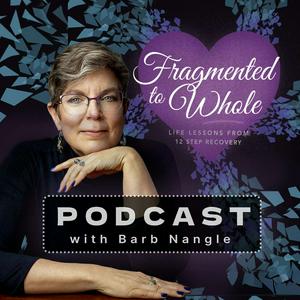
Tired of feeling fragmented and overwhelmed? Fragmented to Whole: Life Lessons from 12-Step Recovery is your guide to creating a life of wholeness, authenticity, and healthy boundaries. Join Barb Nangle, a boundaries coach and speaker, as she shares raw and honest insights from her own journey and the principles of 12-step recovery. Discover how to set boundaries without guilt or shame, overcome people-pleasing tendencies, manage your emotions effectively, cultivate a stronger sense of self, and build healthier relationships. Barb's approach is raw, honest, and sometimes a little bit (okay, a lot) sweary. Barb doesn't speak for or endorse any particular 12 step program of recovery. Though she's a huge fan of 12 step recovery, and a member of two 12 step fellowships, she cannot speak for them. If you're ready for real talk and practical tools for transformation, tune in! To learn more about Barb, go to https://higherpowercc.com/
Site de podcastOuça Fragmented to Whole: Life Lessons from 12 Step Recovery, anything goes with emma chamberlain e muitos outros podcasts de todo o mundo com o aplicativo o radio.net
Obtenha o aplicativo gratuito radio.net
- Guardar rádios e podcasts favoritos
- Transmissão via Wi-Fi ou Bluetooth
- Carplay & Android Audo compatìvel
- E ainda mais funções
Obtenha o aplicativo gratuito radio.net
- Guardar rádios e podcasts favoritos
- Transmissão via Wi-Fi ou Bluetooth
- Carplay & Android Audo compatìvel
- E ainda mais funções

Fragmented to Whole: Life Lessons from 12 Step Recovery
Leia o código,
baixe o aplicativo,
ouça.
baixe o aplicativo,
ouça.
Fragmented to Whole: Life Lessons from 12 Step Recovery: Podcast do grupo
 Brasil