

Ouça este podcast gratuitamente no aplicativo: Baixe gratuitamente na App Store
radio.net
Sleeptimer
Guardar rádio
396 episódios
The Philosophical Origins of Modernism, Part 1: What Happened to Catholicism #2
18/09/2026 | 15minThis is a free preview of a paid episode. To hear more, visit meretradition.substack.com
Check out Fr Tommasi’s articles I mentioned if you have time: https://substack.com/@frromanotommasiAgainst Tim Flanders and His Diabolism
17/09/2026 | 48minA Note to the Tenderhearted
In general, my audience knows my writing to be measured, and it is often described as charitable. This is something I work hard at, because it isn’t always easy to stay cool as a cucumber when you do what I do. There are legions of people who would like to see my downfall, and, lets be honest, it isn’t an easy thing to defend Catholic Tradition, and especially the SSPX.
At times my motives have been questioned — the Trad Inc. stuff, etc. — and I have been accused of every sin under the Sun. I do what I do for basically two reasons, which are really one reason; and neither of those reasons are financial, because defending the SSPX is not what I would call a good business decision! My family certainly won’t miss any meals, but you would be out of your mind if you thought someone like me could achieve the professional success of a mainstream Catholic commentator by doing what I do. Those men, and I don’t blame them, will get hefty speaking fees to show up and speak at massive conferences, and so on. I, on the otherhand, will hop in my car and drive to Timbuckto to give talks for a bit of money and trust that the Lord will encourage people to be generous with donations. I am grateful for all of it, and I do not lament or regret doing it, because it isn’t about the money. If I could do it for free, I would.
In any event, my reasons. First, I want to defend the Catholic Church, because it is the most important thing that I believe I can do with my time as a professional. I didn’t seek out this path, but it sort of fell on my lap, and I took it as a sign from Providence that I should continue down the path laid in front of me. Initially, I merely wanted to do something like being a run of the mill apologist at a place like Catholic Answers. Then, I found Catholic Tradition, and the rest, as they say, is history.
Second, I do what I do, with regard to defending Tradition and the SSPX, because I am convinced, as God is my witness, that a Revolution has taken place in the Church, and therefore we must defend against the Revolution for the sake of the Church. My path brought me to the SSPX, which I was not raised in, and did not seek of my own accord. It is my belief that the SSPX is the only priestly organization within the Church that has both the theological formation, and the administrative reality sufficient to offer a comprehensive resistance to the disease of Modernism. Of course, there are other great priests outside the SSPX, and I count many of them as my friends, but as far as things go, the SSPX does not have to give a hat-tip to Modernism in any way, even implicitly or by silence, and I think that is indispensable. Whether you attend the SSPX or not, you benefit from their fight, because their fight is for you and your soul, even if you have never met them.
Now, I always defend my own. I will defend my family, I will defend my friends and my community, I will defend my country, and I will defend my priests. In addition, I will always defend Archbishop Lefebvre because I believe he was, is, a great saint, and that history will show us as the years and centuries go by, that he truly was an Athanasius of our time.
In any event, when someone attacks my own, I do take it personally, because I am a human being, and I am not a sociopath, so I have emotions and affection for persons that I love very much.
I love the SSPX, because I love Archbishop Lefebvre like a father, even though I never met him. I love my priests because they love my wife and children enough — along with the other faithful they serve — to choose a life of being an outcast and hated by the Church they serve as valiantly as anyone for nothing other than love of Our Blessed Lord and his Bride.
When men like Tim Flanders go down the path of creating new cockamamie ways to try and prove the SSPX is in schism, they don’t just do bad theology, but they hurt people. Real people. And I see that with my own eyes.
For instance. Families that found the SSPX and have adult children who don’t think it is the right thing to do, which makes things hard. The parents work extra hard to keep the family together, and they finally find a good place where they can at least co-exist and attend each other’s weddings and baptisms. But then, men like Tim come along and throw pseudo-theological spaghetti at the wall with a lot of fancy words and references to this and that esoteric idea that sounds smart, and all of a sudden these families take a hit. “Look, even this place and this guy who you told me was pro-SSPX and that you aren’t in schism has changed his mind! You think you are smarter than this guy who writes long essays in a major traditional publication?”
The kids who were on the fence think their parents have joined a cult or some evil group of uncharitable elitists who are basically creating their own religion, and all of a sudden the family is broken again.
This doesn’t need to happen. Men like Tim Flanders could just keep their pseudo-theological musings to themselves, but something compels them to drop nuclear bombs into people’s lives.
Maybe they don’t see because they live in a world where speculative theological banter is like a sport, or professional wrestling, where there are no true victims. But there are victims, and there are tears, and there is sorrow.
It is evil, and it has to stop. There is enough stuff out there against the SSPX, and men like Tim Flanders don’t have to go on creating new ways to try and prove the SSPX is schismatic with their own personal opinions in ways that the authorities in Rome haven’t even done. These men will tell you about obedience, and then they hold people to standards they have created in their own intellectual prison and exclude others from a Church they have made in their own mind.
It is evil, and it really hurts people, and the damage caused is not irrelevant.
The late Bishop Tissier once came to give Confirmations at our priory, and I heard him preach. He spoke of the need for Catholics to defend the Church, as is the theme in Confirmation, and he let us know that defending the Church sometimes includes attacking, the way that defending one’s country includes attacking when war has been declared.
I will attack when necessary, and I will do it with a clean conscience, because it is right and just to defend the innocents who are hurt by men like Tim Flanders when they publicly pontificate about imaginary modes of schism and heresy in the public forum, and by doing so they deceive unwitting readers who do not have the time or the theological acumen to realize that they have been sold a worthless bag of beans.
One more thing before we continue. Those who have followed my work for a long time may recall that I was — I think — the first Catholic writer and podcaster to come out against Michael Lofton. If you don’t know who he is, don’t waste your time, but if you know, you know. He had been friendly to Tradition, and even had me on his show many times, as well as other SSPX priests. One day he decided to go after the SSPX and then Tradition as such. Now, the man has almost left the Faith entirely. At the time I called him an “Enemy of the Church” because I could see it. I could see that the way he was doing things was going to result in what eventually happened — a full-blown Modernist attack on Tradition.
Tim Flanders is not Michael Lofton, but they are not as dissimilar as you might think. Both men have converted to different religions, or denominations, or streams within the Catholic Church about a half-dozen times in a short period of time. Both men have this habit of waffling back and forth, never being able to sink their teeth into a solid way of thinking and stay there. Both are also easily influenced by media (Tim admits this) and influential Catholic voices who get their hooks in them.
Now, Tim is not Michael Lofton because Tim demonstrates way more virtue and his temperament is different. Nevertheless, mark my words, this will not be the last time Tim Flanders waffles and has to do a public reinvention of himself in the public forum. He has done it a number of times, and he will do it again.
He is a good man, but he is unstable and cannot commit to being a certain way permanently, and we are watching that cycle play out at the expense of others who have supported him in the past.
I called Michael Lofton an Enemy of the Church, because he was and is. I will call Tim Flanders an Enemy of the Church, because anyone who gains people’s trust and then waffles back and forth, only to cause them to be confused and disheartened, has troubled consciences and souls. The Church exists in souls.
Funnily, I remember Matt Fradd texted me when I went after Lofton, and he said I was being uncharitable and misrepresenting Lofton. I wonder what he was say now…
The crisis in the Church is hard enough for people, and we don’t need men who should know better adding fuel to the flames that will burn Catholics who are just trying to save their souls.
We don’t get to decide when war breaks out, and sometimes that war is a civil war, so former confreres become enemy combatants. All the same, if the bullets are flying and they are in my direction or the direction of those I love, then if you are in my crosshairs, I will pull the trigger and sleep easy.
Deus Vult.
Mere Tradition with Kennedy Hall is a reader-supported publication. To receive new posts and support my work, consider becoming a free or paid subscriber.
I. The Mad Man
On the fifteenth of September, the editor of OnePeterFive published a piece announcing that he had been wrong about the Society of St Pius X. It is the second part of what he calls an editorial process, and it appeared alongside a much longer retraction on his Substack. The Substack is where the footnotes are, but very few people read his Substack, and OnePeterFive is where the readers are. I intend to answer both, but I am starting here, because this is the one that will be read.
Before I say anything critical, let me lay out my approach.
I have nothing to say about his sincerity, which I cannot judge. At the same time, his words have meaning, and he has done a very grave thing in how he has presented his ideas, so I will deal with that.
You may also have noticed that I used the term “Diabolism” in the title, which I am sure seems harsh. Allow me to explain.
When we think of the diabolical, we often think of preternatural parlour tricks and spiritual phenomena. But the root of the term means “to slander” or “to falsely accuse.” A writer on Substack, who I believe is extraordinarily intelligent, defines the Diabolical, in the sense we use it here, thusly:
Diabolical
That which throws apart, what belongs together in an ordered whole: principle from end, affirmation from operation, higher from lower, and judgment from the object that should govern—throwing apart coherence. What belongs together in one order is cut into tangents rather than distinguished (Cartesian vs. Thomistic). A distinction preserves order, while a tangent departs from it, carries meanings foreign to it, and multiplies. Hence the perpetual mode of figuring out and never arriving. We refer to structure, functions, and effects, not intention or moral state.
In simpler terms: It cuts what holds into loose ends, and loose ends multiply.
That is what Tim has done in his recent article. He has said many unprovable and even untrue things about the priests of the SSPX, and he has accused them of a number of errors and sins without sufficient evidence. He has also confused terms, and used them wrongly, and has inflated things to mean things they do not mean; also, he has gone on numerous tangents about his own made-up theological categories, and applied them to the SSPX with no standard of judgement but his own. In short, he as stepped into the situation and caused unnecessary trouble to souls who look to OnePeterFive for actual theology, and instead have been given duplicity, and pride. I say Pride and I mean it, because, as can be seen in his article, and will be shown in this one, Tim has created categories to condemn the SSPX that not even the Modernists in Rome use. It is completely diabolical.
To quote Pope Saint Pius X — whom Tim has accused of iconoclasm, which is an extremely grave sin: “It is pride which fills Modernists with that confidence in themselves and leads them to hold themselves up as the rule for all, pride which puffs them up with that vainglory which allows them to regard themselves as the sole possessors of knowledge, and makes them say, inflated with presumption, We are not as the rest of men..” (Pascendi, 40)
Tim has troubled the consciences of curious Catholic readers, and he has done it while employing poor scholarship, dubious citations, and generalities he has manufactured for himself. In addition, he has written his article as a sort of confession — but it is not a confession in the truest sense, because it blames everyone but himself, which I will prove.
Today, so many of us misunderstand charity, and we confuse it with niceness. “So-and-so is so charitable, because he never raises his voice and is nice to people.” Charity is the love of neighbour for the sake of God. It can be charitable to keep your mouth shut, and it can be charitable to speak up. It can be charitable to avoid violence, and it can be charitable to throw hands if the situation warrants it for a just cause.
The Crusaders were charitable, and they swung swords and ran cold steel through the hearts of infidels who murdered and plundered innocent Christians. Sometimes true charity requires a bit of blood. So, I ask the reader to man up if needed and avoid sentimentalism and the heresy of “niceness.” (Don’t worry, it isn’t a real heresy, and I am not judging anyone by a pretend heresy that I have made up to use as a literary device, because I am not following Tim’s method.)
Tim is a grown man, and he is too well-read and has had too many real-life conversations to characterize the SSPX and its faithful in the way that he has. He deserves to be taken out behind the woodshed for his transgressions, because stupid actions deserve consequences, and when they are public, the consequences must be as well.
Furthermore, as we will see below, Tim has engaged hypocritically in the very behaviour he accuses others of, especially with regard to “cancelling.” If you read his piece, you will notice that he laments a “Soviet-style Liquidation” of the SSPX by Church authorities — which is a fancy way of saying that they were cancelled mercilessly, including being denied proper recourse to legal procedure.
Now notice what Tim has done. He has written a piece accusing the SSPX of a variety of sins and heresies, and then he has changed the editorial policy of OnePeterFive to disallow vehement pro-SSPX voices. I was a member of the editorial board — I say was, because I will have nothing to do with a publication that has devolved under Tim’s leadership — and I was not informed of this change.
Let that sink in for a second: Tim Flanders has changed the editorial standards for OnePeterFive in a way that disallows a strong defence of the SSPX against the very accusations he has levelled, and he did not inform the editorial board! Maybe he did inform the board and didn’t tell me, which would be just as bad for other reasons.
Ironically, the change in the editorial process disallows me, a former board member, from responding to Tim’s article on the site. Yes, I have read all the nonsense that Tim believes we have to read in order to have an opinion that he thinks is informed enough, but I would be too pro-SSPX for his new standards.
Tim talks a big game about charity, piety, and unity. But when push comes to shove, he has decided to give an autobiographical account of his own spiritual journey and use it as the basis for damning a group of priests whose interior life, piety, orthodoxy, and virtue he liquidates with his commentary.
Tim Flanders should be ashamed of himself for how he has handled this.
I am not one for boycotts, so I won’t tell you what to do with your time or money, but if you love Catholic Tradition, I would avoid OnePeterFive and wouldn’t give them a dime.
Another note about his method. You will notice that Tim has characterized traditionalists like myself as suffering from a whole host of faults, and as generally lacking virtue and charity. Of course, since his words are so inflammatory and so insulting to so many, we must now respond in kind — which will produce the stereotypical “angry Trad” reaction.
In doing this, he has governed OnePeterFive — which is run by donations, by the way, so if you are an SSPX person who has donated, you have paid the salary of a man who is teaching the world to think you suffer from heresies and spiritual sicknesses — the way politicians handle people they disagree with. Tim has built an edifice in his own mind wherein traditionalists are a group of evildoers who do not know the Lord the way people with true interior lives do, like Tim; and in provoking them, they will respond. In short, Tim has dealt with traditionalists the way the Marxists dealt with the proverbial “anti-vaxxer” during COVID. Look at those crazy anti-vaxxers. I can’t understand why they are so angry. All we did was vilify them, tell the world how evil they were, and say that everyone was dead because of their inability to understand science.
Similarly, Tim has labelled traditionalists as holding unworthy opinions because he believes they have not read enough Vatican II — how could he possibly know that, especially with regard to the priests of the SSPX? — or because they do not pray enough, or because they are fake Thomists, or because they are not truly Marian. Which means that any response to Tim can be filed under the edifice he has built for Trads to inhabit.
Tim has created an enclosure in which he is the judge of who knows theology enough, who prays enough, and who is virtuous enough. And he has presented his conclusions as the fruit of personal spiritual troubles, speaking in his Substack of how God has shown him things that led him to these conclusions. To this we can say: “God has shown me that you are wrong.” Of course, that will not suffice — because Tim knows that SSPX Trads cannot have the interior life necessary to really know God’s will, because they are probably Jansenists, or too Ultramontane, or whatever.
Tim has essentially become the madman in Chesterton’s Orthodoxy:
If a man says (for instance) that men have a conspiracy against him, you cannot dispute it except by saying that all the men deny that they are conspirators; which is exactly what conspirators would do. His explanation covers the facts as much as yours. Or if a man says that he is the rightful King of England, it is no complete answer to say that the existing authorities call him mad; for if he were King of England that might be the wisest thing for the existing authorities to do. Or if a man says that he is Jesus Christ, it is no answer to tell him that the world denies his divinity; for the world denied Christ’s… his mind moves in a perfect but narrow circle. A small circle is quite as infinite as a large circle; but, though it is quite as infinite, it is not so large… The lunatic’s theory explains a large number of things, but it does not explain them in a large way.
And, as Chesterton says, “curing a madman is not arguing with a philosopher; it is casting out a devil.” That is why I have called Tim’s actions diabolical.
Now that this first part is out of the way, we will proceed to dismantle his disastrous theological and historical claims.
Mere Tradition with Kennedy Hall is a reader-supported publication. To receive new posts and support my work, consider becoming a free or paid subscriber.
II. An Essay That Contains No Argument
As I said, the article is styled at the outset as a confession: I was wrong about the SSPX. The opening is autobiographical. The middle is a collection of supposed errors. And the conclusion is a policy announcement: publication standards at OnePeterFive concerning the Society will change.
Tim has sought the sympathy of readers by laying his heart bare, before moving on to a lengthy excoriation of the SSPX — an excoriation that has been done poorly. Frankly, it is a type of sleight of hand.
Throughout the piece, Tim makes it clear that his screed about the SSPX being veritably evil is not exhaustive, and he points the reader to another publication for the footnotes. What is amazing about this is that Tim has used the platform of OnePeterFive — again, a donation-run publication that he does not own — to slam a group of priests, while the supposed proof of his statements sits on his own personal website.
Anyway, I went and looked at what he cited from his Substack.
The Substack has eighteen footnotes. They speak to the argument from St. Ignatius of Antioch. (I will write a separate piece on Tim’s errors regarding Eucharistic ecclesiology, using the very sources he cites against him.) They point to the Society’s 1979 Declaration. They cite a South Indian Society magazine from 2018, a page of Most Asked Questions, Cardinal Ratzinger’s Santiago address, the theologian John Meyendorff, and an article in an online theological encyclopaedia.
They do not support the claims made in the OnePeterFive piece.
The footnotes do not support the claim that the Society’s whole school suffers from an ahistorical Aristotelian Thomism. That is his claim, and, as far as I can tell, his own invented terminology. As far as I can tell, Tim also has no idea how SSPX priests are actually formed. He claims that they suffer, more or less, from a deficient formation in which they are taught that there is “no salvation outside ahistorical Aristo-Thomism.”
Well, if I may — I actually do know how they are formed. I also know how they are formed in the academies from which most SSPX priests come. They study the great works of literature. They study the philosophies of antiquity, and not merely Aristotle. They read the Summa, and they study the commentaries on Aquinas. They study Vatican II at length. They study the great moral theologians. They study the works of the great councils and of a great number of popes. And more. They also spend a whole lot of time in prayer, in front of the Blessed Sacrament, and there is a general silence during much of the day at the seminaries so they can stay recollected. Nevertheless, this does not suffice for a true interior life or real piety according to Tim’s diagnosis.
The priests of the SSPX and the faithful who attend their schools receive a formation in theology and philosophy that Tim could only have dreamed of growing up in public schools, yet he stands in judgement of their intellectual chops.
In any event, Tim’s footnotes do not support his claim that they lack piety, and his own in-person experience — not his online experience — ought to belie such slander. A couple of years ago, when Tim frequented and spoke at our SSPX men’s conference, it was First Friday. At our chapel we follow the old-school way of doing First Friday. The whole affair takes about two hours, and your knees are wrecked by the end of it. It starts with Mass; then Benediction, while praying the Rosary and singing the usual Benediction hymns, along with singing the Litany of the Sacred Heart in Latin, which alone takes about 12 minutes; then Father guides us through a fifteen-minute silent meditation before the Blessed Sacrament, on top of the usual prayers and the Rosary. After the ceremony, Tim said to me — and I paraphrase — “My parish is called Sacred Heart, and our First Fridays are nothing like that. Do you guys always do that?”
Nevertheless, we of course lack sufficient piety for Tim.
Also, another time, Tim attended a Third Order meeting with me where Father gave a conference on Mariology and why she truly is the Corredemptrix and Mediatrix of all Graces. To make his points, Father used scripture, the ancient Fathers, Thomas Aquinas, and a number of popes. So, Father went through the works of saints, popes, and theologians from 19 centuries.
We left the meeting, and Tim expressed how incredible the lesson was and how lucky we were to have priests give us such great Marian theology.
Nevertheless, the SSPX priests and those who follow them suffer from a lack of true Marian Thomism, according to Tim.
He also makes claims about an entire narrative of the SSPX that he apparently fell prey to, and he condemns it as false — but there is no proof.
In any event, his footnotes fail to support his OnePeterFive essay in a variety of ways, and to go into all of them here would turn this into a small book.
The essay is not an essay, because an essay must make a real argument. It cannot merely be a pile of assertions and accusations buttressed by self-referential footnotes that explain nothing in the essay itself, while simultaneously deploying fabricated terms about “false spirits” and other things of his own making.
Mere Tradition with Kennedy Hall is a reader-supported publication. To receive new posts and support my work, consider becoming a free or paid subscriber.
III. Tim Has Dealt with the SSPX Like a Marxist
Now to the contradiction that runs down the middle of the piece.
As mentioned above, Tim laments the Soviet-style liquidation of the SSPX and says that it was wrong. Nevertheless, Tim has engaged in the very behaviour he laments. His slanderous claims, his false accusations, and his misrepresentation of facts — none of which he properly proves with citations — all result in a change to the editorial process of OnePeterFive, which is, in effect, a cancellation. Quite frankly, this is Marxist, in the way Tim uses the term, to the core.
All you SSPX people have been treated poorly, and that was bad, and I disavow you guys being left out… by the way, you are heretics and schismatics, you lack virtue, you have no piety, and you are not allowed to write here as you used to.
Tim should enter politics, because he could stand in front of Congress and say: I disavow racism in all its forms, especially against people who have been labelled white supremacists… by the way, we are now enforcing a policy whereby whites cannot have the jobs they used to have, because we are worried that their whiteness will creep in.
He goes further.
Tim reproduces his own editorial standard for anything written about the Council — a standard requiring a prospective contributor to have first read two of the editor’s own articles, then to be well versed in a named list of authors who write in reply to traditionalists, and then to have read all sixteen documents and all the postconciliar clarifications.
Apparently it should be called OnePeterTim. Ubi Petrus, ubi Tim.
What Tim has done is hand you a syllabus of his own preferred works — which he deems demonstrative of a true Catholic intellect — as the barrier to entry. I think I would have an easier time getting a PhD from a mainline liberal Catholic university than publishing at OnePeterTim. Amazing.
Maybe OnePeterTim can start awarding Timplomas if they complete his syllabus of true knowledge. I wonder if there will be a test for prospective writers: Do you understand Vatican II well enough, with an open heart that is void of any icky nastiness from those mean SSPX Narrative people?
If Tim ever finds a new line of work, he should work for an HR department, because what he is advocating for is essentially re-education before employment can continue, in the hopes that any false beliefs will be exorcised from the person suffering from a subconscious, invisible malady.
OnePeterTim has essentially adopted a theological DEI policy.
But wait, there’s more.
He tells us, before any of it has been applied to a single named piece of writing, that nothing he has read from the fictitious SSPX School of Ahistorical Aristotelian Thomism meets his invented standards. In all humility, charity, and piety, Tim has made himself into a mini-magisterium, standing in judgment over the intellectual chops of theologians and priests formed in institutions where his pseudo-essay writing style would not earn a passing grade in first year.
Now, on the one hand, Tim may have the contractual right to do what he has done, since he manages the magazine. Nevertheless, he does not have the moral right to act this way, because generous readers have paid his salary, and they have given money — at least in part — to read men like myself and others who speak about the SSPX without the tact of a Marxist liquidator.
This is an act of gatekeeping described as the opposite of gatekeeping, in the same essay, by the same man. He denounces the use of institutional power to remove a party’s voice, and then uses his institutional power to reduce that party’s voice in the one place he controls.
There is a version of this essay that would have been appropriate. It would have said: I have changed my mind, here is why, and because I now hold these views my magazine will reflect them. That version would be lame, but it would not be objectionable in the same way. Instead, the essay wants credit for refusing to cancel while performing the act, and the two cannot be had together.
Mere Tradition with Kennedy Hall is a reader-supported publication. To receive new posts and support my work, consider becoming a free or paid subscriber.
IV. The Ratzinger Passage Betrays Him
Fundamental to the essay is a passage from Cardinal Ratzinger’s address at Santiago in July 1988, delivered in the immediate aftermath of the consecrations.
Tim quotes it at length, and he quotes it accurately. Ratzinger warns against surrendering to triumphalism. He says that a Christian cannot rejoice in disunity. And he says that even if blame cannot be laid at the Holy See’s door with certainty, it is our obligation to ask what errors we have committed and what errors we are still committing.
Tim notes the humility of a man who had just been instrumental in an excommunication, and who, given a major platform, did not use it to enumerate the other man’s errors. He compares it to what a father does when he has to punish a son: he asks what he could have done better. Fair enough.
And then he writes six thousand words enumerating the other side’s errors.
Ahistorical Aristotelian Thomism. Clericalist ultramontanism. Neo-Jansenism. A failure to meet editorial standards. An absence of the virtue of piety. An absence of academic seriousness. A malformed reading of the Council. A refusal to dialogue — despite decades of actual dialogue. A narrative that has put the whole traditional movement into a hole.
Now, the essay is full of the words I was wrong. But it is all puffery, regardless of his intention.
Every admission in the piece has the same structure. He was wrong because he allowed the Narrative to influence his thinking. He fell into the Narrative. He sniffed Modernism everywhere and denounced people online — because that is what this way of thinking does to a man.
If Tim sinned, he sinned because Tim sinned. No SSPX bogeyman held a gun to his head and told him to be a jerk — if he acted like a jerk, he did it on his own. But, he can’t just say that, because really it was those bad SSPX guys who made him think that way. Quite frankly, this manner of thinking is demonstrably effeminate. He may as well say “The Devil made me do it.”
Tim’s pseudo-essay presents itself as an admission of guilt and then blames everyone but himself for his supposed transgressions. That is not self-examination. It is a transfer of responsibility conducted in the style of confession, and it is the exact inverse of the passage he holds up as his model.
There is a further problem.
The Ratzinger passage is about the side holding the power examining itself. Ratzinger was not asking what Lefebvre had done to provoke Rome. He was asking what Rome had done wrong. The humility is located in a specific place: in the institution, looking at itself.
In the world that Tim’s fake essay governs — the traditionalist world — Tim is the one holding the institutional power. He edits a widely read journal. He sets the terms of entry. Applying his own chosen model honestly would mean asking what OnePeterFive, and the traditional movement’s publishing establishment more broadly, have got wrong over the last decade. It would mean the self-examination running toward himself. It would also mean asking the editorial board what to do, but that never happened either.
Instead, the question becomes what the Society and the fake Narrative supposedly did to his own psyche and to OnePeterTim.
I won’t be surprised if OnePeterTim starts asking the SSPX for reparations due to subconscious generational trauma.
Mere Tradition with Kennedy Hall is a reader-supported publication. To receive new posts and support my work, consider becoming a free or paid subscriber.
V. Roma Locuta Est, and a Case That Is Not Finished
There is a section of the essay devoted to the proposition that a layman ought not to dispute a clerical court.
Here is the problem with that. Innumerable canon lawyers are laymen. But according to Tim, they must not dispute clerical courts — even though it is their job to do so.
Tell me something, Tim the Merciful Liquidator. If an SSPX man like myself publishes what he was told by a layman who works as a canon lawyer in Rome — something I have done — do we both sin? Does the lawyer sin by doing his job, or do I sin by writing about what he does when he does it?
For a man who laments that the SSPX harbours a spirit of — and I quote — “Clericalist Hyperüberultramontanism,” Tim certainly does get annoyed when laymen question the actions of courts in the Vatican. By the way, I had to copy and paste that word, because I have trouble spelling expansive fake ones.
As an aside, I can’t for the life of me understand how it is the SSPX of all priestly societies that gets labelled as being too ultramontane. In its most basic form Ultramontanism is a very high opinion of the pope in both ecclesial and civil spheres. If it can be demonstrated in an inflated manner, ultramontanism is blamed for clericalism, which leads to blindly following clerics even when they are wrong.
This is why I am so glad that the Fraternity of Saint Peter and other Traditional groups have resisted the popes since Vatican II! Er, wait, I am sorry, I forgot it was the SSPX that has done that. For the sake of common sense and the proper use of terms, how on God’s green Earth can the SSPX be too ultramontane when they are the only group in the Latin Church to have actually resisted the Pope?!
In any event, Tim’s stated position on this matter is this. The highest ecclesiastical court has judged the Society’s clerics schismatic. The judgment could be in error; history furnishes examples. But it is not for a layman to judge a clerical judgment of clerics on a clerical question. So Tim, most humbly, does not question it. Roma locuta est.
He illustrates this with an analogy. A priest who told a layman to ignore a civil court’s sentence would be told by the judge that he has no jurisdiction here, and the judge would be right. Then Tim brings in St Thomas Becket, whom he characterizes as having died to keep the clerical courts free of lay interference.
Three things.
The analogy does not work
Becket’s quarrel was about jurisdiction over persons — whether clerics accused of crimes could be haled before the king’s courts. It was not the proposition that the laity must hold no opinions about ecclesiastical judgments and voice none. If that were the principle, then the lay apostolate this same essay spends pages defending — the Two Swords, the lay nobility, the journal itself — would be illegitimate on its face. You cannot summon Becket to silence lay comment on the Church’s affairs in a piece whose other half is a manifesto for lay competence in the Church’s affairs.
The rule is applied only in the direction that costs Tim nothing
If it is unfitting for a layman to publicly dispute the verdict, then it is equally unfitting for a layman to publicly amplify it and to publicly build a programme upon it. Tim has published two essays treating the verdict as settled and drawing from it the maximum available practical consequences, while reserving any doubts he might have for a private channel.
And Rome has not finished speaking
I could not believe he got this so wrong.
The piece refers to “the highest ecclesiastical court.” The Dicastery for the Doctrine of the Faith is not a court. The DDF can handle certain specific delicts through particular tribunals, but the Dicastery itself is not a court. The highest court in the Church is the Supreme Tribunal of the Apostolic Signatura.
What was issued on the second of July was a decree, in which six men were named. The extension of the word “schism” to the Society’s priests generally is found not in the decree but in an accompanying Explanatory Note, which carries no force of law.
Furthermore, the Society has lodged an appeal, and it is ongoing.
Roma locuta est, causa finita — except that the cause is formally open.
Tim has made deference to the process his stated principle, and he has announced the result before the process has run, and has built editorial policy on his flawed conclusion — as a layman — about an ongoing canonical dispute involving clerics in Rome.
So Tim tells us that we cannot dispute what courts are doing or have done, which is not actually true. Yet he has judged the SSPX, largely on the basis of an ongoing canonical process, and has conflated a legally impotent Note with a criminal sentence.
If I may share an anecdote — which I hope I can do legitimately, considering that Tim has shared his personal spiritual insights in order to buttress his claims about the SSPX — one canon lawyer said of my analysis of the situation: “Kennedy Hall’s analysis seems quite sound and reliable to me.”
That praise was published in an article by Peter Kwasniewski. I wonder whether Dr. K and the canon lawyer were aware that what the three of us did was basically illegal according to Tim. We should have checked with the editorial policy of OnePeterTim first.
Tim has gone beyond hyperubermontanism or whatever it is called and has given us UltraTuchoism: Tucho locuta est.
One more aside before the next part of the article: Tim laments that the SSPX Narrative, along with Neo-Jansenism (more on that in another article) has given Trads free reign to mock the pope. Well, aside from the fact that the pope is not mocked by SSPX priests in general, which I can attest to after having attended about a thousand Masses served by them, we should be careful with associating mocking the pope or other clerics with a spiritual disease.
Be careful Tim, if mocking the pope is a grave sin as such, then you are going to have to throw Dante into the Hell you have created for hyperuberappletiniclericaljansenistfakethomistites.
Mere Tradition with Kennedy Hall is a reader-supported publication. To receive new posts and support my work, consider becoming a free or paid subscriber.
VI. “Eternal Rome,” Misunderstood, Badly
Tim rejects the Archbishop’s concept of “Eternal Rome.” His stated ground is that the concept seems to “savour of heresy.”
This is an astonishing statement, considering that Tim tells us he suffered from what amounted to a spiritual disease when he was favourable to the SSPX, because he “sniffed Modernism” everywhere. I suppose sniffing is different from savouring — although the olfactory and gustatory systems do work in tandem. Perhaps it is acceptable for us to speak of tasting heresy in Traditionalists, but if we smell it in others, that is clearly demonstrative of schismatic behaviour.
In any event, “Eternal Rome” was Archbishop Lefebvre’s term, used to distinguish his belief about Rome from the “Conciliar Church” — a term coined by Vatican officials. Cardinal Benelli used it in correspondence with Lefebvre. Naturally, Lefebvre responded that he did not belong to a Conciliar Church, because no such thing exists. And, naturally, the opposite of a Rome tied to one particular council as the mark of its identity, at the expense of every other council, is a Rome that is timeless. Hence “Eternal.”
Tim writes:
But what exactly is “Eternal Rome”? The SSPX Narrative does not say exactly. The various factions of the SSPX clerics themselves disagree with each other about what is Eternal Rome and what is the practical application of adhering thereto.
Tim says in his piece that he has read enough SSPX literature to have earned the right to an opinion, but he utterly fails here. While the made-up “SSPX Narrative” may not define the term adequately for OnePeterTim, Archbishop Lefebvre said the following in his famous Declaration:
We hold fast, with all our heart and with all our soul, to Catholic Rome, Guardian of the Catholic Faith and of the traditions necessary to preserve this faith, to Eternal Rome, Mistress of wisdom and truth.
We refuse, on the other hand, and have always refused to follow the Rome of neo-Modernist and neo-Protestant tendencies which were clearly evident in the Second Vatican Council and, after the Council, in all the reforms which issued from it.
All these reforms, indeed, have contributed and are still contributing to the destruction of the Church, to the ruin of the priesthood, to the abolition of the Sacrifice of the Mass and of the sacraments, to the disappearance of religious life, to a naturalist and Teilhardian teaching in universities, seminaries and catechetics; a teaching derived from Liberalism and Protestantism, many times condemned by the solemn Magisterium of the Church.
He added:
That is why we hold fast to all that has been believed and practiced in the faith, morals, liturgy, teaching of the catechism, formation of the priest and institution of the Church, by the Church of all time; to all these things as codified in those books which saw day before the Modernist influence of the Council. This we shall do until such time that the true light of Tradition dissipates the darkness obscuring the sky of Eternal Rome.
Lefebvre explained very clearly what was meant by Eternal Rome. It is the Church of all time — which includes now, by the way, because now is a part of time — and to hold fast to Eternal Rome is to reject the novelties and heresies that destroy the faith and kill souls.
For goodness’ sake, even throughout Tim’s recent about-face on the SSPX, he speaks of all the evil things that have been done in the Church, in a number of areas, since the Council. Tim rejects those things. So did Lefebvre. Tim rejects them because he knows that, when compared with the Church of all time, they are not acceptable. So on the one hand Tim believes “Eternal Rome” is a term that tastes like heresy; on the other hand, he rejects all the bad things that have happened in the Church of What’s Happening Now.
Tim writes that the SSPX Narrative does not define Eternal Rome. Two things. First, Lefebvre defined it very clearly. Second, the term is self-explanatory, because eternal means forever and Rome means Rome.
The Rome of Forever is the Rome of the past, the present, and the future. Apparently, holding fast to the Rome of Forever is not good enough for Tim, so he writes:
The first problem with this is that the concept seems to “savour of heresy,” because it not only does not define what “Eternal Rome” is exactly, but it defines Eternal Rome as something not exactly the same as the current Bishop of Rome.
So Tim laments that the amorphous SSPX Narrative does not define Eternal Rome, and, in the same sentence, that it defines Eternal Rome as something other than the current Bishop of Rome.
With respect: does Tim know what eternity means? It includes the now-time as well as the before-time. And since the pope of today is part of the now-time, he is part of eternity.
The SSPX is condemned for not defining a term and for defining the term wrongly, in the same sentence, by a man who seems not to know how time works. Good grief.
Also, what are these SSPX “factions” Tim speaks of? Is he referring to the so-called Resistance? They are not part of the SSPX, so that is a gripe he should take up in a different article, about other people. And even if there were factions within the SSPX, would that delegitimize them? If so, what are we to do with the Catholic Church?
If the SSPX is the cause of factions, then is Rome the cause of the other factions in the Church? We may as well liquidate the whole thing, if we follow Tim’s logic all the way down. Throw out the baby, the bathwater, and the tub itself.
He writes:
Obviously as traditionalists we all know the doctrine of Vatican I says that the bishop of Rome is to guard the Tradition and not invent new teachings, and Vatican II confirms this same thing in a beautiful passage from Dei Verbum paragraph 10.
Yes — no kidding. But what does that prove about the SSPX being in error? Regarding Vatican I, we read in Pastor Aeternus:
For the Holy Spirit was promised to the successors of Peter not so that they might, by his revelation, make known some new doctrine, but that, by his assistance, they might religiously guard and faithfully expound the revelation or deposit of faith transmitted by the apostles. Indeed, their apostolic teaching was embraced by all the venerable fathers and reverenced and followed by all the holy orthodox doctors, for they knew very well that this See of St. Peter always remains unblemished by any error, in accordance with the divine promise of our Lord and Saviour to the prince of his disciples: “I have prayed for you that your faith may not fail; and when you have turned again, strengthen your brethren.”
So the pope is meant to guard the faith; he does not have the power to make new doctrines; and the See of Peter is inviolate. Now, even Tim does not believe that the man who holds the office always does right, since he has accused Pope St Pius X and Blessed Pius IX of terrible blunders elsewhere. He has accused Popes St Pius X, Pius XII, and Paul VI of overseeing iconoclasm, among other things.
If it is possible for the See of Peter to remain inviolate while the men who occupy it can do bad things, then there must be some timeless — Eternal? — element holding the whole thing together. Sorry, my logic is beginning to savour of heresy again. Drat.
Tim also cites John Paul II’s Ecclesia Dei afflicta against the SSPX, but he leaves out an astonishing passage from the Polish pope:
Moreover, I should like to remind theologians and other experts in the ecclesiastical sciences that they should feel themselves called upon to answer in the present circumstances. Indeed, the extent and depth of the teaching of the Second Vatican Council call for a renewed commitment to deeper study in order to reveal clearly the Council’s continuity with Tradition, especially in points of doctrine which, perhaps because they are new, have not yet been well understood by some sections of the Church. (Emphasis added)
That is paragraph 5(b) of the document. Tim’s article pulls from paragraph 4, but he cites it as paragraph 5. So he cannot even cite the correct paragraph while condemning the SSPX. And he ignores the very paragraph that comes immediately after where John Paul II transgresses Vatican I and goes on about new doctrines.
Apparently, “we all know the doctrine of Vatican I says that the bishop of Rome is to guard the Tradition and not invent new teachings” — but Tim cannot spot Pope John Paul II’s transgression against something Tim believes we all obviously understand, even though it is written in the very document he cites. Ironically, JPII’s blunder is in the actual paragraph 5, which, if I were to psychologize, seems like some sort of subconscious mistake on Tim’s part.
Furthermore, since we all obviously understand Vatican I, we know that Vatican I also says, in Session Three, Chapter Four: “Hence, too, that meaning of the sacred dogmas is ever to be maintained which has once been declared by holy mother church, and there must never be any abandonment of this sense under the pretext or in the name of a more profound understanding.” (Emphasis added)
Therefore, John-Paul II’s allusion to a continuity with Tradition when he speaks of new doctrine does not save him, either, because he calls for a deeper understanding of the doctrines to find what they mean as new things. Deeper is a synonym for profound.
Now, I cannot tell whether I am doing the False Spirit of Vatican I right now by appealing to a document that we all understand — according to Tim — and seeing where a pope in the “Conciliar Church” transgressed what was actually written in Vatican I. I was under the impression that comprehending what you read means understanding what the words mean. Nevertheless, I should probably ditch the Syllabus of Errors and get to reading on the new Syllabus of OnePeterTim.
I am going to work on my piety, which is no doubt defective because I attend the SSPX. So I will go and see what God has to say to me, and write some more about this soon.
Kyrie Eleison
This is a public episode. If you'd like to discuss this with other subscribers or get access to bonus episodes, visit meretradition.substack.com/subscribeAn Enemy Has Done this: What Happened to Catholicism #1
15/09/2026 | 25minThis is a free preview of a paid episode. To hear more, visit meretradition.substack.com
In this episode, we get into the overarching themes that will be covered in the series and discuss the path for the rest of the instalments.
PDF Documents for further study:
Part One: https://drive.google.com/file/d/16Y0XcadHsHdiaEIEMutzLdQhj5c40GXJ/view?usp=sharing
Part Two: https://drive.google.com/file/d/1FEYtQozDd7M2S1t8wiE9NRSI55MDlZbR/view?usp=shari…What Happened to Catholicism? The Heresy Behind the Crisis | New Series
14/09/2026 | 32minClick HERE for Real Estate For Life
Click HERE for iCatholicMobile
This is a public episode. If you'd like to discuss this with other subscribers or get access to bonus episodes, visit meretradition.substack.com/subscribeSanctifying Grace, Actual Grace, Charismatic Grace, and Sacramental Grace: How Does This All Work?
10/09/2026 | 39miniCatholic Mobile:
https://www.icatholicmobile.com/
Real Estate For Life:
https://realestateforlife.org/
Sources Used:
Magisterial documents
* Council of Trent, Session VI, Decree on Justification (1547), ch. 7 — https://www.ewtn.com/catholicism/library/decree-concerning-justification--decree-concerning-reform-1496
* Council of Trent, Session VII, Canons on the Sacraments in General (1547), canons 6–8 — https://www.ewtn.com/catholicism/library/decree-concerning-the-sacraments--decree-concerning-reform-1497
* Catechism of the Council of Trent (the “Roman Catechism,” 1566), Part II, “On the Sacraments” — McHugh-Callan translation (1923): https://www.catholicsociety.com/documents/Catechism_of_the_Council%20of_Trent.pdf — also available in the older Donovan translation (1829): https://en.wikisource.org/wiki/The_Catechism_of_the_Council_of_Trent/Part_2
St. Thomas Aquinas, Summa Theologiae
* I-II, qq. 109–114 — general treatise on grace
* I-II, q. 111 — “The Division of Grace” (sanctifying vs. gratuitous, operating vs. cooperating, prevenient vs. subsequent) — https://www.newadvent.org/summa/2111.htm
* III, q. 62, a. 2 — whether sacramental grace adds anything beyond the grace of the virtues and gifts — https://www.newadvent.org/summa/4062.htm
* III, q. 72, a. 7, ad 3 — restates the q. 62 teaching — https://www.ccel.org/ccel/aquinas/summa.TP_Q72_A7.html
References and manuals (all pre-conciliar)
* The Catholic Encyclopedia (Robert Appleton Co., 1907–1912), “Actual Grace” by Joseph Pohle — https://www.newadvent.org/cathen/06689x.htm
* Ludwig Ott, Fundamentals of Catholic Dogma (Herder, 1952; Tan Books reprint) — Book 3, “God the Sanctifier” (grace) and Book 4, “The Doctrine of the Sacraments” (sacramental grace)
* Joseph Pohle, Grace, Actual and Habitual: A Dogmatic Treatise, vol. VII of Dogmatic Theology, ed. Arthur Preuss (B. Herder, 1919) — public domain, on Project Gutenberg and Internet Archive
* Joseph Pohle, The Sacraments: A Dogmatic Treatise, vols. VIII–XI of the same series (B. Herder, 1915–1917)
* Baltimore Catechism No. 3
This is a public episode. If you'd like to discuss this with other subscribers or get access to bonus episodes, visit meretradition.substack.com/subscribe
Mais podcasts de Comentários de notícias
 Sem PrecedentesComentários de notícias, Notícias, Política
 The New Yorker Radio HourArte, Comentários de notícias, Livros, Notícias, Política, Sociedade e cultura
 Pauta PúblicaComentários de notícias, Notícias
 Central MeioComentários de notícias, Notícias
 Angu de GriloComentários de notícias, Notícias, Notícias diárias
 DW Berlin Briefing - Inside German politicsComentários de notícias, Notícias
 RESUMIDOComentários de notícias, Notícias
 20 Minutos: entrevistas ao vivo em Opera MundiComentários de notícias, Ensino, Notícias
 Intercept BrasilComentários de notícias, Notícias
 Bom Dia, Fim do MundoComentários de notícias, Notícias, Política
Podcasts em tendência em Comentários de notícias
- DW Berlin Briefing - Inside German politicsComentários de notícias, Notícias
 Talks from the Hoover InstitutionComentários de notícias, História, Notícias
 From Our Own CorrespondentComentários de notícias, Notícias
 Fronteiras, por Rodrigo da SilvaComentários de notícias, Notícias
 Conversas com o MeioComentários de notícias, Notícias
 Off With Their HeadlinesComentários de notícias, História, Notícias, Notícias de entretenimento
 Columbia Energy ExchangeComentários de notícias, Negócios, Notícias
 Judging FreedomComentários de notícias, Notícias
 Análise dos Fatos com Felipe Moura BrasilComentários de notícias, Notícias
 PivotComentários de notícias, Notícias, Tecnologia
 Best of the SpectatorComentários de notícias, Notícias, Notícias diárias, Sociedade e cultura
- Central MeioComentários de notícias, Notícias
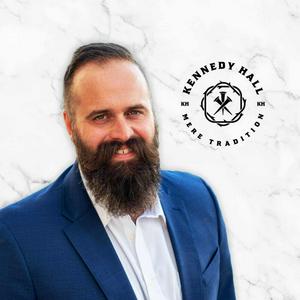
Sobre Mere Tradition with Kennedy Hall
Catholic Tradition. No more, no less. meretradition.substack.com
Site de podcastOuça Mere Tradition with Kennedy Hall, Sem Precedentes e muitos outros podcasts de todo o mundo com o aplicativo o radio.net
Obtenha o aplicativo gratuito radio.net
- Guardar rádios e podcasts favoritos
- Transmissão via Wi-Fi ou Bluetooth
- Carplay & Android Audo compatìvel
- E ainda mais funções
Obtenha o aplicativo gratuito radio.net
- Guardar rádios e podcasts favoritos
- Transmissão via Wi-Fi ou Bluetooth
- Carplay & Android Audo compatìvel
- E ainda mais funções

Mere Tradition with Kennedy Hall
Leia o código,
baixe o aplicativo,
ouça.
baixe o aplicativo,
ouça.
Mere Tradition with Kennedy Hall: Podcast do grupo
 Brasil