
Ouça este podcast gratuitamente no aplicativo: Baixe gratuitamente na App Store
radio.net
Sleeptimer
Guardar rádio
71 episódios
Annihilation Anxiety: The Hidden Conflict in Personality Disorders
14/10/2026 | 17minIn this episode, Dr. Mark Ettensohn explores the concept of annihilation anxiety and its role in narcissistic pathology and other personality disorders.
Beginning with a clinical vignette involving childhood emotional and physical abuse, the episode examines what can happen when a child’s separate thoughts, feelings, and perceptions become psychologically threatening to a caregiver. A child may depend on a parent for love, safety, and recognition while simultaneously discovering that important parts of his own subjective experience cannot safely coexist with the parent’s psychological reality. Under these conditions, psychological separateness itself can become associated with danger.
Dr. Ettensohn describes this relational configuration as a kind of zero-sum psychological system. When two minds cease to confirm one another, it can feel as though only one can remain intact. Either one person must surrender some part of their subjective experience, or the incompatible experience of the other person must be changed, discredited, controlled, or destroyed. Over time, children raised within these dynamics may internalize the expectation that maintaining a separate mind threatens attachment, identity, or psychological survival.
The episode then considers narcissistic pathology as one possible adaptation to this problem. Idealization and admiration can provide refuge from annihilation by supporting a coherent and valued sense of self. But when that self remains dependent upon confirmation from other people, criticism, disagreement, or rejection can reactivate the original threat. Familiar narcissistic defenses such as grandiosity, projection, devaluation, and rage can then function as attempts to prevent an intolerable representation of the self from existing in either person’s mind.
Dr. Ettensohn argues that this process is not exclusive to narcissism. Different forms of personality pathology may organize annihilation anxiety differently. Separateness may be surrendered through dependency, destabilize the experience of self in borderline states, become experienced as persecutory threat, or be avoided through schizoid or avoidant withdrawal. Despite their differences, these adaptations can share a common psychological problem: difficulty maintaining a stable experience of self while remaining in relationship with a genuinely separate other.
Ultimately, the episode proposes annihilation anxiety as a central conflict in personality pathology and examines how complex relational trauma can reproduce itself across generations. What gets transmitted is not simply a collection of abusive behaviors, but a way of organizing relationships in which psychological separateness becomes dangerous and one person’s subjectivity may have to disappear so that another’s can remain intact.
Works Cited:
Neuman, C. J. (2012). Impact of borderline personality disorder on parenting: Implications for child custody and visitation recommendations. Journal of Child Custody, 9(4), 233–249. https://doi.org/10.1080/15379418.2012.748350
⸻
Additional Resources
Website: https://healnpd.org
Newsletter: https://healnpd.substack.com
Purchase Unmasking Narcissism: A Guide to Understanding the Narcissist in Your Life: https://amzn.to/3nG9FgH
LISTEN ON APPLE PODCASTS: https://rb.gy/cklpum
LISTEN ON AMAZON MUSIC: https://rb.gy/g4yzh8
About Heal NPD
Heal NPD is a clinical practice specializing in the assessment and treatment of pathological narcissism, Narcissistic Personality Disorder, and related personality difficulties. We provide comprehensive diagnostic assessments, individual psychotherapy, and consultations for partners and family members.
Learn more or inquire about services: https://healnpd.orgIf We Talked About Depression the Way We Talk About NPD
14/10/2026 | 15minIn this episode, Dr. Mark Ettensohn asks a simple question: What would happen if we talked about depression the way we currently talk about narcissism?
Through a thought experiment, the episode imagines an alternate reality in which depression has become the focus of the same kind of online discourse that now surrounds narcissism. Social withdrawal becomes “withholding.” Loss of motivation becomes laziness. Preoccupation with painful internal states becomes selfishness. Irritability becomes hostility. Difficulty accepting help becomes an unwillingness to take accountability. Gradually, recognizable features of a mental disorder are stripped of their psychological context and reinterpreted as evidence of a morally defective kind of person.
The thought experiment then expands. Stories from people who have been hurt by depressed partners, parents, friends, and coworkers begin supplying additional characteristics of the “depressed person.” Lying, cheating, manipulation, neglect, controlling behavior, and abuse are folded into the category, not because these behaviors have been shown to characterize depression, but because some people with depression also engage in them.
Dr. Ettensohn argues that something similar has happened in popular discourse about narcissism. Behaviors such as lying, cheating, gaslighting, manipulation, coercion, love bombing, vindictiveness, and abuse are increasingly presented as characteristics of “the narcissist,” even though none are specific to narcissistic pathology. The result is a circular process in which harmful behavior is used to identify someone as a narcissist, while the behavior of people already identified as narcissists is then used as evidence for what narcissists supposedly do.
The episode also examines why Narcissistic Personality Disorder may be particularly vulnerable to this process, because unlike many psychiatric diagnoses, the traditional diagnostic criteria for NPD already emphasize objectionable interpersonal manifestations such as entitlement, exploitation, impaired empathy, arrogance, and grandiosity.
Ultimately, the episode argues for putting psychology back into the cultural conversation about narcissism. When narcissistic pathology is reduced to an ever-expanding collection of frightening, hurtful, or objectionable behaviors, the psychological organization that might make those behaviors intelligible disappears. What remains may still use the language of psychology, but instead of a model of a mind, it becomes the description of a villain.
⸻
Additional Resources
Website: https://healnpd.org
Newsletter: https://healnpd.substack.com
Purchase Unmasking Narcissism: A Guide to Understanding the Narcissist in Your Life: https://amzn.to/3nG9FgH
LISTEN ON APPLE PODCASTS: https://rb.gy/cklpum
LISTEN ON AMAZON MUSIC: https://rb.gy/g4yzh8
About Heal NPD
Heal NPD is a clinical practice specializing in the assessment and treatment of pathological narcissism, Narcissistic Personality Disorder, and related personality difficulties. We provide comprehensive diagnostic assessments, individual psychotherapy, and consultations for partners and family members.
Learn more or inquire about services: https://healnpd.orgWhat Narcissistic Self-Esteem REALLY Looks Like
13/10/2026 | 16minIn this episode, Dr. Mark Ettensohn examines what self-esteem actually looks like in pathological narcissism and why common explanations such as “low self-esteem hidden beneath grandiosity” or “grandiosity masking shame” oversimplify a much more complicated psychological process.
The episode begins by examining self-esteem as a regulatory system rather than a fixed quantity that a person either has or does not have. Healthy self-esteem is generally stable, realistic, and basically positive. Dr. Ettensohn explains how pathological narcissism can involve difficulties in all three areas, producing self-appraisals that are unstable, highly reactive to circumstances, and capable of shifting between unrealistically positive and unrealistically negative views of the self.
The discussion explores the grandiose and vulnerable self-states associated with pathological narcissism. Grandiosity can involve genuine feelings of superiority, exceptionalism, or importance, while vulnerable states may involve shame, humiliation, inadequacy, depression, envy, or anxiety. These states can alternate, overlap, and interact in complicated ways. Neither necessarily represents the person's “real” self hiding underneath the other.
Dr. Ettensohn also discusses the development of self-esteem regulation, including the interaction between temperament, heritable traits, relationships, and developmental experience. Rather than reducing pathological narcissism to a single cause, contemporary models understand personality pathology as emerging through complex interactions between the characteristics people bring into the world and the experiences through which their personalities develop.
The episode then considers behaviors frequently associated with pathological narcissism, including arrogance, entitlement, idealization, devaluation, exploitation, and impaired empathy. These features are often discussed as though they stand apart from problems of self-esteem. Dr. Ettensohn explains how they can instead function within a larger system of self-esteem regulation, particularly when grandiosity is recruited to maintain or restore a threatened sense of self.
At the same time, none of these features by itself establishes pathological narcissism. People can be arrogant, entitled, grandiose, low in empathy, or insecure without having NPD. They can also have unstable or chronically low self-esteem without being narcissistic. Pathological narcissism refers to the larger organization of these features: the vulnerability of the self-esteem system, grandiose and vulnerable self-states, and the characteristic regulatory strategies used to maintain, protect, or restore the person’s sense of self.
Ultimately, the episode challenges attempts to reduce narcissistic psychology to a single hidden truth beneath the surface. Grandiosity can sometimes defend against shame, but that particular dynamic should not be mistaken for an explanation of the disorder as a whole.
⸻
Additional Resources
Website: https://healnpd.org
Newsletter: https://healnpd.substack.com
Purchase Unmasking Narcissism: A Guide to Understanding the Narcissist in Your Life: https://amzn.to/3nG9FgH
LISTEN ON APPLE PODCASTS: https://rb.gy/cklpum
LISTEN ON AMAZON MUSIC: https://rb.gy/g4yzh8
About Heal NPD
Heal NPD is a clinical practice specializing in the assessment and treatment of pathological narcissism, Narcissistic Personality Disorder, and related personality difficulties. We provide comprehensive diagnostic assessments, individual psychotherapy, and consultations for partners and family members.
Learn more or inquire about services: https://healnpd.orgThe Circular Logic of Narc Abuse Content
13/10/2026 | 14minIn this episode, Dr. Mark Ettensohn examines the circular logic that often appears in popular “narcissistic abuse” discourse and how it can create a closed system for interpreting other people’s behavior.
The episode begins with a pattern Dr. Ettensohn has repeatedly encountered online: once someone concludes that another person is a narcissist, virtually any response can become further evidence of narcissism. Disagreement becomes an inability to tolerate criticism. Anger becomes narcissistic rage. Denial becomes DARVO. Withdrawal becomes the silent treatment. An apology becomes manipulation or hoovering. Even evidence that contradicts the original conclusion can be reinterpreted as proof that the narcissist has successfully deceived others.
Dr. Ettensohn argues that this creates an essentially unfalsifiable framework. If both an accusation and its denial can be treated as evidence of guilt, there is no independent standard by which the original interpretation can be tested or revised. Rather than asking what explanation best accounts for another person’s behavior, the process begins with a conclusion and assembles evidence around it.
Drawing on his experience conducting psychological assessments, Dr. Ettensohn discusses how this reasoning can persist even when a person does not meet criteria for Narcissistic Personality Disorder or pathological narcissism. He explores how the extensive vocabulary of popular narcissistic-abuse content can encourage people to infer hidden motives and psychological states from ambiguous behavior while becoming increasingly resistant to alternative explanations.
The episode also challenges the widespread conflation of pathological narcissism with abuse. People with NPD can behave abusively, but abusive behavior does not itself establish the presence of pathological narcissism. Recent research has likewise raised questions about treating pathological narcissism as a general explanation for intimate partner abuse.
Ultimately, the discussion asks a basic epistemological question: If every possible response can be interpreted as evidence that someone is a narcissist, what evidence could ever show that the conclusion was wrong?
References:
Day, N. J. S., Kealy, D., Biberdzic, M., Green, A., Denmeade, G., & Grenyer, B. F. S. (2025). Coercive control and intimate partner violence: Relationship with personality disorder severity and pathological narcissism. Personality and Mental Health, 19(4), e70038.
https://onlinelibrary.wiley.com/doi/full/10.1002/pmh.70038
⸻
Additional Resources
Website: https://healnpd.org
Newsletter: https://healnpd.substack.com
Purchase Unmasking Narcissism: A Guide to Understanding the Narcissist in Your Life: https://amzn.to/3nG9FgH
LISTEN ON APPLE PODCASTS: https://rb.gy/cklpum
LISTEN ON AMAZON MUSIC: https://rb.gy/g4yzh8
About Heal NPD
Heal NPD is a clinical practice specializing in the assessment and treatment of pathological narcissism, Narcissistic Personality Disorder, and related personality difficulties. We provide comprehensive diagnostic assessments, individual psychotherapy, and consultations for partners and family members.
Learn more or inquire about services: https://healnpd.orgWhy Every Abuser Looks Like A 'Narcissist'
13/10/2026 | 14minIn this follow-up to a previous episode, Dr. Mark Ettensohn examines a central problem in the way narcissism is commonly discussed online: the assumption that abusive behavior is sufficient evidence of narcissism.
The episode argues that this conclusion arises, in part, from a longstanding problem in the DSM diagnostic criteria for Narcissistic Personality Disorder. Many of the interpersonal characteristics traditionally associated with NPD, including entitlement, impaired empathy, exploitation, arrogance, and refusal to take responsibility, are also common features of abusive relationships in general. As a result, virtually any abusive relationship can appear “narcissistic” without establishing that pathological narcissism is actually present.
Dr. Ettensohn explores how this lack of specificity has contributed to the widespread popularity of the concept of “narcissistic abuse,” and why it has become increasingly difficult to distinguish abusive behavior from pathological narcissism itself. He argues that contemporary research has moved toward understanding pathological narcissism as a disorder of identity and self-esteem regulation characterized by fluctuating grandiose and vulnerable states, rather than simply a collection of observable interpersonal behaviors.
The episode also examines how popular discussions of narcissism often continue to rely on the older behavioral framework while separating the term “narcissism” from its underlying clinical construct. Dr. Ettensohn argues that this creates conceptual confusion, contributes to public stigma surrounding NPD, and encourages people to mistake abuse itself for evidence of narcissistic pathology.
Ultimately, the discussion asks a simple question: When does abusive behavior actually indicate pathological narcissism, and when are we simply describing abuse?
To see the video this follows up: https://youtu.be/lcIEM7IVXxk
⸻
Additional Resources
Website: https://healnpd.org
Newsletter: https://healnpd.substack.com
Purchase Unmasking Narcissism: A Guide to Understanding the Narcissist in Your Life: https://amzn.to/3nG9FgH
LISTEN ON APPLE PODCASTS: https://rb.gy/cklpum
LISTEN ON AMAZON MUSIC: https://rb.gy/g4yzh8
About Heal NPD
Heal NPD is a clinical practice specializing in the assessment and treatment of pathological narcissism, Narcissistic Personality Disorder, and related personality difficulties. We provide comprehensive diagnostic assessments, individual psychotherapy, and consultations for partners and family members.
Learn more or inquire about services: https://healnpd.org
Mais podcasts de Ciência






Podcasts em tendência em Ciência
















Sobre Heal NPD
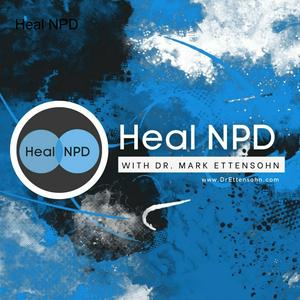
Dr. Ettensohn is a clinical psychologist who specializes in treating narcissism and related disorders. This podcast discusses pathological narcissism from a compassionate and non-stigmatizing perspective. It is for individuals who struggle with narcissism, their loved ones, and the general public.
Site de podcastOuça Heal NPD, Naruhodo e muitos outros podcasts de todo o mundo com o aplicativo o radio.net
Obtenha o aplicativo gratuito radio.net
- Guardar rádios e podcasts favoritos
- Transmissão via Wi-Fi ou Bluetooth
- Carplay & Android Audo compatìvel
- E ainda mais funções
Obtenha o aplicativo gratuito radio.net
- Guardar rádios e podcasts favoritos
- Transmissão via Wi-Fi ou Bluetooth
- Carplay & Android Audo compatìvel
- E ainda mais funções

Heal NPD
Leia o código,
baixe o aplicativo,
ouça.
baixe o aplicativo,
ouça.
 Brasil