

Ouça este podcast gratuitamente no aplicativo: Baixe gratuitamente na App Store
radio.net
Sleeptimer
Guardar rádio
41 episódios
Ep. 40: Acute Low Back Pain Guideline: A Clinician's Perspective
13/09/2026 | 38minEpisode Summary:
Welcome back to the Pain Matters podcast, where Dr. Sudheer Potru, DO, alongside Dr. Mustafa Broachwala, DO, delves into crucial topics on acute low back pain guidelines. Featuring insights from Dr. Jessica Oswald, MD, MPH and Dr. Devin Kansagara, MD, FACP, this episode focuses on the implications of FDA-funded guidelines, co-sponsored by the American Academy of Pain Medicine. This expert panel discusses the nuances of managing acute low back pain, emphasizing evidence-based practices to improve patient care.
Throughout the episode, Dr. Oswald and Dr. Kansagara explore the guidelines’ perspectives on imaging, opioids, and alternative therapies. Discussing the common tendency to order imaging tests for low back pain, the conversation shifts to effective patient communication and strategies for reducing unnecessary imaging. They also address opioid use, highlighting its role as a third-line option and discussing the importance of evaluating individual patient needs to optimize function without escalating risks. The episode also emphasizes non-pharmacological interventions, such as early physical therapy, and overcoming challenges related to access bottlenecks.
Key Takeaways:
Guideline Applicability: Emphasizing the acute stage, the guidelines apply to pain lasting less than six weeks.
Imaging Insights: Many clinicians still rely heavily on imaging for acute low back pain despite evidence showing limited benefit. Patient communication is crucial in managing expectations.
Opioid Recommendations: Reserved as a third-line treatment, opioids are not usually recommended for acute low back pain due to risks outweighing benefits in most cases.
Non-Pharmacological Therapies: Early engagement in physical therapy and alternative therapies can enhance long-term recovery, highlighting the importance of patient education and movement.
Epidural Injections and Controversies: The discussion points out the limited evidence for epidural steroid injections, prompting nuances in clinical decision-making amid evidence shortages.Ep 39 Suzetrigine in Acute Pain: Mechanism, Clinical Use, and What Comes Next
15/07/2026 | 41minEpisode Summary:
In this episode of the Pain Matters podcast, Host Sudheer Potru, DO, FASA, FASAM, and Co-Host Zafeer Baber, MD, offer a comprehensive discussion of the (relatively) new analgesic medication suzetrigine, emphasizing its impact on acute pain management. Approved by the FDA in January 2025, this oral medication offers promising alternatives for moderate-to-severe postoperative pain management. Delving into its mechanism, the conversation also covers the history of voltage-gated sodium (“NAV”) 1.8 channel research and its implications for patient care.
Throughout the episode, the hosts highlight suzetrigine’s unique mechanism of action, acting preferentially on the NAV 1.8 sodium channels located predominantly in the peripheral nervous system. The dialogue explores its advantages over traditional opioids, including reduced side effects such as sedation and constipation, making it an attractive option for enhancing postoperative recovery protocols like ERAS (Enhanced Recovery After Surgery). The conversation expands on the complexities of treating chronic pain and the potential for new Nav channel-targeting agents to revolutionize pain management employing targeted strategies.
Key Takeaways:
Understanding Suzetragine: Suzetragine acts as a novel analgesic focusing on the NAV 1.8 sodium channels, offering reduced side effects compared to opioids, especially in postoperative settings.
Mechanism and Discovery: The NAV 1.8 sodium channel, essential for pain signal propagation, was key to designing suzetrogine. Its function was inadvertently highlighted by genetic mutations found in individuals who couldn’t feel pain due to alterations in similar channels.
Economic and Clinical Implications: Although suzetrogine is more expensive than traditional pain medications, its potential to reduce hospital-acquired complications could justify its cost in clinical settings.
Future Prospects in Chronic Pain: Ongoing research into suzetrogine’s effectiveness for conditions like diabetic neuropathy could offer new opportunities in managing chronic pain.
Broader Pharmacological Impacts: The development of NAV channel-targeted medications marks a significant milestone, signaling a shift towards more specialized pain management options.
*Views expressed by our hosts and guests are their own and do not necessarily reflect those of the hosts, their institutions, or the American Academy of Pain Medicine.Ep. 38: Acute Low Back Pain Guideline: A Patient Advocate's Perspective*
16/06/2026 | 33minEpisode Summary:
In this engaging and informative episode of the Pain Matters Podcast, hosts Sudheer Potru, DO, FASA, FASAM, and Co-Host Zafeer Baber, MD, sit down with renowned chronic pain advocate, Tom Norris. With a four-decade-long journey through the challenges of chronic pain, Tom shares his invaluable insights regarding the newly drafted Acute Low Back Pain Guideline** (drafted by the Pacific Northwest Evidence-based Practice Center at Oregon Health & Science University (OHSU EPC) and the American Academy of Pain Medicine), recently submitted to Pain Medicine Journal and currently under review. His unique perspective underscores the critical need for clear communication and collaboration between clinicians and patients, especially in the context of guideline development and healthcare delivery.
Throughout the discussion, the trio delves into practical strategies for managing acute and chronic pain, emphasizing the importance of patient-centered communication, the role of alternative therapies, and the power of support groups. Tom candidly discusses his military background and how it has shaped his ability to advocate effectively for himself and others within the medical community. The episode also explores the significance of understanding non-pharmacologic pain management techniques, such as virtual reality, acupuncture, and Tai Chi, and the need for greater awareness and education on these options. Anchored by Tom's wealth of experience and wisdom, this episode serves as a robust resource for both healthcare providers and patients seeking to enhance their pain management approaches.
Key Takeaways:
Patient-Centered Communication: Building trust and understanding between clinicians and patients is crucial in effectively managing pain and implementing guidelines.
Integrative and Alternative Therapies: Non-drug approaches like acupuncture, virtual reality, and Tai Chi can be beneficial in managing pain, but public awareness about these methods is limited.
Support Groups' Role: Connecting with others facing similar pain challenges can provide essential support and insights, offering solace and practical advice.
Empowering Patients: Patients should proactively educate themselves, prepare questions for their providers, and seek various treatment avenues to optimize their care.
Guideline Development Insight: Having patients involved in the creation of medical guidelines ensures that the recommendations are practical and resonate with those they are designed to help.
*Views expressed by our guests are their own and do not necessarily reflect those of the hosts, their institutions, or the American Academy of Pain Medicine.
**The Pacific Northwest Evidence-based Practice Center (PNW-EPC) at Oregon Health & Science University (OHSU) is partnered with AAPM for the development of an evidence-based clinical practice guideline on the assessment and management of acute low back pain (ALBP). This project was financially supported by the Food and Drug Administration (FDA) of the U.S. Department of Health and Human Services (HHS) as part of a financial assistance award [FAIN] totaling $1,999,980.00, with 100 percent funded by FDA/HHS. The contents are those of the authors and do not necessarily represent the official views of, nor an endorsement by, FDA, HHS, or the U.S. Government. The funders had no decision-making role in designing and conducting systematic review, data collection, analysis, and interpretation of the data or approval privilege on the recommendation and good practice statements. As requested, the FDA provided nonbinding feedback and technical support to the guideline panel and methodological team.
A methodologically rigorous systematic review on assessment and management of ALBP was conducted by the PNW-EPC to provide evidence for guideline development. An independent, multidisciplinary guideline development used evidence from the systematic review to formulation evidence-based clinical recommendations to the guide assessment and management of ALBP.Ep 37 Acetaminophen in Pregnancy and Children: Debunking Myths and Ensuring Safe Use*
31/10/2025 | 34minIn this episode, Amber Borucki, MD from Stanford Medicine, joins Host Sudheer Potru, DO, FASA, FASAM, and Co-Host Zafeer Baber, MD, to discuss acetaminophen use during pregnancy and childhood. They focus on a significant Swedish study that dispels myths about acetaminophen's links to autism, reinforcing its safety and effectiveness. Dr. Borucki highlights its role in pain management for expectant mothers and children, while the hosts discuss alternatives to opioids, like acetaminophen and ibuprofen, and stress the importance of consulting healthcare providers for proper dosing and guidance.
About the Guest
Dr. Amber Borucki is an anesthesiologist and pain medicine specialist focused on chronic pain management in children and young adults, particularly after surgery or due to chronic conditions. She earned her medical degree from Rush Medical College and completed her residency at the University of Chicago. Dr. Borucki also underwent fellowships in pediatric anesthesiology and adult/pediatric pain medicine at Boston Children's Hospital, Brigham Women's Hospital, and Beth Israel Deaconess Medical Center. After a year of private practice in Reno, Nevada, she spent five years at UCSF as a pediatric anesthesiologist and the Director of the Pediatric Anesthesia Service at UCSF Benioff Children's Hospital.
🔑 Key Takeaways
Acetaminophen is Safe: Current studies, including a large Swedish cohort, show no link between acetaminophen use in pregnancy and autism, reinforcing its safety profile.
Importance of Treating Pain in Children: Dr. Borucki discusses the potential long-term adverse effects of untreated pain in pediatric patients, including increased risks of chronic pain and mood disorders.
Dosing Caution: The significance of proper dosing is highlighted, emphasizing the need for a healthcare professional consultation, especially in young children.
Combating Opioid Use: Acetaminophen serves as a valuable alternative in managing pain, potentially decreasing reliance on opioids post-surgery.
Consult Reliable Sources: Listeners are encouraged to consult reputable organizations like the American Academy of Pediatrics for trustworthy medical advice.
Resources
American Academy of Pediatrics: Acetaminophen is Safe for Children When Taken as Directed, No Link to Autism
American College of Obstetricians & Gynecologists: Acetaminophen Use in Pregnancy and Neurodevelopmental Outcomes
Society for Pediatric Pain Medicine Video: Acetaminophen and autism: what is safe for children?
*Views expressed by our guests are their own and do not necessarily reflect those of the hosts, their institutions, or the American Academy of Pain Medicine.Exploring PA Roles & Growth in Pain Medicine Practice
23/09/2025 | 34minEpisode Summary:
In this compelling episode of the Pain Matters Podcast, hosts Sudheer Potru, DO, FASA, FASAM, and Zafeer Baber, MD, sit down with Jeremy Adler, DMSc, PA-C, DFAAPA, a seasoned Physician Assistant practicing at the UCSD Center for Pain Medicine in the field of pain medicine, to explore the evolving roles of advanced practice providers in the specialty. Jeremy shares insights from his 25-year career spanning private practice and academia, shedding light on the benefits and challenges of working in these different professional settings.
Jeremy Adler's engaging discussion highlights the multidimensional nature of medicine, emphasizing the importance of a multidisciplinary approach that includes APPs, anesthesiologists, psychologists, and more. This episode delves into the reasons behind the rising interest in APP roles, fueled by the pursuit of work-life balance and diverse practice opportunities across specialties. The conversation also explores the necessity of formalized education and training to equip PAs and NPs with the skills needed to excel in the complex landscape of pain medicine.
About the Guest
Jeremy A. Adler, DMSc, PA-C, DFAAPA|Dr. Jeremy Adler is a nationally recognized physician assistant with over 25 years of experience in pain management. He serves at UC San Diego Health’s Center for Pain Medicine and previously co-owned a private pain practice. A published author and national lecturer, he’s known for his advocacy in evidence-based, compassionate pain care and has earned honors including California State Assembly recognition and POCN’s 2022 Top Pain Management PA award. He also leads the American Academy of Pain Medicine Foundation and holds leadership roles in major professional organizations.
🔑 Key Takeaways:
The significant growth in APP roles offers expanded opportunities, especially in specialties like pain medicine, where multidisciplinary collaboration is essential and the patient population is ever-growing.
The transition from private practice to academia provides unique insights into differing healthcare dynamics, patient populations, and resource availability.
A foundation in teamwork and continued education is crucial for true success and effectiveness in a team-based healthcare model.
Advancements in APP practice have made it a rewarding career choice, especially for those seeking a balanced work-life and diverse professional experiences.
Building strong communication channels within multidisciplinary teams is vital to navigating challenges and ensuring optimal patient care.
Resources
Jeremy A. Adler, DMSc, PA-C, DFAAPA: LinkedIn
Jeremy A. Adler, DMSc, PA-C, DFAAPA, UCSD Center for Pain Medicine
*Views expressed by our guests are their own and do not necessarily reflect those of the hosts, their institutions, or the American Academy of Pain Medicine.
Mais podcasts de Ciência
 Alô, Ciência?Ciência, Ciências Naturais, Ciências Sociais, Ensino
 SinapseCiência
 Ciência SujaCiência, Crimes verdadeiros, Documentário, Sociedade e cultura
 Os três elementosCiência
 StarTalk with Neil deGrasse TysonCiência, Ensino
 InfectoCastCiência, Ciências da Vida
 NaruhodoCiência, Ciências Sociais, Ciências da Vida, Enriquecimento individual, Ensino
 O Tempo VirouCiência, Natureza
 Ologies with Alie WardCiência, Comédia, Sociedade e cultura
 Ciência Sem FimCiência
Podcasts em tendência em Ciência
 The Quanta PodcastCiência, Ciências da Vida
 From First PrinciplesCiência
 Fricção CientíficaCiência, Sociedade e cultura
- Ologies with Alie WardCiência, Comédia, Sociedade e cultura
 DiscoveryCiência
 Vedanta CastCiência, Ciências da Vida, Ensino, Hinduísmo, Religião e espiritualidades
 Culpa do CérebroCiência
 Heal NPDCiência, Ciências Sociais, Ensino
 Tributos e Direito PodcastCiência, Ciências Sociais
 Why This Universe?Astronomia, Ciência, Física
 UAP Unidentified Alien PodcastCiência, Crimes verdadeiros, Sociedade e cultura, Tecnologia
 Short WaveCiência, Ciências da Vida, Notícias, Notícias diárias
 Sons De ChuvaCiência, Natureza
 From Our Neurons to YoursCiência, Ciências da Vida, Saúde e fitness, Saúde mental
 Das Wissen | SWRCiência
 All In The MindCiência, Ciências da Vida, Saúde e fitness, Saúde mental
 Salvo-conduto PodcastCiência, Ciências Sociais
 Super FatoAstronomia, Ciência
 NefropapersCiência
 Nature PodcastCiência, Notícias, Tecnologia
Sobre Pain Matters Podcast Network
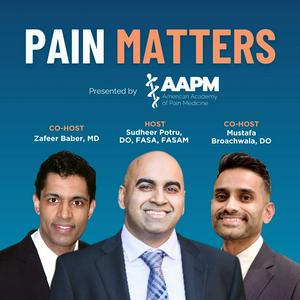
The Pain Matters Podcast Network is presented by the American Academy of Pain Medicine. It’s the nation’s leading podcast network for healthcare providers focused on providing the best care today, tomorrow, and beyond. Home to multiple pain-focused podcasts, we share the latest innovations and practical applications that directly impact how we care for patients and measure success in multidisciplinary care in every episode.
Site de podcastOuça Pain Matters Podcast Network, Alô, Ciência? e muitos outros podcasts de todo o mundo com o aplicativo o radio.net
Obtenha o aplicativo gratuito radio.net
- Guardar rádios e podcasts favoritos
- Transmissão via Wi-Fi ou Bluetooth
- Carplay & Android Audo compatìvel
- E ainda mais funções
Obtenha o aplicativo gratuito radio.net
- Guardar rádios e podcasts favoritos
- Transmissão via Wi-Fi ou Bluetooth
- Carplay & Android Audo compatìvel
- E ainda mais funções

Pain Matters Podcast Network
Leia o código,
baixe o aplicativo,
ouça.
baixe o aplicativo,
ouça.
 Brasil