

Ouça este podcast gratuitamente no aplicativo: Baixe gratuitamente na App Store
radio.net
Sleeptimer
Guardar rádio
287 episódios
EXPLAINER: Did Plague Just Escape From a Russian Lab?
13/10/2026 | 7minA young scientist died in a Russian plague lab. Officials deny an accident. Is biowarfare a real threat, or is the bigger risk something else?
Robert Lufkin MD looks at the death of a young lab worker at Russia's Irkutsk anti-plague institute, why Moscow's denials are hard to take at face value, and what Annie Jacobsen's book Biological War: A Scenario gets right and wrong. Untreated pneumonic plague is almost always fatal. The right antibiotics cut deaths sharply. A strain that shrugs off those drugs is the real nightmare. Historically, the bigger risk has been accidents, secrecy, and a slow response, not a deliberate attack.
Chapters:
00:00 — Introduction
00:41 — What Happened at the Irkutsk Plague Lab
01:54 — Why the World Doesn't Take Russia's Word
03:09 — Satellite Images of Russia's Expanding Biolabs
03:25 — Annie Jacobsen's Biological War Scenario
04:48 — Untreated Plague Is Almost Always Fatal
05:31 — Madagascar's Drug-Resistant Plague Strain
05:50 — Lab Accidents Are More Likely Than Attacks
06:29 — The 2019 Fire at Russia's Vector Lab
06:48 — The Takeaway: Chronic Disease Was the Real Risk
Key takeaways:
A young scientist died of pneumonia of unknown origin at a Siberian plague lab. Independent reports alleged a broken tube of live plague. Russian authorities deny a lab accident.
In 1979, spores leaked from a Soviet military bioweapons facility. Moscow blamed bad meat for 13 years.
Satellite images show 10 new buildings and more than 250,000 square feet added at a Russian biological facility since 2022.
Untreated pneumonic plague is almost always fatal. In a CDC review, antibiotics cut deaths to about 17 percent with the right drugs.
In 1995, doctors in Madagascar found a plague strain resistant to every antibiotic then recommended.
Lab accidents, secrecy, and slow response have been the larger historical risk, including a 2019 fire at the Vector lab.
In the COVID data cited here, nearly 95 percent of hospitalized adults already had a chronic condition.
Studies & sources:
Nelson et al., Clinical Infectious Diseases, 2020
Galimand et al., New England Journal of Medicine, 1997
Kompaniyets et al., Preventing Chronic Disease, 2021
CNN, October 4, 2026
The Atlantic on the 1979 Sverdlovsk anthrax leak
Washington Post on Russia's laboratory expansion
The Conversation on Annie Jacobsen, Biological War: A Scenario
CNN on the 2019 Vector lab fire
Dr. Lufkin's book Lies I Taught in Medical School.
⭐ Enjoying the show? Please leave a 5-star review on Apple Podcasts — it takes 30 seconds and helps more people discover the science of health and longevity. Thank you!
New episodes every other Tuesday. Subscribe so you don't miss one.
Continue this conversation on Substack: https://robertlufkinmd.substack.com
Lies I Taught In Medical School — Free sample chapter: https://www.robertlufkinmd.com/lies/
Web: https://www.robertlufkinmd.com
YouTube: https://www.youtube.com/robertlufkinmd
X: https://x.com/robertlufkinmd
Instagram: https://www.instagram.com/robertlufkinmd/
TikTok: https://www.tiktok.com/@robertlufkin
LinkedIn: https://www.linkedin.com/in/robertlufkinmd/EXPLAINER: How To Live To 117
06/10/2026 | 8minShe lived to 117 — and when scientists sequenced everything from her genome to her gut bacteria, they found a paradox that rewrites what aging has to look like. In this episode, Robert Lufkin MD breaks down the landmark multiomics study of Maria Branyas Morera, the world's oldest verified person, published in Cell Reports Medicine (2025) by the Esteller lab. The study mapped her genome, epigenome, proteome, metabolome, and microbiome — and found a body that was simultaneously very old and biologically young.
Chapters:
00:00 — Introduction
00:43 — Who Was Maria Branyas Morera, the World's Oldest Person?
01:18 — The Multiomics Study Published in Cell Reports Medicine
02:03 — The Paradox: Old and Young at the Same Time
02:23 — Epigenetic Clocks: A Biological Age 23 Years Younger
02:51 — Why Her Short Telomeres May Have Protected Her
03:44 — Clean Metabolism: Very Low Triglycerides, High HDL
04:22 — Inflammaging: Why Low Inflammation Is the Real Headline
05:10 — Gut Microbiome, Daily Yogurt, and Bifidobacterium
06:05 — The Longevity Chain: Gut, Inflammation, Metabolism
06:23 — The Honest Caveat: Half Genetics, Half Lifestyle
07:29 — The Takeaway: What Aging Cleanly Really Means
Key takeaways:
Six epigenetic clocks estimated her biological age as much as 23+ years younger than her chronological age
Her telomeres were among the shortest recorded in a healthy person — possibly acting as a brake on tumor growth rather than a death sentence
Her lipid panel was remarkably clean: extremely low VLDL and triglycerides, very high HDL
Systemic inflammation stayed strikingly low — "inflammaging" was turned down
Her gut microbiome was unusually diverse and dominated by Bifidobacterium — she ate about three yogurts a day for the last 20 years of her life
It's an n-of-1 study: roughly half genetics, half lifestyle — but the pattern points upstream to metabolic health
Studies & sources mentioned:
Santos-Pujol et al., Cell Reports Medicine 2025 — The multiomics blueprint of the individual with the most extreme lifespan
Watch the video version on YouTube: https://youtu.be/0TX_E46sAFk
📖 Dr. Lufkin's book "Lies I Taught in Medical School": https://robertlufkinmd.com/lies/
📰 Substack newsletter: https://robertlufkinmd.substack.com
🌐 Website: https://robertlufkinmd.com
⭐ Enjoying the show? Please leave a 5-star review on Apple Podcasts — it takes 30 seconds and helps more people discover the science of health and longevity. Thank you!
New episodes every other Tuesday. Subscribe so you don't miss one.
Continue this conversation on Substack: https://robertlufkinmd.substack.com
Lies I Taught In Medical School — Free sample chapter: https://www.robertlufkinmd.com/lies/
Web: https://www.robertlufkinmd.com
YouTube: https://www.youtube.com/robertlufkinmd
X: https://x.com/robertlufkinmd
Instagram: https://www.instagram.com/robertlufkinmd/
TikTok: https://www.tiktok.com/@robertlufkin
LinkedIn: https://www.linkedin.com/in/robertlufkinmd/Ozempic Face: Why Weight Loss Can Make You Look Older | Kay Durairaj MD
29/09/2026 | 45minA facial plastic surgeon reveals the MRI data on "Ozempic face," why repeated masseter Botox can thin the jawbone, and the topical rapamycin resetting skin cells to a 20-year-old phenotype.
In this episode of Health Longevity Secrets, Robert Lufkin MD sits down with Dr. Kay Durairaj, a USC and UCLA-trained facial plastic surgeon bringing evidence-based medicine to the longevity-aesthetics frontier. Old friends from their UCLA head and neck tumor-board days, they dig into the science most aesthetic clinics gloss over: how GLP-1 drugs uniquely strip facial fat, why exosomes and peptides are a "Wild West," the surprising data on retinoids and epigenetic aging, and how collagen biostimulators and topical rapamycin may genuinely rejuvenate skin at the cellular level.
Chapters:
00:00 — Introduction
02:03 — From Head & Neck Cancer Surgery to Longevity Aesthetics
03:04 — Bringing Evidence-Based Medicine to the Aesthetics Wild West
04:06 — Why Aging Should Be Treated as a Disease
06:07 — Ozempic Face: The MRI Data on Facial Fat Loss
09:14 — The Mid-Face Miracle Protocol: Collagen Biostimulators
10:15 — Reversing Ozempic Face After Rapid Weight Loss
11:15 — Exosomes Explained: Real Biology vs Marketing Hype
14:18 — How to Vet Exosome Sourcing, Purity and Shelf Life
16:22 — The Peptide Wild West: BPC-157, SS-31 and FDA-Approved Options
19:28 — N-of-1 Peptide Risks: Angiogenesis and Oncogenes
20:28 — Do Retinoids Accelerate Aging? The MitraBio Epigenetic Data
23:32 — Sculptra and Radiesse: Real Regenerative Science
25:33 — Masseter Botox and Permanent Jawbone Thinning
29:37 — Three Facial Biomarkers of Biological Age
31:38 — Does Lifting Weights Help or Hurt Your Face?
36:48 — Topical Rapamycin: Resetting Fibroblasts to a 20-Year-Old
40:51 — A New Peptide Skin-Longevity Line and Final Advice
Key takeaways:
GLP-1 drugs uniquely attack facial fat — MRI data show roughly 7% midfacial volume loss for every 10 kg of weight lost, primarily from superficial and deep cheek fat pads, driving "Ozempic face."
Collagen biostimulators (like Sculptra and Radiesse) can preserve or restore facial volume during rapid weight loss and have 20+ years and 200+ peer-reviewed papers behind their collagen-remodeling effects.
The exosome and research-peptide markets are largely unregulated — source, purity, shelf life, and donor quality matter, and lyophilized "exosome" skincare is often just protein fragments.
Repeated masseter Botox can thin the mandibular bone, especially in postmenopausal women — animal data are consistent, human data are mixed, so caution is warranted with aggressive long-term use.
Topical rapamycin (a "rapalog") may reset the fibroblast mTOR cycle, shifting aged, bloated skin cells toward a younger, spindle-shaped phenotype — an emerging frontier in cellular skin rejuvenation.
Studies & sources:
Radiographic Midfacial Volume Changes in Patients on GLP-1 Agonists (7% loss per 10 kg) — https://pubmed.ncbi.nlm.nih.gov/40407186/
Soft Tissue Facial Changes Following Massive Weight Loss, Aesthetic Surgery Journal Open Forum 2024 — https://pmc.ncbi.nlm.nih.gov/articles/PMC11427949/
MitraBio epigenetic skin DNA-methylation tape-strip profiling — https://mitrabio.tech/resources/unlocking-epigenetic-insights/
Repeated botulinum toxin masseter injections decrease mandibular angle bone volume — https://pmc.ncbi.nlm.nih.gov/articles/PMC5466904/
RapaLogic / Re-Q topical rapalog for fibroblast skin rejuvenation — https://www.rapamycin.news/t/a-new-rapalog-for-skin-aging-rapalogix-health-rlx-201/22010
GHK-Cu copper peptide: regenerative and protective actions in skin — https://pmc.ncbi.nlm.nih.gov/articles/PMC6073405/
Dr. Kay Durairaj — Beauty by Dr. Kay — https://beautybydrkay.com/
📖 Dr. Lufkin's book "Lies I Taught in Medical School": https://robertlufkinmd.com/lies/
⭐ Enjoying the show? Please leave a 5-star review on Apple Podcasts — it takes 30 seconds and helps more people discover the science of health and longevity. Thank you!
New episodes every other Tuesday. Subscribe so you don't miss one.
Continue this conversation on Substack: https://robertlufkinmd.substack.com
Lies I Taught In Medical School — Free sample chapter: https://www.robertlufkinmd.com/lies/
Web: https://www.robertlufkinmd.com
YouTube: https://www.youtube.com/robertlufkinmd
X: https://x.com/robertlufkinmd
Instagram: https://www.instagram.com/robertlufkinmd/
TikTok: https://www.tiktok.com/@robertlufkin
LinkedIn: https://www.linkedin.com/in/robertlufkinmd/EXPLAINER: Will AI Cure All Disease?
22/09/2026 | 9minWill AI cure all disease? 90% of biomedical papers published in December 2025 show signs of AI assistance — and the Nobel laureate behind AlphaFold says AI could help end all disease within a decade. In this episode, Robert Lufkin MD examines what artificial intelligence is really doing to health science: the quiet takeover of the scientific paper, the first AI-discovered drug to pass a Phase 2a trial, robot laboratories running experiments around the clock, and the honest caveats behind the "end of disease" headlines — plus what it all means for your health today.
Chapters:
00:00 — The 90% Stat: AI Fingerprints in Biomedical Papers
00:49 — Part 1: The Quiet Takeover of the Scientific Paper
02:16 — Part 2: The Wins Are Real
02:46 — AlphaFold, 200 Million Proteins & the 2024 Nobel Prize
03:13 — Rentosertib: First AI-Discovered Drug to Pass Phase 2a
04:02 — The Superbug Puzzle: 10 Years vs 2 Days
04:22 — Part 3: Robot Labs & the 10-Year Promise
05:26 — Demis Hassabis on "The End of Disease"
06:26 — Part 4: The New Bottleneck Is Verification
07:43 — Part 5: The Honest Caveats
08:42 — Part 6: The Takeaway
Key takeaways:
Roughly 90% of biomedical papers published in December 2025 show measurable signs of AI writing assistance — most of it polishing, not fraud.
AlphaFold predicted structures for essentially all 200 million known proteins and earned the 2024 Nobel Prize in Chemistry.
Rentosertib became the first drug with an AI-discovered target and AI-designed molecule to improve lung function in a randomized, placebo-controlled Phase 2a trial (Nature Medicine).
Autonomous "robot labs" like Lila Sciences ($1.3B valuation, backed by Nvidia) aim to run science at machine speed.
The bottleneck in science is shifting from producing findings to verifying them — zero AI-discovered drugs have full FDA approval so far.
No matter how fast discovery gets, your metabolic health remains the foundation AI can't replace.
Studies & sources:
Kobak et al. — Detecting AI fingerprints in biomedical abstracts (preprint)
Nature News — AI-written biomedical literature
Nobel Prize in Chemistry 2024 — AlphaFold
Rentosertib Phase 2a randomized trial, Nature Medicine 2025
BBC News — Imperial College superbug question answered by AI in 2 days
Fierce Biotech — Lila Sciences autonomous AI research labs
Lila Sciences — $1.3B valuation with Nvidia backing
CBS 60 Minutes — Demis Hassabis on "the end of disease"
📖 Dr. Lufkin's book "Lies I Taught in Medical School"
⭐ Enjoying the show? Please leave a 5-star review on Apple Podcasts — it takes 30 seconds and helps more people discover the science of health and longevity. Thank you!
New episodes every other Tuesday. Subscribe so you don't miss one.
Continue this conversation on Substack: https://robertlufkinmd.substack.com
Lies I Taught In Medical School — Free sample chapter: https://www.robertlufkinmd.com/lies/
Web: https://www.robertlufkinmd.com
YouTube: https://www.youtube.com/robertlufkinmd
X: https://x.com/robertlufkinmd
Instagram: https://www.instagram.com/robertlufkinmd/
TikTok: https://www.tiktok.com/@robertlufkin
LinkedIn: https://www.linkedin.com/in/robertlufkinmd/Ultrasound to Calm the Nervous System | Jon Hacker
15/09/2026 | 42minModern technology is tricking your nervous system into fight-or-flight — and it's decently profitable to keep you there. Jon Hacker, CEO of NeurGear, explains how focused ultrasound vagus nerve stimulation can switch you back.
In this episode of Health Longevity Secrets, Robert Lufkin MD sits down with Jon Hacker, biomedical engineer and CEO/co-founder of NeurGear, the company behind ZenBud — the first ultrasound-based vagus nerve stimulator. They cover how the vagus nerve governs your rest-and-digest state, why so many of us are stuck in survival mode, how ultrasound compares to electrical stimulators, what the clinical trial data shows, and where single-neuron interfaces could take medicine next.
Chapters:
00:00 — Introduction
01:36 — From Anime Dream to Neurotech Startup: Jon Hacker's Story
06:32 — How AI Supercharges a Small Hardware Team
09:26 — Why Ultrasound Won: Two Pivots to the Vagus Nerve
12:21 — Vagus Nerve 101: Rest-and-Digest vs Survival State
14:59 — How Modern Technology Traps You in Fight-or-Flight
16:02 — Measuring Vagal Tone: HRV, Resting Heart Rate & Reaction Time
19:44 — How Focused Ultrasound Activates a Nerve
21:07 — ZenBud vs Electrical Vagus Stimulators (Pulsetto, Truvaga)
23:00 — Dosing ZenBud: 30-Minute Sessions, Sleep & Safety Limits
26:05 — The Medical Industry's Incentive Problem
30:16 — What to Track: Why Quality of Life Beats Biometrics
32:34 — Side Effects & Overuse: Headache Warning Signs
34:22 — Where VNS Fits: Sleep, Diet, Exercise & Breathwork
36:57 — The Future: Single-Neuron Interfaces & Full-Dive VR
Key takeaways:
Your vagus nerve drives your "rest-and-digest" state — low vagal tone leaves you stuck in survival mode, and chronic survival-state activation feeds the chronic diseases we face today
ZenBud uses low-intensity focused ultrasound (not electricity) to stimulate the auricular branch of the vagus nerve — no shocks, no gel pads, no app required
In a 4-week pilot trial, daily 5-minute sessions produced significant reductions in anxiety, depression, and PTSD symptom scores
Reaction time, resting heart rate, and HRV can track nervous-system changes — but your quality of life is the gold standard
Start with 5 minutes a day and scale up slowly; a mild reversible headache is the signal to dial back
Studies & sources:
Kohler I, Hacker J, Martin E — "Reduction of Anxiety-Related Symptoms Using Low-Intensity Focused Ultrasound Neuromodulation" (JMIR Neurotechnology, 2025) — https://neuro.jmir.org/2025/1/e69770
Auricular Ultrasonic Vagus Nerve Stimulation (review, PMC) — https://pmc.ncbi.nlm.nih.gov/articles/PMC12468173/
ZenBud device — https://zenbud.health
NeurGear — https://neurgear.com
📖 Dr. Lufkin's book Lies I Taught in Medical School · 📰 Substack newsletter · 🌐 robertlufkinmd.com
⭐ Enjoying the show? Please leave a 5-star review on Apple Podcasts — it takes 30 seconds and helps more people discover the science of health and longevity. Thank you!
New episodes every other Tuesday. Subscribe so you don't miss one.
Continue this conversation on Substack: https://robertlufkinmd.substack.com
Lies I Taught In Medical School — Free sample chapter: https://www.robertlufkinmd.com/lies/
Web: https://www.robertlufkinmd.com
YouTube: https://www.youtube.com/robertlufkinmd
X: https://x.com/robertlufkinmd
Instagram: https://www.instagram.com/robertlufkinmd/
TikTok: https://www.tiktok.com/@robertlufkin
LinkedIn: https://www.linkedin.com/in/robertlufkinmd/
Mais podcasts de Ciência




Podcasts em tendência em Ciência






Sobre Health Longevity Secrets
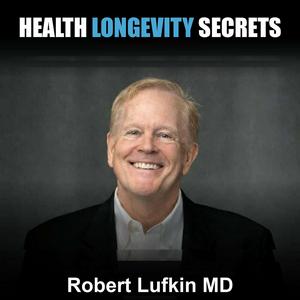
The health advice you're getting isn't working. Want to know what the experts actually do for themselves? Health Longevity Secrets reveals the real science behind longevity, metabolic health, fasting, and disease reversal—the protocols that researchers and physicians use in their own lives, not just what they tell patients. Robert Lufkin MD is a medical school professor, practicing physician, and New York Times bestselling author. After reversing his own chronic disease through lifestyle medicine, he's on a mission to share what actually works. Each episode features in-depth interviews with world-class scientists, doctors, and biohackers who share their personal health strategies—no sponsored talking points, just real answers. Your health transformation starts here.
Site de podcastOuça Health Longevity Secrets, Ciência Suja e muitos outros podcasts de todo o mundo com o aplicativo o radio.net
Obtenha o aplicativo gratuito radio.net
- Guardar rádios e podcasts favoritos
- Transmissão via Wi-Fi ou Bluetooth
- Carplay & Android Audo compatìvel
- E ainda mais funções
Obtenha o aplicativo gratuito radio.net
- Guardar rádios e podcasts favoritos
- Transmissão via Wi-Fi ou Bluetooth
- Carplay & Android Audo compatìvel
- E ainda mais funções

Health Longevity Secrets
Leia o código,
baixe o aplicativo,
ouça.
baixe o aplicativo,
ouça.
Health Longevity Secrets: Podcast do grupo
 Brasil
