
Ouça este podcast gratuitamente no aplicativo: Baixe gratuitamente na App Store
radio.net
Sleeptimer
Guardar rádio
136 episódios

Why Humanity Will Never Leave the Solar System
15/11/2026 | 53minCould humanity ever travel beyond our solar system and explore distant stars? Despite incredible advances in space technology, the distances between stars, the limitations of spacecraft, energy requirements, and the challenges of keeping humans alive in deep space present enormous obstacles.
In this episode, we explore the scientific and technological barriers that could prevent humanity from ever reaching another star system. Is interstellar travel simply a matter of time, or are there fundamental limits that make it almost impossible?
Discover why escaping our solar system may be one of humanity’s greatest challenges and what it means for the future of space exploration.
#SpaceExploration #SolarSystem #InterstellarTravel #Astronomy #SciencePodcast
Hosted on Acast. See acast.com/privacy for more information.Everything You Need to Know About Breast Cancer
11/11/2026 | 25minBreast cancer is one of the most common cancers affecting women worldwide, but how much do we really know about it?
In this episode, we break down everything you need to know about breast cancer, from what it is and the possible risk factors to early warning signs, symptoms, diagnosis, treatment options, and the importance of early detection.
We also discuss common misconceptions, the importance of regular breast self-awareness, clinical breast examinations, and mammograms, as well as why both women and men should understand the risks.
Most importantly, we explore how awareness, timely medical attention, and access to proper treatment can make a difference.
🎗️ WHAT YOU’LL LEARN:
What is breast cancer?
Common signs and symptoms to look out for.
Possible causes and risk factors.
Can men develop breast cancer?
How breast cancer is detected and diagnosed.
Available treatment options.
The importance of early detection.
Common myths and misconceptions about breast cancer.
💗 KNOW THE SIGNS. SPREAD AWARENESS. SAVE LIVES.
Don’t keep this information to yourself. Share this episode with friends, family, and loved ones. A conversation today could make a difference tomorrow.
Disclaimer: This episode is for educational and awareness purposes only and should not replace professional medical advice, diagnosis, or treatment.
#BreastCancer #BreastCancerAwareness #EarlyDetection #CancerAwareness #BreastHealth #HealthEducation #CancerPrevention #KnowTheSigns #WomensHealth
Hosted on Acast. See acast.com/privacy for more information.Is the Universe Certain? Or is it just odds
07/11/2026 | 24minIs the universe governed by predictable laws, where every event has a definite cause and outcome, or is reality fundamentally built on probability?
For centuries, scientists and philosophers have debated whether everything that happens is predetermined or whether chance plays a genuine role in shaping the universe. Classical physics once suggested that, with enough information, we could theoretically predict the future. But the discovery of quantum mechanics challenged that idea.
In this episode, we explore the fascinating world of probability, uncertainty, and the strange rules governing the smallest particles in existence. From Einstein’s famous objections to quantum randomness to the uncertainty principle and the role of chance in modern physics, we examine how much of reality can actually be predicted.
Are the events of the universe already written, or does nature leave room for genuine randomness?
Perhaps the biggest mystery isn’t what will happen next, but whether the universe knows at all.
Hosted on Acast. See acast.com/privacy for more information.Understanding Congenital Defects: Causes, Types, and What You Should Know
04/11/2026 | 26minWhy are some babies born with medical conditions that affect the way their bodies develop or function? Congenital defects, also known as birth defects, are health conditions that develop during pregnancy and are present at birth. They can affect different parts of the body, including the heart, brain, spine, limbs, and other organs.
In this episode, we explore what congenital defects are, how they develop, and the different factors that may contribute to them. From genetic changes and inherited conditions to certain environmental exposures and pregnancy-related factors, we examine what science tells us about the causes of birth defects.
We also look at some common examples, including congenital heart defects, spina bifida, cleft lip and palate, and Down syndrome. Why do these conditions occur? Can they be detected before birth? And what medical treatments and support options are available for affected children and their families?
Beyond the science, we discuss the importance of prenatal care, early diagnosis, medical research, and reducing the stigma surrounding congenital conditions.
What causes congenital defects, can they be prevented, and how can modern medicine help children born with these conditions? Join us for an informative journey into human development, genetics, pregnancy, and medical science.
Hosted on Acast. See acast.com/privacy for more information.Could humanity survive a mass extinction event?
24/10/2026 | 24minWhat would happen if Earth faced a catastrophe capable of wiping out most life on the planet? From a massive asteroid impact and supervolcanic eruptions to nuclear conflict, extreme climate disruption, and other global disasters, humanity faces risks that could threaten the future of civilization.
In this episode, we explore whether humans could survive a mass extinction event and what science tells us about our chances. How did our planet recover from previous mass extinctions? What makes humans different from other species? And could our intelligence, technology, adaptability, and ability to cooperate help us survive a world transformed by catastrophe?
We examine the potential consequences of global food shortages, disrupted ecosystems, damaged infrastructure, and the collapse of essential supply chains. We also investigate how scientists study existential risks, why biodiversity matters for human survival, and whether modern civilization is more resilient—or more vulnerable—than we might think.
If a catastrophe changed Earth beyond recognition, would humanity find a way to survive, or could our civilization disappear forever?
Join us for a fascinating journey into mass extinction, planetary disasters, human resilience, and the science of survival.
Topics covered:
What defines a mass extinction event?
The five major mass extinctions in Earth’s history
Asteroid impacts and supervolcanic eruptions
Nuclear conflict and other global catastrophic risks
How climate disruption and ecosystem collapse could affect humanity
The vulnerability of modern food systems and infrastructure
Could humans survive if civilization collapsed?
What humanity can do to reduce global catastrophic risks
Hosted on Acast. See acast.com/privacy for more information.
Mais podcasts de Ciência



Podcasts em tendência em Ciência













Sobre Kurzgesagt Podcast: Science Revealed
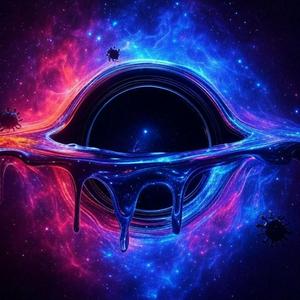
Dive into the world of Kurzgesagt with this podcast exploring the science, stunning animation, and optimistic storytelling that captivate millions. Each episode breaks down Kurzgesagt’s most popular videos—like black holes, climate change, and pandemics—offering fresh insights, and expert takes, Join us to unravel the brilliance of Kurzgesagt’s visual science and discover why it’s a global phenomenon. Subscribe now for your dose of curiosity-driven audio!Become a supporter of this podcast: https://www.spreaker.com/podcast/kurzgesagt-podcast-science-revealed--6600013/support. Hosted on Acast. See acast.com/privacy for more information.
Site de podcastOuça Kurzgesagt Podcast: Science Revealed, Ta de Clinicagem e muitos outros podcasts de todo o mundo com o aplicativo o radio.net
Obtenha o aplicativo gratuito radio.net
- Guardar rádios e podcasts favoritos
- Transmissão via Wi-Fi ou Bluetooth
- Carplay & Android Audo compatìvel
- E ainda mais funções

 Brasil

