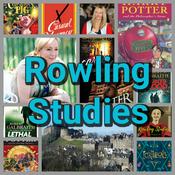
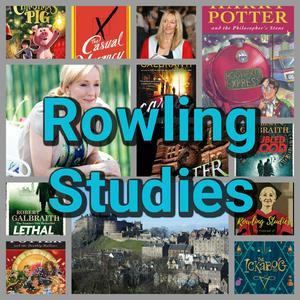
PodcastsArteRowling Studies The Hogwarts Professor Podcast

Rowling Studies The Hogwarts Professor Podcast

John Granger
Rowling Studies The Hogwarts Professor Podcast
Último episódio

69 episódios

  • Rowling Studies The Hogwarts Professor Podcast

    What do Tyler Powell, Rupert Fleetwood, Jolanda Lindvall, and Lady Jensen Have in Common?

    02/03/2026 | 1h 27min
    Nick Jeffery and John Granger met up last Sunday — St David’s Day in Wales and the Sunday of the Triumph of Orthodoxy — to talk about John’s first Hallmarked Man names post, ‘The Allegorical Cryptonyms of The Hallmarked Man, Part One: Ten Cratylic Character Names and their Embedded Meanings.’ In addition to reviewing the high points of that post, Nick offered his insights about the first names John tried to decipher and John added context to the ‘Name Game’ Rowling Readers globally have been playing for 29 years now, Saturn return.
    Seven high spots of their rollicking conversation:
    * Nick shared his belief that Rowling creates the character names she does as much for herself as a writer as for her readers. If the character matches the name, as he sees it, then she has a constant reminder of what that imaginary man or woman does, says, or won’t do or say;
    * John pushed back on that, first because we’ve been told she changed character names while writing them, but more because of what a name is, namely, an image or icon through which the reader experiences the archetypal reference to which Rowling is referring. He thought this was complementary to Rowling’s other Shed tools (alchemy, mythology, ring writing, Christian symbolism, etc.) and argued that, as with the other anagogical artistry, our work in consciously excavating the hidden meaning of names was in keeping with the Hogwarts Professor corrective mission (Eliot’s "We had the experience but missed the meaning" challenge in The Dry Salvages);
    * Nick through light into John’s American blind spots with respect to Rupert (Army jargon! and a comic strip bear), Jensen (a posh car in the 60’s that had maintenance issues), and the Welsh undercurrents of Tyler, Griffiths, Ian (Ianto!), and Powell. And the River Fleet, a now invisible tributary channel flowing through the heart of London to the Thames!
    * John supplemented what he wrote in the post about the mythological backdrop to the Lindvall, Powell, and Griffiths names with what he thinks now are Christian symbolism, too, especially with respect to the love Tyler shows to Jolanda/Chloe;
    * John expanded, too, on Names being another Rowling method of “exteriorization,” a subject he covered at length in his ‘The Christmas Pig: A Quadrigal Reading’ in that epic post’s anagogical section, and the importance of that artistry in working the magic of transformation readers experience in her work;
    * Nick put John’s mind at ease about ‘Ian Griffiths,’ the name of Hallmarked Man’s sex trafficking, short, psychopathic rape-murderer, being a cipher for ‘John Granger;’ and
    * The two agree in conclusion, after an intense back and forth about the Peter-John Rule in Rowling Studies as applied to Strike 8, that the first ten names that John discussed in his post seem to confirm the Hogwarts Professor working-hypothesis that the last three books will be a trilogy involving many of the same characters to resolve unresolved questions and mysteries of the first seven book ring-set.
    John and Nick both referenced the work of Professor Beatrice Groves: check out her exegetical work on the name of The Silkworm’s ‘Owen Quine’ here, her post about Rowling’s connections with the ‘Never Forget’ Campbell clan, and her chapter on Cratylic Names in Literary Allusion in Harry Potter.
    Nick is working on another ‘Rowling Reading’ segment about a Hallmarked Man epigraph source, Matthew Arnold’s Merope: A Tragedy, John has more Strike 8 names in queue to decipher, most notably Danny DeLeon and Oliver Branfoot, John and Nick are both charting Part Nine of Hallmarked in which the meaning of names plays a critical role, and Nick is writing the itinerary for a bonus trip to Rowling’s home town that will be a bonus in the Hogwarts Professor online class in preparation.
    As always, thank you for your subscription to Hogwarts Professor as well as thanks in advance for sharing your thoughts in the comment boxes below. Stay tuned!
    Hogwarts Professor is a reader-supported publication. To receive new posts and support my work, consider becoming a free or paid subscriber.


    This is a public episode. If you'd like to discuss this with other subscribers or get access to bonus episodes, visit hogwartsprofessor.substack.com/subscribe

  • Rowling Studies The Hogwarts Professor Podcast

    What the Hallmarked Man Epigraphs Reveal About Rowling-Galbraith's Artistry and Meaning

    22/02/2026 | 1h 37min
    Nick Jeffery read Robert Browning’s The Ring and the Book, a Victorian epic poem about a murder mystery in 17th Century Italy, to test a theory. John Granger’s best guess after surveying the chapter headings of Hallmarked Man last September was that, of all 77 sources for the 139 epigraphs in Strike8, Browning’s poem was the most likely to hold a secret message or special meaning inside it. John had said something similar about another Browning poem and Ink Black Heart, Elizabeth Barrett Browning’s Aurora Leigh, and Nick had confirmed that through his own reading and confirmation by Rowling herself. He thought John’s track record of spotting important epigraph sources merited a test reading
    .He published his findings on Friday in a post titled ‘The Ring and The Book – A Rowling Reading.’ In brief, the murder in Browning’s poem is a point-to-point model for the Ironbridge murder mystery in Hallmarked Man with characters in Rowling-Galbraith’s book — most notably, Chloe Griffiths, Tyler Powell, and Ian Griffiths — having their astonishing equivalents in Ring. The less obvious but more important links between the two are in their implicit feminism and other messages:
    Both works critique abusive relationships and patriarchal power: Guido’s control of Pompilia and Dino Longcaster’s control of Decima Mullins. The legal system (Books 8–9 especially) is satirized as formalistic, pedantic, and often blind to moral reality. True justice requires personal moral intuition beyond mere evidence or procedure. The Pope’s monologue (Book 10) weighs this tension most profoundly. In The Hallmarked Man the police are slow to act on new information gained by Strike and Robin and Farah Navabi manages to hoodwink the courts into escaping punishment for her part in Patterson’s crimes.
    The Ring and The Book dramatizes the eternal struggle between good and evil. Pompilia embodies instinctive purity, sacrificial love, and spiritual insight despite her suffering. Guido represents sophisticated, calculating evil that twists morality to justify cruelty. Browning affirms that evil exists but that good can somehow arise from or shine through evil’s consequences. In The Hallmarked Man evil is real, monstrous, and often cloaked in normalcy or power structures, but it can be exposed and defeated through persistence, intuition, and moral courage.
    Nick also discusses in this article the chiastic structure of Ring (!) and the ‘conversation’ he heard between Robert Browning in this poem with Aurora Leigh, the masterpiece by his late wife. His ‘Rowling Reading’ of Ring and the Book, consequently, will soon be a touchstone piece not only in Rowling Studies but Browning Studies as well (#ArmstrongBrowningLibraryAndMuseum @ Baylor).
    As they have done before with Nick’s ‘Rowling Reading’ articles. the Hogwarts Professor team recorded their conversation about the piece (listen to their discussions of I Capture the Castle and Aurora Leigh). Seven High Points of that Ring and the Book epigraph conversation include:
    * Nick’s review of why Serious Strikers and Rowling Readers should read The Ring and the Book along with the story of his immersion in it;
    * John’s explanation of why he was so confident that Browning’s poem was a template of some kind for Hallmarked Man even though only six of Strike8’s 139 epigraphs were taken from it;
    * Their survey of Rowling’s previous work with epigraphs — Deathly Hallows and Casual Vacancy all the way to Running Grave and Hallmarked Man — for works with similar embedded-in-the-epigraph texts and those without one (or in which it hasn’t yet been discovered);
    * Nick’s discussion of Rowling’s previous comments about epigraphs and her answer to the question, ‘Which Came First, the Epigraph or the Story?’;
    * John’s best guess pre-publication about the text that will be the epigraph source in Sleep Tight, Evangeline and which Strike text it will most resemble with its Whiskey Shambles title;
    * Nick’s commitment to exploring Blue Oyster Cult epigraphs in Career of Evil to see if one of that band’s albums, all of which supposedly had sci-fi themes and story continuity, served as a text-within-the-text for Strike3; and
    * John’s suggestion that the relationship of Elizabeth Barrett Browning and Robert Browning, a great love with a shared vocation, might be a point of reflection for Serious Strikers as a template for understanding the Strike-Ellacott partnership.
    Nick and John will be recording their group charting of Hallmarked Man’s Part Eight this week with Sandy Hope and Ed Shardlow (and Presvytera Lois?), a survey of readers is in the works, and the long-awaited close look at the Strike series in light of the Cupid and Psyche myth draws ever nearer. Stay tuned!
    The Ten Questions, Epigraph Charting, and Links to Previous Epigraph Discussions Here and Elsewhere:
    The Ring and The Book – A Rowling Reading, Nick Jeffery, February 2026
    Intro to Epigraphs 101, John Granger, September 2022
    The Heart is Not About Emotions and Affection but the Human Spiritual Center, John Granger, October 2022
    A Rowling Reading of Aurora Leigh, Nick Jeffery, November 2025
    Beatrice Grove’s Pillar Post Page at HogwartsProfessor.com
    * Scroll down for Prof Groves’ posts about epigraphs and literary allusion in Cuckoo’s Calling, The Silkworm, Troubled Blood, and Ink Black Heart
    Lethal White: Ibsen’s ‘Rosmersholm’, John Granger, December 2018
    Rowling, Dylan Thomas, and the I Ching: Three Thoughts on Strike7’s Epigraphs, John Granger, April 2023
    ‘Deathly Hallows’ and Penn’s ‘Fruits of Solitude,’ John Granger, October 2008
    The Aeschylus Epigraph in ‘Deathly Hallows,’ John Granger, October 2008
    Maid of the Silver Sea Epigraphs: Louise Freeman Davis’ Collected Posts, 2025
    The Faerie Queene Epigraphs in Troubled Blood
    * Scroll down the Troubled Blood Pillar Post for the Faerie Queene commentary by Beatrice Groves, Elizabeth Baird-Hardy and John Granger
    Robert-Galbraith.com Posts about the Epigraphs in Each Book
    * Hallmarked Man’s Epigraphs: The Poetry
    * Hallmarked Man’s Epigraphs: The Prose
    * Scroll Down the site’s ‘Features’ Page for all the other Epigraph Posts
    Agents of Fortune: The Blue Oyster Cult Story, Martin Popoff, May 2016
    Pompilia: A Feminist Reading Of Robert Browning’S The Ring And The Book, Anne Brady, May 1988
    Roman Murder Mystery: The True Story of Pompilia, Derek Parker, January 2001
    Sleep Tight, Evangeline: Nick Jeffery and John Granger talk with Dimitra Fimi
    Hallmarked Man Epigraphs: The Tally Sheet
    Matthew Arnold: 17 poems, 25 epigraphs, 6 from Merope: A Tragedy
    * 3, 17, 52, 103, 108, 110 (Merope), 21, 33, 68, 38, 97, 41, 45, 59, 58, 69, 73, 76, 80, 86, 96, 106, 119, 122, 124
    Robert Browning: 26 poems, 38 epigraphs including frontispiece, 6 from The Ring and the Book
    * 44, 75, 62, 64, 102, 118 (Ring and Book), frontispiece, 2, 9, 11, 107, 13, 16, 20, 26, 28, 32, 35, 37, 114, 39, 42, 93, 44, 75, 47, 51, 62, 64, 67, 116, 71, 77, 79, 84, 87, 120, 90, 91, 100, 102, 109, 118, 126
    A. E. Housman: 5 works, 25 poems, 28 epigraphs, 10 from Last Poems
    * 1, 5, 7, 53, 19, 92, 56, 65, 74, 105 (Last Poems), 23, 30, 34, 36, 40, 43, 46, 49, 57, 63, 78, 82, 89, 94, 98, 112, 115, 125
    John Oxenham: 1 work, 26 epigraphs
    * Parts 1-10, Epilogue, 15, 18, 22, 25, 27, 55, 60, 66, 83, 85, 88, 95, 111, 113, 127 (Maid of the Silver Sea)
    Albert Pike: 3 works (?), 22 epigraphs, 16 from Morals and Dogma
    * 4, 16, 12, 121 (Liturgy), 8, 10, 14, 29, 31, 48, 50, 54, 61, 70, 81, 99, 101 (Morals and Dogma), 24, 72 (Ancient and Accepted Rite?)
    Most epigraphs: Robert Browning
    Frontispiece: Robert Browning
    Most from one poem: Tie, Robert Browning 6 Ring and Book, Matthew Arnold 6 Merope: A Tragedy
    Most from one novel: John Oxenham 26 Maid of the Silver Sea
    Most from one didactic or discursive argument: Albert Pike 22 (24?) Morals and Dogma
    Conclusions: Ring and Book your best bet as template, Re-read Maid of the Silver Sea, read Merope: A Tragedy
    Tally Sheet of Epigraphs for Ink Black Heart:
    Poet: epigraph numbers, (total)
    * Christina Rossetti: 8, 14, 22, 24, 25, 35, 38, 50, 52, 54, 56, 84, 86, 90, 98, 103, 105, 107 (18)
    * Elizabeth Barrett Browning: 12, 21, 33, 39, 42, 45, 47, 58, 67, 71, 72, 82, 96, 101, 102, 104 (16; all but #s 21 and 58 from ‘Aurora Leigh’)
    * Mary Elizabeth Coleridge: Book, 1, 18, 20, 49, 79, 81, 91, 93, 94, 106 (11)
    * Emily Dickinson: 11, 31, 53, 58, 59, 65, 70, 76, 99 (8)
    * Charlotte Mew: 16, 17, 40, 55, 66, 92, 95 (7)
    * Felicia Hemans: 6, 10, 15, 63, 100 (5)
    * Amy Levy: 7, 23, 32, 80, 85 (5)
    * Jean Ingelow: 9, 27, 29, 37, 64 (5)
    * LEL!: 62, 68, 69, 83 (4); see also Rossetti 52 ‘LEL’)
    * Mary Tighe: 36 (Psyche), 43, 60, 88 (4)
    * Helen Hunt Jackson: 4, 87, 89 (3)
    * Joanna Baillie: 13, 21, 34 (3)
    * Augusta Webster: 44, 48, 51 (3)
    * Emily Pfeiffer: 3, 75 (2)
    * Charlotte Bronte: 19, 74 (2)
    * Adah Isaacs Menken: 30, 57 (2)
    * Constance Naden: 41, 46 (2)
    * Mathilda Blind: 61, 97 (2)
    * Mary Kendall: 73, 77 (2)
    * Martha Jane Jewsbury: 2 (‘To My Own Heart’)
    * Anne Evans: 28
    * ‘Michael Field’ (Katherine Bradley and Edith Cooper): 78
    The Heart and Vision epigraphs in Ink Black Heart by chapter number:
    * Heart: 20, 106 (MEC); 21, 67; 52, 107; 68, 85; 2; 63, 80, 85; 17, 40, 55, 95 (Mew); 19, 74; 27; 30; 36, 60; 87 (23)
    * Vision: Frontispiece, 1, 49, 81 (MEC); 22, 25, 38, 90, 98 (CR); 59; 3; 34; 95; 57; 88; 48; 46 (17)
    Tally Sheet of Epigraphs for Cuckoo’s Calling:
    * Frontispiece: Rossetti -- A Dirge
    * Prologue: Lucius Accius, Telephus
    * Part One: Boethius, The Consolation of Philosophy
    * Part Two: Virgil, Aeneid
    * Part Three: Virgil, Aeneid
    * Part Four: Pliny the Elder, Historia Naturalis
    * Part Five: Virgil, Georgics
    * Epilogue: Horace, Odes
    * [Closing Poem: Tennyson, Ulysses]
    Brackets/Latch: 19th Century English poets (see Groves)
    Most epigraphs: Virgil (3); no other author has more than one
    Most frequently referenced work: Aeneid (2), shades in Ulysses
    Center of Chiasmus: Aeneid (true if ring has 5, 8, or 9 parts)
    Turtleback lines: Not evident in authors list, perhaps in meanings of specific epigraphs
    Conclusions:
    * Read Aeneid to look for Cuckoo’s parallels;
    * Study epigraphs to look for parallels
    Online Literature Review for ‘Epigraphs of Cuckoo’s Calling:‘
    https://robert-galbraith.com/epigraphs-of-the-cuckoos-calling/
    * 2025 connecting the dots between epigraphs and chapter set to follow (generic)
    * No mention of Strike as Aeneas
    https://strikefans.com/the-cuckoos-calling-epigraphs/
    * Reprinting of epigraphs without commentary
    * No mention of Strike as Aeneas
    https://thesefilespod.com/blog/the-cuckoos-calling-epigraphs/
    * Includes a very helpful link to The Rowling Library and an article there about the ‘real world’ crime serving as a template for the Landry murder
    * No mention of Strike as Aeneas
    https://mugglenet.wpenginepowered.com/2017/09/literary-allusion-cuckoos-calling-part-1-christina-rossettis-dirge/
    * Brilliant discussion of the Rossetti poem but curiously without reference to resurrection meaning
    * No mention of Strike as Aeneas
    https://mugglenet.wpenginepowered.com/2017/09/literary-allusion-cuckoos-calling-part-2-tennysons-ulysses/
    * Brilliant discussion of Strike as Ulysses
    * No mention of Strike as Aeneas, curious becauseh Virgil models Aeneas on Ulysses
    The Ten Questions of This Conversation (Sort Of!)
    1, (Nick) So, John, I finally wrote up my findings about The Ring and the Book as the story template for Hallmarked Man’s murder mystery and, as we did with my posts about Aurora Leigh and I Capture the Castle, let’s talk about it, expanding on the correspondences between the Browning poem and Strike 8. The natural place to begin is with your guess about Ring and the Book being a template based on your tally of the Hallmarked Man epigraphs, a theory you shared on our first show post-publication. Can you explain your process and what made you so confident about Ring and the Book?
    2. (John) Looking at that tally, then, Arnold’s Merope and Oxenham’s Maid of the Silver Sea are quantitatively more likely equivalents to Aurora Leigh in Ink Black Heart, but the Browning frontispiece, number of his epigraphs, the hidden quality of the Ring and Book poem titles, and the relationship with Barrett Browning made it seem the most likely. That the poem is considered one of the great feminist tracts written by a man didn’t hurt. I still want to go back to the Arnold poem, though, because of the centrality of his epigraphs in the center Parts and Oxenham deserves a re-read, too, or just a trip to Louise Freeman Davis site, the home of Oxenham Studies online. What struck me while reading your post, Nick, was in the correspondences you found between Ring and the Book and Hallmarked Man. Can you give us the highlights of that?
    3. (Nick) The Ironbridge murder mystery, then, is largely lifted from the death of Pompilia. Which is unusual isn’t it? Has Rowling-Galbraith ever used her epigraphs to point to the template of her story?
    4. (John) I think, then, that at least four of the previous Strike novels give us the embedded template, per Beatrice Groves The White Divel and The Revenger’s Tragedy (and even Hamlet) gives us important clues about The Silkworm crime, Rosmersholm and its incestuous backdrop inform the murder of Lethal White, the Janus deceiver in Faerie Queene should have been a give-away about the poisoner in Troubled Blood, and, as Rowling confirmed and you demonstrated Nick, Aurora Leigh is the working model for Ink Black Heart. I think the closest Rowling epigraph suggestions to story template was in the Rossetti poem that opens Cuckoo’s Calling and the Aeschylus epigraph in Deathly Hallows. What has Rowling said, though, about her epigraph sources? Do they precede the novels or follow the writing?
    5. (Nick) So it’s not one or the other, I think, that is, she has a template in mind and if the source doesn’t have sufficient quotable pieces to serve a epigraphs for the whole book, she uses other sources from the genre in play or that highlight her central theme (cf., the Gray’s Anatomy heart epigraphs in tandem with the hearty women Victorian poets in Ink Black). What I’m struck by here, though, is the shift in importance of epigraphs to Rowling-Galbraith. The numbers are startling, no, between Cuckoo and Hallmarked?
    6. (John) Not only do we see a jump from eight or nine epigraphs in Strike1 to 139 in Stike8, but Team Rowling is pushing readers to think more seriously about them by posting reviews of the epigraphs in each book, drawing the dot-to-dot correspondences. I confess the Strike novel whose epigraphs are not like the others, Nick, is Career of Evil and its Blue Oyster Cult lyrics. You’ve been reading a book about Blue Oyster Cult so I’ll defer to you in this despite my great fondness for heavy metal groups with sci-fi themed lyrics...
    7. (Nick) What about the book we haven’t got in hand, John: Sleep Tight, Evangeline? We have been told -- sort of! -- the title is from a 2014 song from an American blues band called ‘The Whiskey Shambles.’ Which of the previous epigraph models Rowling has used, from Deathly Hallows to Hallmarked Man, do you think we’ll be seeing in Strike9? What are your thoughts on that, especially as the best link we have for Sleep Tight, Evangeline is from a rock and blues band?
    8. (John) So I hope that we’re going to see another Running Grave type epigraph experience in Evangeline, though Grave was unique among Rowling novels and their epigraphs in not having a story-book, poem, or play as its primary source. The I Ching, cannot be a story-template per se because it is a divination tool or means to reflection. Unless you think Pike’s Morals and Dogmas Freemasonry encyclopedia qualifies as an equivalent of sorts to the I Ching? That’s another outlier, isn’t it?
    9. (Nick) To put a Fourth Generation focus on this, John, we should be looking for a technique that Serious Readers can use for Sleep Tight, Evangeline to hunt for the embedded source if its hidden as were Aurora Leigh and The Ring and the Book. You’ve found the ones no one else noticed in Ink Black Heart and Hallmarked Man, how did you do that and do you think the same method will work for Cuckoo and Career as well as Evangeline?
    10. (John) So, yes, I found them but you had the first confirmed by Mrs Murray and then connected the dots between the Browning poems and Rowling’s work. If this method is going to work on Cuckoo, Career, and Evangeline it will have to involve a spotter and a shooter, though they can be the same person. The spotter technique is nothing but grunt work; chart the epigraphs used and spot the author most frequently referenced and the work of theirs most frequently cited. The shooter work is actually a lot more involved and interesting; tell us about your experiences with the two Browning’s’ epic poems, that thrill of discovering correspondences. Do you think that excitement is something Rowling is offering her readers a a treasure hunt or as a point of reflection in terms of meaning?


    This is a public episode. If you'd like to discuss this with other subscribers or get access to bonus episodes, visit hogwartsprofessor.substack.com/subscribe
  • Rowling Studies The Hogwarts Professor Podcast

    'Sleep Tight, Evangeline,' Miniature Psalters, and the Head of Persephone: A Conversation with Dimitra Fimi

    17/02/2026 | 1h 22min
    Last November Nick and John introduced Dimitra Fimi, the magnificent maven of Tolkien Studies and Professor of Fantasy and Children's Literature at the University of Glasgow, to students of J. K. Rowling’s work. In that discussion, ‘Reading Rowling as Myth Maker and Myth Re-Writer: A Conversation with Dr Dimitra Fimi,’ she shared her thoughts about Rowling’s creative use of mythology in Harry Potter but especially in the Cormoran Strike series.
    The Hogwarts Professor team asked her to join us again because of Rowling’s yuletide charm bracelet gift to Strike fandom and the recent announcement of the Strike 9 title, Sleep Tight, Evangeline. Her insights about the Longfellow poem as a possible even likely source of the next book’s epigraphs are engaging, but it is her expertise in the arcane area of miniature books as well as mythology and the light each shines on the two items attached to the last link of the charm bracelet that open up exciting possibilities
    .
    Her idea is that the Psalter on the ninth link of the charm bracelet may actually be, unlike the other tokens on the bracelet’s nine links, an object that will play a part in the story, a miniature book. It turns out that one inch high books were something of an industry as curios in the 19th and early 20th century, a means of demonstrating technological mastery.
    Dr Fimi discussed several projects she has been a part of in conjunctions with nano-technologists and the librarians at the University of Glasgow’s special collections division. The one that has the most obvious link to English literature is the ‘Tiny Alice project,’ a contemporary effort to minituarize Lewis Carroll’s Alice stories to unfathomable minuteness:
    The Tiny Alice Project has produced one of the world’s smallest books: a tiny reproduction of Lewis Carroll’s children’s classic Alice’s Adventures in Wonderland (1865). All 78 pages and 26,764 words of the story have been transposed on to a tiny silicon chip, with each page just the width of a human hair (60 microns). Each individual letter is just two microns high, and made from pure gold!
    Click on the icons below to find out more about the project, the technology behind it, and Lewis Carroll and his interest in the minuscule. Via the tabs above you can also discover the long tradition of miniature books, and teaching resources.
    Clip: Twixter link to tweet above
    You can read Dr Fimi’s write-up of ‘Tiny Alice’ and the Miniature Book exhibition she curated at the University of Glasgow to highlight their special collection of these treasures at her 2019 blog post about them. Pictures that include annotated miniature books — copies in which their owners made notes in the miniscule margins of the printed pages — can be seen here.
    Later this week, Nick will be sharing his thoughts on Robert Browning’s The Ring and the Book as the Ironbridge Murder story’s template within Hallmarked Man, John, Nick, Sandy Hope, and Ed Shardlow will be parsing the ring within Strike8’s Part Seven, and more about Longfellow’s Evangeline — stay tuned!
    The Ten Questions Guiding Today’s Conversation with Dr Fimi with the Necessary Links for Fun Follow-Up:
    (Intro) So everything Serious Strikers are thinking and talking about this month made me think of you, Dimitra, and to write you hat-in-hand with an invitation for your return to HogwartsProfessor to share your perspective, knowledge, and first impressions. Thank you for making time to join us!
    1. (John) Jumping right in, then, two of the charms on the Strike9 or ‘Evangeline’ bracelet are Fimi areas of unique expertise: the Psalter and the Head of Persephone. I had urged readers to read your Miniature Books in Children’s Fantasy at A Kind of Elvish Craft: The Dimitra Fimi Substack Site in the links after our conversation here last November but I confess to being surprised still when you asked for the dimensions of the Psalter charm after Nick and I posted our thoughts on the subject. For those who haven’t read your ‘Miniature Books’ post, please share how one of the world authorities on the writing of J. R. R. Tolkien became interested in the smallest of texts, the ‘Little Books’ of 19th century printing.
    2. (Nick) So you asked for the dimensions of the Psalter, you weren’t thinking as we were that the Psalter charms would be a box holding a folded up paper with a psalm, maybe two, inside it. You’re thinking it might actually be a complete Coverdale Psalter? Is that possible?
    3. (John) What Nick and I hope to contribute to the nascent field of Rowling Studies, as you know, is a refocusing of the scholarship and the serious reader attention about her work on to her Lake Springs -- the biographical part of story inspiration -- her Shed Tools or intentional artistry, and the Golden Threads, the plot points and themes that run throughout her work, i.e., to bring Rowling Studies more in line with all literary scholarship about notable authors, living and dead.
    One of the Golden Threads we talked about in our Kanreki series last summer was the ‘Embedded Text,’ the books inside a book topos that is in almost every book Rowling writes (Kanreki Golden Thread posts one and two). Detective fiction is always about an embedded text, the narrative ‘written’ by the criminal to prevent the detective from reading the real story of what happened and Rowling-Galbraith often makes this narrative an actual book (Dumbledore Chocolate Frog Card, Tales of Beedle the Bard, Bombyx Mori, Talbot’s ‘True Book,’ The Predictions of Tycho Dodonus, etc.). How do you think a Psalter miniaturized book would appear in a Strike novel?
    4. (Nick) Has an author used a miniaturized book before in this way? Were there 19th Century Psalters that people wore as talismans or carried as the original Pocket Books?
    5. (John) And what about the Head of Persephone charm on that bracelet? It’s on the ninth and last link, paired with that Psalter. You shared your first thought about the Persephone charm, a hopeful note, on the comment thread here. As our go-to authority on Greek mythology, I’m dying to know more of your thinking about (a) the specific charm and its relation to the Cupid and Psyche myth-template to the Strike series, (b) its pairing with the Psalter, and (c) its position as the last charm on the bracelet. Do you still think it’s a sign that Robin will survive Sleep Tight, Evangeline?
    6. (Nick) As someone immersed in mythological studies and more than familiar with Rowling’s use of myth, do you think the Jungian interpretation of that myth as the ‘actualization of feminine identity’ is a better lens through which to read that embedded text or is the Spenserian lens of Eros/Anteros, False Cupid and Cupid more helpful? Or is this not a case of Either/Or but Both/And? Valentines Day Special
    7. (John) Rowling is a close reader and admirer of J. R. R. Tolkien, though that is more evident in the clear pointers to his work in her own work than from her interviews. How does her use of myth contrast with that of Tolkien and Lewis? (See John’s 2008 post about Rowling’s debts to Tolkien and the two part podcast with Tolkien scholars and Rowling Readers Dr Amy H Sturgis and Dr Sara Brown here and here for more on that influence.)
    8. (Nick) In an in-person meeting with UK Serious Strikers last week, Rowling shared with them and later via X with everyone the title of the ninth Strike novel, Sleep Tight, Evangeline. We’re pretty sure that title refers to a song by an American Blues group called ‘The Whiskey Shambles’ (story of the hunt, why Whiskey Shambles is a good bet). There is a famous poem, though, by Henry Wadsworth Longfellow called ‘Evangeline,’ one perhaps not as famous as ‘Aurora Leigh’ or ‘The Ring and the Book,’ other texts Rowling may have used as back-drops to her novels, but still another poem very famous in its own time akin to those epics. Is its subject matter as good a match-up with the possible direction of Sleep Tight as the Victorian poetry back-drop is with other Rowling models?
    9. (John) You’re a native Greek speaker; what does ‘Evangeline’ mean in Greek? Is it a common name in Greece or is it a ‘Virtue Name’ in the Puritan tradition of grace-filled names (cf., Credence Barebone is probably a reference to an Englishman named “Praise-God Barebone, whose son Nicholas may have been given the name If-Jesus-Christ-had-not-died-for-thee-thou-hadst-been-damned[3]“).
    10. (Nick) Don’t leave before trying to tie together the pieces of this conversation! Is there a thread joining the Psalter, the Head of Persephone, miniaturized books, and the title Sleep Tight, Evangeline?
    Dimitra Fimi is Professor of Fantasy and Children’s Literature at the University of Glasgow and Co-Director of the Centre for Fantasy and the Fantastic. Her Tolkien, Race and Cultural History won the Mythopoeic Scholarship Award for Inklings Studies and she co-edited the critical edition of A Secret Vice: Tolkien on Invented Languages which won the Tolkien Society Award for Best Book. Her Celtic Myth in Contemporary Children’s Fantasy won the Mythopoeic Scholarship Award in Myth and Fantasy Studies. Other work includes co-editing Sub-creating Arda: World-building in J.R.R. Tolkien’s Work, its Precursors and its Legacies and Imagining the Celtic Past in Modern Fantasy. She has contributed articles for the TLS and The Conversation, and has appeared on numerous radio and TV programs.
    When the rightly famous and beloved ‘The Great Courses’ series decided to offer a Lord of the Rings entry for their catalog of the very best in scholarship for adult-learners, they asked Dimitra Fimi to create ‘The World of J. R. R. Tolkien,’ one of their most popular courses and one you can enjoy in an Audible edition.
    Links Promised in Conversation:
    A Kind of Elvish Craft: The Dimitra Fimi Substack Site
    * Miniature Books in Children’s Fantasy
    * Parabasis: A Tribute to Dionysis Stavvopoulos
    * On Tolkien’s Letter 131 (4): “Romance” vs. Science
    Dimitra Fimi articles at ‘The Conversation’
    * After 150 years, we still haven’t solved the puzzle of Alice in Wonderland (2015)


    This is a public episode. If you'd like to discuss this with other subscribers or get access to bonus episodes, visit hogwartsprofessor.substack.com/subscribe
  • Rowling Studies The Hogwarts Professor Podcast

    Valentine's Day Special: The Cupid and Psyche Myth within the Cormoran Strike Series

    14/02/2026 | 1h 58min
    Happy Valentine’s Day!
    Mrs Murray met the UK StrikeFans.com contingent and Badly WiredLamp (“and friends”) on Thursday to talk about the Cormoran Strike novels. Yesterday, Friday the 13th, Rowling tweeted about the secret she had told them — the title of Strike9:
    Nick Jeffery found the most likely source of the title Sleep Tight, Evangeline, assuming it is not an anagram, in six minutes:
    BadlyWiredLamp who was at the Rowling meeting congratulated Nick on twixter seven minutes later: “Well done for finding it Nick!” with a hand salute emoji. Which semi-confirmation from a witness suggests he is spot on.
    Even more impressive, Nick wrote up a flash post about The Whiskey Shambles and other ‘Evangeline’ possibilities at the HogwartsProfessor weblog, ‘Sleep Tight, Evangeline – Title Release for Strike 9.’ Nick and John will be discussing this news as well as the Psalter and Head of Persephone charms with miniature book, Tolkien, and mythology expert Dimitra Fimi this weekend for a post here next week. See her ‘Miniature Books in Children’s Fantasy’ to prepare for that conversation. Stay tuned!
    But it’s Valentine’s Day! John and Nick celebrate this Hallmark Holiday with a journey through the Cormoran Strike novels’ V-Day celebrations and a discussion of the various Valentines and Cupid’s in the story, with special emphasis on the Cupid and Psyche myth that Rowling has suggested is the series story template.
    That suggestion came the week after Hallmarked Man’s publication in the first of her Public Service Announcements to “Robin and Strike fans:”
    This image came as a surprise even to Hogwarts Professor subscribers because, though we have been writing and talking about the Cupid and Psyche myth as one of the mythological templates behind the Strike series since early 2021, it was the first time Rowling had acknowledged this publicly. Since the September revelation of this connection by the author and the appearance of the head of Persephone at the end of her Strike9 clues Christmas Charm bracelet, Strike fandom is now on board with the idea.
    Which on-boarding Nick and John celebrate with this Hearts and Flowers conversation, in which:
    * Nick reviews the Valentines Day events in the Strike series, the importance of which makes 14 February to Serious Strikers what Halloween is to Harry Potter fans;
    * John discusses the post American Bar office scene in Troubled Blood that let the cat out of the bag about the Cupid and Psyche myth just beneath the Strellacott romance;
    * Nick updates that with Rowling’s PSAs and charm pointers to the Trials of Psyche in Robin’s story;
    * John lays out how and where Hallmarked Man features Valentine Longcaster, the character with the Cupid name, and a Valentine’s Day conflict with dogs to Guard the Gates of Hell (from charting Parts Five and Six);
    * Nick journeys back to Cuckoo’s Calling and explains how Lula Landry’s death and Robin’s first meeting with Strike are twist on Cupid and Psyche with Venus, Psyche, and Cupid, Hephaestus, and Ares all with their equivalents in Charlotte, Robin, and Cormoran;
    * John ups the ante of the conversation by bringing in Edmund Spenser and C. S. Lewis, two writers Rowling loves, both of whom wrote stories that turn on Cupid and Psyche, and suggesting that Galbraith, in using the Eros-Anteros distinction of those writers in the Strike series is answering allegorically the core question of human life: whether to focus the soul on the ephemeral body and its desires or on the noetic faculty of soul, the Heart, logos within us;
    * Nick and John then discuss Robin and Strike’s individual relationships Cuckoo to Hallmarked in light of Cupid-False Cupid and taking turns going through the Strike novels with a look at the principal murder victim and murderer and their respective relationships;
    * John shares the Jungian interpretation of Cupid and Psyche as the mythic representation of feminine actualization, the chrysalis of female identity;
    * And more!
    Below are the links to posts on this subject mentioned in their back and forth and to a translation of the original myth. Happy Valentines Day — and stand by for more discussion of Sleep Tight, Evangeline, the Psalter and Persephone Charms, and all things Strike and Mythology with Dimitra Fimi.
    Links Mentioned in the Valentines Day Celebration Conversation:
    Rowling Points to Myth of Cupid and Psyche in order to Console Strike Fans Disappointed with Hallmarked Man (8 September 2025, Nick Jeffery)
    Nick shares the context of Rowling’s tweet (fan disappointment!) and the background information about the illustration she chose for it.
    The Most Pleasant and Delectable Tale of the Marriage of Cupid and Psyche (Apuleius)
    A translation of the Silver Age Latin tale from Apuleius’ Golden Ass.
    A Mythological Key to Cormoran Strike? The Myth of Eros, Psyche, and Venus (22 April 2021, John Granger)
    The first post to discuss Rowling’s use of this specific myth within Cormoran Strike, it is essential reading and comes in four parts:
    * a discussion of Rowling’s stated beliefs about the soul and how it is the focus of her story-telling,
    * a review of her psychological artistry in Potter and the post Potter novels and screenplays,
    * a synopsis of the Eros and Psyche myth, and
    * a point to point look at the parallels in the story thus far with speculation about novels to come.
    Robin’s Two Perfumes: The Meaning of Philosychos and Narciso (9 June 2021, John Granger)
    The names of Robin’s baseline perfume, Philosychos, and the one she and Strike choose at story’s end, Narciso, both point less to the bedroom than to Robin’s allegorical, psychological, and mythological role as Psyche in the series.
    Erich Neumann in his Amor and Psyche: The Psychic Development of the Feminine describes this discipline as a “prohibition against pity” which “signifies Psyche’s struggle against the feminine nature.” …
    Psyche’s last trial involves her having to confront death, a “marriage” to which she was condemned as a sacrifice at the story’s start, a meeting she can only survive by transcending her feminine qualities of nurturing and pity. She must become, if only temporarily, a narcissist to pass through Hades and return to the world of the Sun and to Cupid. The myth, in Jungian lights, is about her transcending the accidental self, here her feminine and sexual relation to Eros or Cupid, for “ego-stability” leading to “individuation,” ascent to the greater, immortal Self.
    Robin as resident psychologist and loving soul is the Psyche-cipher of the Strike mysteries. She differs from the relatively passive Human Beauty of the myth in her active and determined “struggle against the feminine nature,” her “What. I. Do!” She not only wrestles with her desires for domesticity and maternity in her thinking but stands up to Strike-Cupid in their Valentine’s Day Street Fight and demands his respect or at least more considerate behavior. But she is still struggling with her difficulty to be the narcissist rather than the Great Mother when circumstances and her heroine’s journey of psychological individuation demand that.
    Reading Rowling as Myth Maker and Myth Re-Writer: A Conversation with Dr Dimitra Fimi
    Nick Jeffery and John Granger converse with Dr Dimitra Fimi about Harry Potter, Cormoran Strike, Tolkien, Jane Eyre, and the Mythological Artistry of J. K. Rowling, Hogwarts Saga to Hallmarked Man
    The Hallmarked Man’s Mythological Template
    ‘Cupid and Psyche’s importance for grasping the depths of Strike 8, from the “necessity” of the Silver Vault and the three men in Robin’s life, to spaghetti carbonara and ‘Maid of the Silver Sea’
    Ink Black Heart: The Mythic Backdrop (10 September 2022, John Granger)
    What Rowling is depicting in Robin’s journey through the events and mystery of Ink Black Heart include a trap set by Venus, one that takes Robin to a personal and professional underworld or hell, her survival and endurance of every temptation by her determination to be steely rather than empathetic, especially with respect to a certain “lame fellow” (!), and her re-surfacing from hell a changed person, one worthy of begrudging Venereal approval (or Zeus’ intervention — Rokeby!).
    Ink Black Heart: Strike as Zeus to Robin’s Leda and Cupid to Mads’ Psyche (10 November 2022, John Granger)
    These traditional portrayals of the every person’s human and divine aspects, soul and spirit as man and woman in dynamic, cathartic relationship — think Romeo and Juliet, Redcrosse Knight and Una, Cupid and Psyche — are perhaps, with her alchemical symbolism, sequencing, and coloring, Rowling’s greatest literary ‘reach’ and achievement in the Strike series, albeit one largely lost on her her vast reading audience. The deliberate conjunction-melange of archetypal psychology, mythology, and spiritual allegory in these novels is, especially in combination with her hermetic artistry, intertextual playfulness (Aurora Leigh!), and chiastic structures, testimony to the author being one of the most accomplished and challenging writers of the age in addition to the most popular (and least well understood, even by her fans).
    Hallmarked Man: Freemasonry and J. K. Rowling (7 February 2024, Nick Jeffery)
    The Royal Arch degree is unique in England for including the ceremony of “Passing the Veils” symbolising the path to enlightenment that a mason undergoes as he progresses in the craft. Given Peter Rowling’s upward social mobility from working class apprentice to engineer and moving from the Bristol suburbs to middle class Tutshill, it isn’t beyond reason to wonder if Peter might have been tempted by the social and career advantages that freemasonry might have offered him and exposed a young Joanne to some of the symbolism.
    Edinburgh, as well as being the home of the Grand Lodge of Scotland, is also home to if not the oldest lodge in the world, then at least the one with the oldest records. Lodge of Edinburgh (Mary’s Chapel) No. 1 has minutes of meetings from 31st July 1599. There have long been arguments between this Lodge and the one in Kilwinning on the other coast of Scotland as to which is the oldest. (see IVº of the Rite of Baldwyn above)
    J. K. Rowling’s ‘G-Spot’ and ‘Triple Play:’ The Lake & Shed Secret of Her Success (21 September 2024, John Granger)
    I want to try tonight to explain as succinctly — and as provocatively — as possible why I think Rowling’s ‘Lake and Shed’ metaphorical explanation of how she writes offers a compelling reason for both why she writes and why readers around the world love her novels the way they do. I call this her ‘G-Spot’ and ‘Triple Play’ because it is her point of singular genius, the defining quality that separates her from contemporary story-tellers, which involves ‘Shed’ artistry of three particular literary tools, all subliminal, which work together to achieve her aims.
    The Hallmarked Man’s Flood of Names, Characters, and Plots (22 September 2025, John Granger)
    Rowling’s seven Shed tools — psychomachia, literary alchemy, ring composition, misdirection towards defamiliarization, Christian symbolism, mythology, and inter-intratextuality (writing about reading and writing) — are all about the transformation of the human soul by cathartic experience in the imaginative heart, i.e., our spiritual reorientation. These traditional tools alone don’t do it, of course; her capacity for creating archetypal characters that we care about in profound fashion is what gives the tools their grip on the heart.
    But, if a writer uses these tools in his or her Shed, the game being played and its stakes are not in question. Everything Rowling has written to date, with greater or lesser success (largely dependent on her control of the final product, cough*Warner Brothers*cough), shares this aim. Her global popularity testifies that much more often than not she hits her target to the delight of her readers.
    I assume this was her aim in Hallmarked Man. It’s early days on the full exegesis of Strike8 in light of Rowling’s Shed tools, Lake springs, and Golden Threads, but there are encouraging signs. My third reading of the book included my first ‘Aha!’ moments with respect to the mythological template of the series, the Shed tool Rowling was openly urging her readers to think about in her recent Cupid and Psyche tweet.
    Jungian Interpretations of ‘Cupid and Psyche:’
    * Erich Neumann: Amor and Psyche: The Psychic Development of the Feminine (A Commentary on the Tale by Apuleius)
    * Paul Diel: Symbolism in Greek Mythology: Human Desire and Its Transformations (A “psychological study of the symbols condensed in the fate of the mythological hero”)
    * Robert A. Johnson: SHE: Understanding Feminine Psychology (An interpretation based on the myth of Amor and Psyche and based on Jungian mythological principles)
    * Marie-Louise von Franz: Golden Ass of Apuleius: The Liberation of the Feminine in Man (originally A Psychological Interpretation of The Golden Ass of Apuleius)
    ‘Tamspells’ Point to Point Correspondence List of Events in the Strike-Ellacott Novels and the Myth of Cupid and Psyche
    The list ‘Tamspells’ made will be Nick and John’s starting point in their upcoming conversation with her about how to see the myth beneath the surface of the story
    Cupid and Psyche Myth Highlights to Look for in Your Review at Home of the Strike Series:
    * Jealousy of Venus
    * Psyche’s Wedding/Funeral March to Mountain Crag
    * Psyche Rescued by Cupid, stuck with his own arrow
    * Retreat to Hidden Castle, Love in Darkness
    * The Two Sisters
    * The Confrontation with Lamp and Knife
    * Psyche’s Return Home; Death of Sisters (Pan cameo)
    * Psyche’s Search for Cupid/Venus: Ceres Interview
    * Brought to Venus (Worry and Sadness)
    * First Trial: Seeds and Grains (Ant)
    * Second Trial: Wool from Golden Sheep (Reed)
    * Third Trial: Crystal glass for Black Stygian water (Zeus, Eagle)
    * Persephone Odyssey: Box for Beauty (Tower instructions)
    * Barley Cakes for Cerberus and Two Coins for Charon
    * Must ignore: “a lame man driving a mule loaded with sticks, a dead man swimming in the river that separates the world of the living from the world of the dead, and old women weaving.”
    * Meal in Underworld with Persephone
    * Return Trip, Falling to Temptation
    * Cupid intervention; intersession and deal with Zeus
    * Olympian Court Date
    * Marriage of Cupid and Psyche post Ambrosia, birth of Pleasure
    Strike Novel Victim Eros Anteros Murderer Eros Anteros Cuckoo’s Calling Lula Landry Evan Duffield Marlene Higson,Yvette Bristow, Guy Some, Jonah Agyuman John Bristow Alison Creswell Yvette Bristow The Silkworm Owen Quine Kathryn Kent Leonora/Orlando Elizabeth Tassel Michael Fancourt Owen Quine? Career of Evil Kelsey Platt Rock Band Leader Ray Williams, (Hazel Furley) Donny Laing Rhona Bunyan, hostage women Agnes Waite Lethal White Jasper Chiswell Ornella Seraphin, Kinvara Patricia Fleetwood Raphael Chiswell Kinvara Hanratty Ornella Seraphin Troubled Blood Margot Bamborough Paul Satchwell Roy/Anna Phipps Una Janice Beattie Steven Douthwaite/Diamond Dead Mother Dennis Creed Louise Tucker Agnes Waite Ink Black Heart Edie Ledwell Philip Ormond? Joshua Blay, Grant Heather Ledwell Gus Upcott Anomie/Paperwhite, Vikas BhardwajMorehouse Katya Upcott The Running Grave Daiyu Wace, Kevin Pirbright (Jacob) Louise Pirbright Abigail Glover Patrick, Baz Jennifer Wace The Hallmarked Man Tyler Powell Anne-Marie Morgan Chloe Griffiths/Jolanda Lindvall Ian Griffith Jolanda/Sapphire Rita Lindvall?


    This is a public episode. If you'd like to discuss this with other subscribers or get access to bonus episodes, visit hogwartsprofessor.substack.com/subscribe
  • Rowling Studies The Hogwarts Professor Podcast

    The Christmas Charm Bracelet of Strike 9 Clues (Part Two)

    06/02/2026 | 1h 10min
    Elizabeth Baird Hardy, Deputy Headmistress of Hogwarts Professor, the genius behind AppalachianInkling.com, Hunger Games expert, and author of Milton, Spenser and the Chronicles of Narnia: Literary Sources for the C.S. Lewis Novels, joined Nick and John to discuss the Charm Bracelet that J. K. Rowling posted on her Twixter home page as a Christmas gift to her readers. She said that that the thirteen charms on nine links were a set of clues about the next Strike novel, the ninth in a ten book series.
    In the first Part of Elizabeth, Nick, and John’s conversation, they discussed Rowling’s charm bracelet history, speculated about why she posted this picture when she did, decided to look at each charm on the bracelet for its stand-alone meaning and its place in the nine link set, and to read the whole series as if it were a ring composition, one reflecting a nine Part structure in Strike 9. They then made deep dives into the details of each charm: the heart shaped box containing a ‘You and Me’ engagement ring, a golden diamond-laden egg, a foul anchor, two angels, and a Trojan horse.
    In this second Part of that conversation, the trio of Serious Strikers continue with the remaining charms on the bracelet, namely, a Jack-in-the-box, an Hourglass, a White Rose and Crocodile, a Corvid head, and a Psalter paired on the last link with the Head of Persephone. They share their thoughts, too, about the bracelet as a symbolic integer and its ring meaning.
    The notes below are in support of references they make mid-flight and to other resources of interest to Magic Charm Decoders! Enjoy.
    Thank you to all our subscribers with special gratitude and appreciations for our paid subscribers; you are the wind in our sails, the heat from our vents…
    Serious Strikers are reading Browning’s The Ring and the Book, charting Hallmarked Man Part Six, and reviewing the Myth of Cupid and Psyche to look for parallels in the Strike-Ellacott series. See you soon!
    Jack-in-the-Box Charm
    * Rowling claims this as her favorite charm (Nick and John in the conversation mistakenly attribute this preference to the Psalter charm):
    * Badly Wired Lamp ID’d it
    * Is it a devil — or a Racoon?
    * The jack in the box toy, the 'Jack' being a devil, was invented in Germany in the 16th century as a mockery of the Roman Catholic doctrine of the Real Presence of Christ in the Eucharist.
    * The shape of this charm, the golden circular center in the inside of the open box top, represents the transcendent spiritual realm and the square bottom with its four directions, the fallen world. The ‘jack’ devil lives in the latter but is from the former.
    * The charm is the third latched object in the chain, the heart box and Trojan horse preceding it and the psalter at chain’s end following it — which means the ring latch and center are latched objects with surprises inside. The two interior objects at center have deadly surprises and the beginning and end eternal life interiors. The symbolism here is of the human being and its capacity via choice for either spiritual perfection in sacrificial love (anteros) or consumption by individual desires (eros). The thing hidden inside, man’s spiritual capacity or heart, is either light or darkness, the inside bigger than the outside. (John)
    * What is the Strike 9 connection, the analogue to the demonic Jack in the box? Is it RFM? Uncle Ted? Ilsa’s husband Nick? Polworth?
    * The Jack’s position is at the center of the bracelet and between the hourglass and the Trojan horse. So it’s placed between cleverness and craftiness and things that we can control and bad surprises, but also time, because we can’t control time. (Elizabeth)
    Hourglass Charm
    * tempus fugit ‘like sand in an hourglass’
    * memento mori
    * infinite symbol
    * The Strike series may be a collection of mystery-story genres, each one illustrating a unique type of story, different from all the others while keeping the same core of characters and overarching narrative (cf., Rowling’s note in The Running Grave acknowledgements that that book was her “cult” book). The hourglass, then, may be Rowling’s pointer to Strike9 being a suspense drama in which the good guys not only have a challenging mission (find and rescue the missing Robin, Strike, Lucy, Pat, whomever) but have to do it before a literal deadline arrives. The Ticking Clock plot device.
    * If the Jack at link five is the center of the bracelet ring of nine links, how does the hourglass mirror the Trojan horse? It’s two parts? The deadline aspect? “Reveal the crazies inside before the hourglass empties”?
    White Rose Charm
    * White Rose of Yorkshire
    * The interior of the flower charm is a literal Turtleback or ring composition diagram.
    * White Rose of Dante: Paradiso Cantos XXXI and XXXII
    The true home of all the blessed is with God in the Empyrean, a heaven of pure light beyond time and space. Dante sees the blessed systematically arranged in an immense white rose: like a hologram, a three-dimensional image, the rose is formed from a ray of light reflected off the outer surface of the Primum Mobile (30.106-17). The queen of this white rose is the Virgin Mary, traditionally represented as a rose herself (see Par. 23.73-4). This celestial rose recalls large rose windows of Gothic cathedrals, many of which are dedicated to Mary. The image of the rose, often red, is also used to represent Christ or, in other contexts, earthly love. The white rose is symmetrically structured according to various criteria, including belief, age, and gender. One half of the rose, already full, holds those who, according to Christian tradition, believed in Christ to come (the blessed of the Hebrew Bible); the other half, with only a few seats still unoccupied, contains those who believed in Christ already come (saved Christians). Two gendered rows mark this division of the rose in two halves. In the row below Mary appear women of the Hebrew Bible (Eve, Rachel, Sarah, Rebecca, Judith, Ruth, and unnamed others); Beatrice is seated next to Rachel, on the third row from the top. Opposite Mary, John the Baptist heads a row of men containing Francis, Benedict, Augustine, and other Christian fathers. Mary is flanked by Adam (first man) and Moses on one side, and Peter (first pope) and John the Evangelist on the other. John the Baptist is flanked by Lucy on one side and Anna, the mother of Mary, on the other. While only adults are seated in the upper section of the rose, below a certain line the rose contains souls of blessed children, their precise location based not on their own merits (since they lacked the power of free will) but on predestination. As physical laws do not apply in the Empyrean, Dante's ability to see these figures is not diminished by distance (30.118-23; 31.76-8).
    * White Rose of Mockingjay (Hunger Games finale)
    The prevailing symbol of Catching Fire and the most meaningful token the Christ figure of the series gives Katniss is a pearl, the solid-light symbolism of which we’ve discussed before. I think Commander Paylor’s name may be our last Madge-Pearl-Mags name reference in being a “pale orb.” That gold and pearls have a similar translucency and metaphysical correspondence with the ‘Light of the World’ make the twin possibilities that much more rich — and Commander Paylor’s ascending to Panem’s Presidency that much more meaningful and appropriate.
    Katniss steps into the Garden with the Pearl’s blessing (“on my authority”) and discovers roses of every possible color. There are red, of course, and “lush pink, sunset orange, and even pale blue.” She knows what she wants, though; the rose colored like light, the white rose, Dante’s symbolic prelude to the beatific vision and transcendence. Just as she cuts the “magnificent white bud just about to open” “from the top of a slender bush” (ibid, p. 355), the manacled, “pale, sickly green” President Snow, our snake in the Garden, speaks.
    “The colors, are lovely, of course, but nothing says perfection like white.”
    Our story Satan, you recall, left her a white rose in District 12 in chapter 1 and dropped roses with the bunker buster bombs in Part 1 to terrify Katniss. Now we know why. He was taunting her with her end, that as a seeker’s soul he knew her goal was perfection in Christ and taunted her with it, especially when he held Peeta-Christ and understood the cartharsis and chrysalis she would have to pass through to claim it herself. Now that she is in the inner sanctuary, the High Place, he tells her the truth she could not hear anywhere else, the final, ugly truth about the cause for which Katniss had sacrificed everything. Snow reveals, just as Peeta had told her at the story’s start, that she was deceived by those she trusted. President Coin killed Primrose with a weapon designed by Gale.
    Having been to the Absolute center, the world navel, and taken away the beatific vision as a white rose, Katniss is no longer a seeker but the resolution of contraries, an androgyn of justice and mercy. She is above right and wrong now as the phoenix-mockingjay and hears the voice of the “murderer” on the Hanging Tree at last. She deceives President Coin at the Victors Meeting as something of an avenging angel; she becomes a murderer herself by assassinating President Coin. Peeta-Christ comes down from the tree as her savior once again and prevents her suicide via Nightlock by his out-of-nowhere intervention.
    * Why does the White Rose share the seventh bracelet link with a crocodile? Faerie Queene!
    Crocodile Charm
    * The Crocodile in Shed, crocodile skin handbags (Hallmarked Man)
    “Maybe the4 crocodile or whatever they’re keeping in the shed’s chewed its way out,” said Strike. “ (Chapter 22, p 176; center chapter of Part 2)
    * Crocodile entry, Cirlot’s Dictionary of Symbolism
    Crocodile Two basically different aspects of the crocodile are blended in its symbolic meaning, representing the influence upon the animal of two of the four Elements. In the first place, because of it viciousness and destructive power, the crocodile came to signify fury and evil in Egyptian hieroglyphics (19); in the second place, since it inhabits a realm intermediate between earth and water, and is associated with mud and vegetation, it came to be thought of as an emblem of fecundity and power (50). In the opinion of Mertens Stienon there is a third aspct, deriving from its resemblance to the dragon and the serpent, as a symbol of knowledge. In Egypt, the dead used to be portrayed transformed into crocodiles of knowledge, an idea which is linked with that of the zodiacal sign of Capricorn. Blavatsky compares the crocodile with the Kumara of India (40). Then, finally, come the symbols of Inversion proper and of rebirth. (67)
    * Lyndy Abraham’s Dictionary of Alchemical Imagery entry for ‘Crocodile:’
    Crocodile The mercurial *serpent or transforming arcanum in its initial chthonic aspect during the dark, destructive opening of the opus alchymicum. Like the *bee, the crocodile was classified as a serpent in te bestiaries of the sixteenth and seventeenth centuries. The amphibious nature of the crocodile made it an apt symbol for the dual-natured *Mercurius. When Lepidus in Shakespeare’s Antony and Cleopatra says, ‘Your serpent of Egypt is bred of your mud by the operation of your sun; so is your crocodile’ (2.7.26-7), he is referring to the generation of gold in the earth, and the generation of the mercurial serpent through the heat of the secret *fire or ‘sun’. With the phrase ‘operation of your sun’ Lepidus also alludes to the final law of the alchemical Emerald Table: ‘That which I had to say about the operation of the Sun is completed’ (48)
    * Sandy Hope on Crocodile symbolism
    Isis Church crocodile in Faerie Queene: Book 5, Canto VII
    Book V Canto vii. The speaker praises the virtue of justice and cites Osyris as an example of the just man. His wife, Isis, represented equity and to the Temple of Isis Britomart and Talus come to spend the night. Talus, however, is not allowed into the temple. Britomart enters and sees a statue of Isis with her foot on a crocodile. The temple is also full of the priests of Isis who are not allowed to drink wine as it leads to rebellion. Britomart sleeps under the statue of Isis and dreams that the crocodile comes alive and threatens the Goddess. The Goddess subdues the crocodile and it becomes meek and then impregnates the Goddess. She gives birth to a lion which conquers all other beats. Britomart awakes and tells her troubling dream to a priest. He tells her that the crocodile represents Arthegall, Isis represents Britomart, and the lion their son whom they will conceive. Grateful for the interpretation, Britomart leaves and comes to Radigund’s castle. Radigund and Britomart battle, Britomart is wounded in the shoulder, and finally Britomart beheads Radigund. Talus enters the castle and wreaks carnage on the Amazon women inside. Britomart finds Arthegall dressed, like other, in women’s clothing. she is shamed by the sight, and it is not quite clear whether her suspicions that Arthegall has been unfaithful are confirmed or refuted. She finds Arthegall some armour, arms him, and the rest in the castle. during this time Britomart rules as a princess and reforms the Amazon society so that women are restored to proper subjection to men. Finally, Arthegall leaves to complete his quest against Grantorto. Britomart lets him leave because she knows that his success in this quest is important to restore his ego. After residing further at the Amazon castle she finally leaves to help keep her mind off the absent Arthegall.
    * The Spenser Encyclopedia entry for ‘Church of Isis:’ (408) Clifford Davidson
    When Britomart spends the night in the temple, she sees a ‘wondrous vision’ in which she participates first as a votary of Isis and then as the goddess herself. Her devotion to the statue causes her to become Isis in her dream: she is serving at the altar when she sees herself transformed into Isis but wearing the royal robe. The crocodile awakens, devours the flames which threaten to destroy the temple, and threatens to eat Isis/Britomart until it is driven back by her rod. Then it seeks her ‘grace and love,’ she yields, it impregnates her, and from their union she gives birth to a lion. As the Priest explains, the crocodile is Osiris (the Egyptian god of Justice) who sleeps under the feet of Isis ‘To shew that clemence oft in things amis,/ Restraines those sterne behests, and cruell doomes of his’ (22), and who shows thereby the proper relation of justice and judgment to equity. The Priest also explains to Britomart that the crocodile is Artegall, ‘The righteous Knight,’ who will settle the storms and ‘raging flames, that many foes shall reare’ and restore to her the heritage of her throne, and who will give her a ‘Lion like’ son (23), the new British monarchy of the Tudors.
    The crocodile is a symbol both of guile and of a regeneration that will affect future history. As guile, its relation to Isis is reminiscent of Vice figures under the feet of triumphing Virtues in medieval art. An iconographic association between the crocodile in its demonic aspect and medieval saints’ legends derives ultimately – significantly for Spenser – from the classical figure of Britomartis (Miskimin 1978). In Plutarch’s Isis and Osiris 50, it is linked to Typhon, the enemy of justice and order, while in Renaissance iconographic tradition it is often symbolic of the need for prudence (for one must be prudent to avoid the wily crocodile). Cesare Ripa’s Iconologia (sv Lussuria) shows the nude Luxury (or Lechery) seated upon a crocodile, an interesting analogy to its phallic sexuality in Britomart’s dream. Yet along with these primarily negative associations, there are also positive ones in the crocodile’s identification with Osiris/Artegall/Justice and in the implication that Isis/Britomart/Equity is incomplete without her partner. The image contains its own contradiction, unresolved by the Priest.
    * Troubled Blood and Faerie Queene: Where Britobart and Artegall are used as stand-ins for Robin and Cormoran:
    Troubled Blood features several embedded texts, the most important of which is never mentioned in the book: Edmund Spenser’s Faerie Queen. Serious Strikers enjoyed the luxury of not one but two scholars of Edmund Spenser who checked in on the relevance and meaning of Rowling’s choice of the greatest English epic poem for her epigraphs, not to mention the host of correspondences between Strike 5 and Queen. Elizabeth Baird-Hardy did a part by part exegesis of the Troubled Blood-Faerie Queen conjunctions and Beatrice Groves shared her first thoughts on the connections as well. Just as Lethal White’s meaning and artistry is relatively unappreciated without a close reading of Ibsen’s Rosmersholm, so with Strike 5 and Faerie Queen.
    Elizabeth Baird-Hardy
    * Day One, Part One: The Spenserian Epigraphs of the Pre-Released Troubled Blood Chapters
    * Day Two, Part Two: The Spenserian Epigraphs of Troubled Blood Chapters Eight to Fourteen
    * Day Three, Part Three: The Spenserian Epigraphs of Troubled Blood Chapters Fifteen to Thirty
    * Day Four, Part Four: The Spenserian Epigraphs of Troubled Blood Chapters Thirty One to Forty Eight
    * Day Five, Part Five: The Spenserian Epigraphs of Troubled Blood Chapters Forty Nine to Fifty Nine
    * Part Six: The Spenserian Epigraphs of Troubled Blood Chapters Sixty to Seventy One
    * Spenser and Strike Part Seven: Changes for the Better
    Beatrice Groves
    * Trouble in Faerie Land (Part 1): Spenserian Clues in Troubled Blood Epigraphs
    * Trouble in Faerie Land (Part 2): Shipping Robin and Strike in the Epigraphs of Troubled Blood
    * Trouble in Faerie Land (Part 3): Searching for Duessa in Troubled Blood
    John Granger:
    * How Spenser Uses Cupid in Faerie Queen and Its Relevance for Understanding Troubled Blood
    * Reading Troubled Blood as a Medieval Morality Play
    Corvid Charm
    * Rowling Twixter headers: 12 January 2016, 9 April 2017 (Nick)
    * Fantastic Beasts reference? The Lestrange Family Motto features a crow and the ‘Lost Child’ of that series is named ‘Corvus’
    * Crow Symbolism per Cirlot, Dictionary of Symbols:
    Crow Because of its black colour, the crow is associated with the idea of beginning (as expressed in such symbols as the maternal night, primigenial darkness, the fertilizing earth). Because it is also associated with the atmosphere, it is a symbol for creative, demiurgic power and for spiritual strength. Because of its flight, it is considered a messenger. And, in sum, the crow has been invested by many primitive peoples with far-reaching cosmic significance. Indeed, for the Red Indians of North America it is the great civilizer and the creator of the visible world. It has a similar meaning for the Celts and the Germanic tribes, as well as in Siberia (35). In the classical cultures it no longer possesses such wide implications, but it does still retain certain mystic powers and in particular the ability to foresee the future; hence its claw played a special part in rites of divination (8). In Christian symbolism it is an allegory of solitude.
    Amongst the alchemists it recovers some of the original characteristics ascribed to it by the primitives, standing in particular for nigredo, or the initial state which is both the inherent characteristic of prime matter and the condition produced by separating out the Elements (putrefactio) … In Beaumont’s view, the crow in itself signifies the isolation of him who lives on a superior plane (5), this being the symbolism in general of all solitary birds. (71-72)
    * Lyndy Abraham’s Dictionary of Alchemical Imagery entry for ‘Crow:’ (49)
    Crow, crow’s head, crow’s bill A symbol of the *putrefaction and *black nigredo which is the first stge of the opus alchymicum. The old body of the metal or matter for the Stone is dissolved and putrefied into the first matter of *creation, the *prima materia, so that it may be regenerated and cast into a new form. The Hermetis Trismegisti Tractatus Aureus said of this initial stage of death and dissolution in the work: ‘The First is the Corvus, the Crow or Raven, which from its blackness is said to be the beginning of the Art’ (bk. 2, 235). In his Aurora, Paracelsus wrote that when the matter has been placed in the gentle heat of the secret fire it passes through corruption and grows black: ‘This operation they call putrefaction, and the blackness they name the head of the Crow’ (55). Thomas Charnock likewise wrote of the putrefaction: ‘The Crowes head began to appere as black as Jett’ (TCB, 296). In Zoroaster’s Cave the matter produced during this stage is identified with the name of the process: ‘When the matter has stood for the space of forty dayes in a moderate heat, there will begin to appear above, a blacknesse like to pitch, which is the Caput Corvi of the Philosophers, and the wise men’s Mercury’ (80). According to Ripley the terms ‘crows head’ and ‘crows bill’ are synonymous: ‘The hede of the Crow that tokeyn call we,/And sum men call hyt the Crows byll’ (TCB, 134) (see ashes). In A Fig for Momus Thomas Lodge listed the crow’s head amongst other alchemical enigmas: ‘Then of the crowes-head, tell they weighty things’ (Works, 3:69). When Face in Jonson’s The Alchemist says that the matter of the Stone has become ‘ground black’, Mammon enquires of him, ‘That’s your crowes-head? And Subtle replies, ‘No, ‘tis not perfect, would it were the crow’ (2.3.67-8).
    Psalter Charm
    * In ‘Charms, Psalms & Golden Clues: A brace(let) of clues for Strike 9,’ Prof Groves discusses the psalm as charm:
    Charm first meant the incantation itself, and then the amulet that carried that incantation to protect the wearer and then – from the 19th century – the small ornamental trinkets, fastened to girdles, watch-chains and bracelets, that resembled those original, talismanic charms. This means that Rowling’s clue-charm of a Psalm book (which can actually carry a sacred text) circles back beautifully to the original meaning of the word – in which a charm was an amulet carrying a holy text. These charms do not always hold texts but Rowling has confirmed that this one does: ‘The book is a psalm book and holds real, miniature psalms’ I think this protective hinterland of charms make it likely that the specific psalm that such a psalm-book charm would carry would be the most comforting and talismanic of psalms – Psalm 23. This psalm famously describes the Lord’s love as protective, even unto the valley of the shadow of death
    * John argues that, in addition to the 23rd Psalm, Psalm 90 (91 in Masoretic or KJV reckoning), the so-called ‘Soldier’s Psalm’ is at least as likely as an insert for this charm, which is to say, as a talisman a soldier might give a woman about to enter Hades to beg a gift from Persephone…
    The Head of Persephone Charm
    * Rowling’s clarifying picture
    * Psyche’s Last Task from Venus:
    One final task is then given to Psyche, one in which Psyche is commanded to bring back a bit of Persephone’s beauty from the Underworld. In Greek mythology no living soul is meant to be able to enter the Underworld, let alone leave it, and so Aphrodite felt that she would be rid of Psyche once and for all. Indeed, it seemed that Aphrodite would be proved right, for Psyche’s only idea about entering the Underworld was to kill herself. Before Psyche can commit suicide a voice whispers to her instructions about how to complete the task. Thus Psyche finds an entrance to the Underworld and is soon crossing the Acheron upon the skiff of Charon, and the princess even manages to gain an audience with Persephone. Persephone on the surface appears to be sympathetic to the quest of Psyche, but Psyche has been warned about accepting food or a seat in the palace of Hades, for both would bind her to the Underworld for all time. But eventually, Persephone gives Psyche a golden box, said to contain some of the goddess’ beauty.
    * The Head of Persephone charm is paired with the Psalter on the ninth and last link; again, if the Psalm is 22 (23) or 90 (91), then the connection is an invocational prayer for help traveling through the “valley of death,” for protection from the “asp and basilisk,” the “lion and dragon.”
    * As above, note that the beginning, middle, and end of the bracelet feature clasped objects, with the Psalter being a codex that opens and Psyche’s journey to Persephone is in pursuit of a “golden box” containing the means to otherworldly beauty.


    This is a public episode. If you'd like to discuss this with other subscribers or get access to bonus episodes, visit hogwartsprofessor.substack.com/subscribe

Mais podcasts de Arte

Sobre Rowling Studies The Hogwarts Professor Podcast

The Artistry and Meaning of J. K. Rowling and Other Greats hogwartsprofessor.substack.com
Site de podcast

Ouça Rowling Studies The Hogwarts Professor Podcast, Vem escutar audiobooks e muitos outros podcasts de todo o mundo com o aplicativo o radio.net

Obtenha o aplicativo gratuito radio.net

  • Guardar rádios e podcasts favoritos
  • Transmissão via Wi-Fi ou Bluetooth
  • Carplay & Android Audo compatìvel
  • E ainda mais funções
Informação legal
Aplicações
Social
v8.7.2 | © 2007-2026 radio.de GmbH
Generated: 3/7/2026 - 2:41:51 AM