PodcastsSaúde e fitnessThe Ty Beal Show

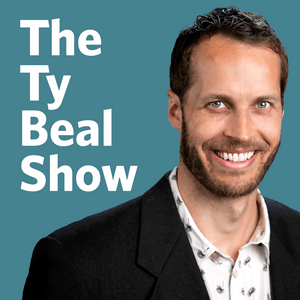
The Ty Beal Show

Ty Beal, PhD
The Ty Beal Show
Último episódio

Episódios Disponíveis

5 de 23
  • The Case for Ethical Omnivorism | Frédéric Leroy, PhD
    In this episode, Frédéric Leroy, PhD, a professor of food science and biotechnology at the Free University of Brussels, joins the show to dismantle the polarized debate surrounding animal-source foods. We explore the nutritional risks associated with restrictive vegan diets, particularly for vulnerable groups like infants and women of reproductive age, while examining the evolutionary and biological role of meat in the human diet. Dr. Leroy challenges the current push toward exclusively plant-based global policies, discussing the limitations of the EAT-Lancet report and the "carbon tunnel vision" often applied to environmental sustainability. We also dig into the misunderstood science of saturated fat and processed meats, distinguishing between traditional preservation methods and modern ultra-processing. Dr. Leroy introduces the "Nourishment Table," a flexible, evidence-based framework for healthy eating that prioritizes nutrient density and minimizes ultra-processed foods. Finally, we discuss the concept of "ethical omnivorism" and how to balance animal welfare with the ecological realities of food production. If you want a nuanced, scientific perspective on the role of livestock in a healthy and sustainable future, this episode is for you. Timestamps 00:00 Introduction and Guest Background 05:23 Exploring Vegan Diets: Risks and Nutritional Concerns 14:51 Health Outcomes of Vegan Diets: A Closer Look 20:04 The Debate on Animal Source Foods: Evidence and Context 24:14 Nutritional Perspectives on Meat: Myths and Realities 30:57 Processed Meats: Understanding the Nuances 36:17 Cultural and Nutritional Context of Processed Meats 39:40 The Role of Animal-Sourced Foods in Human Nutrition 42:57 Critique of EAT Lancet Dietary Guidelines 48:11 The Nourishment Table: A Flexible Dietary Framework 55:58 Ethical Considerations in Animal Food Consumption 01:03:51 Environmental Impact of Animal Agriculture Dr. Frédéric Leroy X: https://x.com/fleroy1974 LinkedIn: https://www.linkedin.com/in/fleroy1974/ Free University of Brussels: https://imdo.research.vub.be/en/prof-dr-ir-frederic-leroy Connect with Ty X: https://www.x.com/TyBealPhD LinkedIn: https://www.linkedin.com/in/tybeal Instagram: https://www.instagram.com/tybealphd Newsletter: https://www.tybeal.com

    --------  
    1:11:46
  • Evidence, Uncertainty, and Nutrition Science | Gordon Guyatt, MD
    What do we know about health, nutrition, and medicine — and how confident should we be? In this episode, Dr. Gordon Guyatt, the clinician-scientist who coined the term evidence-based medicine and co-created the GRADE framework, breaks down why so much health and nutrition guidance rests on weak foundations. We dig into the hierarchy of evidence, why observational studies so often mislead us, and what went wrong with hormone replacement therapy and antioxidant vitamins. Dr. Guyatt also explains the intense backlash to the NutriRECS red-meat guidelines and why overstating certainty erodes trust in both science and public health. We also explore the growing influence of health influencers, why acknowledging uncertainty is essential, and how AI could both help and harm evidence-based decision-making. From the limits of nutrition research to the future of trustworthy guidelines, this conversation offers a clear, honest look at what we know — and what we don’t. If you want rigorous, hype-free insight into how evidence should inform health decisions, this episode is for you. Timestamps 00:00 Introduction 01:10 What evidence-based medicine actually means 04:28 When low-quality evidence misleads (HRT, antioxidants) 07:29 Why most nutrition research is low certainty 11:29 The NutriRECS red-meat guidelines and backlash 17:55 How the nutrition field overstates certainty 21:02 Influencers and misinformation 23:42 AI’s role in evidence-based decision-making 31:58 Why uncertainty and humility matter 32:34 Advice for clinicians and researchers 37:14 How to make recommendations with low-quality evidence Dr. Gordon Guyatt X: https://x.com/GuyattGH LinkedIn: https://www.linkedin.com/in/guyattgh McMaster University: https://experts.mcmaster.ca/people/guyatt Connect with Ty X: https://www.x.com/TyBealPhD LinkedIn: https://www.linkedin.com/in/tybeal Instagram: https://www.instagram.com/tybealphd Newsletter: https://www.tybeal.com

    --------  
    41:02
  • Food Intelligence: Why Ultra-Processed Foods Make Us Overeat | Kevin Hall, PhD
    Why do ultra-processed foods make us eat more — even when calories, sugar, fat, and protein are matched? In this episode, Dr. Kevin Hall, author of Food Intelligence and one of the most influential scientists in metabolism and obesity research, breaks down the mechanisms driving overeating — and shares brand-new findings from his latest NIH study. We dig into energy density, hyper-palatability, dopamine, food addiction, food policy, and how we can redesign the food system for real health impact — without hype or ideology. If you want clear, evidence-based answers about why we eat what we eat, this episode is for you. Timestamps 00:00 Introduction to Food Intelligence 02:55 Dr. Kevin Hall's Journey in Nutrition 06:02 Understanding Food Intelligence 08:49 The Landmark Study on Ultra-Processed Foods 11:59 Critiques and Implications of the Study 14:56 Triangulating Evidence in Nutrition Research 18:10 Ongoing Research and Future Directions 20:49 Key Findings from Recent Trials 24:00 The Role of Food Industry in Nutrition 34:57 Incentivizing Healthy Food Choices 38:25 Understanding Ultra-Processed Foods and Health 41:49 The Neurobiology of Food Addiction 46:23 Exploring Dopamine Responses to Food 48:21 Energy Density and Hyper-Palatability 54:11 The Role of Food Environment in Diet Choices 01:00:09 Navigating the Future of Food Systems 01:08:29 Re-engineering Food for Healthier Options 01:12:03 The Carrot and the Stick Approach 01:18:22 The Role of GLP-1s in Obesity Management 01:24:19 Political Momentum for Food System Change 01:30:32 Challenges in Implementing Food Policies Dr. Kevin Hall X: https://x.com/KevinH_PhD LinkedIn: https://www.linkedin.com/in/kevinhall4 Website: https://www.kevinhallphd.com Book — Food Intelligence: https://a.co/d/8uRXuAv Connect with Ty X: https://www.x.com/TyBealPhD LinkedIn: https://www.linkedin.com/in/tybeal Instagram: https://www.instagram.com/tybealphd Newsletter: https://www.tybeal.com

    --------  
    1:42:57
  • Unpacking Nova: The Origins and Future of Ultra-Processed Foods | Carlos Monteiro, MD, PhD
    What is the definition of an ultra-processed food (UPF), and where did the concept originate? Why is the Nova classification system both a groundbreaking public health tool and a source of intense debate? And how can we use this framework to build healthier food systems around the world? In this episode of The Ty Beal Show, Dr. Carlos Monteiro, the Brazilian epidemiologist who coined the term "ultra-processed food" and developed the revolutionary Nova classification system, joins Ty for a timely discussion. Recorded on the day of its release, they break down the new Lancet series on UPFs and human health, which Dr. Monteiro co-authored. Dr. Monteiro shares the fascinating story of how observing Brazil's rapid rise in obesity led his team to identify a new category of foods—not just "junk," but sophisticated, engineered formulations designed to replace traditional diets. We delve into the most common critiques of the UPF concept, including the heterogeneity of the category and the challenges of identification, and Dr. Monteiro offers sharp, evidence-based rebuttals. He also outlines a pragmatic path for policy, explaining why solutions must be tailored to a country's stage of dietary transition and why we cannot rely on industry-led reformulation. Highlights from the episode include: The origin story of the Nova classification system and its core principles A direct response to the major scientific and industry-led criticisms of the UPF concept Why comparing individual UPFs in observational studies is flawed—and what the evidence shows Practical, simplified markers for identifying UPFs in policy (think: flavors, colors, and artificial sweeteners) Key takeaways from the new Lancet series on ultra-processed foods and human health The critical difference between promoting traditional diets in some countries and rebuilding entire food systems in others The parallel between the UPF dietary pattern and the celebrated Mediterranean diet pattern Why mobilizing civil society is key to countering corporate power and passing effective policies Dr. Monteiro brings five decades of epidemiological expertise to one of the most critical issues in modern nutrition, making a powerful case that addressing the ultra-processing of our food supply is essential to combating diet-related disease globally. Find the new Lancet Series on Ultra-Processed Foods and Human Health online at The Lancet. Connect with Dr. Carlos Monteiro on X. Connect with Ty on X, LinkedIn, Instagram, and Facebook. Sign up for Ty's Newsletter.
    --------  
    1:03:23
  • Ultra-Processed People: Corporate Power and Public Health | Chris van Tulleken, MD, PhD
    What are ultra-processed foods (UPFs), and why is the concept so controversial? How does a diet high in these foods affect our bodies, brains, and hormones? And how can we build effective policies to improve public health without shaming individuals or fueling disordered eating? In this episode of The Ty Beal Show, Chris van Tulleken, MD, PhD, a professor at University College London, BBC broadcaster, and author of the bestseller Ultra Process People, joins Ty to discuss the science and politics of ultra-processed foods. Dr. van Tulleken shares the compelling results from his own self-experiment eating a diet comprised of 80% UPFs, detailing the rapid weight gain, hormonal disruption, and surprising changes in brain connectivity it caused. We explore the intense debate around the UPF definition, why industry engineering makes these products distinct from homemade food, and how corporate profit motives are a key driver of the global obesity pandemic. Dr. van Tulleken also offers a nuanced path forward for policy—one that focuses on nutrient-based warning labels, taxation, and marketing restrictions—and shares how he balances this knowledge with real life in his own family. Highlights from the episode include: What happened to Dr. van Tulleken’s body, appetite hormones, and brain on a one-month, 80% ultra-processed diet The scientific and policy debates surrounding the UPF definition How food companies engineer food for overconsumption and profit Why a homemade brownie is not the same as a commercially produced one Practical policy solutions, including warning labels, marketing restrictions, and taxation The parallels between the food industry and the tobacco industry The critical problem of industry-funded science and conflicts of interest Navigating a "disordered food environment" without triggering disordered eating Dr. van Tulleken brings his rigorous scientific perspective and trademark humor to one of the most polarized issues in modern nutrition, making a powerful case that we must address corporate power and the food environment to solve diet-related disease. Find Dr. Chris van Tulleken at University College London and get his book, Ultra Process People. Connect with Dr. van Tulleken on X and Instagram. Connect with Ty on X, LinkedIn, Instagram, and YouTube. Read his publications on Google Scholar. Sign up for Ty's Newsletter.
    --------  
    1:26:04

Mais podcasts de Saúde e fitness

Sobre The Ty Beal Show

Are you overwhelmed by conflicting nutrition advice? Tired of trying to separate health facts from fleeting fads? I’m Ty Beal, PhD, a nutrition scientist exploring what we eat and how it truly impacts our wellbeing.On The Ty Beal Show, we cut through the noise. Each week, I’ll be talking with leading experts in nutrition, public health, and food systems—bringing you the latest science in simple, practical terms. We’ll explore why there’s no one perfect diet, how to nourish your body, and ways to help avoid chronic disease.Here’s the truth: Nutrition shouldn’t be confusing. Our goal is to empower you with knowledge that’s actually useful—so you can feel your best, without the hype. We focus on facts, not fear; understanding, not judgment; and a dose of common sense—and maybe even some humor—along the way.If you’re ready to take charge of your health with credible, science-backed insights, hit subscribe. Let’s learn and grow together. Connect with me on X, LinkedIn, Instagram, and YouTube. Read my publications on Google Scholar. Sign up for my Newsletter.
Site de podcast

Ouça The Ty Beal Show, Parece Terapia e muitos outros podcasts de todo o mundo com o aplicativo o radio.net

Obtenha o aplicativo gratuito radio.net

  • Guardar rádios e podcasts favoritos
  • Transmissão via Wi-Fi ou Bluetooth
  • Carplay & Android Audo compatìvel
  • E ainda mais funções
Informação legal
Aplicações
Social
v8.1.1 | © 2007-2025 radio.de GmbH
Generated: 12/12/2025 - 6:52:16 AM