
Ouça este podcast gratuitamente no aplicativo: Baixe gratuitamente na App Store
radio.net
Sleeptimer
Guardar rádio
304 episódios
302 - Michael Hudson: Trump Is Looting America | On Billionaires, Wall Street, and the Oil Wars
24/10/2026 | 3h 5minSupport the Show: https://www.youtube.com/channel/UCsxwneBx6apV1mQ7CbWKfXQ/join
Michael Hudson is an economist, financial historian, and distinguished research professor of economics at the University of Missouri–Kansas City. In this episode, Michael and Robinson discuss how financialization has changed the American economy, why working for a living has become harder, and the growing power of billionaires. More particularly, they talk about Trump and political influence, oil wars involving Iran and Russia, their consequences for fuel and food prices, and Hudson’s argument that China is using the industrial model America abandoned. They also discuss private equity, public banking, de-dollarization, AI, ancient debt jubilees, and the difference between creating wealth and collecting economic rent. Michael’s most recent published book is Temples of Enterprise (2024).
Michael’s Website: https://michael-hudson.com/
Temples of Enterprise: https://michael-hudson.com/2024/05/temples-of-enterprise/
OUTLINE
00:00 Highlights
00:39 Inherited Wealth and Earning a Living
07:03 Financialization, Bank Bailouts, and Private Equity
13:05 Industrial Capitalism, Banking, and Colonial Debt
25:39 Public Investment, Technology, and the Managerial Class
33:18 Reagan, Thatcher, and Privatization
46:35 Oil Wars, Fuel Shortages, and Food Prices
54:06 Debt Jubilees and the Rise of Ancient Oligarchies
1:00:42 Empire, Oil, and Economic Dependence
1:06:24 De-Dollarization, BRICS, and Public Money
1:13:08 Economic Rent, Value, and the Cost of Living
1:27:51 Neoliberalism and the Rejection of Classical Economics
1:39:19 Pension Funds and the Financialization of Retirement
1:45:06 China’s Industrialization and Public Banking
1:59:15 China’s Property Bubble and Evergrande
2:11:16 Billionaires and Wealth Concentration
2:15:22 Trump, Political Influence, and Regulatory Capture
2:26:59 AI, Intellectual Property, and Social Costs
2:30:58 Billionaires in China and Russia
2:36:21 Gulf Monarchies, Oil Wealth, and the United States
2:45:45 Democracy, Oligarchy, and US Foreign Policy
2:55:41 Alternatives to the Rentier Economy
3:01:16 Michael’s Outlook for the Next Few Years
Robinson’s Website: https://robinsonerhardt.com/
Robinson Erhardt researches symbolic logic and the foundations of mathematics at Stanford University, where he is also a JD candidate in the Law School.
Disclaimer: Robinson’s Podcast is a forum for open discussion. Guests’ views are their own and do not necessarily reflect Robinson's. Hosting a guest does not imply that he endorses the views or opinions they express.301 - Jessica Tarlov: Trump’s Economy Is Pricing You Out | On Fox News, Healthcare, Billionaires, and 2026
22/10/2026 | 1h 1minSupport the Show: https://www.youtube.com/channel/UCsxwneBx6apV1mQ7CbWKfXQ/join
Jessica Tarlov is a political strategist and co-host of The Five on Fox News and Raging Moderates with Scott Galloway. She holds a PhD in political science from the London School of Economics. In this episode, Jessica and Robinson discuss Trump’s political vulnerabilities, the Democrats’ prospects in the 2026 midterms, and how to argue across political divides. More particularly, they talk about immigration and ICE, healthcare costs, the debate over billionaire donors, and Jessica’s view that Trump’s corruption is catching up with him. They also discuss Democratic purity tests, criticism of Trump from the right, Jessica’s career on Fox News, and the cases for James Talarico, Abdul El-Sayed, Jon Ossoff, and Mary Peltola. Jessica’s latest book is I Disagree: Winning Arguments Without Losing Friends (Random House, 2026).
Jessica on Fox News: https://www.foxnews.com/person/t/jessica-tarlov
Raging Moderates: https://podcasts.voxmedia.com/show/raging-moderates
I Disagree: https://www.penguinrandomhouse.com/books/803493/i-disagree-by-jessica-tarlov/
OUTLINE
00:00 Is Immigration Trump’s Greatest Strength?
03:34 Why Admitting You’re Wrong Makes You More Persuasive
06:04 What Do Democrats Stand For?
08:32 How to Disagree Without Losing Friends
10:10 Healthcare, Billionaires, and the Democrats’ Dilemma
12:25 Why Do Billionaires Back Democrats?
17:39 How Jessica Tarlov Found Her Voice on Fox News
26:19 Can Democrats Win Over Conservative Voters?
27:21 Should Voting Be Mandatory?
32:59 Why Talarico Wants to Turn Texas Purple
34:47 How to Win Progressives Without Passing Every Purity Test
39:02 Nick Fuentes, Trump’s Weakness, and the Limits of Debate
42:01 Why Jon Ossoff Is a Democrat to Watch
44:42 Why Jessica Tarlov Is Backing Mary Peltola
47:16 Bobby Pulido, Cait Conley, and the Democrats to Watch
54:42 The Case for El-Sayed and Talarico
Robinson Erhardt researches symbolic logic and the foundations of mathematics at Stanford University, where he is also a JD candidate in the Law School.
Disclaimer: Robinson’s Podcast is a forum for open discussion. Guests’ views are their own and do not necessarily reflect Robinson's. Hosting a guest does not imply that he endorses the views or opinions they express.300 - Richard Wolff, Cornel West, & Norman Finkelstein: America Is in DENIAL | On Mamdani, Tucker, & Trump
17/10/2026 | 2h 11minSupport the Show: https://www.youtube.com/channel/UCsxwneBx6apV1mQ7CbWKfXQ/join
Richard Wolff is Professor Emeritus of Economics at the University of Massachusetts Amherst and co-founder of Democracy at Work. Cornel West holds the Dietrich Bonhoeffer Chair at Union Theological Seminary. Norman Finkelstein is a political scientist and author who received his PhD in politics from Princeton University. In this episode, Richard, Cornel, Norman, and Robinson discuss the crisis of the American left and whether it can rebuild its political power. More particularly, they discuss Zohran Mamdani’s compromises, Cornel’s warning that he could become another Barack Obama, and their disagreements over working with Tucker Carlson. They also discuss Donald Trump and American decline, Bernie Sanders and class politics, Cornel’s break with Jill Stein and the Green Party, immigration, Gaza, and where to draw moral lines when building political coalitions. Their recent books include Richard’s Understanding Capitalism (Democracy at Work, 2024), Cornel’s Truth Matters, coauthored with Robert P. George (Post Hill Press, 2025), and Norman’s Gaza’s Gravediggers: An Inquiry into Corruption in High Places (OR Books, 2026).
Richard’s Website: https://www.rdwolff.com/
Understanding Capitalism: https://www.democracyatwork.info/understanding_capitalism
Cornel’s Website: https://www.cornelwest.com/
Truth Matters: https://www.simonandschuster.com/books/Truth-Matters/Robert-P-George/9798888451700
Norman’s Website: https://www.normanfinkelstein.com/
Gaza’s Gravediggers: https://www.orbooks.com/catalog/gazas-gravediggers/
OUTLINE
00:00 Introduction
01:06 What Do Elections Actually Change?
05:47 How Enthusiasm Turned Into Disappointment for Zohran Mamdani
09:36 The Deep Denial in the United States
14:11 Is Another New Deal Still Possible?
17:27 The Repression of American Colonialism
23:49 Is America’s Decline Irreversible?
30:25 Cornel West on Bernie, Mamdani, and Colonialism
42:12 America Fears Socialism—But for How Long?
44:36 Neoliberalism Is a Curse on Socialism
49:06 Jill Stein and Why Cornel West Left the Green Party
52:15 Bernie Sanders and the Holocaust
59:52 Is Tucker Carlson Dangerous for the Left?
1:06:53 Can Immigration Be Fixed?
1:11:04 How Capitalism Destroyed Itself in Germany
1:15:21 Do Blacks Have Legitimate Complaints About Immigrants?
1:19:23 International Relations
1:21:04 Biden, Obama, and Red Lines
1:25:09 What If Our Heroes Were Racist?
1:27:27 Will the Rest of Us Ever Be Prosperous Again?
1:42:29 Who Is Pumping Denial Down America’s Throat?
1:48:55 John Stuart Mill on Truth
1:50:34 Rick’s Biggest Mistake in Life
1:57:00 Cornel’s Biggest Mistake in Life
2:01:49 The Academy Caved to Biden, Trump, and Israel
Robinson Erhardt researches symbolic logic and the foundations of mathematics at Stanford University, where he is also a JD candidate in the Law School.299 - Robert Pape: Trump Is Making Iran STRONGER—and America WEAKER
15/10/2026 | 1h 25minSupport the Show: https://www.youtube.com/channel/UCsxwneBx6apV1mQ7CbWKfXQ/join
Robert Pape is Professor of Political Science at the University of Chicago and director of the Chicago Project on Security and Threats. In this episode, Robert and Robinson discuss why the Iran war has become an escalation trap for Donald Trump, the United States, and Israel. More particularly, they talk about Pape’s argument that the war has strengthened Iran while weakening America’s regional position, Iran’s leverage over the Strait of Hormuz, and how cheap drones and precision weapons are changing the balance of military power. They also discuss how the 2026 midterms could prolong escalation, the limits of predicting war, how AI could make political assassinations easier, and the risks of weapons operating without human oversight. Robert’s latest book is Our Own Worst Enemies: America in the Age of Violent Populism (The New Press, 2026).
Robert’s Substack (Prof Robert Pape): https://professorrobertpape.substack.com/
Robert’s Substack (Escalation Trap): https://escalationtrap.substack.com/
Robert’s YouTube: https://www.youtube.com/@ProfRobertPape
Our Own Worst Enemies: https://thenewpress.org/books/our-own-worst-enemies/
OUTLINE
00:00 Introduction
00:45 Why the Iran War Is Nowhere Near Over
08:08 How Iran Can Defy a Superpower
15:22 How Cheap Drones Changed the Balance of Power
20:31 Is America Building Weapons for the Wrong War?
29:00 Why War Experts Must Risk Being Wrong
40:25 Has Pape Been Wrong About Iran?
45:33 How Time Shifts the Balance of Power
51:23 Why the 2026 Midterms May Prolong the Iran War
55:16 How a Leader’s Health Can Change a War
1:01:40 How Assassinations and Elections Can Upend the World
1:05:28 Is AI Making Iran’s Attacks More Deadly?
1:07:38 Could AI Make Assassinations Easier?
1:13:36 Could Hezbollah Shut Down Israel’s Ports?
1:18:25 When Weapons Act Without Human Control
Robinson Erhardt researches symbolic logic and the foundations of mathematics at Stanford University, where he is also a JD candidate in the Law School.298 - Rick Wilson: Trump Killed the Republican Party | On MAGA, Tucker Carlson, and 2028
13/10/2026 | 1h 1minRick Wilson is a political strategist, author, and co-founder of The Lincoln Project. After decades working in Republican politics, he became a prominent conservative critic of Donald Trump. In this episode, Rick and Robinson discuss the Republican Party Rick believes Trump has destroyed, America’s changing position in the world, and the struggle to defeat Trumpism. More particularly, they talk about the GOP’s competing factions, Trump’s relationships with Benjamin Netanyahu and Vladimir Putin, and American policy toward Iran and Venezuela. They also discuss divisions among Democrats, Bernie Sanders and the progressive left, Abdul El-Sayed and James Talarico, the influence of podcasts and social media, and the prospects for the 2026 and 2028 elections. Rick’s books include Running Against the Devil (Forum Books, 2020).
Rick’s Website: https://www.therickwilson.com/
Running Against the Devil: https://www.penguinrandomhouse.com/books/623822/running-against-the-devil-by-rick-wilson/
OUTLINE
00:00 Introduction
00:47 The Best Reasons for Voting Trump
02:16 The Republican Party Is Broken into Three Pieces
09:16 Why Rick Left the Republican Party
13:58 The United States' Fall from Grace
24:27 How Netanyahu Plays Trump
28:21 Deconstructing Trump's Takeover of Venezuela
31:43 Why Democrats Can’t Get Their Act Together
35:35 Why Progressives Struggle to Win the Presidency
39:46 El-Sayed Has 'The Gift'
42:40 Podcasts and Elections
45:06 Nick Fuentes and the Groypers
51:58 Will Trump Be President Forever?
53:33 Talarico and the Republicans' Loss
56:38 Why Trump Could Cost Republicans 2028
Robinson Erhardt researches symbolic logic and the foundations of mathematics at Stanford University, where he is also a JD candidate in the Law School.
Mais podcasts de Ciência






Podcasts em tendência em Ciência














Sobre Robinson's Podcast
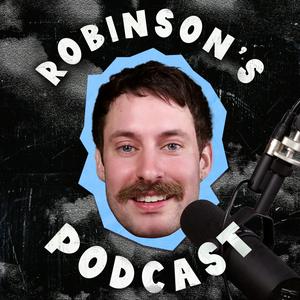
Robinson Erhardt researches symbolic logic and the foundations of mathematics at Stanford University. Join him in conversations with philosophers, scientists, weightlifters, artists, and everyone in-between.
https://linktr.ee/robinsonerhardt
Site de podcastOuça Robinson's Podcast, Horizonte de Eventos e muitos outros podcasts de todo o mundo com o aplicativo o radio.net
Obtenha o aplicativo gratuito radio.net
- Guardar rádios e podcasts favoritos
- Transmissão via Wi-Fi ou Bluetooth
- Carplay & Android Audo compatìvel
- E ainda mais funções
Obtenha o aplicativo gratuito radio.net
- Guardar rádios e podcasts favoritos
- Transmissão via Wi-Fi ou Bluetooth
- Carplay & Android Audo compatìvel
- E ainda mais funções

Robinson's Podcast
Leia o código,
baixe o aplicativo,
ouça.
baixe o aplicativo,
ouça.
 Brasil