

Ouça este podcast gratuitamente no aplicativo: Baixe gratuitamente na App Store
radio.net
Sleeptimer
Guardar rádio
928 episódios
EP 016: Startup of the Week: FlockScore W/ Matthew Spencer
09/09/2026 | 26min"The earlier you can catch risk, the cheaper it is to solve." - Matthew Spencer, Founder of FlockScore
Procurement teams have access to plenty of information when evaluating a new supplier, from certifications and financials to technical capabilities. What they often lack is visibility into a more practical question: How does this supplier actually perform?
In this episode of Art of Procurement's Startup of the Week, we talk with Matthew Spencer, Co-Founder and CEO of FlockScore, a platform building a collective intelligence layer for supplier decisions by bringing together anonymized, real-world supplier performance data.
Matthew shares the experience that led him to start FlockScore, why he believes external supplier performance data can help procurement make faster and more confident decisions, and how the platform is designed to complement the supplier data companies already have.
Listen to this episode to hear:
-Why internal supplier scorecards only provide part of the performance picture
-How peer performance data can help procurement evaluate new and alternative suppliers
-Why supply chain volatility is increasing the need for faster supplier qualification
-How FlockScore combines anonymized peer data with AI-generated supplier signals
-How earlier visibility into issues such as supplier capacity can help teams respond before disruption reaches their own operations
Links:
Matthew Spencer on LinkedIn: https://www.linkedin.com/in/matthewjspencer1?originalSubdomain=be
Visit FlockScore's Profile in the AOP Provider Directory: https://artofprocurement.com/provider-directory/flockscore
Subscribe to the AOP Newsletter: https://resources.artofprocurement.com/art-of-procurement-podcast-subscribe
Subscribe to Art of Procurement on YouTube: https://www.youtube.com/@ArtofProcurement882: Reengineering Procurement for Greater Impact W/ Polly DeSouza
07/09/2026 | 35min"If you want a seat at the table, you've got to pull up the chair." - Polly DeSouza, APAC Transformation Leader
Procurement teams have spent years talking about the need to move away from tactical and transactional work and create more time for strategic priorities. As AI begins to take on more of that work, the opportunity to finally make the shift is growing. The question is whether procurement teams are ready to take advantage of it.
In this episode, Philip Ideson is joined by Polly DeSouza, an APAC transformation leader whose career spans finance, procurement, consulting, and operational transformation. Polly shares lessons from working across more than 20 transformation projects and explains why successful transformation requires procurement to think beyond processes and technology.
They discuss what procurement can learn from finance, why teams need to understand the language of the business, and how strong stakeholder relationships can help procurement earn earlier involvement in business decisions. Polly also explains why she sees procurement as a "guardian of resilience," responsible for creating supplier ecosystems capable of supporting the business through continued uncertainty.
In this episode, Polly discusses how to:
-Connect procurement priorities more directly to financial and business value
-Earn earlier involvement by becoming a trusted partner to stakeholders
-Strengthen procurement's role in organizational resilience
-Use AI-created capacity to tackle higher-value priorities
-Help teams move beyond familiar ways of working
-Build transformation around clear business problems and desired outcomes
-Develop the skills and mindset needed for procurement's next chapter
Links:
Polly Desouza on LinkedIn: https://www.linkedin.com/in/pollyana-desouza-52304a85/
Subscribe to the AOP Newsletter: https://resources.artofprocurement.com/art-of-procurement-podcast-subscribe
Subscribe to Art of Procurement on YouTube: https://www.youtube.com/@ArtofProcurementEP 015: Provider of the Week: Tradeverifyd
02/09/2026 | 30min"It's more the translation of visibility. It's not so much visibility. Visibility is there, but it's what do you do with that?" - Mike Prorock, CEO, Tradeverifyd
Supply chain risk has become both more complex and harder to anticipate. Geopolitical shifts, regulatory changes, multi-tier supplier dependencies, and an overwhelming volume of data are forcing procurement teams to look further into their supply chains and make decisions faster when something changes.
In this episode of the ProcureTech Insider, Jim Cahalan speaks with Mike Prorock, CEO of Tradeverifyd, for a Provider of the Week discussion about turning supply chain visibility into timely, actionable decisions.
Drawing on Tradeverifyd's roots in machine learning, global risk intelligence, and cross-border trade data, Mike explains why simply seeing risk isn't enough. Procurement teams need to understand what a disruption actually means to their business, determine what requires action, and focus their attention on the handful of decisions that matter most.
In this episode, Mike also covers how to:
-Look deeper into multi-tier supply chains to uncover hidden dependencies and potential bottlenecks
-Combine external intelligence, internal business data, and emerging signals while protecting sensitive company information
-Translate supply chain visibility into prioritized actions rather than overwhelming teams with alerts
-Use AI agents to analyze changing conditions, explore potential responses, and reduce the manual work required to chase down data
Links:
Mike Prorock on LinkedIn: https://www.linkedin.com/in/mprorock/
Visit the Tradeverifyd profile in the AOP Provider Directory: https://artofprocurement.com/provider-directory/tradeverifyd
Subscribe to the AOP Newsletter: https://resources.artofprocurement.com/art-of-procurement-podcast-subscribe
Subscribe to Art of Procurement on YouTube: https://www.youtube.com/@ArtofProcurement881: Owning Transformation: How to Successfully Lead Procurement Through Change W/ Gretchen Vance
31/08/2026 | 35min"Don't ask AI to do something that you don't know how to do yourself." - Gretchen Vance, Vice President Procurement at Forest Lawn Parks and Mortuaries
Procurement transformation often comes down to a leader's willingness to push for change, even when the path forward requires taking a risk. For Gretchen Vance, Vice President of Procurement at Forest Lawn Parks and Mortuaries, that once meant putting two pieces of paper on her CFO's desk: a proposal for an e-procurement system and her resignation.
In this episode, Philip Ideson speaks with Gretchen about the transformation she has led during her 18 years at Forest Lawn, from digitizing a previously paper-based purchasing function to taking responsibility for the full procure-to-pay process. She shares how procurement supports Forest Lawn's deeply service-oriented mission and why that same commitment to service shapes the suppliers her team chooses to work with.
Gretchen also offers a practical perspective on AI. Her team is already using it to analyze data, support RFQs, and streamline contract reviews, but she is clear that procurement professionals still need the knowledge and judgment to recognize when an AI-generated answer is wrong. She discusses why digitization and good data matter, how bringing procurement and AP together can strengthen supplier relationships, and what it takes to lead people through continued change.
In this episode, Gretchen also explains how to:
-Build supplier relationships around shared culture and purpose
-Position procurement as a problem-solving partner to the business
-Use AI to save time without sacrificing human expertise and judgment
-Create a strong data foundation for digitization and AI
-Connect procurement and AP to improve the end-to-end supplier experience
-Take calculated risks when meaningful transformation requires leadership commitment
-Embrace continuous learning and change as a procurement leader
Links:
Gretchen Vance on LinkedIn: https://www.linkedin.com/in/gretchen-vance-cpsm-6869794a/
Subscribe to the AOP Newsletter: https://resources.artofprocurement.com/art-of-procurement-podcast-subscribe
Subscribe to Art of Procurement on YouTube: https://www.youtube.com/@ArtofProcurementEP 014: Provider of the Week: Sievo W/ Sammeli Sammalkorpi
26/08/2026 | 24min"The expectation level of procurement is rising. Today's stuff that was not possible a year ago, that felt like science fiction three years ago, is something that we can create for our customers today." - Sammeli Sammalkorpi, Co-founder & CEO, Sievo
For CPOs and their teams, procurement data has never been more abundant… or more challenging to harness. Demands go far beyond savings: teams are being asked to link procurement value to broader business goals, manage complexity, and adapt to the rapid rise of AI.
In this episode of the ProcureTech Insider we speak with Sammeli Sammalkorpi, Sievo's co-founder and CEO, for a candid "Provider of the Week" discussion about what it takes to turn chaotic data into actionable business value.
With Sievo handling data equivalent to more than two percent of global GDP, Sammeli shares why long-term data investment, proprietary benchmarks, and hands-on integration are making the biggest difference for large enterprises.
In this episode, Sammeli also covers how to:
-Build an enterprise-wide data foundation ready for AI and rapid business change
-Turn procurement analytics into prioritized, actionable insights
-Benchmark your spend and risk using truly global, anonymized industry data
-Translate procurement results into the language of margin, revenue, and business value
Links:
Sammeli Sammalkorpi on LinkedIn: https://www.linkedin.com/in/sammeli-sammalkorpi/
Visit the Sievo profile in the AOP Provider Directory: https://artofprocurement.com/provider-directory/sievo
Subscribe to the AOP Newsletter: https://resources.artofprocurement.com/art-of-procurement-podcast-subscribe
Subscribe to Art of Procurement on YouTube: https://www.youtube.com/@ArtofProcurement
Mais podcasts de Carreiras
 De Carona na CarreiraCarreiras, Negócios
 Estratégia TechCarreiras, Negócios
 Virando a Chave - O podcast que impulsiona a comunidade de corretoresCarreiras, Negócios
 ROI Hunters | Marketing Digital & GrowthCarreiras, Enriquecimento individual, Ensino, Negócios
 A Bit of OptimismCarreiras, Enriquecimento individual, Ensino, Negócios
 Think Fast Talk Smart: Communication TechniquesAprendizagem de idiomas, Carreiras, Comédia, Ensino, Improvisação, Negócios
 Leaders with Francine LacquaCarreiras, Negócios
 Líder HD - Liderança em Alta DefiniçãoCarreiras, Negócios
 Direito de RespostaCarreiras, Negócios
Podcasts em tendência em Carreiras
 Maria vai com as outrasCarreiras, Negócios, Sociedade e cultura
 30 Minutes to President's Club | No-Nonsense SalesCarreiras, Negócios
 Direito 4.0Carreiras, Negócios
 Casa Trabalho CasaCarreiras, Empreendedorismo, Gestão, Negócios
 Aprova OAB!Carreiras, Negócios
 LDB: princípios e fins da educaçãoCarreiras, Negócios
 Data Career Podcast: Helping You Land a Data Analyst Job FASTCarreiras, Cursos, Ensino, Negócios, Tecnologia
- Virando a Chave - O podcast que impulsiona a comunidade de corretoresCarreiras, Negócios
- Estratégia TechCarreiras, Negócios
- ROI Hunters | Marketing Digital & GrowthCarreiras, Enriquecimento individual, Ensino, Negócios
- Líder HD - Liderança em Alta DefiniçãoCarreiras, Negócios
- Think Fast Talk Smart: Communication TechniquesAprendizagem de idiomas, Carreiras, Comédia, Ensino, Improvisação, Negócios
Sobre Art of Procurement
Learn from procurement experts. Host Philip Ideson talks with thought leaders who share the trends, strategies and tactics that you can lever to elevate the role of procurement - and your career.
Site de podcastOuça Art of Procurement, De Carona na Carreira e muitos outros podcasts de todo o mundo com o aplicativo o radio.net
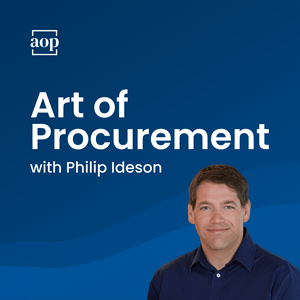
Obtenha o aplicativo gratuito radio.net
- Guardar rádios e podcasts favoritos
- Transmissão via Wi-Fi ou Bluetooth
- Carplay & Android Audo compatìvel
- E ainda mais funções
Obtenha o aplicativo gratuito radio.net
- Guardar rádios e podcasts favoritos
- Transmissão via Wi-Fi ou Bluetooth
- Carplay & Android Audo compatìvel
- E ainda mais funções

Art of Procurement
Leia o código,
baixe o aplicativo,
ouça.
baixe o aplicativo,
ouça.
 Brasil