PodcastsCiênciaThe Complete History of Science

The Complete History of Science

Gethin Richards
The Complete History of Science
Último episódio

47 episódios

  • The Complete History of Science

    Special: The History of Reproductive Science with Prof. Michael Carroll

    22/03/2026 | 1h 12min
    Michael, an Associate Professor in Reproductive Science, joins us for a wide-ranging dive into the history of reproductive science.  From ancient Galenic theories and Leonardo da Vinci's anatomical drawings, through the gradual unravelling of how sperm and eggs work, to the breakthroughs that ultimately made IVF possible.
    We trace the key milestones: sperm capacitation, early animal studies, and the pioneering work of Edwards, Steptoe, and Purdy that led to the birth of Louise Brown in 1978, and the 12 million IVF babies who have followed since.
    Support the show
    Support the show: buymeacoffee.com/completehistoryofscience
    Contact: [email protected]
    BlueSky: https://bsky.app/profile/gethinrichards.bsky.social
    Music Credit: Folk Round Kevin MacLeod (incompetech.com) Licensed under Creative Commons: By Attribution 3.0 License
  • The Complete History of Science

    The Harmony of Johannes Kepler [Johannes Kepler Part 4]

    25/01/2026 | 43min
    In 1610 reports reached Prague that Galileo had discovered new planets, and Kepler felt compelled to find out for himself what had actually been seen. Reading Starry Messenger and later observing through a borrowed telescope, he became one of Galileo’s earliest and most important defenders. Kepler not only confirmed the existence of Jupiter’s moons but also argued publicly for the reliability of telescopic observations, and went further by explaining, for the first time, how the telescope worked in theory through his optical treatise Dioptrice.
    Alongside this defence of new instruments, the episode follows Kepler’s search for harmony in the structure of the cosmos, culminating in the discovery of his third law of planetary motion. It then traces his long and difficult effort to complete the Rudolphine Tables, based on Tycho Brahe’s observations. Published in 1627, the tables proved vastly more accurate than anything before them and made possible the successful prediction of planetary transits. Though Kepler did not live to see their full impact, the tables ensured that his astronomy could no longer be ignored.
    Support the show
    Support the show: buymeacoffee.com/completehistoryofscience
    Contact: [email protected]
    BlueSky: https://bsky.app/profile/gethinrichards.bsky.social
    Music Credit: Folk Round Kevin MacLeod (incompetech.com) Licensed under Creative Commons: By Attribution 3.0 License
  • The Complete History of Science

    Christmas Special 2025 - Q and A

    24/12/2025 | 28min
    Merry Christmas! 
    Answering listener questions as well as some long standing FAQs.  Enjoy!
    Support the show
    Support the show: buymeacoffee.com/completehistoryofscience
    Contact: [email protected]
    BlueSky: https://bsky.app/profile/gethinrichards.bsky.social
    Music Credit: Folk Round Kevin MacLeod (incompetech.com) Licensed under Creative Commons: By Attribution 3.0 License
  • The Complete History of Science

    Q and A Requests

    03/12/2025 | 1min
    Planning on doing a Q and A about the show as an Xmas special. If you have any questions about the show or the history of science in general send them to the below address.  
    [email protected]
    This episode will self destruct in two weeks time.
    Support the show
    Support the show: buymeacoffee.com/completehistoryofscience
    Contact: [email protected]
    BlueSky: https://bsky.app/profile/gethinrichards.bsky.social
    Music Credit: Folk Round Kevin MacLeod (incompetech.com) Licensed under Creative Commons: By Attribution 3.0 License
  • The Complete History of Science

    The New Astronomy [Johannes Kepler Part 3]

    14/11/2025 | 39min
    After years of struggle, Johannes Kepler finally had the tools and data to wage what he called his “War with Mars.” Rejecting ancient assumptions he used Tycho Brahe’s observations to discover his first two laws of planetary motion. His New Astronomy not only redefined celestial mechanics but transformed astronomy from a geometric art into a true physical science. 
    Support the show
    Support the show: buymeacoffee.com/completehistoryofscience
    Contact: [email protected]
    BlueSky: https://bsky.app/profile/gethinrichards.bsky.social
    Music Credit: Folk Round Kevin MacLeod (incompetech.com) Licensed under Creative Commons: By Attribution 3.0 License

Mais podcasts de Ciência

Sobre The Complete History of Science

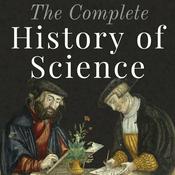
A podcast exploring the history of science from the beginning. We will cover all of the most important scientific discoveries from Archimedes to Newton to Einstein. The aim is to give a complete overview of how science evolved and how it shaped the modern world.Support the show and keep it going: https://buymeacoffee.com/completehistoryofscienceWebsite:https://thecompletehistoryofscience.com/Follow me on BlueSky for updates: https://bsky.app/profile/gethinrichards.bsky.socialYouTube:https://youtube.com/@thecompletehistoryofscienceMusic credit:Folk Round Kevin MacLeod (incompetech.com)Licensed under Creative Commons: By Attribution 3.0http://creativecommons.org/licenses/by/3.0/Photo credit: "L0015096EB" by Wellcome Library, London is licensed under CC BY 4.0. Image has been cropped.
Site de podcast

Ouça The Complete History of Science, StarTalk Radio e muitos outros podcasts de todo o mundo com o aplicativo o radio.net

Obtenha o aplicativo gratuito radio.net

  • Guardar rádios e podcasts favoritos
  • Transmissão via Wi-Fi ou Bluetooth
  • Carplay & Android Audo compatìvel
  • E ainda mais funções
Informação legal
Aplicações
Social
v8.8.6| © 2007-2026 radio.de GmbH
Generated: 4/11/2026 - 10:47:34 AM