Ouça este podcast gratuitamente no aplicativo: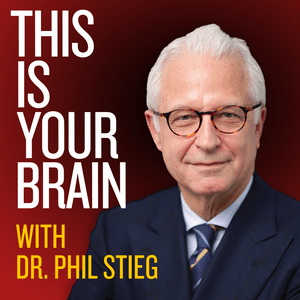 Baixe gratuitamente na App Store
radio.net
Sleeptimer
Guardar rádio
This Is Your Brain With Dr. Phil Stieg
Weill Cornell Medicine Neurological Surgery
Último episódio
Episódios Disponíveis
5 de 190
- The Power Of TouchTouch is the first sense we develop, and one of the most powerful tools we have for connection, healing, and communication. In this episode, social neuroscientist Dr. Michael Banissy explains how everyday gestures like hugs, handshakes, and high-fives influence our health and emotional well-being. From the biological complexity of our touch receptors to surprising studies on immune response, stress, and sleep, Dr. Banissy reveals why touch matters more than we think, and what happens when we don't get enough of it. Plus - the dangers of a pain-free life. For more information, transcripts, and all episodes, please visit https://thisisyourbrain.com For more about Weill Cornell Medicine Neurological Surgery, please visit https://neurosurgery.weillcornell.org--------29:08
- Coming Next Friday: "The Power of Touch""Reach out and touch someone" isn't just a slogan from a long distance phone ad. It's also a powerful statement about human connection. Dr. Michael Banissy, a professor of social neuroscience at the University of Bristol, explores how we understand and respond to others through touch, empathy, and emotional communication. He explains how hugs can actually support our emotional and physical health. For more information, transcripts, and all episodes, please visit https://thisisyourbrain.com For more about Weill Cornell Medicine Neurological Surgery, please visit https://neurosurgery.weillcornell.org--------1:19
- Can Big Tech Read My Mind?Whether it's our shopping habits, Google searches, or Facebook friends, we are all aware that our personal information is being collected and often sold online. But what about our thoughts, what's going on in our minds? With all the advances in consumer Neurotechnology and AI, stealing data from our brains is no longer science fiction and at least for now, it can collected and used without our consent. Can anything be done to stop this intrusion into our most personal information? Dr. Sean Pauzauski, Medical Director at the Neurorights Foundation, discusses how companies collect our brain data, and whether or not your mind has any right to privacy. Plus - The art of "Mentalists" who make you believe they can read your mind! For more information, transcripts, and all episodes, please visit https://thisisyourbrain.com For more about Weill Cornell Medicine Neurological Surgery, please visit https://neurosurgery.weillcornell.org--------21:46
- Coming Next Friday: "Can Big Tech Read My Mind?"Our personal data is online and it's for sale. But what about the information from our brains, in our thoughts? With the exponential increase in neurotechnology devices for use by the general public, the private data in our minds is also being collected -- and might be used without our permission! Dr. Sean Pausowski, the Medical Director at the Neurorights Foundation, is working to protect our brains' rights to privacy, finding ways to safeguard our thoughts, emotions, even our subconscious before it's too late. For more information, transcripts, and all episodes, please visit https://thisisyourbrain.com For more about Weill Cornell Medicine Neurological Surgery, please visit https://neurosurgery.weillcornell.org--------1:26
- The Neuroscience of Your WorkoutWhy do you exercise? It might be to lose weight, maintain or improve your health, reduce stress, or perhaps a combination of all of these. But what is actually motivating you is simpler than that. As Dr. Gary Wenk reveals in his book "Your Brian on Exercise", you exercise because your brain needs you to move, and it will do everything it can to motivate you to do it. He provides fascinating insights into exactly what is happening to our brains when we go jogging, lift weights, swim laps, or take a walk, as well as what happens when we don't. He'll also answer questions we all have about exercise vs diet to lose weight and perhaps, most importantly, how much exercise is enough. For more information, transcripts, and all episodes, please visit https://thisisyourbrain.com For more about Weill Cornell Medicine Neurological Surgery, please visit https://neurosurgery.weillcornell.org--------27:46
Mais podcasts de Saúde e fitness
 Huberman LabSaúde e fitness, Ciência, Ciências da Vida
 Cartas de um TerapeutaSaúde e fitness, Saúde mental
 Parece TerapiaSaúde e fitness, Saúde mental
 Autoconsciente Podcast | Vida interiorSaúde e fitness, Religião e espiritualidades, Sociedade e cultura, Saúde mental, Filosofia, Espiritualidades
 Isso não é uma sessão de análise, com Vera IaconelliSaúde e fitness, Sociedade e cultura, Saúde mental, Relacionamentos
 Psicologia na PráticaEnsino, Saúde e fitness, Saúde mental, Enriquecimento individual
 Despertar ZenSaúde e fitness, Religião e espiritualidades, Sociedade e cultura, Budismo, Saúde mental, Filosofia
 Comida sem FiltroSaúde e fitness
 On Purpose with Jay ShettyNegócios, Saúde e fitness, Saúde mental
 The Mindset MentorNegócios, Ensino, Saúde e fitness
Podcasts em tendência em Saúde e fitness
 Psicologia e Saúde Mental por @psicollogaSaúde e fitness, Saúde mental
 Psicanálise em voz alta - leituras de Lacan, Freud e afinsSaúde e fitness, Saúde mental
 Bem EstarSaúde e fitness
 Nothing much happens: bedtime stories to help you sleepFicção, Saúde e fitness
 Equilíbrio & Caos com Pri LeiteSaúde e fitness
 ADHD Experts PodcastSaúde e fitness, Saúde mental
 Office Hours with Arthur BrooksSaúde e fitness, Saúde mental
 Medicina Resumida - Depois do Plantão e MinicastsEnsino, Saúde e fitness, Medicina
 SEXLOGSaúde e fitness, Sexualidade
 COFCAST - RESIDÊNCIA MÉDICASaúde e fitness, Medicina
 Pílulas de PsicologiaSaúde e fitness, Saúde mental
 Tribo Forte Podcast: Saúde. Boa Forma. Estilo De Vida!Ensino, Saúde e fitness, Nutrição, Enriquecimento individual
 Thais GalassiSaúde e fitness, Saúde mental
 Psicologia SinceraSaúde e fitness, Saúde mental
 Musicas para RelaxarSaúde e fitness, Saúde mental
 MuzyCASTSaúde e fitness
 Neurology® PodcastEnsino, Saúde e fitness, Ciência, Medicina
 ZOE Science & NutritionEnsino, Saúde e fitness, Ciência, Nutrição
 João Pestana : o melhor podcast para dormirSaúde e fitness, Saúde mental
 Som De Chuva Com TrovõesSaúde e fitness, Saúde mental
 Relaxing White NoiseSaúde e fitness
- The Mindset MentorNegócios, Ensino, Saúde e fitness
 Nutrição, Exercício e SaúdeSaúde e fitness, Fitness
 Meditação GuiadaSaúde e fitness, Saúde alternativa
- Despertar ZenSaúde e fitness, Religião e espiritualidades, Sociedade e cultura, Budismo, Saúde mental, Filosofia
 Crônicas de um CuidadoSaúde e fitness, Sociedade e cultura, Saúde mental
- Comida sem FiltroSaúde e fitness
 Contos Eróticos Sexo Livre - Erotismo em SérieSaúde e fitness, Sexualidade
Sobre This Is Your Brain With Dr. Phil Stieg
This Is Your Brain With Dr. Phil Stieg provides a fascinating look into the human brain, with each episode asking new questions — and finding new answers — about our most mysterious organ. Together with his expert guests, Dr. Stieg takes us on a journey that reveals unexpected secrets at every turn, and redefines what we know about ourselves and our place in the world.
The podcast explores the many fascinating aspects of neuroscience, ranging from how the brain is wired for both sudden bursts of violence and the pervasive inner calm of meditation. Where does confidence come from? How do we remember traumatic events – or do we? How do other animals experience consciousness? Does storytelling change our brains?
Take the journey with us as we explore the very foundation of what makes us human.
Site de podcastOuça This Is Your Brain With Dr. Phil Stieg, Huberman Lab e muitos outros podcasts de todo o mundo com o aplicativo o radio.net
Obtenha o aplicativo gratuito radio.net
- Guardar rádios e podcasts favoritos
- Transmissão via Wi-Fi ou Bluetooth
- Carplay & Android Audo compatìvel
- E ainda mais funções
Obtenha o aplicativo gratuito radio.net
- Guardar rádios e podcasts favoritos
- Transmissão via Wi-Fi ou Bluetooth
- Carplay & Android Audo compatìvel
- E ainda mais funções

This Is Your Brain With Dr. Phil Stieg
Leia o código,
baixe o aplicativo,
ouça.
baixe o aplicativo,
ouça.
 Brasil