PodcastsCiênciaStars, Cells, and God

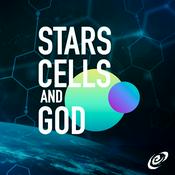
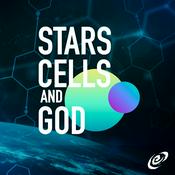
Stars, Cells, and God

Reasons to Believe
Stars, Cells, and God
Último episódio

134 episódios

  • Stars, Cells, and God

    Evolution by Design | Sun’s Fine-Tuned Migration

    08/04/2026 | 48min
    Join biochemist Fazale “Fuz” Rana and astrophysicist Hugh Ross as they discuss discoveries with theological and philosophical implications that point to the reality of God’s existence.

    Evolution is predicated on a sequence of chance events, with each outcome being largely random, yielding flawed, imperfect designs. This process is hardly one that a Creator would use to intentionally create and orchestrate life’s history. But advances in evolutionary biology suggest that life scientists have been wrong about the nature of the evolutionary process. Instead of being antiteleological at its core, biological evolution appears to be replete with purpose and intent. In this episode, biochemist Fuz Rana describes a recent study that illustrates the teleological nature of biological evolution and explores how creationists could co-opt this idea.

    Using the latest data from the Gaia survey, astronomers compiled a list of 6,594 stars very similar to our Sun. They found two distinct groups: younger stars with fewer heavy elements and older stars with more. This discovery affirms the theory that the Sun formed in the most metal-rich part of our galaxy, 10,000 light-years closer to the galactic center, and was later ejected into the part of our galaxy safest for the survival of advanced life. Hugh Ross explains how this formation and ejection must be exquisitely fine-tuned for advanced life to be possi

    LINKS & RESOURCES:

    Mapping Life’s Disparity and Evolutionary Constraints in a Geometric Complexity Space


    Solar Twins in Gaia DR3 GSP-Spec II. Age Distribution and Its Implications for the Sun’s Migration


    Designed to the Core
  • Stars, Cells, and God

    Cave Art and God’s Image

    01/04/2026 | 1h
    Join biochemist Fazale “Fuz” Rana and astronomer David Block as they discuss discoveries with theological and philosophical implications that point to the reality of God’s existence.


    What are Christians to make of cave art? Why did early humans create it, and what did it mean to them? What does this artistic expression reveal about who we are and our place in the cosmos?

     

    Astronomer David Block and biochemist Fuz Rana discuss these questions and more.
  • Stars, Cells, and God

    Increased Wildfire Risk | Wonders of Planet Formation

    25/03/2026 | 45min
    Join astrophysicists Hugh Ross and Jeff Zweerink as they discuss discoveries with theological and philosophical implications that point to the reality of God’s existence.

    Global warming over the past four decades has produced more than a twofold increase in synchronous fire weather (SFW)—both within and across regions—in northern temperate and boreal regions and in equatorial Asia during El Niño years. SFW is strongly correlated with higher levels of PM2.5—fine particulate air pollution. From 2006 to 2020, wildfire PM2.5was responsible for 24,100 deaths per year in the contiguous United States, with deaths from neurological diseases showing the greatest increase. For health reasons alone, Hugh Ross explains, climate change mitigation and wildfire suppression must become an urgent priority.

    During the last 30 years, astronomers have discovered thousands of planetary systems around other stars. The more they learn about those planets, the more our solar system looks rare. Jeff Zweerink explains how the recent detection of a planet floating freely in space provides even more evidence for the unique design of our solar system. 

    LINKS & RESOURCES:

    Increasing Synchronicity of Global Extreme Fire Weather

    Wildfire Smoke PM2.5 and Mortality Rate in the Contiguous United States: A Causal Modeling Study

    Weathering Climate Change

    Exoplanet Observations Sharpen Picture of Planetary Formation

    Two Views of a Rogue Planet
  • Stars, Cells, and God

    Distant Galaxy and Creation | AI Coding Widens the Divide

    18/03/2026 | 36min
    Join astrophysicists Hugh Ross and Jeff Zweerink as they discuss discoveries with theological and philosophical implications that point to the reality of God’s existence.

    James Webb Space Telescope astronomers have discovered a galaxy, MoMz-14, that’s 13.5 billion light-years away. This distance implies that astronomers are seeing the galaxy 288 million years after the cosmic creation event, which is extremely early in the universe’s history. Hugh Ross explains that this discovery is consistent with big bang creation models, which predict that many first-born stars exceeded 300 solar masses. These models also propose two types of early galaxies: some whose light came mainly from stars and others dominated by light from supermassive black holes.

    AI technology in the workplace has led to noticeable productivity gains. One recent study on computer programming estimates a yearly increase of ~$30 billion in economic value in the US solely from AI use in Python code (a widely used programming language). The same study also shows that AI use correlates with an increase in coding skills for senior-level developers. However, entry-level programmers who use AI show no corresponding increase in coding skill. This discovery echoes Proverbs 1:5, where Solomon teaches that wisdom means using tools not merely for “productivity” but for growth in understanding. 

    LINKS AND RESOURCES:

    A Cosmic Miracle: A Remarkably Luminous Galaxy at zspec = 14.44 Confirmed with JWST

    Is the Big Bang Theory in Trouble?

    Who Is Using AI to Code? Global Diffusion and Impact of Generative AI
  • Stars, Cells, and God

    DNA Expresses Design | Be Fruitful and Multiply

    11/03/2026 | 53min
    Join biochemist Fazale “Fuz” Rana and astrophysicist Jeff Zweerink as they discuss discoveries with theological and philosophical implications that point to the reality of God’s existence.

    DNA’s structure reveals remarkable features that point to a Creator’s role in life’s design. Likewise, the cellular machinery that accesses DNA’s stored information reflects intentional design. In this episode, biochemist Fuz Rana discusses the latest insights about enhancer control of gene expression and how these advances strengthen the case for a Creator.

    Although “mommy brain” (mental fog) seems like a common phenomenon during pregnancy and the months after, few scientific studies have investigated the long-term effects of pregnancy on mental health. Jeff Zweerink explains a recent large-scale study showing that pregnancy and breastfeeding are associated with better postmenopausal cognitive health, including lower rates of dementia and Alzheimer’s disease. For Christians, results like these echo the wisdom of the biblical vision of fruitfulness, reflected in God’s command to “be fruitful and multiply.”

    LINKS AND RESOURCES: 

    Genetic Factors Mediating Long-Range Enhancer-Promoter Communication in Mammalian Development

    Pregnancy and Breastfeeding Are Associated With Less Later-Life Cognitive Decline in a Longitudinal, Prospective Cohort

Mais podcasts de Ciência

Sobre Stars, Cells, and God

Discussions of new discoveries taking place at the frontiers of science that have theological and philosophical implications, as well as new discoveries that point to the reality of God’s existence.
Site de podcast

Ouça Stars, Cells, and God, Ciência Suja e muitos outros podcasts de todo o mundo com o aplicativo o radio.net

Obtenha o aplicativo gratuito radio.net

  • Guardar rádios e podcasts favoritos
  • Transmissão via Wi-Fi ou Bluetooth
  • Carplay & Android Audo compatìvel
  • E ainda mais funções

Stars, Cells, and God: Podcast do grupo

Informação legal
Aplicações
Social
v8.8.6| © 2007-2026 radio.de GmbH
Generated: 4/12/2026 - 6:59:52 PM