Ouça este podcast gratuitamente no aplicativo: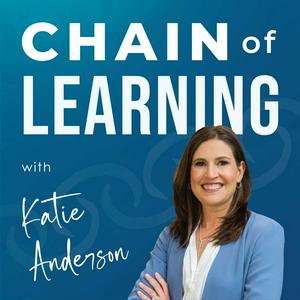 Baixe gratuitamente na App Store
radio.net
Sleeptimer
Guardar rádio
65 episódios
64| Stop Doing Transformation—and Start Enabling It: Redefine Your Role as a Change Leader [with Jill Forrester]
21/1/2026 | 46minApply for the Japan Leadership Experience here:
https://kbjanderson.com/japantrip/
What if the reason leading your organization’s transformation feels heavy isn’t the work itself—but the role you’ve been playing as a change leader?
If you’re a change leader, continuous improvement professional, or internal consultant, this tension may feel familiar. You’re helping. You’re busy. You’re delivering results. And before you realize it, you’re wearing every hat—facilitator, teacher, problem-solver, checker—all at once.
That was my experience too as an internal change leader. And it’s a pattern I see again and again in my work with internal change leaders and continuous improvement practitioners: when we’re not clear on our role, we become the doers of transformation—when our real work is to enable others to lead it.
In this episode of Chain of Learning, I’m joined by Jill Forrester, Director of Continuous Improvement at 3sHealth, to explore the leadership shift that changed how she and her team show up—and the impact they’re having—by moving from helping to intentionally creating the conditions for learning and ownership.
If you’ve ever felt the weight of carrying organizational transformation on your shoulders, this conversation will help you see why—and how redefining your role and how you help can change everything.
You’ll Learn
Why internal change leaders often become the default doers—and why that role isn’t sustainable
How lack of role clarity creates confusion, overburden, and dependency for leaders and their internal clients
What it really means to create the experience for learning, not just drive improvement outcomes
Why clarifying and labeling your role and intention changes how others engage
How shifting from doing to enabling builds capability, ownership, and sustainable transformation
ABOUT MY GUEST:
Jill Forrester has been a leader in health system transformation since 2012. She has collaboratively guided the development of a comprehensive management system at 3sHealth, encompassing patient and customer engagement, problem-solving and process redesign, strategic visioning and deployment, performance measurement, leadership coaching and development, and employee engagement. Jill is an active member of a strong provincial network of continuous quality improvement leaders dedicated to strengthening Saskatchewan’s health system through learning-centered, people-focused practices.
IMPORTANT LINKS:
Full episode show notes with links to other podcast episodes and resources: ChainOfLearning.com/64
Check out my website for resources and ways to work with me KBJAnderson.com
Connect with Jill Forrester: linkedin.com/in/jill-forrester
Follow me on LinkedIn: linkedin.com/in/kbjanderson
Download my free KATALYST™ Change Leader Self-Assessment: KBJAnderson.com/katalyst
Learn more about my Japan Leadership Experience: kbjanderson.com/japantrip
Discover how to get out of the Doer Trap: kbjanderson.com/doertrap
TIMESTAMPS FOR THIS EPISODE:
03:27 Jill’s new role director of continuous improvement and when she realized she needed to make a shift
05:00 The question, “Are we actually helping”? that changed how Jill viewed her role
07:01 Why starting a training with questions makes a bigger impact
10:12 Why opening up space for others to learn and contribute can improve engagement
13:56 Two shifts Jill and her team made to clarify their roles for better continuous improvement outcomes and build confidence
16:07 Labeling your role (even when it feels awkward) to better guide others to transformation
22:47 What lead Jill to invest in the Japan Leadership Experience to take her leadership to the next level
25:14 Seeing quality as trust and quality as love to reshape how you think about improvement
25:44 What good 5S is as something you feel instead of a checklist
27:16 An example of 5S in the Japanese culture
29:20 The importance of long term thinking to sustain your company for decades
30:42 How giving with two hands can be applied to your organization to show respect and support others
33:08 The impact of creating space for others to ask questions and learn more quickly
35:05 Doing less doing and creating the conditions to increase results and coach more effectively
37:15 Reflections to shift from doers to catalysts of change
38:29 Top recommendation for change leaders and continuous improvement practitioners who want to show up in that different space from doing to enabling
40:35 Your role as a change leader and creating an experience for others to learn and to lead change themselves
42:38 The impact of an intention pause before your next meeting or discussion to help you shift from doing to enabling
Apply for the Japan Leadership Experience here:
https://kbjanderson.com/japantrip/63| Close the Sustainability Execution Gap: How Leaders Turn Intent into Action [with Rose Heathcote]
07/1/2026 | 41minWhen you hear the word sustainability, what comes to mind first?
If it’s recycling, you’re not alone. But sustainability is far bigger—and more complex—than end-point solutions that address the symptoms of deeper problems. As this episode reveals, sustainability efforts—like many major transformations, including lean—don’t stall because leaders don’t care. They stall because of an execution gap: the gap between what organizations say matters and what actually shows up in daily work, decisions, and priorities.
In this episode of Chain of Learning, I’m joined by Rose Heathcote, sustainability expert, lean adviser, and author, to explore sustainability as a leadership and transformation challenge, not just an environmental one.
Together, we discuss why sustainability often lives in strategy decks and slogans, but struggles to take root in everyday work, and how leaders can shift their focus upstream to close that gap: to how work is designed, how problems are framed, and how people learn to see new kinds of waste and impact.
This conversation goes beyond sustainability to address a pattern that shows up in any transformation—lean, AI-enabled change, or building a people-first learning organization.
If you’re working to close the gap between intention and execution, this episode offers perspective and practical starting points for leading meaningful change that lasts.
You’ll Learn:
What sustainability really means—and why it’s often treated as an aspiration instead of embedded in daily work
What the sustainability execution gap is, and why it mirrors lean and culture-change failures
Why shifting problem-solving upstream—from symptoms to root causes—is critical for creating lasting impact
How lean thinking and problem-solving skills enable sustainability and organizational transformation when paired with influence and change leadership skills
Why speaking the language of business matters for gaining leadership buy-in—and how AI can be used as a thinking partner to support systems thinking and better decisions
ABOUT MY GUEST:
Rose Heathcote is a speaker, adviser, and Chartered Environmentalist who works at the intersection of Lean thinking and sustainability. She is the founder of Thinking People and the author of "Green Is the New Gold." With decades of experience supporting organizations across industries and regions, Rose focuses on helping leaders move sustainability from aspiration to everyday practice through systems thinking, problem-solving, and people-centered change.
IMPORTANT LINKS:
Full episode show notes with links to other podcast episodes and resources: ChainOfLearning.com/63
Check out my website for resources and ways to work with me KBJAnderson.com
Connect with Rose Heathcote: linkedin.com/in/rose-heathcote
Follow me on LinkedIn: linkedin.com/in/kbjanderson
Download my free KATALYST™ Change Leader Self-Assessment: KBJAnderson.com/katalyst
Learn more about Rose’s book, “Green is the New Gold”: learn.thinking-people.co.uk/courses/green-is-the-new-gold
Learn more about my Japan Leadership Experience: kbjanderson.com/japantrip
TIMESTAMPS FOR THIS EPISODE:
01:04 Why the real challenge with sustainability starts with where the conversation begins
02:39 A broader definition of sustainability meeting the needs of people, planet, and future generations
04:16 Why people mistake sustainability for “recycling”
05:54 The execution gap lean leaders keep running into
07:43 A real-world example: when “people first” and sustainability don’t show up in the metrics
09:58 Important shifts leaders must make to close the execution gap
11:26 Seeing waste, energy loss, and impact through a green lens
14:06 Using AI as a thinking partner, not a replacement
15:16 The skills leaders must develop in an AI-driven world
16:41 How multidisciplinary thinking led to a smarter, more sustainable solution
19:19 Why sustainability requires systems thinking across the value chain
20:23 How to make progress towards big challenges
23:05 The meaning of the Japanese concept, “sanpo yori” and “yanpo yori” for goodness in four ways and happiness for the long term view
24:33 How the book “Green is the New Gold,” came to be
27:10 Three ways to build better products and be more efficient while reducing impacts on the planet
29:19 What we are doing well as a global community to make improvements towards sustainability
31:31 How to broaden your lens and use what you already know to do more good
32:35 Practical first steps lean leaders can take to apply a sustainability lens at work
34:29 Why productivity alone doesn’t reduce damage to the environment
36:45 A simple reflection on looking upstream to improve sustainability
Apply for the Japan Leadership Experience here:
https://kbjanderson.com/japantrip/62| Remove the Muda to Reveal the Buddha: Turning Life’s Weight from Waste Into Wisdom
23/12/2025 | 20minWhat if the very thing weighing on you right now is the key to your next level of growth?
Many of us carry more than we realize: unfinished goals, unmet expectations, family pressures, and the constant mental load of what still needs to be done.
In this episode of Chain of Learning, I share a grounding teaching from a Zen priest in Japan after a Zazen guided meditation session that has deeply resonated with me—and with leaders on my Japan Leadership Experience:
“Remove the muda to reveal the Buddha.”
In Japanese, muda means waste. And in Lean, muda refers to anything that doesn’t add value.
I’ve been reflecting on this phrase and its deeper meaning as I process my own life experiences, both personally and professionally.
This Zen teaching invites us to look inward: to notice what weighs us down, reflect on what it’s trying to teach us, and transform that weight into wisdom.
As you move forward—whether at the end of a year or in the middle of a busy work period—this episode offers an invitation to slow down, study your experiences, and release what no longer serves you, so that you can lead your life and work with greater intention, clarity, and a continuous learning mindset.
YOU’LL LEARN:
What Daruma dolls reveal about resilience, focus, and habits rooted in practice, not perfection
What “Remove the muda to reveal the Buddha” means beyond lean – and how reflection helps turn inner weight into wisdom
Four additional Zen teachings that apply to effective leadership, helping change leaders move beyond tools to presence, purpose, and a growth mindset
A simple reflection practice to reframe or release muda so it supports – not burdens – your growth
The distinction between goals and intentions, and why letting your being guide your doing leads to more meaningful progress
IMPORTANT LINKS:
Full episode show notes with links to other podcast episodes and resources: ChainOfLearning.com/62
Check out my website for resources and ways to work with me KBJAnderson.com
Follow me on LinkedIn: linkedin.com/in/kbjanderson
Learn more about my Japan Leadership Experience: KBJAnderson.com/japantrip
Get a copy of “Learning to Lead Leading to Learn”: KBJAnderson.com/learning-to-lead
Video clip of the daruma temple: Leadership Lessons from Japan’s Daruma Temple
TIMESTAMPS FOR THIS EPISODE:
01:55 Daruma dolls and what they represent
03:28 How Zazen meditation can bring you back to inner peace and inner being
04:26 What it means to “Remove the muda to reveal the Buddha”
06:43 The burden Isao Yoshino carried of what he considered was his big failure as a business leader and the shift in perspective to lift the burden, as highlighted in “Learning to Lead, Leading to Learn”
08:07 Four Zen teachings and how to apply them as a transformational change leader
12:00 How the burning of daruma dolls each year show reflection in practice
13:05 Your intentional practice to help you remove the muda
13:36 3 examples of how to use this reflection process to adjust or release so to turn waste into wisdom
13:49 Example 1: You’ve been stuck in constant doing
14:16 Example 2: Your plans didn’t unfold as expected
15:07 Example 3: A relationship has shifted
16:38 The distinction between goals vs intentions—being and doing
17:31 How to “Remove the muda to reveal the buddha” to release the weight you carry and move forward
Apply for the Japan Leadership Experience here:
https://kbjanderson.com/japantrip/61| Reflections from the Japan Leadership Experience: Live from Tokyo [with Nick Kemp] (BONUS)
17/12/2025 | 47minApply for my Japan Leadership Experience! The May 2026 cohort is officially SOLD OUT and I'm now accepting applications for the November 2026 cohort. Secure your spot now and take advantage of the early registration discount.
Have you ever stepped outside your routine and suddenly seen your work—or yourself—with fresh clarity?
Sometimes the most meaningful leadership breakthroughs happen when we pause and immerse ourselves in a space designed for reflection, curiosity, and connection.
In this bonus episode—recorded live in Tokyo the morning after Cohort 8 of my Japan Leadership Experience wrapped up—I’m joined by Ikigai expert and past Chain of Learning guest Nick Kemp, who spent the week with my Japan program cohort in November 2025 as both a participant and speaker. Still energized from the experience, we sat down to capture our reflections while they were still vivid.
You'll hear us revisit the moments that stood out, the leaders who inspired us, and the Japanese concepts that came alive throughout the week—ikigai, kaizen, ichigo ichie, omotenashi, sanpo yoshi, and more.
This unscripted conversation offers a glimpse into what my Japan Leadership Experience is all about: a week of learning, community, and connection that helps global executives, lean practitioners, and change leaders discover the essence of respect for people—and “hold precious what it means to be human”—and how to create a culture of excellence.
YOU’LL LEARN:
How the Japan Leadership Experience creates an ibasho—a place where you feel you truly belong—and why this is foundational for leadership
How Japanese companies view revitalization through kaizen as both a business strategy and a people-centered philosophy
What the debate over whether it’s “seven wastes vs. eight wastes” in lean and Toyota Production System reveals about how we teach, learn, and complicate continuous improvement
Why immersive learning matters—and how stepping away from your daily responsibilities helps you reconnect with purpose and see challenges through a new lens
Why long-term relationships and trust sit at the heart of meaningful learning and business success.
If there’s one thing to take away from this episode, it’s this:
Transformation happens when you step outside your routine and into intentional space for reflection, learning, and community.
ABOUT MY GUEST:
Nicholas Kemp, is the founder of Ikigai Tribe and is the author of IKIGAI-KAN: Feel a Life Worth Living and co-author with Professor Daiki Kato of Rolefulness:A Guide to Purposeful Living.
IMPORTANT LINKS:
Full episode show notes with links to other podcast episodes and resources: ChainOfLearning.com/61
Check out my website for resources and ways to work with me KBJAnderson.com
Connect with Nick Kemp: linkedin.com/in/nicholas-kemp
Follow me on LinkedIn: linkedin.com/in/kbjanderson
Check out Nick Kemp’’s website: ikigaitribe.com
Listen to Nick’s Ikigai Tribe podcast: ikigaitribe.com/podcasts
Download my free KATALYST™ Change Leader Self-Assessment: KBJAnderson.com/katalyst
Learn more about my Japan Leadership Experience: kbjanderson.com/japantrip
TIMESTAMPS FOR THIS EPISODE:
01:54 The story behind how Nick and Katie first met
03:55 Katie and Nick’s shared connection of living in Japan
04:45 What Katie loves about her special relationships with Japanese business leaders
06:23 What lead Katie to start the Japan Leadership Experience
09:47 How living in Japan and developing relationships with Japanese businesses and Toyota leaders led to Katie to write the book “Learning to Lead, Leading to Learn” and start the Japan Leadership Experience programs Japan Leadership Experience
11:33 The parallel process with writing the book and leading the first program
12:34 The definition of “ibasho” and how the Japan Leadership Experience is about being in a place where you can feel like yourself
15:03 How the word “revitalize” is used in Japan by leaders as the reason for kaizen
15:41 Katie’s favorite parts of leading her Japan Leadership Experience cohorts
17:41 The planning behind the scenes to make the experience a success
18:55 Katie’s connection to her role in bringing people together for learning and connection
21:08 Nick’s biggest takeaway during the week in Japan on the Japan Leadership Experience
23:56 How different cultures have a different sense of urgency and the difference between Japanese culture and Western culture in relationship to kaizen activities
25:25 Starting the day with a morning meeting, “chorei” connected to greater purpose and feeling inspired to do more
26:37 The key to being more roleful and the book “Rolefulness”
28:47 What “sanpo-yoshi” means – goodness in three ways – operating in three- way goodness for customer, company, and community
31:27 The importance of sustainability in Japanese culture
32:31 Clarity on the debate of seven waste or eight waste in lean from a Toyota leader
34:44 The essence of being over doing
36:01 An example of omotenashi in Japanese culture
37:43 Nick’s experience in taking time away to be go to Japan
39:42 The importance of putting aside your everyday role and experience a different way of leading
44:09 The transformation when you step outside routines and into intentional space for reflection and connection
44:53 Questions to reflect on as you listen to this episode
Apply for the Japan Leadership Experience here:
https://kbjanderson.com/japantrip/60| Bounce Back From a Faceplant: How to Flip the Script on Failure [with Melisa Buie and Keeley Hurley]
10/12/2025 | 42minWe all know that moment where something falls apart.
A project slips. A conversation goes sideways. The promotion doesn’t happen.
We call it “failure,” but it’s often not the mistake itself that stops us.
It’s the fear, the funk, and the uncertainty that follow. And those emotions can hold us back far more than the faceplant ever did.
In this episode, I’m joined by Dr. Melisa Buie and Keeley Hurley—seasoned leaders in engineering, quality, and continuous improvement and the co-authors of Faceplant: FREE Yourself from Failure’s Funk.
Together, we explore what really happens beneath the surface when we stumble—and what it takes to get back up with clarity, confidence, and intention.
Just like Daruma dolls represent the Japanese proverb “Fall down seven times, get up eight,” always righting themselves when knocked over, our path to success comes from acknowledging the stumbles, setbacks, and faceplants that are inherent along the way.
What matters is that we don’t get stuck—we get up and learn our way forward.
YOU’LL LEARN:
What’s at risk when leaders fear failure, and how organizations unintentionally teach people to avoid mistakes
The FREE model (Focus, Reflect, Explore, Engage) as a practical way to get back up, learn forward, and regain clarity after a setback
Emotional hijacks to watch for—including the four instinctive patterns in the Conspirator Matrix: machine, magician, statue, and satellite
Why embracing a growth mindset frees you to experiment, learn, and release perfection when things don’t go as planned
Continuous improvement practices like reflection (post-mortems) and anticipation (pre-mortems) that strengthen learning before and after challenges occur
If a setback has ever left you uncertain about your next step in building a people-centered culture, this conversation offers a compassionate, practical path to learn your way forward when you fall down.
ABOUT MY GUESTS:
Dr. Melisa Buie is a laser physicist–turned–problem solver with a PhD in Nuclear Engineering/Plasma Physics and decades of leadership in manufacturing at Coherent, Lam Research, Applied Materials, and Advanced Energy. She’s published 40+ papers, holds 6 patents, and is a Six Sigma Black Belt. Melisa is the co-author of Faceplant: FREE Yourself from Failure’s Funk, where she turns hard-won lessons into practical wisdom for navigating setbacks.
Keeley Hurley is a continuous improvement leader with 20+ years in engineering, manufacturing, and quality, and a Certified Manager of Quality/Organizational Excellence. Known for her humility and humor, she brings real-world experience from the many “faceplants” that shaped her problem-solving approach. She is the co-author of Faceplant: FREE Yourself from Failure’s Funk, blending lessons from her own missteps into tools for resilience and growth.
IMPORTANT LINKS:
Full episode show notes with links to other podcast episodes and resources: ChainOfLearning.com/60
Check out my website for resources and ways to work with me KBJAnderson.com
Connect with Melisa Buie: linkedin.com/in/melisabuie
Connect with Keeley Hurley: linkedin.com/in/keeleyhurley
Follow me on LinkedIn: linkedin.com/in/kbjanderson
Check out Melissa and Keeley’s book, Faceplant: FREE Yourself from Failure’s Funk
TIMESTAMPS FOR THIS EPISODE:
01:46 What inspired the book, “Faceplant”
02:56 The emotion behind failure that keeps us stuck
05:53 Getting over the hump of the funk knowing others experience failure
07:03 The meaning of the equation, anxiety = care x uncertainty where our anxiety is amplified
08:25 Why the care factor amplifies when when others are involved
10:01 The pre-mortem exercise to reduce anxiety by anticipating what could go wrong
12:01 How faceplanting is similar to daruma dolls in getting up after we fall
12:44 The aspects of the FREE model in freeing yourself from failure
14:25 Breaking down the acronym FREE: Focus, Reflect, Explore, Engage
17:01 The meaning of the Japanese word, hansei, that means deep self-reflection in improving how we react
17:53 The four quadrant system and determining which quadrant triggers our fight or flight response
20:25 How the four quadrants were determined
21:51 An example of how fear held Keeley back in an emotional hijack in the laser industry
22:47 Melisa’s personal experience in having a fixed mindset when faced with failure
23:56 How Melisa moved from a fixed mindset to a growth mindset and taking chances
26:13 Ways to approach failure in an organizational level
28:40 Importance of clarifying expectations instead of adding pressure on ourselves
30:02 The meaning behind the phrase, “By learning the wrong lesson, you can get stuck with a Life Sentence”
31:24 The both/and thinking that both Melisa and Keeley had to face in embracing failure
36:55 How to apply the concept of hansei in reflecting on a current change initiative and how to learn from failure
39:06 Two ways to reflect on this episode to get past face plants and building small intentional steps to build a learning culture
Apply for the Japan Leadership Experience here:
https://kbjanderson.com/japantrip/
Mais podcasts de Negócios
 Stock PickersNegócios, Investimentos
 Economia FaladaNegócios, Empreendedorismo, Investimentos
 Como Você Fez Isso?Negócios
 Jota Jota PodcastNegócios
 Os Sócios PodcastNegócios
 Do Zero ao TopoNegócios
 EconomiaNegócios
 G4 PodcastsNegócios, Gestão
 Market MakersNegócios, Investimentos
 Os Economistas PodcastNegócios, Investimentos
Podcasts em tendência em Negócios
 The Morgan Housel PodcastNegócios
 O Investidor InteligenteNegócios, Investimentos
 GainCast - Bolsa de Valores sem mimimiNegócios, Investimentos
 LVTALKSNegócios
 Momento InvestidorNegócios, Investimentos
 Ágora InvestimentosNegócios
 Análise EconômicaNegócios, Investimentos
 Cleiton PinheiroNegócios, Gestão
 Second LevelNegócios, Investimentos
 Talvez você deva falar sobre dinheiroNegócios, Ensino, Investimentos, Enriquecimento individual
 Marketing Digital do ZeroNegócios, Carreiras, Marketing
 Agro Resenha PodcastNegócios, Empreendedorismo
 Dando as CartasNegócios, Carreiras
 Aura por Lucas AbreuNegócios, Tecnologia
 Mind AssetNegócios, Investimentos
 Investidor Sardinha por Raul SenaNegócios, Empreendedorismo
 The Knowledge ProjectNegócios, Ensino, Sociedade e cultura, Tecnologia, Empreendedorismo, Enriquecimento individual
 Odd LotsNegócios, Notícias, Investimentos, Comentários de notícias
 Behind the MoneyNegócios, Notícias, Notícias de negócios
 Escola de Inteligência ArtificialNegócios
 Business WarsNegócios, História, Gestão
 Business English from All Ears EnglishNegócios, Ensino, Aprendizagem de idiomas
 Direito 4.0Negócios, Carreiras
 Livros para empreendedoresNegócios, Empreendedorismo
 Café com Ferri - Podcast ☕Negócios, Empreendedorismo
 Sai da Média - Podcast | Geronimo ThemlNegócios
 Lugar de Potência por Ricardo BasagliaNegócios, Carreiras
 The Indicator from Planet MoneyNegócios
 Good Morning BusinessNegócios
 SLOGANNegócios, Marketing
Sobre Chain of Learning: Leadership Strategies for Continuous Improvement and Transformational Change
Chain of Learning® is the trusted leadership podcast for transformational change leaders, Lean and operational excellence practitioners, and internal change agents who believe that people—not tools—are the foundation of sustainable results.
If you’re committed to continuous improvement and continuous learning, and want to build a culture where teams are capable, confident, and empowered to solve problems, innovate, and lead at every level—this podcast is for you.
Hosted by Katie Anderson, award-winning author of "Learning to Lead, Leading to Learn" and globally recognized expert in people-centered leadership, Chain of Learning explores how leaders at all levels move from transactional “doing” to a vibrant, engaged culture of learning—where people and process lead to organizational success.
Each biweekly episode offers practical insights, reflective questions, and real-world examples to help you:
* Build high-performing learning cultures
* Strengthen continuous improvement, influence, and Lean leadership capabilities
* Lead transformational change with intention
* Develop people through problem-solving, coaching, and leadership development
* Improve performance while investing in human potential
Grounded in human-centered leadership and the principles of the Toyota Way, the podcast features conversations with influential thinkers and practitioners shaping the future of organizational learning, operational excellence, and change leadership. Past guests include Carol Dweck, Michael Bungay Stanier, Jim Womack, Gene Kim, and Larry Culp.
Through thoughtful conversations, real-world stories, and practical reflection, you’ll learn how leadership behaviors, learning mindsets, and systems thinking come together to create sustainable impact.
Subscribe and follow Chain of Learning® to deepen your impact—and share this podcast with your friends, fellow change leaders, and colleagues so that we can strengthen our Chain of Learning together.
Podcast website: ChainOfLearning.com
Katie Anderson’s website: KBJAnderson.com
Connect with Katie: linkedin.com/in/kbjanderson
Read Katie's award-winning book: LearningToLeadLeadingToLearn.com
Download the KATALYST™ Change Leader Assessment: KBJAnderson.com/Katalyst
Site de podcastOuça Chain of Learning: Leadership Strategies for Continuous Improvement and Transformational Change, Stock Pickers e muitos outros podcasts de todo o mundo com o aplicativo o radio.net
Obtenha o aplicativo gratuito radio.net
- Guardar rádios e podcasts favoritos
- Transmissão via Wi-Fi ou Bluetooth
- Carplay & Android Audo compatìvel
- E ainda mais funções
Obtenha o aplicativo gratuito radio.net
- Guardar rádios e podcasts favoritos
- Transmissão via Wi-Fi ou Bluetooth
- Carplay & Android Audo compatìvel
- E ainda mais funções

Chain of Learning: Leadership Strategies for Continuous Improvement and Transformational Change
Leia o código,
baixe o aplicativo,
ouça.
baixe o aplicativo,
ouça.
 Brasil