
Ouça este podcast gratuitamente no aplicativo: Baixe gratuitamente na App Store
radio.net
Sleeptimer
Guardar rádio
497 episódios
What To Do When An Offer Stalls Out
26/10/2026 | 31minWhat do you do when your offer stops working?
First step: Keep breathing.
An offer that stops working may feel like a disaster. But you need more
information so you can decide whether it is indeed the end of the world, or,
a problem you can fix.
In other episodes of this show, we’ve talked about a sales letter that lasted
40 years… and comic-strip sales letter that lasted more than 50 years…
things that seem to have had nearly eternal life.
These days, the life-cycle is much faster. Because things are changing all
around us so quickly, and ultimately, those changes affect our offers.
I’ve got a whole lot of proven techniques to tell you about, to fix an ailing
offer… as well as a couple of situations where the fix is to replace it
completely.
Resources:
Breakthrough Advertising
https://breakthroughadvertisingbook.com/
Chris Dyson’s Post
https://x.com/ChrisLDyson/status/2105928385289388519
The Persuasion Story Code
https://www.amazon.com/dp/B0CFD2KXNQScientists Reveal Extreme Sales Shortcut
19/10/2026 | 31minWhat are the little things we do in our copy that have an overly large impact on our sales?
It’s a good question, because it’s so easy to get caught up in headlines, stories, offers and bullet points that sometimes we don’t pay enough attention to all the little roadblocks we might be putting up for ourselves.
All of which has to do with the question: How easy is it for the prospect to actually READ our copy?
Today we’re going to review a number of simple ways to make our copy as easy to read as possible.
But then we’ll go further. We’ll look at some little-known, high-quality scientific research I uncovered that gets right to the heart of how readers respond unconsciously and are more likely to buy, because of certain easy-to-control X factors in our copy.
Stuff most people weren’t even aware of.
Article by scientists in The Psychologist magazine:
https://www.bps.org.uk/psychologist/if-its-easy-read-its-easy-do-pretty-good-and-true
Earlier Podcast: How to Make Your Copy Easy to read:
Youtube: https://youtu.be/RmNZSlF4644
Spotify: https://open.spotify.com/episode/6WQ3Gbwt25Lqrs3r1VjaSp
My book, The Persuasion Story Code:
https://www.amazon.com/dp/B0CFD2KXNQ7 More Eternal Truths Of Copywriting
12/10/2026 | 37minA couple weeks ago, we did an entire show to answer the question:
“Are there eternal truths of advertising copywriting that are as true today as they were 40, 50, even 100 years ago?”
It turns out, there are.
In fact, we were only able to cover about half of them on that show.
Today we’ve got seven more for you, with easy to understand examples from the past as well as from this decade–sometimes, this year.
You’ll be impressed with how little has changed in terms of human nature and what we respond to.
Resource:
The Persuasion Story Code
https://www.amazon.com/dp/B0CFD2KXNQTheater Genius Copywriting Secrets
05/10/2026 | 31minA powerful mindset forces you to write scripts for TV and movies that compel viewers to watch. Keeps them glued to the screen, in fact.
There’s a nearly identical mindset like that for writing copy.
We’re going to look at both today, and how you can put the copywriting mindset to work for you right away.
This all stems from the prolific and controversial playwright, screenwriter and author David Mamet. He’s written tons of stuff but you may be most familiar with his devastating movie about sales, “Glengarry Glen Ross.”
Well, in 2006 Mamet adapted a memoir from a special ops soldier into a breathtaking TV series called The UNIT.
He wrote a memo to his writers room on the show that was leaked and became legendary in Hollywood.
A little later on in the show I’ll share important insights from the memo–important for copywriters–and tell you how you can get a free copy for your own use and enjoyment.
I’ve also pulled out 5 rules for writing drama from one of his books, and these rules are easily adapted to writing compelling copy.
RESOURCES:
Book: 3 Uses of the Knife, on the Nature and Purpose of Drama
https://www.amazon.com/dp/037570423X
The famous Mamet memo to writers of The UNIT
https://www.slashfilm.com/508254/a-letter-from-david-mamet-to-the-writers-of-the-unit/
The Persuasion Story Code
https://www.amazon.com/dp/B0CFD2KXNQThe Eternal Truths Of Copywriting
28/09/2026 | 37minFor as long as I remember, new people coming into direct response marketing believe that the old rules no longer apply, and they are in an entirely new game.
It’s just human nature.
As bestselling author Robert Heinlein told the Washington Post in a 1984 interview, “every younger generation that has ever come along thinks they invented sex.”
This comes to mind because of a comment I saw the other day on social media, where a successful young copywriter was asking with some annoyance where he could find some up-to-date social feeds on present-day copywriting info, and not on stuff on what worked 40 years ago.
That got me thinking, because a lot of what we do here on Copywriters Podcast is go over Old Masters material which is even MORE than 40 years old.
Now, to be sure, 40 years ago they didn’t have video sales letters online, or Facebook ads, or lead magnets… or really, any kind of Internet marketing. That didn’t start until the late 1990s.
There are certainly new technologies and techniques that we all want to keep up to date on. And sometimes we cover those here.
But as I was thinking about all of this, my question was more fundamental:
“Are there eternal truths of advertising copywriting that are as true today as they were 40, 50, even 100 years ago?”
It turns out, there are. Today I’ve got seven of them for you, with easy to understand examples from the past as well as from this decade–often, this year.
You’ll be impressed with how little has changed in terms of human nature and what we respond to.
RESOURCE: The Persuasion Story Code
https://www.amazon.com/dp/B0CFD2KXNQ
Mais podcasts de Negócios




Podcasts em tendência em Negócios

















Sobre Copywriters Podcast
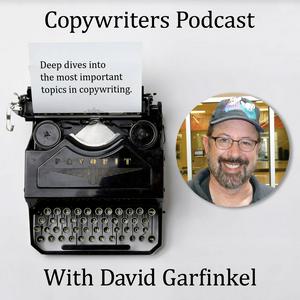
Copywriting lessons from David Garfinkel
Site de podcastOuça Copywriters Podcast, G4 Podcasts e muitos outros podcasts de todo o mundo com o aplicativo o radio.net
Obtenha o aplicativo gratuito radio.net
- Guardar rádios e podcasts favoritos
- Transmissão via Wi-Fi ou Bluetooth
- Carplay & Android Audo compatìvel
- E ainda mais funções
Obtenha o aplicativo gratuito radio.net
- Guardar rádios e podcasts favoritos
- Transmissão via Wi-Fi ou Bluetooth
- Carplay & Android Audo compatìvel
- E ainda mais funções

Copywriters Podcast
Leia o código,
baixe o aplicativo,
ouça.
baixe o aplicativo,
ouça.
 Brasil