Ouça este podcast gratuitamente no aplicativo: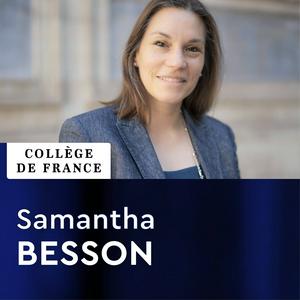 Baixe gratuitamente na App Store
radio.net
Sleeptimer
Guardar rádio
Droit international des institutions - Samantha Besson
Collège de France
Último episódio
136 episódios
Conférence - Alain Papaux : Droit et peinture : la cause animale, de l'escargot (del Cossa) à l'hermine (da Vinci)
14/11/2025 | 1h 9min
Samantha BessonDroit international des institutionsCollège de FranceAnnée 2025-2026Conférence - Alain Papaux : Droit et peinture : la cause animale, de l'escargot (del Cossa) à l'hermine (da Vinci)Alain PapauxProfesseur de Philosophie du droit de l'environnement, Université de LausanneAlain Papaux est invité par l'assemblée du Collège de France sur proposition de la Pr Samantha Besson. La conférence se tiendra dans le cadre d'une convention signée avec l'Université de Lausanne.RésuméAdoptant la cause animale pour objet de réflexion et la peinture pour moyen de cognition, nous interrogerons la façon dont le droit opère catégorisation du réel, en particulier sa manière singulière, de l'ordre du juste, de traduire les données scientifiques, de l'ordre du vrai. De l'escargot (dans l'Annonciation de del Cossa) à l'hermine (dans Cecilia Gallerani de Vinci), la cause animale, à la faveur des questions et contradictions qu'elle suscite (animal-machine, animal-meuble, « valeur intrinsèque », « dignité » de l'animal), oblige à revisiter la catégorisation juridique du réel. Par conséquent à réviser notre rapport au monde, pour qui admet que le droit revêt une puissante fonction anthropologique (A. Supiot ; A. Schiavone) : et si l'humain était un « vivant » parmi d'autres animés, littéralement « animaux », tous au bénéfice de la qualité de « sujet de droit » ? Une technique juridique banale, en vérité, laquelle, de surcroît, pourrait bien constituer un obstacle à la transition écologique.Alain PapauxÉtudes de droit, de philosophie, de linguistique et d'histoire de l'art aux universités de Lausanne, Genève, Heidelberg et Saint-Louis de Bruxelles à l'European Academy of Legal Theory. Ancien Conseiller juridique du Gouvernement du canton de Vaud (Suisse). Professeur ordinaire de Méthodologie juridique, de philosophie du droit et de philosophie du droit de l'environnement à l'Université de Lausanne. Professeur invité de théorie du droit, d'épistémologie et de sémiotique juridiques aux universités de Bruxelles (10 fois), Aix, Toulon (2 fois), Rennes et Neuchâtel (2 fois). Cocréateur de la collection L'écologie en questions aux P.U.F.
Colloque - Katia Coutant, Alban Guyomarc'h & Yann Robert : General Discussion, introduced and chaired by Young Researchers
26/9/2025 | 20min
Samantha BessonDroit international des institutionsCollège de FranceAnnée 2025-2026The "Province of All Mankind"? Property in Outer Space under Public and Private International Law & PhilosophyColloque - Katia Coutant, Alban Guyomarc'h & Yann Robert : General Discussion, introduced and chaired by Young ResearchersPanel 4: General Conclusions and DiscussionColloque organisé par la Pr Samantha Besson, chaire Droit international des institutions, les 25 et 26 septembre 2025PrésentationAs it is the case in other (marine or polar) "spaces" of international law usually defined negatively as areas beyond the (territorial) jurisdiction of States, a "non-appropriation" principle applies to the outer space (art. II 1967 Outer Space Treaty; art. 11(2-3) 1979 Moon Agreement). Despite later clarifications in the 1979 Moon Agreement, States still disagree, however, about both the material scope of the principle of non-appropriation (celestial bodies only, or both the bodies and their extracted resources) and its personal scope (public appropriation in the form of sovereign claims by States only, or both public and private appropriation). They also disagree about the implications of the second, more positive principle that was added in the Moon Agreement, i.e. that of "common heritage of mankind" (art. 11(1) Moon Agreement) and about the content of the further principle of "equitable access and sharing of benefits" (art. 11(7d) Moon Agreement) that applies to the common exploitation of celestial resources. In any case, due to the limited number of State ratifications (17 to date), the Moon Agreement is not considered as an expression of universally binding customary law. The same applies to the international regime for the common exploitation of the natural resources of celestial bodies foreseen by the agreement (art. 11(5-7) and 18 Moon Agreement).This disagreement is sharpened by the tension between those more recent principles, including non-appropriation through use, and the original principles of the international law of "areas beyond national jurisdiction", i.e. the principle of "freedom of exploration and use" (art. I(1) Outer Space Treaty) and its twin principle, i.e. the "freedom of scientific investigation" (art. I(3) Outer Space Treaty; art. 6(1) Moon Agreement). Those original principles have been left untouched by the new ones, indeed, and seem to accommodate free appropriation of resources through use, even if those freedoms have to be "carried out for the benefit and in the interests of all countries" (art. I(1) Outer Space Treaty; art. 4(1) Moon Agreement). The same tensions between the original principles and the subsequent ones also apply within other spaces of international law such as the high seas and deep seabed and have not been resolved by the 2023 Agreement on the Conservation and Sustainable Use of Marine Biological Diversity of Areas beyond National Jurisdiction.This indeterminacy has led certain States and regional organizations to adopt domestic (public and private) legislation, develop soft law and/or conclude bilateral agreements to secure the property rights and investments of private companies authorized by those States to explore and exploit celestial bodies and their resources. Their hope thereby is to shape what is called, in international treaty law, a "subsequent practice in the application of treaties establishing an agreement". If those States were to succeed, that practice could influence the interpretation of the Outer Space Treaty. After all, this is exactly what some States did in 1982 after the adoption of the Convention of the Law on the Sea and following their disagreements about the organization of the international regime for the common exploitation of the deep seabed resources in the convention. So-doing, they steered that regime towards the 1994 compromise and the modification of the convention that ensued and, arguably, led to that regime's contemporary deadlock.This situation raises numerous questions about the kind of international law of outer space the international community of peoples should aim at developing. This is especially the case if we are to prevent the "enclosure" through public and private appropriation of what art. I(1) Outer Space Treaty refers to as the "province of all mankind". It also raises difficult questions about the state of our legal imaginary at a turning point of life on Earth. Are our legal categories themselves at risk of being prematurely "enclosed" by the binary opposition between (State) territory and space, by the opposition between the "common" and the public or the private, and by a given articulation of property to sovereignty?This two-day conference will bring public and private international lawyers together with political and legal philosophers to discuss the complex issues raised by property in outer space, including its relations to the notions of territory, jurisdiction and sovereignty, but also the international legal status of scientific research, data and samples. The discussions will be organized around three central issues: (i) the relations between property, jurisdiction and sovereignty, and their implications in outer space; (ii) the prospects of "commoning" in outer space, and of a distinct future international institution and regime to govern the common use of celestial resources as currently discussed by the United Nations' Committee on the Peaceful Use of Outer Space (COPUOS); and (iii) the public and common good of science, and its implications for a better distinction between scientific "exploration" and commercial "use", exploitation or appropriation of and by science in outer space.Participants/Speakers: Philippe Achilleas (University of Paris-Saclay); Michael Byers (University of British Columbia, Vancouver); Isabel Feichtner (University of Würzburg); Stephan Hobe (University of Cologne); Maria Manoli (University of Aberdeen); Michela Massimi (University of Edinburgh); Alex Mills (University College, London); Margaret Moore (Queen's University, Ontario); Yannick Radi (Catholic University of Louvain); Lukas Rass-Masson (University of Toulouse Capitole); Anna Stilz (University of Berkeley); Fabio Tronchetti (University of Northumbria); Jonathan B. Wiener (Duke University); Katrina M. Wyman (New York University).
Colloque - Yannick Radi : General Conclusions
26/9/2025 | 40min
Samantha BessonDroit international des institutionsCollège de FranceAnnée 2025-2026The "Province of All Mankind"? Property in Outer Space under Public and Private International Law & PhilosophyColloque - Yannick Radi : General Conclusions Panel 4: General Conclusions and DiscussionColloque organisé par la Pr Samantha Besson, chaire Droit international des institutions, les 25 et 26 septembre 2025PrésentationAs it is the case in other (marine or polar) "spaces" of international law usually defined negatively as areas beyond the (territorial) jurisdiction of States, a "non-appropriation" principle applies to the outer space (art. II 1967 Outer Space Treaty; art. 11(2-3) 1979 Moon Agreement). Despite later clarifications in the 1979 Moon Agreement, States still disagree, however, about both the material scope of the principle of non-appropriation (celestial bodies only, or both the bodies and their extracted resources) and its personal scope (public appropriation in the form of sovereign claims by States only, or both public and private appropriation). They also disagree about the implications of the second, more positive principle that was added in the Moon Agreement, i.e. that of "common heritage of mankind" (art. 11(1) Moon Agreement) and about the content of the further principle of "equitable access and sharing of benefits" (art. 11(7d) Moon Agreement) that applies to the common exploitation of celestial resources. In any case, due to the limited number of State ratifications (17 to date), the Moon Agreement is not considered as an expression of universally binding customary law. The same applies to the international regime for the common exploitation of the natural resources of celestial bodies foreseen by the agreement (art. 11(5-7) and 18 Moon Agreement).This disagreement is sharpened by the tension between those more recent principles, including non-appropriation through use, and the original principles of the international law of "areas beyond national jurisdiction", i.e. the principle of "freedom of exploration and use" (art. I(1) Outer Space Treaty) and its twin principle, i.e. the "freedom of scientific investigation" (art. I(3) Outer Space Treaty; art. 6(1) Moon Agreement). Those original principles have been left untouched by the new ones, indeed, and seem to accommodate free appropriation of resources through use, even if those freedoms have to be "carried out for the benefit and in the interests of all countries" (art. I(1) Outer Space Treaty; art. 4(1) Moon Agreement). The same tensions between the original principles and the subsequent ones also apply within other spaces of international law such as the high seas and deep seabed and have not been resolved by the 2023 Agreement on the Conservation and Sustainable Use of Marine Biological Diversity of Areas beyond National Jurisdiction.This indeterminacy has led certain States and regional organizations to adopt domestic (public and private) legislation, develop soft law and/or conclude bilateral agreements to secure the property rights and investments of private companies authorized by those States to explore and exploit celestial bodies and their resources. Their hope thereby is to shape what is called, in international treaty law, a "subsequent practice in the application of treaties establishing an agreement". If those States were to succeed, that practice could influence the interpretation of the Outer Space Treaty. After all, this is exactly what some States did in 1982 after the adoption of the Convention of the Law on the Sea and following their disagreements about the organization of the international regime for the common exploitation of the deep seabed resources in the convention. So-doing, they steered that regime towards the 1994 compromise and the modification of the convention that ensued and, arguably, led to that regime's contemporary deadlock.This situation raises numerous questions about the kind of international law of outer space the international community of peoples should aim at developing. This is especially the case if we are to prevent the "enclosure" through public and private appropriation of what art. I(1) Outer Space Treaty refers to as the "province of all mankind". It also raises difficult questions about the state of our legal imaginary at a turning point of life on Earth. Are our legal categories themselves at risk of being prematurely "enclosed" by the binary opposition between (State) territory and space, by the opposition between the "common" and the public or the private, and by a given articulation of property to sovereignty?This two-day conference will bring public and private international lawyers together with political and legal philosophers to discuss the complex issues raised by property in outer space, including its relations to the notions of territory, jurisdiction and sovereignty, but also the international legal status of scientific research, data and samples. The discussions will be organized around three central issues: (i) the relations between property, jurisdiction and sovereignty, and their implications in outer space; (ii) the prospects of "commoning" in outer space, and of a distinct future international institution and regime to govern the common use of celestial resources as currently discussed by the United Nations' Committee on the Peaceful Use of Outer Space (COPUOS); and (iii) the public and common good of science, and its implications for a better distinction between scientific "exploration" and commercial "use", exploitation or appropriation of and by science in outer space.Participants/Speakers: Philippe Achilleas (University of Paris-Saclay); Michael Byers (University of British Columbia, Vancouver); Isabel Feichtner (University of Würzburg); Stephan Hobe (University of Cologne); Maria Manoli (University of Aberdeen); Michela Massimi (University of Edinburgh); Alex Mills (University College, London); Margaret Moore (Queen's University, Ontario); Yannick Radi (Catholic University of Louvain); Lukas Rass-Masson (University of Toulouse Capitole); Anna Stilz (University of Berkeley); Fabio Tronchetti (University of Northumbria); Jonathan B. Wiener (Duke University); Katrina M. Wyman (New York University).
Colloque - Stéphanie Ruphy : Comment
26/9/2025 | 8min
Samantha BessonDroit international des institutionsCollège de FranceAnnée 2025-2026The "Province of All Mankind"? Property in Outer Space under Public and Private International Law & PhilosophyColloque - Stéphanie Ruphy : CommentPanel 3: The Relations between Scientific "Exploration" and Commercial "Exploitation" of Outer SpaceColloque organisé par la Pr Samantha Besson, chaire Droit international des institutions, les 25 et 26 septembre 2025PrésentationAs it is the case in other (marine or polar) "spaces" of international law usually defined negatively as areas beyond the (territorial) jurisdiction of States, a "non-appropriation" principle applies to the outer space (art. II 1967 Outer Space Treaty; art. 11(2-3) 1979 Moon Agreement). Despite later clarifications in the 1979 Moon Agreement, States still disagree, however, about both the material scope of the principle of non-appropriation (celestial bodies only, or both the bodies and their extracted resources) and its personal scope (public appropriation in the form of sovereign claims by States only, or both public and private appropriation). They also disagree about the implications of the second, more positive principle that was added in the Moon Agreement, i.e. that of "common heritage of mankind" (art. 11(1) Moon Agreement) and about the content of the further principle of "equitable access and sharing of benefits" (art. 11(7d) Moon Agreement) that applies to the common exploitation of celestial resources. In any case, due to the limited number of State ratifications (17 to date), the Moon Agreement is not considered as an expression of universally binding customary law. The same applies to the international regime for the common exploitation of the natural resources of celestial bodies foreseen by the agreement (art. 11(5-7) and 18 Moon Agreement).This disagreement is sharpened by the tension between those more recent principles, including non-appropriation through use, and the original principles of the international law of "areas beyond national jurisdiction", i.e. the principle of "freedom of exploration and use" (art. I(1) Outer Space Treaty) and its twin principle, i.e. the "freedom of scientific investigation" (art. I(3) Outer Space Treaty; art. 6(1) Moon Agreement). Those original principles have been left untouched by the new ones, indeed, and seem to accommodate free appropriation of resources through use, even if those freedoms have to be "carried out for the benefit and in the interests of all countries" (art. I(1) Outer Space Treaty; art. 4(1) Moon Agreement). The same tensions between the original principles and the subsequent ones also apply within other spaces of international law such as the high seas and deep seabed and have not been resolved by the 2023 Agreement on the Conservation and Sustainable Use of Marine Biological Diversity of Areas beyond National Jurisdiction.This indeterminacy has led certain States and regional organizations to adopt domestic (public and private) legislation, develop soft law and/or conclude bilateral agreements to secure the property rights and investments of private companies authorized by those States to explore and exploit celestial bodies and their resources. Their hope thereby is to shape what is called, in international treaty law, a "subsequent practice in the application of treaties establishing an agreement". If those States were to succeed, that practice could influence the interpretation of the Outer Space Treaty. After all, this is exactly what some States did in 1982 after the adoption of the Convention of the Law on the Sea and following their disagreements about the organization of the international regime for the common exploitation of the deep seabed resources in the convention. So-doing, they steered that regime towards the 1994 compromise and the modification of the convention that ensued and, arguably, led to that regime's contemporary deadlock.This situation raises numerous questions about the kind of international law of outer space the international community of peoples should aim at developing. This is especially the case if we are to prevent the "enclosure" through public and private appropriation of what art. I(1) Outer Space Treaty refers to as the "province of all mankind". It also raises difficult questions about the state of our legal imaginary at a turning point of life on Earth. Are our legal categories themselves at risk of being prematurely "enclosed" by the binary opposition between (State) territory and space, by the opposition between the "common" and the public or the private, and by a given articulation of property to sovereignty?This two-day conference will bring public and private international lawyers together with political and legal philosophers to discuss the complex issues raised by property in outer space, including its relations to the notions of territory, jurisdiction and sovereignty, but also the international legal status of scientific research, data and samples. The discussions will be organized around three central issues: (i) the relations between property, jurisdiction and sovereignty, and their implications in outer space; (ii) the prospects of "commoning" in outer space, and of a distinct future international institution and regime to govern the common use of celestial resources as currently discussed by the United Nations' Committee on the Peaceful Use of Outer Space (COPUOS); and (iii) the public and common good of science, and its implications for a better distinction between scientific "exploration" and commercial "use", exploitation or appropriation of and by science in outer space.Participants/Speakers: Philippe Achilleas (University of Paris-Saclay); Michael Byers (University of British Columbia, Vancouver); Isabel Feichtner (University of Würzburg); Stephan Hobe (University of Cologne); Maria Manoli (University of Aberdeen); Michela Massimi (University of Edinburgh); Alex Mills (University College, London); Margaret Moore (Queen's University, Ontario); Yannick Radi (Catholic University of Louvain); Lukas Rass-Masson (University of Toulouse Capitole); Anna Stilz (University of Berkeley); Fabio Tronchetti (University of Northumbria); Jonathan B. Wiener (Duke University); Katrina M. Wyman (New York University).
Colloque - Jonathan B. Wiener : Space as Province, Property, and Planetary Protection: Risk and the Rise of the Interplanetary
26/9/2025 | 31min
Samantha BessonDroit international des institutionsCollège de FranceAnnée 2025-2026The "Province of All Mankind"? Property in Outer Space under Public and Private International Law & PhilosophyColloque - Jonathan B. Wiener : Space as Province, Property, and Planetary Protection: Risk and the Rise of the InterplanetaryPanel 3: The Relations between Scientific "Exploration" and Commercial "Exploitation" of Outer SpaceColloque organisé par la Pr Samantha Besson, chaire Droit international des institutions, les 25 et 26 septembre 2025PrésentationAs it is the case in other (marine or polar) "spaces" of international law usually defined negatively as areas beyond the (territorial) jurisdiction of States, a "non-appropriation" principle applies to the outer space (art. II 1967 Outer Space Treaty; art. 11(2-3) 1979 Moon Agreement). Despite later clarifications in the 1979 Moon Agreement, States still disagree, however, about both the material scope of the principle of non-appropriation (celestial bodies only, or both the bodies and their extracted resources) and its personal scope (public appropriation in the form of sovereign claims by States only, or both public and private appropriation). They also disagree about the implications of the second, more positive principle that was added in the Moon Agreement, i.e. that of "common heritage of mankind" (art. 11(1) Moon Agreement) and about the content of the further principle of "equitable access and sharing of benefits" (art. 11(7d) Moon Agreement) that applies to the common exploitation of celestial resources. In any case, due to the limited number of State ratifications (17 to date), the Moon Agreement is not considered as an expression of universally binding customary law. The same applies to the international regime for the common exploitation of the natural resources of celestial bodies foreseen by the agreement (art. 11(5-7) and 18 Moon Agreement).This disagreement is sharpened by the tension between those more recent principles, including non-appropriation through use, and the original principles of the international law of "areas beyond national jurisdiction", i.e. the principle of "freedom of exploration and use" (art. I(1) Outer Space Treaty) and its twin principle, i.e. the "freedom of scientific investigation" (art. I(3) Outer Space Treaty; art. 6(1) Moon Agreement). Those original principles have been left untouched by the new ones, indeed, and seem to accommodate free appropriation of resources through use, even if those freedoms have to be "carried out for the benefit and in the interests of all countries" (art. I(1) Outer Space Treaty; art. 4(1) Moon Agreement). The same tensions between the original principles and the subsequent ones also apply within other spaces of international law such as the high seas and deep seabed and have not been resolved by the 2023 Agreement on the Conservation and Sustainable Use of Marine Biological Diversity of Areas beyond National Jurisdiction.This indeterminacy has led certain States and regional organizations to adopt domestic (public and private) legislation, develop soft law and/or conclude bilateral agreements to secure the property rights and investments of private companies authorized by those States to explore and exploit celestial bodies and their resources. Their hope thereby is to shape what is called, in international treaty law, a "subsequent practice in the application of treaties establishing an agreement". If those States were to succeed, that practice could influence the interpretation of the Outer Space Treaty. After all, this is exactly what some States did in 1982 after the adoption of the Convention of the Law on the Sea and following their disagreements about the organization of the international regime for the common exploitation of the deep seabed resources in the convention. So-doing, they steered that regime towards the 1994 compromise and the modification of the convention that ensued and, arguably, led to that regime's contemporary deadlock.This situation raises numerous questions about the kind of international law of outer space the international community of peoples should aim at developing. This is especially the case if we are to prevent the "enclosure" through public and private appropriation of what art. I(1) Outer Space Treaty refers to as the "province of all mankind". It also raises difficult questions about the state of our legal imaginary at a turning point of life on Earth. Are our legal categories themselves at risk of being prematurely "enclosed" by the binary opposition between (State) territory and space, by the opposition between the "common" and the public or the private, and by a given articulation of property to sovereignty?This two-day conference will bring public and private international lawyers together with political and legal philosophers to discuss the complex issues raised by property in outer space, including its relations to the notions of territory, jurisdiction and sovereignty, but also the international legal status of scientific research, data and samples. The discussions will be organized around three central issues: (i) the relations between property, jurisdiction and sovereignty, and their implications in outer space; (ii) the prospects of "commoning" in outer space, and of a distinct future international institution and regime to govern the common use of celestial resources as currently discussed by the United Nations' Committee on the Peaceful Use of Outer Space (COPUOS); and (iii) the public and common good of science, and its implications for a better distinction between scientific "exploration" and commercial "use", exploitation or appropriation of and by science in outer space.Participants/Speakers: Philippe Achilleas (University of Paris-Saclay); Michael Byers (University of British Columbia, Vancouver); Isabel Feichtner (University of Würzburg); Stephan Hobe (University of Cologne); Maria Manoli (University of Aberdeen); Michela Massimi (University of Edinburgh); Alex Mills (University College, London); Margaret Moore (Queen's University, Ontario); Yannick Radi (Catholic University of Louvain); Lukas Rass-Masson (University of Toulouse Capitole); Anna Stilz (University of Berkeley); Fabio Tronchetti (University of Northumbria); Jonathan B. Wiener (Duke University); Katrina M. Wyman (New York University).
Mais podcasts de Ciência
 StarTalk RadioEnsino, Ciência
 Culpa do CérebroCiência
 Ciência SujaCiência, Sociedade e cultura, Crimes verdadeiros, Documentário
 Hidden BrainArte, Ciência, Artes performativas, Ciências Sociais
 Geografia em Meia HoraCiência, Ciências da Terra
 Ciência Sem FimCiência
 Ta de ClinicagemSaúde e fitness, Ciência, Medicina
 Geopolítica com o Paulo FilhoCiência, Ciências Sociais
 NaruhodoEnsino, Ciência, Ciências da Vida, Enriquecimento individual, Ciências Sociais
 Horizonte de EventosCiência, Astronomia
Podcasts em tendência em Ciência
 15 Minutos em Emergência - Manole EducaçãoCiência
 Tributos e Direito PodcastCiência, Ciências Sociais
 Ombros de GigantesCiência
 Vozes do PlanetaCiência, CATEGORY_NATURE
 Outrage + Optimism: The Climate PodcastNotícias, Ciência, Sociedade e cultura
 Especulando: Ginecologia e ObstetríciaCiência
 Podcasts de FísicaCiência, Física
 Radio SemillaCiência, CATEGORY_NATURE
 Science QuicklyCiência
 O Tempo VirouCiência, CATEGORY_NATURE
 This Week in CardiologySaúde e fitness, Ciência, Medicina
 Circulation on the RunSaúde e fitness, Ciência, Ciências da Vida, Medicina
 The Naked Scientists PodcastSaúde e fitness, Ciência, Ciências da Vida, Medicina, Ciências Naturais
 Ologies with Alie WardComédia, Ciência, Sociedade e cultura
 ZEIT WISSEN. Woher weißt Du das?Ensino, Ciência, Sociedade e cultura
 CrowdScienceCiência
 FarmaCastCiência
 PlantCastCiência, Ciências da Terra
 UnexplainableCiência, Ciências da Vida
 Direito e EconomiaCiência, Ciências Sociais
 Short WaveNotícias, Ciência, Notícias diárias, Ciências da Vida
 Olavo Tem RazãoCiência, Ciências Sociais
 Geopop - Le Scienze nella vita di tutti i giorniCiência, Sociedade e cultura, Ciências da Terra
 Boring History for SleepCiência, Ciências Sociais
 Vedanta CastEnsino, Religião e espiritualidades, Ciência, Hinduísmo, Ciências da Vida
- Geopolítica com o Paulo FilhoCiência, Ciências Sociais
 Science VsEnsino, Saúde e fitness, Ciência
 Something You Should KnowEnsino, Saúde e fitness, Ciência, Enriquecimento individual, Ciências Sociais
- Culpa do CérebroCiência
- Hidden BrainArte, Ciência, Artes performativas, Ciências Sociais
Sobre Droit international des institutions - Samantha Besson
Créée en 2019, la chaire Droit international des institutions renoue avec une longue tradition d'enseignement et de recherche en droit international au Collège de France. Elle lui insuffle une direction à la fois plus spécifique en mettant l'accent sur l'étude de la dimension institutionnelle du droit international et plus régionale puisqu'elle comprend l'étude du droit international des organisations européennes que sont l'Union européenne et le Conseil de l'Europe, mais aussi des organisations internationales d'autres régions du monde.L'intitulé de la chaire convoque la dimension institutionnelle du droit et la place au cœur de son projet : ce dernier porte tant sur les institutions à l'origine du droit international (le droit international des institutions) que sur le droit international qui régit ces institutions (le droit international des institutions). En bref, le projet de la chaire est l'analyse critique et la réforme des institutions, au pluriel, du droit international. L'objectif est de saisir toutes les institutions qui adoptent et sont régies, en retour, par le droit international, à commencer par l'État et les organisations internationales, mais de manière à inclure aussi toutes sortes d'autres institutions, publiques et privées, de droit international que sont, notamment, les villes, les régions, les entreprises multinationales, les organisations non gouvernementales ou encore les syndicats. La diversité de ces institutions du droit international, mais aussi leur articulation autour d'un lien de représentation systémique des peuples de ce monde, et donc de continuité fiduciaire, sont au cœur de la question institutionnelle internationale que cette chaire pose et vise à élucider.Les travaux d'enseignement et de recherche de la titulaire de la chaire, la Pr Samantha Besson, et de son équipe s'articulent autour de trois axes d'analyse et de réforme de l'ordre institutionnel international, tant universel que régional : la représentation, la réglementation et la responsabilité internationales. Aujourd'hui, de grands défis (notamment climatiques, sanitaires ou technologiques) se posent à l'humanité toute entière. Relever ces défis requiert, entre autres, la création ou, du moins, la réforme d'institutions internationales à même d'adopter un droit universel qui soit non seulement commun, mais aussi représentatif et légitime et à même de répondre de la violation de ce droit. C'est le projet de la chaire que d'accompagner ce travail d'innovation institutionnelle nécessaire en droit international et européen.
Site de podcastOuça Droit international des institutions - Samantha Besson, StarTalk Radio e muitos outros podcasts de todo o mundo com o aplicativo o radio.net
Obtenha o aplicativo gratuito radio.net
- Guardar rádios e podcasts favoritos
- Transmissão via Wi-Fi ou Bluetooth
- Carplay & Android Audo compatìvel
- E ainda mais funções
Obtenha o aplicativo gratuito radio.net
- Guardar rádios e podcasts favoritos
- Transmissão via Wi-Fi ou Bluetooth
- Carplay & Android Audo compatìvel
- E ainda mais funções

Droit international des institutions - Samantha Besson
Leia o código,
baixe o aplicativo,
ouça.
baixe o aplicativo,
ouça.
 Brasil