

Ouça este podcast gratuitamente no aplicativo: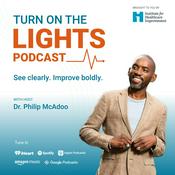 Baixe gratuitamente na App Store
radio.net
Sleeptimer
Guardar rádio
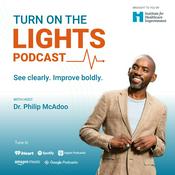
Turn on the Lights Podcast
Brought to you by the Institute for Healthcare Improvement (IHI)
Último episódio
152 episódios
Patient Safety, Workforce Safety, and the Conditions for Safer Care with Patricia McGaffigan
17/09/2026 | 47minPatient safety and workforce safety are not separate priorities. They are different, but deeply connected outcomes of the same health care system.
In this episode, Patricia McGaffigan, Senior Advisor for Safety at the Institute for Healthcare Improvement and President of the Certification Board for Professionals in Patient Safety, explains why health care organizations cannot deliver consistently safe, compassionate care without also protecting and supporting their workforce. She discusses why leaders must move beyond reacting to individual errors, distinguish burnout from moral injury and compassion fatigue, and create systems that encourage people to speak up, report risks, and learn from mistakes. Patricia also shares how boards and senior leaders can make safety a daily purpose rather than a dashboard metric by asking what every major decision will mean for the safety of patients and the workforce.
Tune in to learn why patient and workforce safety must be led together, and how health care organizations can build a culture where people are safe to speak up, learn, and thrive.
About Patricia McGaffigan:
Patricia McGaffigan is Senior Advisor for Safety at the Institute for Healthcare Improvement and President of the Certification Board for Professionals in Patient Safety. She co-chairs the National Steering Committee for Patient Safety and serves as a liaison to IHI’s Lucian Leape Institute, Patient and Workforce Safety and Well-Being Initiative, and Nursing Initiative. A nationally recognized patient-safety leader, Patricia brings experience in clinical practice, teaching, and medical device and technology organizations, with a career focused on improving safety for patients, families, and the health care workforce.
Things You’ll Learn:
Patient safety and workforce safety are inseparable because patients and care teams experience the same system.
Safer systems address the conditions that lead to harm instead of expecting people to be infallible.
Workforce well-being is a performance strategy that makes care safer, more compassionate, equitable, and reliable.
Burnout, moral injury, and compassion fatigue have different causes and require different responses.
Psychological safety, transparency, and accountability must work together for organizations to learn and improve.
Workarounds often reveal system problems and should be examined rather than blamed on individual clinicians.
Boards and leaders must treat zero preventable harm as a core purpose and weigh the safety impact of every major decision on patients and the workforce.
Resources:
Connect with and follow Patricia McGaffigan on LinkedIn.
Follow the Institute for Healthcare Improvement on LinkedIn and explore the IHI website.
Learn more about IHI’s National Action Plan to Advance Patient Safety.
For questions, ideas, or guest suggestions, email podcast@ihi.org.Nursing Leadership, Courage, and Public Trust with Dr. Ernest J. Grant
11/09/2026 | 50minWhat is public trust in nurses worth if it does not lead to voice, protection, and authority?
In this episode, Dr. Ernest J. Grant, Clinical Associate Professor and Vice Dean for Diversity, Equity, and Inclusion at the Duke University School of Nursing, reflects on a nursing career shaped by bedside care, burn prevention, public policy, and national leadership. He shares how nursing found him, what decades of caring for burn patients taught him about dignity and presence, and why prevention became an extension of bedside care rather than a departure from it. Dr. Grant also discusses volunteering after the September 11 attacks, leading the American Nurses Association during COVID-19, and using nurses' firsthand experiences to advocate for safer working conditions and stronger public-health responses. Looking ahead, he explains why nurses need a meaningful seat at the table, how AI should support rather than replace human care, and why healthcare leaders must mentor the next generation and create safer ways for nurses to speak up.
Tune in to hear why honoring nurses requires more than praise; it requires systems that recognize their expertise, protect their courage, and give them the authority to lead.
About Dr. Ernest J. Grant
Ernest J. Grant, PhD, RN, FADLN, FAAN, is a Clinical Associate Professor and Vice Dean for Diversity, Equity, and Inclusion at the Duke University School of Nursing. He is the immediate past president of the American Nurses Association, the nation's largest nurses' organization representing the interests of 5.3 million registered nurses. He was the first man elected president in the organization's 130-year history.
Dr. Grant has more than 30 years of nursing experience and is internationally recognized for his expertise in burn care and fire safety. He also serves as adjunct faculty at the University of North Carolina at Chapel Hill School of Nursing. His work has included bedside care, professional education, injury prevention, public policy, workforce advocacy, and national nursing leadership.
In 2002, President George W. Bush presented Dr. Grant with a Nurse of the Year Award for his work caring for burn victims from the World Trade Center site. He was inducted as a Fellow of the American Academy of Nursing in 2011 and designated an Academy Living Legend in 2026, its highest honorary recognition. He earned his BSN from North Carolina Central University and his MSN and PhD from the University of North Carolina at Greensboro. He has also received honorary doctoral degrees from the University of Wisconsin and Thomas Jefferson University.
Things You'll Learn
Nursing can become a calling through direct experience, mentorship, and the realization that nurses can influence care far beyond a single role or credential.
During major crises, leaders need to listen closely to frontline workers, translate their experiences into action, and advocate for the equipment, information, and protection they need.
Calling nurses heroes is not enough if healthcare systems fail to protect them from unsafe staffing, inadequate resources, violence, and exclusion from decision-making.
Public trust should translate into a meaningful nursing voice in strategy, policy, technology, resource allocation, and the design of patient care.
AI can support clinical work, but it cannot replace the human touch, individualized judgment, or active listening that help patients feel heard.
Leadership does not require a formal title; nurses can lead through advocacy, committee participation, professional organizations, and efforts to improve policies and practice.
Healthcare leaders can turn trust into lasting authority by mentoring future leaders, sharing decision-making context, and building thoughtful succession plans.
Resources
Connect with and follow Dr. Ernest J. Grant on LinkedIn.
Visit the Duke University School of Nursing website.Public Health Memory, Prevention, and Preparedness with Dr. Eugene McCray
04/09/2026 | 52minWhat can four decades of HIV/AIDS response teach public health about preparing for the next crisis?
In this episode, Dr. Eugene McCray, a physician, epidemiologist, and longtime public health leader, reflects on the lessons HIV/AIDS has taught about trust, stigma, data, prevention, equity, and community engagement. He explains how community advocacy helped accelerate surveillance, drug development, education, and access to care, and why effective interventions mean little if they do not reach the people who need them most. Dr. McCray also explores the importance of transparent communication, timely, locally relevant data, and the creation of safe environments where communities and public health teams can share concerns and solutions. Looking ahead, he argues that future public health responses must be community-centered, evidence-based, prevention-focused, and willing to take accountability when systems get things wrong.
Tune in to hear why the lessons of HIV/AIDS are not simply history, but a blueprint for building more resilient public health systems.
IHI Spotlight:
The episode's spotlight connects the conversation to healthcare improvement, safety, equity, and public health learning. The central lesson is that public health needs memory: science and data must remain connected to people, prevention tools must be paired with systems that deliver them equitably, and community partnership must be treated as a condition for effectiveness rather than a courtesy.
About Dr. Eugene McCray:
Dr. Eugene McCray is a physician, epidemiologist, and public health leader whose career has contributed to the HIV/AIDS response in the United States and globally. His work has included HIV surveillance, prevention, healthcare-worker safety, global HIV programs, and leadership of the CDC's domestic HIV program. In this conversation, he draws on decades of experience to explore what public health can learn from HIV/AIDS about trust, community engagement, data, prevention, equity, and accountability.
Things You’ll Learn:
Community-led advocacy helped accelerate the HIV/AIDS response by strengthening surveillance, speeding drug development, and building trust with affected populations.
Stigma and discrimination can undermine public health by discouraging people from testing, seeking care, and accessing services.
Transparent communication is essential when science is uncertain, especially when leaders clearly distinguish what is known from what is not yet known.
Public health leaders need to listen to communities and create environments where staff and community members feel safe sharing concerns, assumptions, and solutions.
Data is most powerful when it is timely, local, actionable, and used to identify populations being left behind rather than to assign blame.
Effective prevention tools such as PrEP cannot reduce inequities unless public health systems tailor delivery to the communities that need them and involve those communities in designing interventions.
Meaningful community engagement should extend across research, implementation, evaluation, and the feedback loop that uses data to improve programs.
Future public health crises will require systems that integrate trust, prevention, and accountability, take responsibility for mistakes, and build stronger community-centered partnerships.
Resources:
Connect with and follow Dr. Eugene McCray on LinkedIn.HIV, Stigma, and Trust with Harold Phillips
28/08/2026 | 53minHealthcare can’t ask communities to trust systems that haven’t earned their trust.
In this episode, Harold Phillips, the CEO of NMAC (formerly the National Minority AIDS Council), discusses what HIV reveals about stigma, trust, racial justice, and the communities still being left behind by healthcare. Drawing on his lived experience with HIV and decades of public health leadership, Phillips explores why healthcare must treat the whole person rather than simply the diagnosis. He explains how stigma, misinformation, and mistrust can keep people from accessing care even when effective treatments and prevention tools are available. Phillips also examines the difference between outreach and genuine community partnership, emphasizing the importance of listening to communities and using their lived experiences to shape healthcare systems and policy.
Tune in to hear Harold Phillips share what healthcare leaders can learn from communities that have historically been left behind, and how those lessons can help build more equitable, trustworthy systems.
IHI Spotlight - Sylvia Trent-Adams:
This episode’s IHI Spotlight features Sylvia Trent-Adams, President and CEO at the Institute of Healthcare Improvement, who talks about the lessons HIV has taught her about dignity, trust, equity, and person-centered care. Drawing on her experience as a nurse caring for soldiers living with or affected by HIV, she emphasizes that treating a diagnosis and truly seeing a person are not the same thing. She also discusses why healthcare organizations must listen to marginalized communities and act on what they hear, making equity an essential part of quality and safety rather than a separate initiative.
About Harold Phillips:
Harold J. Phillips is a nationally recognized HIV policy leader and public health strategist with over 30 years of experience advancing equity, access, and innovation in the fight against HIV/AIDS. In 2025, he was appointed CEO of NMAC, where he leads eNorts to center racial justice and community leadership in the national response to HIV.
Previously, Phillips served as Director of the White House Office of National AIDS Policy (2021–2024), overseeing the implementation of the National HIV/AIDS Strategy and shaping federal policy to accelerate progress toward ending the epidemic. He also held senior roles at the Health Resources and Services Administration’s HIV/AIDS Bureau, where he managed key programs including Ryan White, AIDS Education and Training Centers, and PEPFAR-funded initiatives.
As a Black gay man living with HIV, Phillips brings lived experience and visionary leadership to his work. His career has been defined by a commitment to uplifting marginalized voices, modernizing HIV policy, and building sustainable systems of care.
Things You’ll Learn:
HIV continues to reveal how stigma, misinformation, and mistrust can create barriers to healthcare access.
Treating the whole person requires healthcare systems to address the social and personal circumstances that shape health outcomes.
Lived experience should inform healthcare policy, system design, and shared decision-making.
Genuine community partnership requires ongoing listening, responsiveness, and action, not one-time outreach or consultation.
Healthcare organizations can build trust by listening to communities, adapting their services, and creating systems that center historically marginalized populations.
Resources:
Connect with and follow Harold Phillips on LinkedIn.
Follow NMAC on LinkedIn and explore their website!Leading Humans Through Change with Sue Hassmiller
21/08/2026 | 42minWhat if the key to leading change isn't having all the answers, but knowing how to listen?
In this episode, Sue Hassmiller, a nationally recognized nurse leader, leadership coach, and health care strategist, talks about the human side of leading teams through change and what it takes to build trust, psychological safety, and true ownership. She explains why deep listening and genuine relationships are more effective than simply telling people what to do. She also explores the difference between compliance and ownership, and how leaders can help teams take greater responsibility for improvement by connecting change to their values and giving them a voice. Finally, Sue shares how coaching, curiosity, and self-awareness can help leaders overcome judgment and better understand why teams may feel stuck, resistant, or exhausted.
Tune in to learn how leaders can listen differently, build stronger connections, and create the conditions for meaningful, lasting change in health care!
IHI Spotlight - Jesse McCall:
In this IHI Spotlight, Jesse McCall, Senior Director at IHI, explains that sustainable healthcare improvement depends as much on people and culture as it does on technical methods. He emphasizes connecting frontline staff to a shared purpose, creating psychologically safe environments where people can speak up and test new ideas, and ensuring leaders close feedback loops so employees become partners in change rather than recipients of it.
About Sue Hassmiller:
Sue Hassmiller, PhD, RN, FAAN, is an executive and leadership coach for nurse executives and health care leaders. Across a distinguished career spanning frontline public health, nursing academia, high-level government policy, and 25 years leading national initiatives at the Robert Wood Johnson Foundation, she has dedicated her life to transforming health care systems from the inside out.
An elected member of the National Academy of Medicine, recipient of the Florence Nightingale Medal, and recognized as a Living Legend by the American Academy of Nursing, Sue combines multi-sector expertise with certified coaching to help health care leaders navigate complex relationships, drive health equity, and champion compassionate care. She is also the author of Resetting: An Unplanned Journey of Love, Loss, and Living Again, which explores healing and the vital human element in modern health care.
Things You’ll Learn:
Deep listening is essential for understanding how people experience and respond to change.
Leaders build ownership by listening to their teams, acknowledging their perspectives, and connecting change to shared values.
Psychological safety enables teams to contribute ideas, innovate, and perform at their best.
Effective behavior change requires leaders to change their own behaviors by becoming more curious, self-aware, and less judgmental.
Leaders can better support stuck or exhausted teams by asking questions and seeking to understand the underlying causes instead of making assumptions.
Resources:
Connect with and follow Sue Hassmiller on LinkedIn.
Mais podcasts de Saúde e fitness
 Cartas de um TerapeutaSaúde e fitness, Saúde mental
 Autoconsciente Podcast | Vida interiorEspiritualidades, Filosofia, Religião e espiritualidades, Saúde e fitness, Saúde mental, Sociedade e cultura
 Psicanálise de BotecoSaúde e fitness, Saúde mental
 Lutz PodcastSaúde e fitness
 Psicologia na PráticaEnriquecimento individual, Ensino, Saúde e fitness, Saúde mental
 Huberman LabCiência, Ciências da Vida, Saúde e fitness
 Sereno - Meditação e RelaxamentoSaúde e fitness
 DrauzioCastMedicina, Saúde e fitness
 Sons para relaxar | by Relaxing White NoiseSaúde e fitness
 On Purpose with Jay ShettyNegócios, Saúde e fitness, Saúde mental
Podcasts em tendência em Saúde e fitness
 Som De Chuva Com TrovõesSaúde e fitness, Saúde mental
 Nothing much happens: bedtime stories to help you sleepFicção, Saúde e fitness
 Neurology MinuteEnsino, Medicina, Saúde e fitness, Saúde mental
 JAMA Neurology Author InterviewsCiência, Medicina, Saúde e fitness
 Viva Bem com Marcio AtallaFitness, Saúde e fitness
 Afya PodcastsMedicina, Saúde e fitness
 Afya EndocrinopapersMedicina, Saúde e fitness
 Neurology® PodcastCiência, Ensino, Medicina, Saúde e fitness
 Sexo Livre - Contos Eróticos ExplícitosSaúde e fitness, Sexualidade
 FunkMedicina, Saúde e fitness
 White Noise and Sleep Sounds (12 Hours)Crianças e família, Saúde e fitness, Saúde mental
 Sadhguru PortuguêsCiência, Ensino, Espiritualidades, Guias, Natureza, Negócios, Relacionamentos, Religião e espiritualidades, Saúde alternativa, Saúde e fitness, Sem fins lucrativos, Sociedade e cultura
 Afya CardiopapersSaúde e fitness
 O Que Te Trouxe Aqui?Saúde e fitness
 SEXLOGSaúde e fitness, Sexualidade
 Voo BipolarSaúde e fitness, Saúde mental
 Deep Sleep Stories: Bedtime Sleep Meditation Aid for Insomnia ReliefSaúde alternativa, Saúde e fitness, Saúde mental
 Pet Food Podcast · by PPGVETNutrição, Saúde e fitness
 A Trilha da Meditação por Carlo GuaragnaSaúde e fitness, Saúde mental
 Radio HeadspaceSaúde e fitness, Saúde mental
Sobre Turn on the Lights Podcast
Hosted by Dr. Philip McAdoo, Director of Internal Equity and Workplace Well-Being at the Institute for Healthcare Improvement (IHI), Turn on the Lights is a podcast that aims to improve health care worldwide by shedding light on health care issues through thought-provoking, patient-centered conversations. By demystifying health care problems, we hope to activate both the public and health care professionals to help accelerate changes leading to health and health care improvements worldwide. Our discussions cover various topics such as health care delivery, health equity, quality, and social justice. The podcast features solutions from around the world and encourages listeners to take action.
Brought to you by the Institute for Healthcare Improvement (IHI).
Site de podcastOuça Turn on the Lights Podcast, Cartas de um Terapeuta e muitos outros podcasts de todo o mundo com o aplicativo o radio.net
Obtenha o aplicativo gratuito radio.net
- Guardar rádios e podcasts favoritos
- Transmissão via Wi-Fi ou Bluetooth
- Carplay & Android Audo compatìvel
- E ainda mais funções
Obtenha o aplicativo gratuito radio.net
- Guardar rádios e podcasts favoritos
- Transmissão via Wi-Fi ou Bluetooth
- Carplay & Android Audo compatìvel
- E ainda mais funções

Turn on the Lights Podcast
Leia o código,
baixe o aplicativo,
ouça.
baixe o aplicativo,
ouça.
Turn on the Lights Podcast: Podcast do grupo
 Brasil