Pular para o conteúdo

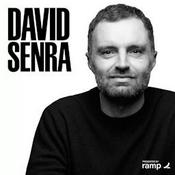
David Senra

Scicomm Media
David Senra
Último episódio

32 episódios

  • David Senra

    Micky Malka, Founder of Ribbit Capital

    02/08/2026 | 1h 16min
    Micky Malka is the founder of Ribbit Capital and helped create Node, which he describes as the first digital art studio designed for digital artists. He calls himself “an entrepreneur at heart and an investor by design”—a deliberately broad description that allows him to resist labels, which is precisely the point. The one label he wants on his tombstone: “He was a rebel.”

    In his mid-20s, Malka and his partners put all the proceeds from their first dot-com exit into starting Lemon Bank in Brazil. He says they nearly lost everything when the economy failed to take off. At its peak Lemon Bank operated roughly 7,000 locations and served 50 million customers while targeting Brazil’s large unbanked population. He later sold it to Brazil’s largest bank.

    Years later, after meeting Walmart CEO Doug McMillon in 2019, Malka proposed that Walmart and Ribbit build a better financial-services business together. That effort became OnePay, which now provides payments, debit, credit and lending products across Walmart’s ecosystem.

    At Ribbit, decisions are made as a group, no single partner is assigned to a company, and the team shares calendars, inboxes and emails. Malka confirms that Ribbit is his sixth company and says he intends to keep building it indefinitely. As he puts it, “The best entrepreneurs never have to sell their company.”

    Show notes: https://www.davidsenra.com/episode/micky-malka

    Made possible by

    Ramp: https://ramp.com

    Deel: https://deel.com/senra

    AppLovin: https://applovin.com/senra

    Chapters

    (00:00:00) Why Micky Malka Refuses to Be Labeled

    (00:03:00) Writing Your Way to Conviction

    (00:05:41) Buying Berkshire at 13 and Learning Buffett's Operating System

    (00:11:48) Token Factories, AI Bankers, and the Future of Money

    (00:18:38) The Infinite Game: Why It's Better to Be Behind

    (00:22:09) Gen Z Founders and the Chaordic Company

    (00:29:00) Why Young Founders Want to Build Atoms, Not Just Bits

    (00:34:29) Bringing Beauty and Taste Back to Technology

    (00:36:56) Revolut, Founder DNA, and Earning Deep Trust

    (00:45:54) Building OnePay With Walmart

    (00:50:53) From Lemon Bank to OnePay: A 20-Year Idea

    (00:56:00) Compounding Trust and Protecting Your Reputation

    (01:00:30) Node and the Rebel Case for Digital Art

    (01:07:34) What It Means to Live as a Rebel

    (01:10:50) Why Ribbit Is Built Like a Startup

    (01:14:41) Charlie Munger and the Power of Time
    Learn more about your ad choices. Visit megaphone.fm/adchoices
  • David Senra

    David Heinemeier Hansson (DHH), Co-founder of 37signals

    26/07/2026 | 1h 41min
    David Heinemeier Hansson (DHH) is the creator of Ruby on Rails and the co-founder of 37signals, the company behind Basecamp, HEY, and ONCE. He has spent 25 years building a software business around one condition: no one gets to tell him what to do.

    Jason Fried hired him as a contractor out of Copenhagen for $15 an hour. He built the first version of Basecamp with just 10 hours a week — 380 hours in total — and still credits the shortage of time for how good it turned out. He does not trust himself with unlimited resources. Nobody should, he argues. Give a team too much money and too many people and it will build a blob.

    Forty-some venture firms came calling in 2005. The only investor 37signals ever said yes to was Jeff Bezos, who accepted a term sheet priced so absurdly high they were certain he would walk. They have been sending him dividend checks ever since. Basecamp has been rewritten three times, and the original 2004 version — discontinued in 2010 — still runs and still makes millions in profit.

    His marketing strategy, borrowed from Kathy Sierra, hasn't changed in two decades: you can't outspend the giants, but you can out-teach them. His product test hasn't either. He builds the thing he wants for himself, and once he'd rather use it than anything else available, he assumes he isn't alone. That's how Ruby on Rails started. It's how Omarchy started too — the Linux distribution he’s spent thousands of hours making and gives away.

    No investors. No board. And now, with Omarchy, no customers. He calls that last step a retirement from capitalism: still making things, still sharing them, with nobody holding a claim on his time.

    Show notes: https://www.davidsenra.com/episode/david-heinemeier-hansson

    Made possible by

    Ramp: https://ramp.com

    AppLovin: https://applovin.com/senra

    HubSpot: https://hubspot.com/startups

    Deel: https://deel.com/senra

    Chapters

    (00:00:00) Cutting Rework From 50,000 Words To 25,000

    (00:02:54) Basecamp Was Built In 380 Hours

    (00:06:46) Unlimited Resources Build A Blob

    (00:10:22) Terminator Beats Avatar By A 1000x

    (00:15:24) The Printer DHH Never Wants To Upgrade

    (00:17:31) Millions In Profit From 16 Year-Old Software

    (00:20:10) The Beauty Of A Finished Product

    (00:22:54) I Would Quit Before Working In An Office

    (00:25:41) Four Uninterrupted Hours Or The Day Is Lost

    (00:31:21) Tobi Lütke Saw The AI Future First

    (00:38:51) Apple Pissed Him Off Enough To Switch

    (00:42:47) The 19 Year-Old Who Beat Apple

    (00:47:16) If Nobody Else Will Build It, I Will

    (00:52:02) The Need For Control, Independence, And Freedom

    (00:53:44) Chef's Choice, Not A Construction-Kit Burger

    (00:56:50) A New Computer Ready In 2 Minutes

    (01:00:33) A Cheaper Mac Will Never Win

    (01:02:27) The Best Ideas Sound Stupid At First

    (01:03:47) Out-Teach Your Competition

    (01:06:57) The Algorithms Broke Reciprocity

    (01:10:53) No Investors Is Freedom. No Customers Is Transcendence.

    (01:13:25) No One Gets To Tell Me What To Do

    (01:16:49) Your Moral Obligation To Buy A Ferrari

    (01:23:19) Costs Are The Only Thing You Control

    (01:26:49) Bezos Paid For The Promise

    (01:30:17) The Confidence To Say No To Everyone

    (01:32:59) The Day A Third Of The Company Left

    (01:36:49) Marc Andreessen Came To Help
    Learn more about your ad choices. Visit megaphone.fm/adchoices
  • David Senra

    Jeff Zalaznick, Co-founder of Major Food Group

    19/07/2026 | 1h 47min
    Jeff Zalaznick is co-founder of Major Food Group, the hospitality company behind Carbone, ZZ's, Torrisi, The Grill, and The Pool. He has opened 77 restaurants and bars and 76 are still operating and profitable. He is now building Major Food Group into a fully vertically integrated hospitality company spanning restaurants, private members' clubs, hotels, and branded residential towers.

    Zalaznick was obsessed with food from childhood, watching cooking shows on PBS while other kids watched cartoons and memorizing the Zagat guide. His first job out of college was as an investment banking analyst at J.P. Morgan, but he knew it wasn’t his dream. He walked out on his birthday, talked his way into any job at the newly opened Mandarin Oriental, built a restaurant website, and eventually partnered with restaurateur Joe Bastianich to get a front-row seat to the business. Watching Joe work, he realized: "I can do this, and I can do it my way." He quickly sold his companies and set out to open his own restaurant.

    The idea was Carbone — elevated Italian-American food built on a simple thesis: take something everyone already loves and make the best version of it ever done. He found his partners, Mario Carbone and Rich Torrisi, and opened Carbone in March of 2013. It’s now one of the most recognizable restaurant brands and sought-after reservations in the world. From there, they’d go on to launch Major Food Group, and the success has continued.

    Show notes: https://www.davidsenra.com/episode/jeff-zalaznick

    Made possible by

    Ramp: ⁠https://ramp.com

    AppLovin: https://applovin.com/senra

    Deel: https://deel.com/senra

    HubSpot: ⁠https://hubspot.com/startups

    Chapters

    (00:00:00) Seventy-Seven Restaurants, Seventy-Six Still Winning

    (00:03:16) The First American Menu Written In English

    (00:04:41) JFK's Cream Of Asparagus

    (00:09:49) Fifty Years Of Smoke, Forty Million To Restore

    (00:13:32) One Text: "Four Seasons?"

    (00:16:17) Always Bet On Who Wants It Most

    (00:19:13) Kill Lunch To Own Dinner

    (00:24:00) The Only Thing That Matters Is If They Come Back

    (00:29:37) Going Viral Isn't The Same As Being Good

    (00:36:39) Watching Cooking Shows Instead Of Cartoons

    (00:41:47) The Men At The Top Were Miserable

    (00:43:21) Walking Into The Mandarin To Beg For Any Job

    (00:49:40) A Front-Row Seat To His Hero

    (00:53:06) Belief Comes Before Ability

    (00:55:35) Burning The Boats

    (00:57:31) Marry The Chef, Don't Hire Him

    (00:59:25) The Best Version Of Something You Already Love

    (01:03:56) The Hail Mary Call At Ten O'Clock

    (01:08:29) "A Piacere" — Whatever You Want

    (01:13:24) The Broken Neon Sign That Became An Icon

    (01:18:17) Go With Whatever Feels Natural

    (01:22:27) A Ten-Dollar Jar Of The Restaurant

    (01:24:15) Your Mediocrity Is My Opportunity

    (01:27:34) Netflix With A Restaurant

    (01:32:11) The Club Where The Food Comes First

    (01:37:07) Miami Was New Year's Eve Every Night

    (01:40:45) Carbone Miami In 100 Days

    (01:46:08) The Greatest Beach Club In America
    Learn more about your ad choices. Visit megaphone.fm/adchoices
  • David Senra

    Eric Glyman, Co-founder of Ramp

    12/07/2026 | 58min
    Eric Glyman is the co-founder and co-CEO of Ramp, the financial-infrastructure platform valued at $44 billion used by over 70,000 businesses to run payments, expenses and accounting from a single place.

    Glyman grew up in Las Vegas and studied at Harvard, where he met his eventual co-founder, Karim Atiyeh. In 2014 the two started Paribus, a price-tracking app born from Glyman's frustration after missing an airfare price drop — the software automatically caught retroactive discounts and filed refunds on customers' behalf. Capital One acquired Paribus in 2016, and Glyman and Atiyeh stayed on for roughly three years running the business inside the bank.

    That experience showed Glyman something he found strange: card companies made money by convincing customers that points and rewards were valuable, then quietly devaluing them. In 2019 he, Atiyeh, and longtime friend Gene Lee left to build Ramp on the opposite premise — instead of pushing businesses to spend more for rewards, help them spend less and waste less time doing it. Every product decision gets run through what Glyman calls a version of "Elon's algorithm": question the requirement, simplify, then automate.

    Ramp tracks its own success obsessively — a running "scoreboard" of dollars and hours saved for customers, displayed on office walls and posted in Slack. Glyman now sees the company's real competitors not as other fintechs but as AI labs, since Ramp is ultimately selling automated knowledge work, not money movement. He frames the company’s mission as: build something that saves people time and money, and let the business follow — freeing entrepreneurs and finance teams from rote work so they can focus on what actually matters to their companies.

    Chapters

    (00:00:00) Smarter Financial Infrastructure To Run Your Business

    (00:04:01) The North Star Is Time And Money

    (00:10:15) A Determined Generalist Can Now Do More Than Ever

    (00:11:58) I'm The Best Doctor I've Ever Been

    (00:13:20) The Tower Of Babel Inside Big Companies

    (00:16:00) The Kid Who Paid For College On Minecraft

    (00:19:10) Everyone Is The Hero Of Their Own Story

    (00:22:31) You Don't Get There In A Hundred Hours

    (00:23:52) Buffett And Munger Stopped Needing To Call Each Other

    (00:25:03) The Damage Of Letting People Free-Ride

    (00:27:40) Consumer-Grade Design In B2B Software

    (00:28:34) The Breville Toaster And The Bit-More Button

    (00:31:47) We Win When Our Customers Win

    (00:35:18) Put The Scoreboard On The Wall

    (00:37:07) A Company Is Just A Fiction With A Common Purpose

    (00:38:19) Focus On The Things That Don't Change

    (00:40:02) Is This Time Actually Different

    (00:40:50) Air Conditioning Made Las Vegas, Not Fortunes

    (00:43:52) 1% Of US GDP Will Be Token Spend

    (00:45:28) A Six-Month Lag To A Model A Hundred Times Cheaper

    (00:46:46) Agents Negotiating With Agents To Buy Things

    (00:49:22) Making Sure The Highest-Return Dollar Gets The Dollar

    (00:51:17) The Dream Of Being At The Table That Matters

    (00:54:14) Why The Labs Are Ramp's Real Competitor

    (00:55:44) Banks Sell Money, Ramp Sells Time

    (00:56:27) When Intelligence Becomes Functionally Free
    Learn more about your ad choices. Visit megaphone.fm/adchoices
  • David Senra

    Jonathan Ross, Founder of Groq

    05/07/2026 | 1h 11min
    Jonathan Ross is the founder of Groq and the inventor of the Google Tensor Processing Unit (TPU), now a senior executive at NVIDIA following the company's $20 billion partnership with Groq.

    Before Groq, Ross built something that didn't exist: a custom AI chip at Google called the TPU, which became the backbone of DeepMind's AlphaGo — the system that defeated world Go champion Lee Sedol in 2016. After watching the TPU push AlphaGo's ELO score up by hundreds of points overnight, Ross grasped a principle that would define his next decade: faster inference produces more capable models. He left Google to act on it.

    Groq's first decade was brutal. Early West Coast VCs passed — and would later watch as NVIDIA announced what Ross describes as the firm's largest deal by nearly 3x. Ross came within weeks of running out of money. Rather than lay off the engineers he needed to hit a critical product milestone, he created "Groq bonds" — war-bond–style instruments that exchanged salary for equity. About 80% of the team participated; nearly half took statutory minimum wage. They saved two months of runway and kept the company alive.

    The core bet Ross made — that fast inference would matter — was widely dismissed, inside Groq and out. When the CEO of GitHub called needing chips to run LLMs, Ross's own engineers told him it couldn't be done. He eventually stopped asking and started declaring: "I intend to do this." He describes that shift — from inviting pessimism to announcing direction — as the most important leadership change he made.

    Now at NVIDIA, Ross carries what he calls manufactured discontent: a deliberate refusal to rest, convinced that every day without sufficient compute is a day the world waits longer for cures for cancer and aging.

    Show notes: https://www.davidsenra.com/episode/jonathan-ross

    Made possible by

    Ramp: ⁠https://ramp.com

    AppLovin: https://applovin.com/senra

    Deel: https://deel.com/senra

    Chapters

    (00:00:00) The $20 Billion NVIDIA Deal Closed In 3 Weeks

    (00:00:25) Why GPUs And LPUs Are Better Together

    (00:01:46) When AI Talks To AI, Speed Wins

    (00:03:30) Always Start With A Hobby Project

    (00:05:55) Ask The Right Questions, Not Answer Them

    (00:08:23) There Are Infinite Ways To Be A Leader

    (00:13:00) I Was One Of The World's Worst Leaders

    (00:14:34) Fewer Constraints, More Room To Surprise You

    (00:16:31) At NVIDIA There Is No Politics

    (00:19:44) You Have To Learn Confidence

    (00:22:23) East Coast VCs Think, West Coast VCs Follow

    (00:23:50) The Keynesian Beauty Contest Of Silicon Valley

    (00:26:48) The Autonomy That Created The NVIDIA Deal

    (00:30:07) Making A Model Smarter By Making It Faster

    (00:34:52) Reality Quotient Beats Intelligence Quotient

    (00:35:44) Find The Dominant Game And Play It

    (00:37:11) A Founder's Job Is Full-Time Change Management

    (00:38:34) Return On Luck: Seize It Better Than Anyone

    (00:42:54) You Can't Sell Speed, You Have To Let People Try It

    (00:46:32) I Intend To: Intentional Leadership

    (00:51:07) Groq Bonds: Trading Salary For Survival

    (00:54:13) Hire For Negatives, Grow For Positives

    (00:58:46) Loss Aversion And Booking The Win Early

    (01:00:37) How Michael Jordan Weaponized Humiliation

    (01:03:13) Manufactured Discontent Drives Everything

    (01:05:02) Every Day Without Compute Has A Real Cost

    (01:07:07) Code Was Rationed, Now It's Nearly Free

    (01:10:04) Teach Kids To Ask Questions, Not Answer Them
    Learn more about your ad choices. Visit megaphone.fm/adchoices
Mais podcasts de Negócios

Sobre David Senra
Conversations with the greatest living founders.
Site de podcast

Ouça David Senra, Jota Jota Podcast e muitos outros podcasts de todo o mundo com o aplicativo o radio.net

Obtenha o aplicativo gratuito radio.net

  • Guardar rádios e podcasts favoritos
  • Transmissão via Wi-Fi ou Bluetooth
  • Carplay & Android Audo compatìvel
  • E ainda mais funções
David Senra: Podcast do grupo
Aplicações
Social
v8.12.1 | © 2007-2026 radio.de GmbH
Generated: 8/2/2026 - 10:53:17 PM