

Ouça este podcast gratuitamente no aplicativo: Baixe gratuitamente na App Store
radio.net
Sleeptimer
Guardar rádio
The PedsDocTalk Podcast: Child Health, Development & Parenting—From a Pediatrician Mom
Dr. Mona Amin
Último episódio
445 episódios
The Follow-Up: Validating Our Children
12/10/2026 | 14minVOTE! The PedsDocTalk Podcast has been nominated for a People's Choice Signal Award - Family and Child Rearing. Vote now through October 15th.
How do we raise expressive children with a voice while still holding firm and loving boundaries? Dr. Mona and Dr. Siggie Cohen explore the balance in this Follow-Up episode. They break down common parenting traps (over-explaining, negotiating, and over-praising) and share how to build internal validation and true connection with your child.
Get Dr. Siggie's new book: https://link.amazon/B09cDlEyf (paid link)
Want more? Listen to the full, original episode.
Our podcasts are also now on YouTube. If you prefer a video podcast with closed captioning, check us out there and subscribe to PedsDocTalk.
Get trusted pediatric advice, relatable parenting insights, and evidence-based tips delivered straight to your inbox—join thousands of parents who rely on the PDT newsletter to stay informed, supported, and confident. Join the newsletter!
Shop Dr. Mona’s favorite products: https://shopmy.us/shop/pedsdoctalk (paid link)
And don’t forget to follow @pedsdoctalkpodcast on Instagram—our new space just for parents looking for real talk and real support.
We love the sponsors that make this show possible! You can always find all the special deals and codes for all our current sponsors on the PedsDocTalk Podcast Sponsorships page of the website.
Learn more about your ad choices. Visit podcastchoices.com/adchoicesThe Sensory Code: What Your Child's Behavior Is Trying to Tell You with Occupational Therapist Laura Petix
07/10/2026 | 1h 1minVOTE! The PedsDocTalk Podcast has been nominated for a People's Choice Signal Award - Family and Child Rearing. Vote now through October 15th.
I’m joined by Laura Petix, pediatric occupational therapist and the founder of The OT Butterfly, to unpack your child’s sensory processing differences. Behaviors like meltdowns, crashing, restlessness or selective eating often stem from their unique “sensory code”. Recognizing these underneath-the-surface needs allow us to move away from reactive power struggles and toward proactive connection.
We discuss:
The three hidden internal systems: vestibular, proprioceptive, and interoceptive
Oversensitivity to internal sensations during moments of distress or embarrassment
Kids who constantly climb, crash or spin and what needs they need met
Sensory overload in environments like school cafeterias
Adults who accommodate their own sensory preferences daily
How dysregulation is usually a gradual buildup
Simple sensory tools like cooling items, fidgets and crunchy foods
To connect with Laura Petix follow her on Instagram @theOTbutterfuly and find all her resources at https://theotbutterfly.com/. Buy her new book, “The Sensory Code: Understanding Sensory Processing Differences to Support Your Child’s Unique Needs”: https://link.amazon/B0fDglrrK (paid link)
Our podcasts are also now on YouTube. If you prefer a video podcast with closed captioning, check us out there and subscribe to PedsDocTalk.
Get trusted pediatric advice, relatable parenting insights, and evidence-based tips delivered straight to your inbox—join thousands of parents who rely on the PDT newsletter to stay informed, supported, and confident. Join the newsletter!
Shop Dr. Mona’s favorite products: https://shopmy.us/shop/pedsdoctalk (paid link)
And don’t forget to follow @pedsdoctalkpodcast on Instagram—our new space just for parents looking for real talk and real support.
We love the sponsors that make this show possible! You can always find all the special deals and codes for all our current sponsors on the PedsDocTalk Podcast Sponsorships page of the website.
Learn more about your ad choices. Visit podcastchoices.com/adchoicesThe Follow-Up: Lessons from a Father of 11
05/10/2026 | 14minVOTE! The PedsDocTalk Podcast has been nominated for a People's Choice Signal Award - Family and Child Rearing. Vote now through October 15th.
You don't need 11 children to learn a valuable lesson or two from a parent who does! In this Follow-Up, Dr. Mona sits down with Moshe Popack to discuss what raising a large family has taught him about parenting and managing relationships. They discuss letting go of perfectionism, adapting to the child that is in front of you and maintaining a balance as both a parent and partner.
Want more? Listen to the full, original episode.
Our podcasts are also now on YouTube. If you prefer a video podcast with closed captioning, check us out there and subscribe to PedsDocTalk.
Get trusted pediatric advice, relatable parenting insights, and evidence-based tips delivered straight to your inbox—join thousands of parents who rely on the PDT newsletter to stay informed, supported, and confident. Join the newsletter!
Shop Dr. Mona’s favorite products: https://shopmy.us/shop/pedsdoctalk (paid link)
And don’t forget to follow @pedsdoctalkpodcast on Instagram—our new space just for parents looking for real talk and real support.
We love the sponsors that make this show possible! You can always find all the special deals and codes for all our current sponsors on the PedsDocTalk Podcast Sponsorships page of the website.
Learn more about your ad choices. Visit podcastchoices.com/adchoicesHow the Healthcare System can fuel the Crunchy Mom Movement: Distrust, Trauma, and the Future of Maternal and Pediatric Care
30/09/2026 | 54minToday I sat down to talk about something I think about a lot…the crunchy mom movement. Why are so many families walking away from traditional healthcare unheard? Caitlyn Shollmeier, a certified nurse midwife and founder of Lila Maternity, joins me to dig into why this is not really about essential oils or cloth diapers. When women do not feel like a person in the room any more they lose trust and feel like just another number on a chart.
Caitlyn shared her own birth story with twins that stuck with me. She felt dismissed by almost her entire care team, except for one nurse who took the time to listen. That relationship changed her birth story. It is a good reminder that as clinicians, the small stuff, like explaining what is happening and why, is never actually small.
We discuss:
Why the crunchy mom movement is growing and what is usually underneath it
How shame and lack of time in modern health care push families toward alternative spaces
The difference between correcting misinformation and actually building trust
Why compassion works better than fact checking when someone feels dismissed
How to spot red flags in online parenting communities
Caitlyn’s own birth story and that one nurse who changed everything
What real informed consent should sound like in a room
To connect with Caitlyn Schollmeier follow her on TikTok @themodernmidwife and check out her laborwear line: https://www.wearlila.com
Our podcasts are also now on YouTube. If you prefer a video podcast with closed captioning, check us out there and subscribe to PedsDocTalk.
Get trusted pediatric advice, relatable parenting insights, and evidence-based tips delivered straight to your inbox—join thousands of parents who rely on the PDT newsletter to stay informed, supported, and confident. Join the newsletter!
Shop Dr. Mona’s favorite products: https://shopmy.us/shop/pedsdoctalk (paid link)
And don’t forget to follow @pedsdoctalkpodcast on Instagram—our new space just for parents looking for real talk and real support.
We love the sponsors that make this show possible! You can always find all the special deals and codes for all our current sponsors on the PedsDocTalk Podcast Sponsorships page of the website.
Learn more about your ad choices. Visit podcastchoices.com/adchoicesThe Follow-Up: Sleep Cultural Barriers
28/09/2026 | 13minIn this Follow-Up episode, Dr. Mona revisits the conversation about the role culture plays in sleep practices for our kids. Joined by certified sleep consultant Diana Martins, the episode shows parents how to navigate cross-cultural and cross-generational expectations - like dark rooms, early bedtimes and crying it out - while staying true to their own parenting choices and maintaining boundaries with family.
We discuss:
- How to get your whole family aligned before starting a sleep plan
- The way to shift the mindset around crying
- The importance of parents learning to calm themselves during the sleep-training process
- Balancing structure with one-off cultural gatherings or light night family events by planning ahead
- Strategies for handling disagreements with grandparents or joint family members
- Acknowledging that previous generations parented differently and we have now learned new ways to help children thrive
Want more? Listen to the full, original episode.
Our podcasts are also now on YouTube. If you prefer a video podcast with closed captioning, check us out there and subscribe to PedsDocTalk.
Get trusted pediatric advice, relatable parenting insights, and evidence-based tips delivered straight to your inbox—join thousands of parents who rely on the PDT newsletter to stay informed, supported, and confident. Join the newsletter!
Shop Dr. Mona’s favorite products: https://shopmy.us/shop/pedsdoctalk (paid link)
And don’t forget to follow @pedsdoctalkpodcast on Instagram—our new space just for parents looking for real talk and real support.
We love the sponsors that make this show possible! You can always find all the special deals and codes for all our current sponsors on the PedsDocTalk Podcast Sponsorships page of the website.
Learn more about your ad choices. Visit podcastchoices.com/adchoices
Mais podcasts de Crianças e família







Podcasts em tendência em Crianças e família














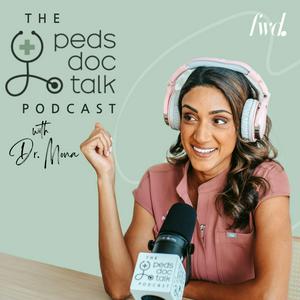
Sobre The PedsDocTalk Podcast: Child Health, Development & Parenting—From a Pediatrician Mom
The PedsDocTalk Podcast is your go-to parenting resource, hosted by Dr. Mona Amin, a trusted pediatrician, parenting expert, and mom of two. As a top 30 Parenting Podcast in the U.S., this show delivers expert-backed guidance on child development, health, illness, behavior, feeding, and sleep—giving parents the confidence to navigate every stage from baby to teen.
Each episode dives into real-life parenting challenges, featuring conversations with specialists in pediatrics, child psychology, nutrition, and parental well-being. From potty training and sleep training to tackling tantrums, picky eating, discipline, screen time, postpartum recovery, and developmental milestones, Dr. Mona provides practical, science-backed advice that actually works.
Tune in on Mondays and Wednesdays for actionable insights, mindset shifts, and expert interviews that empower you to raise healthy, resilient, and happy kids—while thriving as a parent yourself!
Site de podcastOuça The PedsDocTalk Podcast: Child Health, Development & Parenting—From a Pediatrician Mom, Era Uma Vez Um Podcast e muitos outros podcasts de todo o mundo com o aplicativo o radio.net
Obtenha o aplicativo gratuito radio.net
- Guardar rádios e podcasts favoritos
- Transmissão via Wi-Fi ou Bluetooth
- Carplay & Android Audo compatìvel
- E ainda mais funções
Obtenha o aplicativo gratuito radio.net
- Guardar rádios e podcasts favoritos
- Transmissão via Wi-Fi ou Bluetooth
- Carplay & Android Audo compatìvel
- E ainda mais funções

The PedsDocTalk Podcast: Child Health, Development & Parenting—From a Pediatrician Mom
Leia o código,
baixe o aplicativo,
ouça.
baixe o aplicativo,
ouça.
 Brasil