

Ouça este podcast gratuitamente no aplicativo: Baixe gratuitamente na App Store
radio.net
Sleeptimer
Guardar rádio
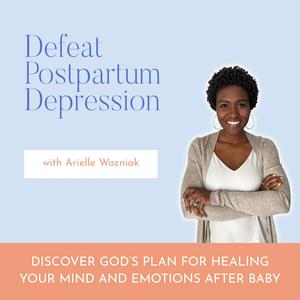
Defeat Postpartum Depression | Postpartum Anxiety, Postpartum Psychosis, Postpartum OCD
Arielle Wozniak
Último episódio
114 episódios
When You Don’t Feel God: Faith, Doubt & Intrusive Thoughts Postpartum
01/09/2026 | 27minThere was a point in my postpartum experience where I wasn’t just questioning my thoughts.
I was questioning everything.
I questioned whether I was really a Christian. Whether I had ever actually been saved. Whether Christianity itself was true. Why God was allowing me to suffer. Why He wasn’t healing me. Why I could open my Bible and feel absolutely nothing.
Today we’re talking about Step 5 of The Unafraid Method: ANCHOR.
In this episode, I’m sharing one of the deepest parts of my own story and what it looked like when postpartum anxiety and intrusive thoughts started affecting my faith too.
We talk about:
Religious intrusive thoughts and the fear of committing the unforgivable sin
Questioning whether I was ever really saved
Watching The Case for Christ because I was questioning what I believed
Wondering why God would allow me to suffer instead of healing me
Reading the Bible and feeling nothing
Using feelings as proof of whether God was close
The moment I looked in the mirror and said, “God, if You’re real, I need You to do something.”
The difference between faith and certainty
How prayer and Scripture can sometimes become part of certainty-seeking
What it means to stay anchored when you don’t understand what God is doing
Why being anchored doesn’t mean never questioning, doubting, or feeling afraid
One of the biggest things I had to learn was this:
God’s presence is not dependent on my ability to feel it.
Being anchored didn’t mean I always felt sure.
Sometimes it simply meant continuing to reach for God when I didn’t feel sure at all.
Peace After Postpartum officially launches October 5th. If you want to hear more when we open, text PEACE to 404-692-3754.
Next up in The Unafraid Method: RECLAIM.You Need People Who Get It: The Kind of Support That Actually Helps When You’re Spiraling
31/08/2026 | 25minOne of the hardest parts of postpartum intrusive thoughts is how isolating they can feel.
You may have people who love you deeply and still feel like no one fully understands what it’s like to be scared of your own mind.
Today we’re talking about Step 4 of The Unafraid Method: CONNECT.
In this episode, I’m sharing why community was such an important part of my own story, why being understood can feel so different from simply being loved, and how the people around you can support you without accidentally becoming part of the reassurance cycle.
We talk about:
Why shame and intrusive thoughts can feel so isolating
The difference between people who love you and people who truly understand the experience
Why hearing “me too” can be so powerful
How community can help you notice progress you may miss on your own
The difference between support and reassurance
What helpful support from a spouse, friend, or family member can actually sound like
How to communicate what you need when you’re spiraling
Why reassurance can bring temporary relief but keep you coming back for more certainty
Where professional support fits into a larger support system
A simple way to identify the gaps in your own support circle
Connection isn’t about finding people who will prove every fear wrong.
It’s about having people who can be present, understand what you’re walking through, and help you stay connected to your life when fear gets loud.
I also share why community is such a big part of Peace After Postpartum, my 90-day group program + community for moms navigating intrusive thoughts, anxiety, and OCD postpartum.
If you want more information, text PEACE to 404-692-3754. 🤍
Next up in The Unafraid Method: ANCHOR.How to Respond When a Scary Intrusive Thought Shows Up
29/08/2026 | 23minYou know you’re spiraling. You know Googling, checking, analyzing, and asking for reassurance aren’t giving you lasting relief.
But then comes the question:
What am I actually supposed to do when the intrusive thought shows up?
Today we’re moving into Step 3 of The Unafraid Method: RESPOND.
In this episode, I’m walking through a simple framework you can use to start creating space between the scary thought and what you do next:
Notice → Name → Don’t Solve → Return
We talk about:
Why trying to get rid of the thought can keep you stuck
How to notice the thought without immediately entering the debate
Naming the pattern instead of analyzing the content
Why “this one is different” is such a powerful trap
Letting a question exist without needing to solve it
Returning to your actual life even when anxiety is still present
How reassurance, prayer, Scripture, and “good thoughts” can sometimes become part of the certainty-seeking cycle
The difference between trust and certainty
Why progress does not mean responding perfectly every single time
A simple exercise to practice responding differently in one real-life situation
The goal is not to make every intrusive thought disappear.
It’s to stop treating every scary thought like a question that has to be answered before you’re allowed to keep living.
I also share more about Peace After Postpartum, my 90-day group program + community for moms navigating intrusive thoughts, anxiety, and OCD.
If you want the founding member details, text PEACE to 404-692-3754 by August 31st. 🤍
Next up in The Unafraid Method: CONNECT.The Things You’re Doing to Feel Safe That May Be Keeping You Stuck in the Intrusive Thought Spiral
27/08/2026 | 25minYou have the scary thought.
Then comes the Googling. The checking. The analyzing. The reassurance. The avoiding. The replaying.
And for a little while, you might actually feel better.
So why does the fear keep coming back?
Today we’re diving into Step 2 of The Unafraid Method: RECOGNIZE.
In this episode, we’re talking about the things you may be doing after an intrusive thought because they make you feel safer in the moment, but can become part of the cycle that keeps pulling you back into fear.
We’ll talk about:
Why reassurance can feel so good but never seem to last
The difference between useful research and Googling for certainty
Checking your feelings, reactions, body sensations, and memories
Avoidance and how fear can slowly start making your decisions
Sneaky mental patterns like reviewing, analyzing, testing, and trying to prove a thought wrong
How prayer can sometimes become part of certainty-seeking without us realizing it
How to start recognizing your own patterns without judging yourself
A simple exercise to identify what you reach for when fear shows up
I also answer a question I’ve been getting about how far postpartum you can be and still join Peace After Postpartum. If these struggles began during your postpartum season and you’re still actively navigating them, I don’t want you to automatically assume you’re “too far postpartum” for this to be relevant.
Peace After Postpartum is my 90-day group program + community for moms navigating intrusive thoughts, anxiety, and OCD.
If you want the founding member details, text PEACE to 404-692-3754 by August 31st. 🤍
Next up: RESPOND — what do you actually do when the scary thought shows up?What’s Actually Happening When a Scary Intrusive Thought Sends You Spiraling — and Why You Can’t Stop Analyzing It
26/08/2026 | 25minIf you’ve ever had a scary intrusive thought postpartum and immediately found yourself analyzing it, checking how you feel, Googling, asking for reassurance, or wondering what it means about you, this episode is for you.
Today we’re diving into the first step of The Unafraid Method: UNDERSTAND.
I’m breaking down what’s actually happening when a scary intrusive thought shows up, your brain assigns meaning to it, anxiety spikes, and suddenly you feel like you have to figure it out right now.
In this episode, we talk about:
Why intrusive thoughts can feel like evidence about who you are
The cycle of intrusion → meaning/alarm → distress → response → temporary relief
Why Googling, checking, reassurance, avoidance, and mental reviewing can keep the spiral going
Why anxiety, sensations, and emotional reactions can become part of what you start analyzing
Why thoughts that hit your deepest values can feel especially powerful
The constant need for certainty underneath so many OCD-type fears
Why “What if this time is different?” can keep restarting the cycle
A simple way to map one recent spiral without trying to solve the thought
The goal isn’t to never have another intrusive thought.
It’s to move from:
“What is wrong with me?”
to:
“I recognize what’s happening here.”
I also share an update on Peace After Postpartum, my new 90-day group program + community for postpartum moms navigating intrusive thoughts, anxiety, and OCD.
If you want details about becoming a founding member, text PEACE to 404-692-3754 by August 31st. 🤍
Tomorrow we’re moving into Step 2 of The Unafraid Method: RECOGNIZE, where we’ll talk about the things you may be doing to feel safe that could actually be keeping you stuck in the spiral.
Mais podcasts de Saúde e fitness
 Psicologia na PráticaEnriquecimento individual, Ensino, Saúde e fitness, Saúde mental
 Sons para relaxar | by Relaxing White NoiseSaúde e fitness
 Isso não é uma sessão de análise, com Vera IaconelliRelacionamentos, Saúde e fitness, Saúde mental, Sociedade e cultura
 Despertar ZenBudismo, Filosofia, Religião e espiritualidades, Saúde e fitness, Saúde mental, Sociedade e cultura
 DrauzioCastMedicina, Saúde e fitness
 Autoconsciente Podcast | Vida interiorEspiritualidades, Filosofia, Religião e espiritualidades, Saúde e fitness, Saúde mental, Sociedade e cultura
 Psicologia na PráticaEnriquecimento individual, Ensino, Saúde e fitness, Saúde mental
 Psicanálise de BotecoSaúde e fitness, Saúde mental
 Huberman LabCiência, Ciências da Vida, Saúde e fitness
 Cartas de um TerapeutaSaúde e fitness, Saúde mental
Podcasts em tendência em Saúde e fitness
 natureza mágicaSaúde e fitness, Saúde mental
 Rain SoundsSaúde e fitness, Saúde mental
 ADHD Experts PodcastSaúde e fitness, Saúde mental
 Relaxing White NoiseSaúde e fitness
 Bem-EstarSaúde e fitness
 Academia de PediatriaMedicina, Saúde e fitness
 MuzyCASTSaúde e fitness
 Inconsciente em CenaSaúde e fitness, Saúde mental
 SENTA DIREITO GAROTA!Saúde e fitness
 Saúde mental masculinaSaúde e fitness, Saúde mental
 Dr TakassiMedicina, Saúde e fitness
 10% Happier with Dan HarrisSaúde e fitness, Saúde mental
 Sereno - Meditação e RelaxamentoSaúde e fitness
 Nothing much happens: bedtime stories to help you sleepFicção, Saúde e fitness
 The HypnotistEnriquecimento individual, Ensino, Saúde e fitness, Saúde mental
 João Pestana : o melhor podcast para dormirSaúde e fitness, Saúde mental
 Despertar Interior - Autoconhecimento simples e sem tabusSaúde e fitness, Saúde mental
 Descomplica PsiSaúde e fitness, Saúde mental
 This Jungian Life PodcastSaúde e fitness, Saúde mental
 Deep Sleep Stories: Bedtime Sleep Meditation Aid for Insomnia ReliefSaúde alternativa, Saúde e fitness, Saúde mental
 Otorrino TalkMedicina, Saúde e fitness
Sobre Defeat Postpartum Depression | Postpartum Anxiety, Postpartum Psychosis, Postpartum OCD
You love your baby but this isn’t what you expected. If you’re battling postpartum depression, anxiety, OCD, intrusive thoughts, or insomnia, you’re not alone. I’m Arielle, Christian mental health coach and mom of three, here to help you discover God’s plan for healing your mind and emotions after baby.
What to do next:
→ Learn more about coaching and support at ariellewozniak.com
→ Text me directly at 404.682.3542 — yes, I really read and respond
→ Subscribe to the show so you never miss an episode
→ If this podcast helps you, share it with a mama friend who needs some light in the darkness
Site de podcastOuça Defeat Postpartum Depression | Postpartum Anxiety, Postpartum Psychosis, Postpartum OCD, Psicologia na Prática e muitos outros podcasts de todo o mundo com o aplicativo o radio.net
Obtenha o aplicativo gratuito radio.net
- Guardar rádios e podcasts favoritos
- Transmissão via Wi-Fi ou Bluetooth
- Carplay & Android Audo compatìvel
- E ainda mais funções
Obtenha o aplicativo gratuito radio.net
- Guardar rádios e podcasts favoritos
- Transmissão via Wi-Fi ou Bluetooth
- Carplay & Android Audo compatìvel
- E ainda mais funções

Defeat Postpartum Depression | Postpartum Anxiety, Postpartum Psychosis, Postpartum OCD
Leia o código,
baixe o aplicativo,
ouça.
baixe o aplicativo,
ouça.
 Brasil